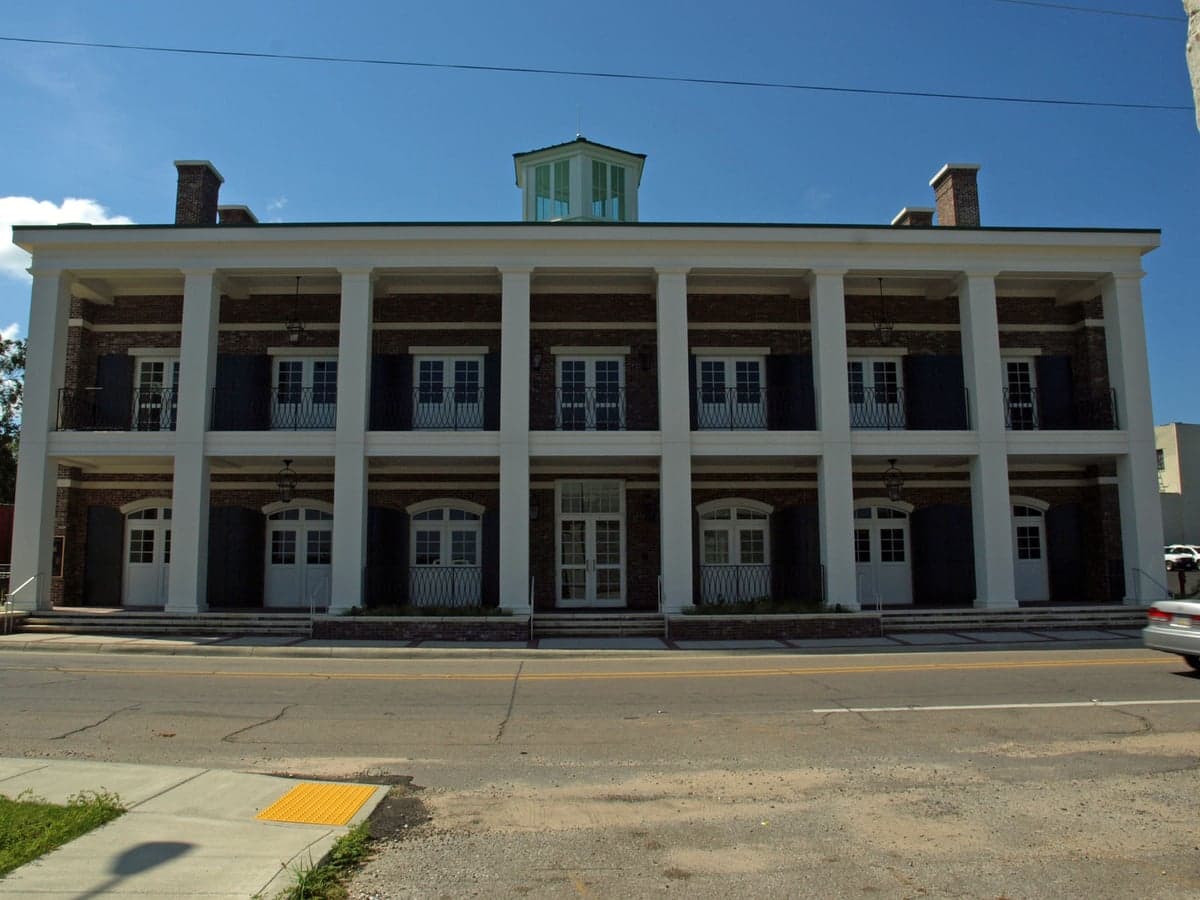
Photo: Wikipedia
Strategic Assessment of Moss Point, MS
Meaningful friction. Expect exposure to either population pressure, blast zones, or natural disaster risk. Consider buying a retreat property.
What does the Strategic Assessment tell us?
Our Strategic Assessment grades tactical survivability of an area. Major population centers, military targets, fallout zones, natural disasters, and border exposure all drive risk — lower exposure means a more defensible position in a crisis.
This is heavily inspired by Joel Skousen's Strategic Relocation book. Highly recommended you checkout the book ($)What does this tell us?
Our Strategic Assessment grades tactical survivability of an area. Major population centers, military targets, fallout zones, natural disasters, and border exposure all drive risk — lower exposure means a more defensible position in a crisis.
This is heavily inspired by Joel Skousen's Strategic Relocation book. Highly recommended you checkout the book ($)Strategic Pillars

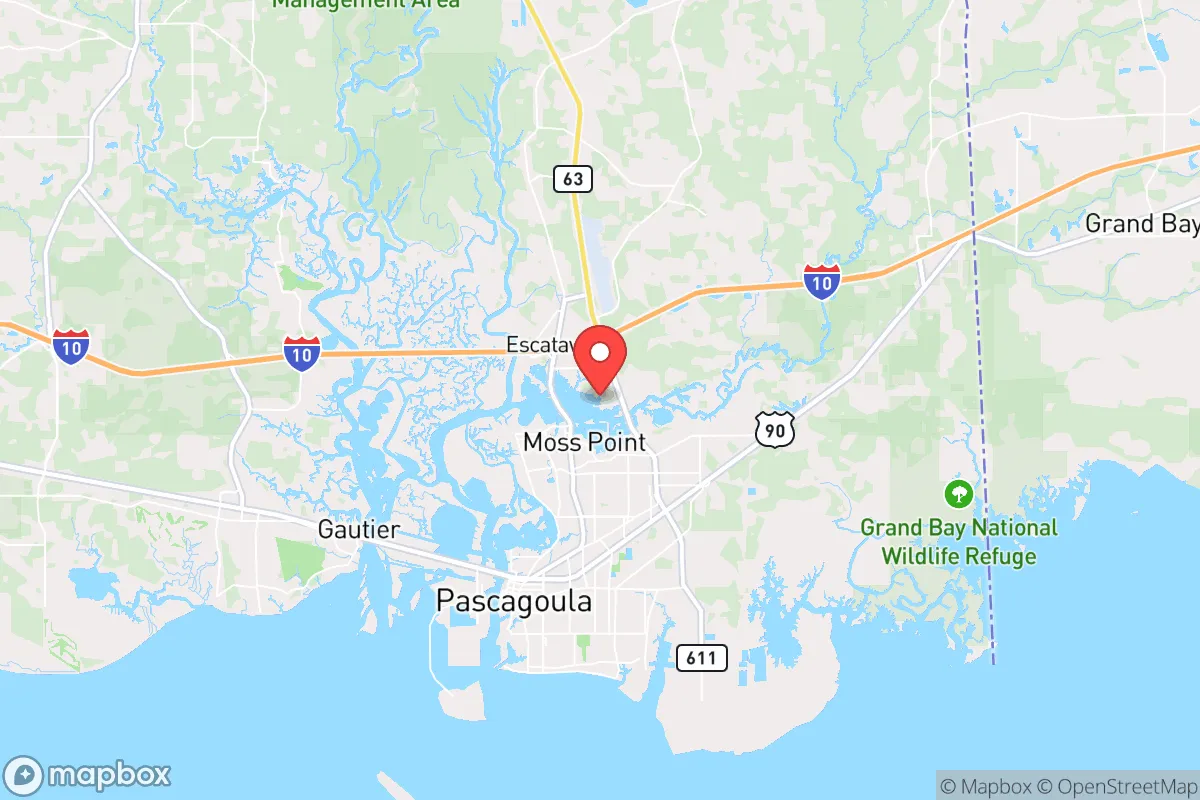
Key Distances
Regional Safe Places
Below is our recommended "safe zones" in Mississippi and the surrounding area based on our strategic heuristics. For most people, it's unrealistic to live in a “safe zone” full-time due to work, family or other personal reasons. They tend to be more rural. However, many of these areas are perfect for second homes and retreat properties that double as a vacation home or even a short-term rental.
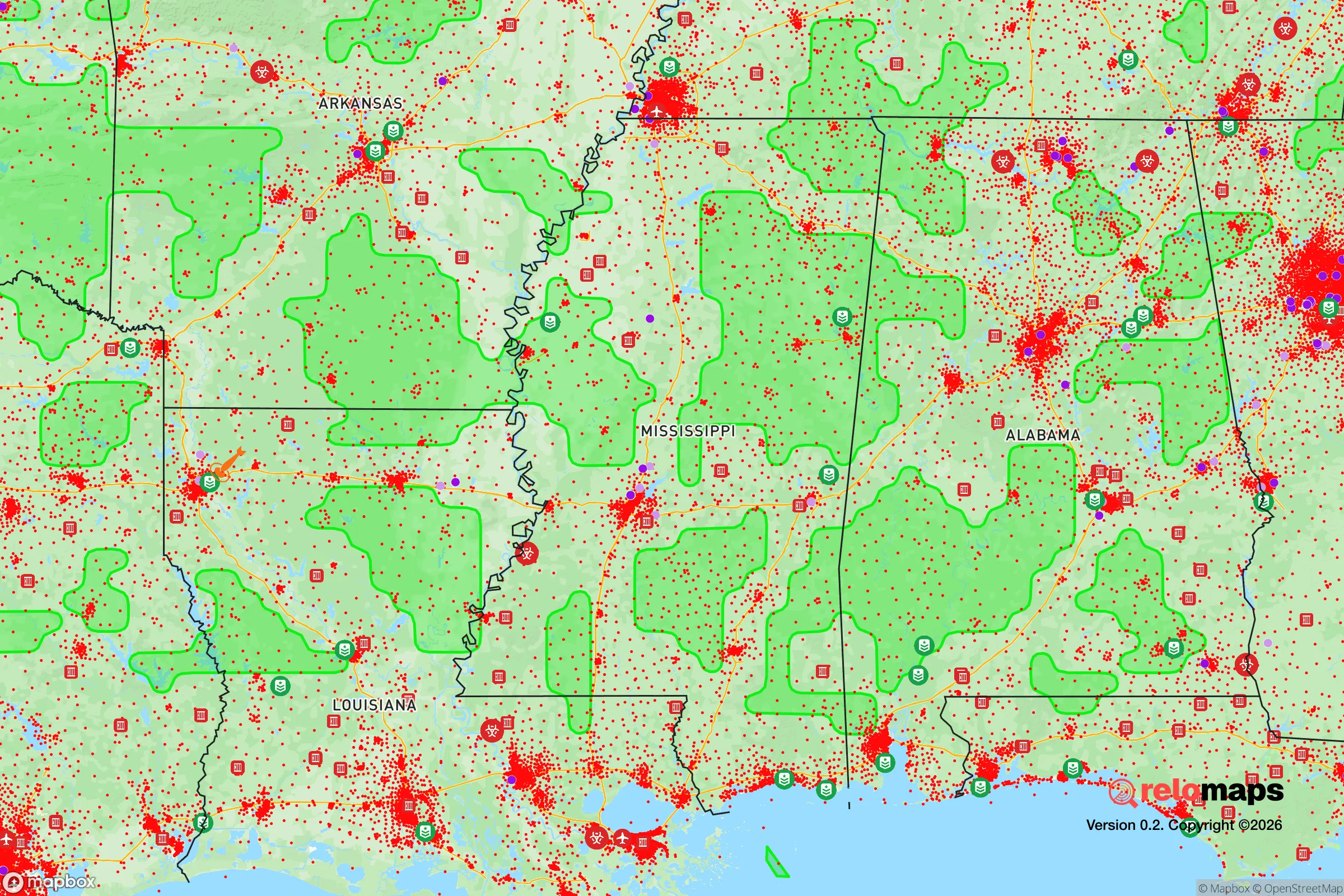
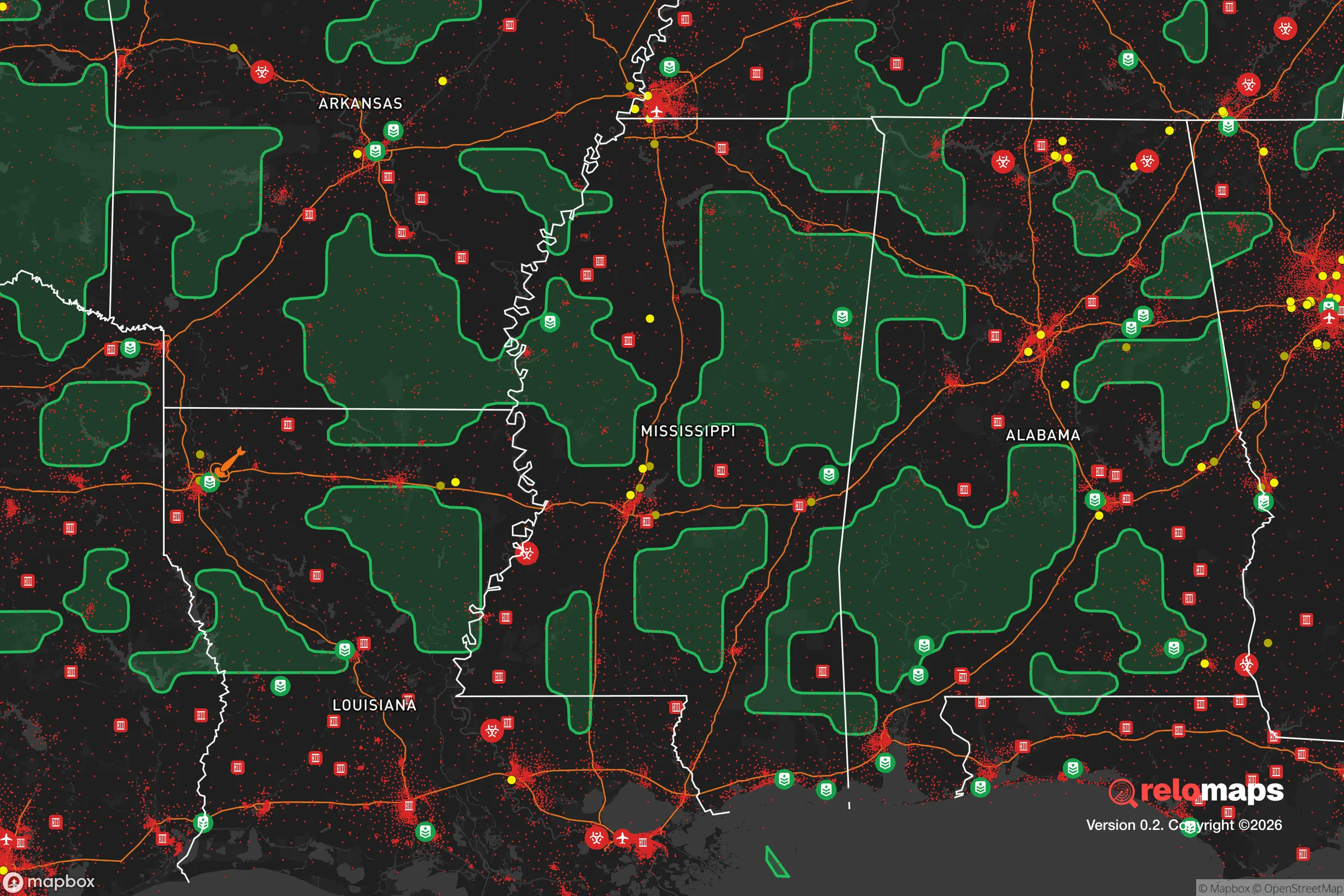


Important Note: For informational purposes only. This does not mean nothing bad ever happens in the green zones. Please use common sense. This is based on public data and modeled with AI. We tried to take a conservative approach but mistakes happen. We update this regularly as new information becomes available.
Solar Generator Recommendations
Backup power matters more here than in safer locations. We've picked three solar generators across budgets and capacity tiers — start with the budget unit if you only need a few essentials, or step up if you want to run a fridge and HVAC for days at a time.

Jackery Portable Power Station Explorer 300
Budget OptionPower on the Go: Weighing only 11 lbs, it's convenient to set up and store with book-sized foldable solar panels

BLUETTI Portable Power Station AC180
Designed for both indoor and outdoor scenarios, AC180 is highly capable as it has a robost capacity and continuous output power.

EF ECOFLOW DELTA Pro Ultra Power Station
Upgraded PickEcoFlow DELTA Pro Ultra is a whole-home energy system designed to grow with your family. Integrated with the Smart Home Panel 2, it scales to meet your evolving energy needs — keeping your home powered, intelligent, and secure through every stage of life.
We earn a commission, at no additional cost to you.
Strategic Assessment Analysis
Moss Point, Mississippi, presents a mixed strategic picture for the conservative prepper or survivalist. Its location on the Gulf Coast offers significant natural advantages—abundant fresh water, a long growing season, and proximity to the Gulf for maritime options—but it also sits in the crosshairs of hurricane alley and within a two-hour drive of a major petrochemical complex that could become a fallout-relevant target. For a relocator prioritizing resilience, the area demands a clear-eyed assessment of both its defensive strengths and its exposure to cascading risks from natural and man-made threats.
Geographic position and natural advantages for long-term survival
Moss Point’s position at the confluence of the Pascagoula River and the Gulf of Mexico is its strongest card. The Pascagoula River system is one of the last free-flowing river systems in the lower 48, meaning it’s less dammed and less controlled than most, offering reliable surface water even during drought. The surrounding Jackson County is heavily forested with pine and hardwood, providing cover, fuel, and building materials. The climate supports a year-round growing season—zone 8b/9a—allowing for three-season vegetable production and perennial food sources like citrus, figs, and pecans. For a family or individual looking to establish a semi-self-sufficient homestead, the soil is sandy loam in many areas, workable with hand tools, and rainfall averages 65 inches per year, meaning rain catchment is viable without complex systems. The Gulf itself is a 20-minute drive, offering fishing, crabbing, and a potential maritime escape route if inland roads become compromised. The area’s low population density outside the immediate I-10 corridor—roughly 100 people per square mile in the county—means fewer neighbors to compete with for resources in a collapse scenario.
Risks, exposures, and proximity to fallout-relevant landmarks
The most glaring vulnerability is hurricane exposure. Moss Point sits directly in the path of Gulf storms, and Hurricane Katrina (2005) demonstrated the area’s fragility: storm surge pushed 20+ feet inland, destroying entire neighborhoods and knocking out power for weeks. A Category 3 or higher storm would force evacuation or require a hardened shelter with flood-proofing. Beyond weather, the proximity to the Chevron Pascagoula Refinery—one of the largest on the Gulf Coast, processing 360,000 barrels of crude per day—is a double-edged sword. In a grid-down or EMP scenario, the refinery could become a source of toxic releases, fires, or targeted disruption. It’s roughly 12 miles southwest of Moss Point, within the blast radius of a major industrial accident. Additionally, the nearby Naval Air Station Meridian (about 90 miles north) and the Ingalls Shipbuilding yard in Pascagoula (10 miles south) are potential military targets in a conflict scenario. Interstate 10 runs directly through Moss Point, which is a liability during civil unrest—it’s a major evacuation route from New Orleans and Mobile, meaning the town could see waves of refugees or looters passing through. The Port of Pascagoula, a deep-water port handling military and commercial cargo, is another concentration of risk. For a prepper, these factors mean that Moss Point is not a remote bug-out location; it’s a semi-urban area with significant exposure to both natural and man-made cascading events.
Practical resilience for a relocator: food, water, energy, and defensibility
On the practical side, Moss Point offers solid foundations for a resilient setup, but requires deliberate investment. Water is abundant—the Pascagoula River and its tributaries provide year-round surface water, but it’s brackish near the coast and requires filtration or distillation for drinking. A well is the best bet; the water table is shallow (20-40 feet) in most of Jackson County, making hand-pump wells feasible. Food production is realistic: the growing season runs from March to November, and local soil amendments (oyster shells for calcium, pine needles for mulch) are free. The area has a strong hunting culture—deer, wild hog, and waterfowl are plentiful—and fishing in the river and bayous is reliable. Energy independence is complicated by frequent storms. Solar is viable (the area gets 200+ sunny days per year), but panels must be ground-mounted and storm-rated. A backup generator with a buried propane tank is almost mandatory for the hurricane season. Defensibility is the weak point. Moss Point’s terrain is flat and heavily wooded, which provides concealment but few natural chokepoints. The town’s layout—scattered subdivisions along the river and highways—means a determined group could approach from multiple directions. A rural property with a long driveway, a creek or river on one side, and a clear field of fire on the other is ideal, but such parcels are increasingly rare and expensive. The local population is a mix of working-class families, retirees, and a significant number of residents reliant on government assistance—meaning in a prolonged crisis, resource competition could be intense. The Jackson County Sheriff’s Office is professional but understaffed (roughly 1 deputy per 1,000 residents), so self-defense capability is non-negotiable.
The overall strategic picture for Moss Point is one of high potential but high maintenance. It’s not a retreat for those seeking isolation—it’s a location for a prepper who wants to leverage natural resources while accepting the risks of coastal living and proximity to critical infrastructure. The area’s resilience depends heavily on individual preparation: a well-built home with storm shutters, a reliable water source, a year’s worth of food storage, and a community of like-minded neighbors. For a single individual or family willing to invest in hardening and networking, Moss Point offers a viable base for riding out regional disruptions. But for anyone looking for a low-risk, low-effort bug-out location, the hurricane threat and the refinery’s shadow make it a hard sell. The smart play here is to treat Moss Point as a forward operating base—not a final redoubt—and to have a secondary plan for inland relocation if the situation deteriorates beyond local capacity.

* Values derived from national, state, county, city and local statistics and may differ in a specific area. Last updated: 2026-05-04T13:00:18.000Z
Narrative content on this page is AI-generated and may contain mistakes. Verify any details that matter before acting on them.
ReloMaps may earn a commission from affiliate links at no extra cost to you.

