Photo: Wikipedia
Demographics of Natchitoches, LA
Affluence Level in Natchitoches, LA
A below-average socioeconomic profile. Incomes, home values, and educational attainment trail the U.S., with higher poverty and unemployment.
People of Natchitoches, LA
The people of Natchitoches, Louisiana, today form a majority-Black city of 17,682 residents, shaped by centuries of French colonial settlement, plantation-era slavery, and post-industrial migration. With a population that is 55.6% Black, 35.3% White, 4.5% Hispanic, and less than 2% combined Asian, Indian, and other groups, the city retains a distinctive Creole and African American cultural identity rooted in its role as the oldest permanent settlement in the Louisiana Purchase territory. The foreign-born share is just 1.0%, and 29.5% of adults hold a college degree, reflecting a community that is predominantly native-born and locally anchored, with a demographic character that diverges sharply from the surrounding rural parishes.
How the city was settled and grew
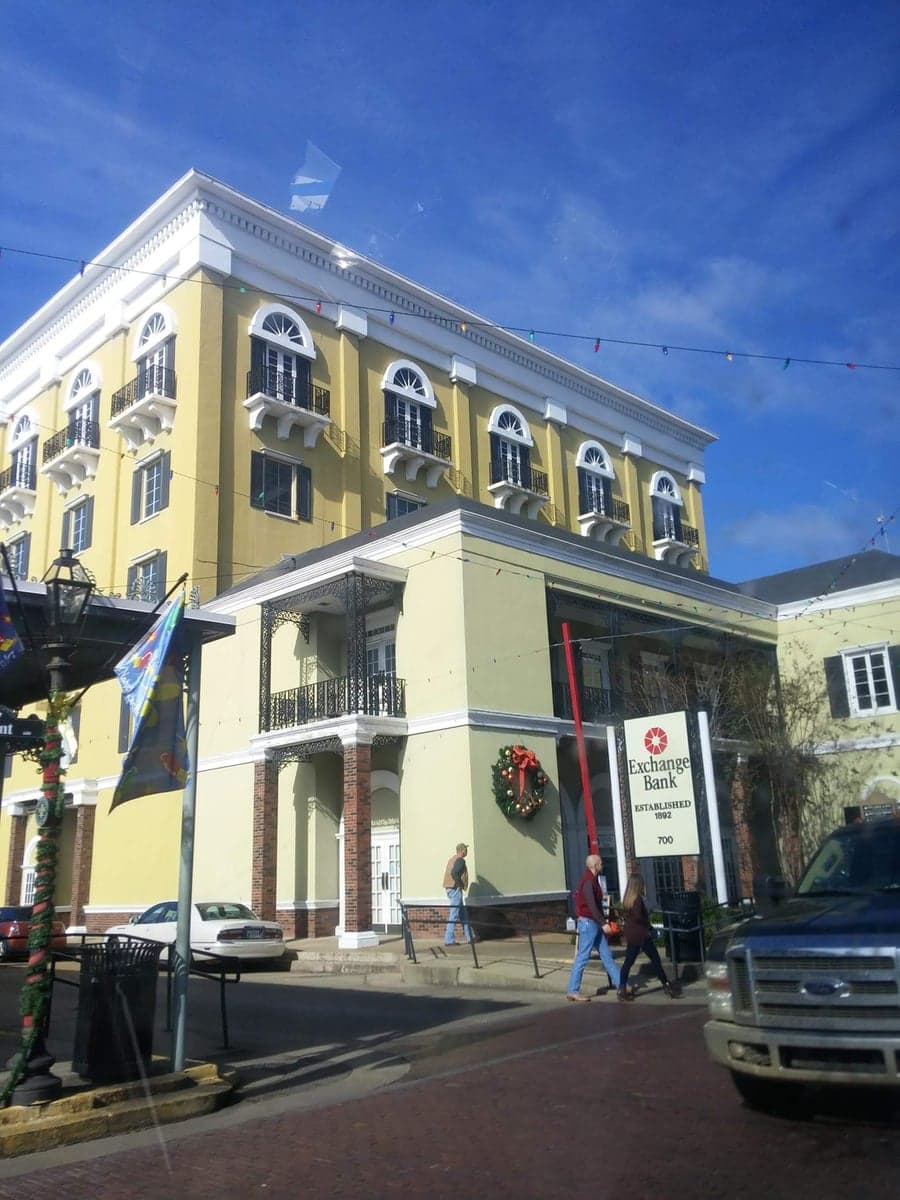
Founded in 1714 by French explorer Louis Juchereau de St. Denis as a trading post on the Red River, Natchitoches drew its earliest European settlers from France and French Canada, who established plantations along the Cane River. The historic Front Street district, with its ironwork balconies and brick storefronts, was the commercial and social hub for these French Creole families, who intermarried with enslaved Africans and free people of color to create a distinct Creole society. By the antebellum era, cotton and sugarcane plantations fueled a population boom, with enslaved Black laborers forming the majority—a pattern that persisted after emancipation. The Melrose Plantation area and the Cane River Creole National Historical Park corridor preserve the homes and churches of these early Black and Creole communities, including the Isle Brevelle settlement, one of the oldest continuously inhabited free Black communities in the United States. The arrival of German and Irish immigrants in the late 19th century added small enclaves near the railroad depots, but Natchitoches remained overwhelmingly Black and French-Creole in character through the early 1900s.
Modern era (post-1965)
The post-1965 period saw significant demographic shifts as the Civil Rights movement ended legal segregation and opened new opportunities. Many White families moved to newer subdivisions on the city's outskirts, such as Lakeview and Northwood, while Black families expanded into previously restricted areas near Northwestern State University and along University Parkway. The decline of small-scale agriculture and the rise of the university as the city's largest employer (over 1,500 jobs) drew a modest influx of faculty and staff from outside the region, slightly increasing the White and Hispanic shares. However, the foreign-born population remained minimal—just 1.0% today—as Natchitoches did not attract the immigrant waves seen in larger Louisiana cities like New Orleans or Baton Rouge. The Hispanic share grew from negligible levels to 4.5%, concentrated in service-industry roles near the university and along the Texas Street corridor. The Black population, which had been the majority since the 19th century, solidified its dominance as younger White residents left for job markets in Houston and Dallas, leaving an older, more established White cohort in historic neighborhoods like Fairgrounds and East Natchitoches.
The future
Natchitoches is likely to remain a majority-Black, low-immigration city over the next 10–20 years, with gradual homogenization rather than tribalization into distinct ethnic enclaves. The Black population is projected to hold steady or grow slightly, supported by the university and regional healthcare jobs, while the White share may continue a slow decline as outmigration of younger adults persists. The Hispanic community, though small, is the fastest-growing segment, driven by service-sector employment and family reunification, but is unlikely to exceed 8–10% without a major economic shift. The East/Southeast Asian and Indian populations (0.5% and 0.2% respectively) are negligible and concentrated among university faculty and medical professionals, with no signs of forming a distinct neighborhood. The city's low foreign-born rate and limited economic diversification mean that Natchitoches will not become a multicultural hub; instead, it will deepen its existing Black Creole identity, with the university and tourism (centered on the historic district and the annual Christmas Festival) anchoring the local economy.
For someone moving to Natchitoches now, the city offers a stable, culturally rich community with a strong sense of place, but limited demographic diversity and modest growth prospects. The population is overwhelmingly native-born and locally rooted, with a majority-Black character that shapes politics, social life, and civic institutions. New residents—particularly those from outside the region—will find a welcoming but insular environment, where the university and historic districts provide the primary social and economic anchors. The city is not becoming more fragmented or polarized; rather, it is consolidating around its established Creole and African American heritage, making it a distinctive but demographically predictable place to live.

* Values derived from national, state, county, city and local statistics and may differ in a specific area. Last updated: 2026-05-01T01:04:54.000Z
Narrative content on this page is AI-generated and may contain mistakes. Verify any details that matter before acting on them.
ReloMaps may earn a commission from affiliate links at no extra cost to you.

