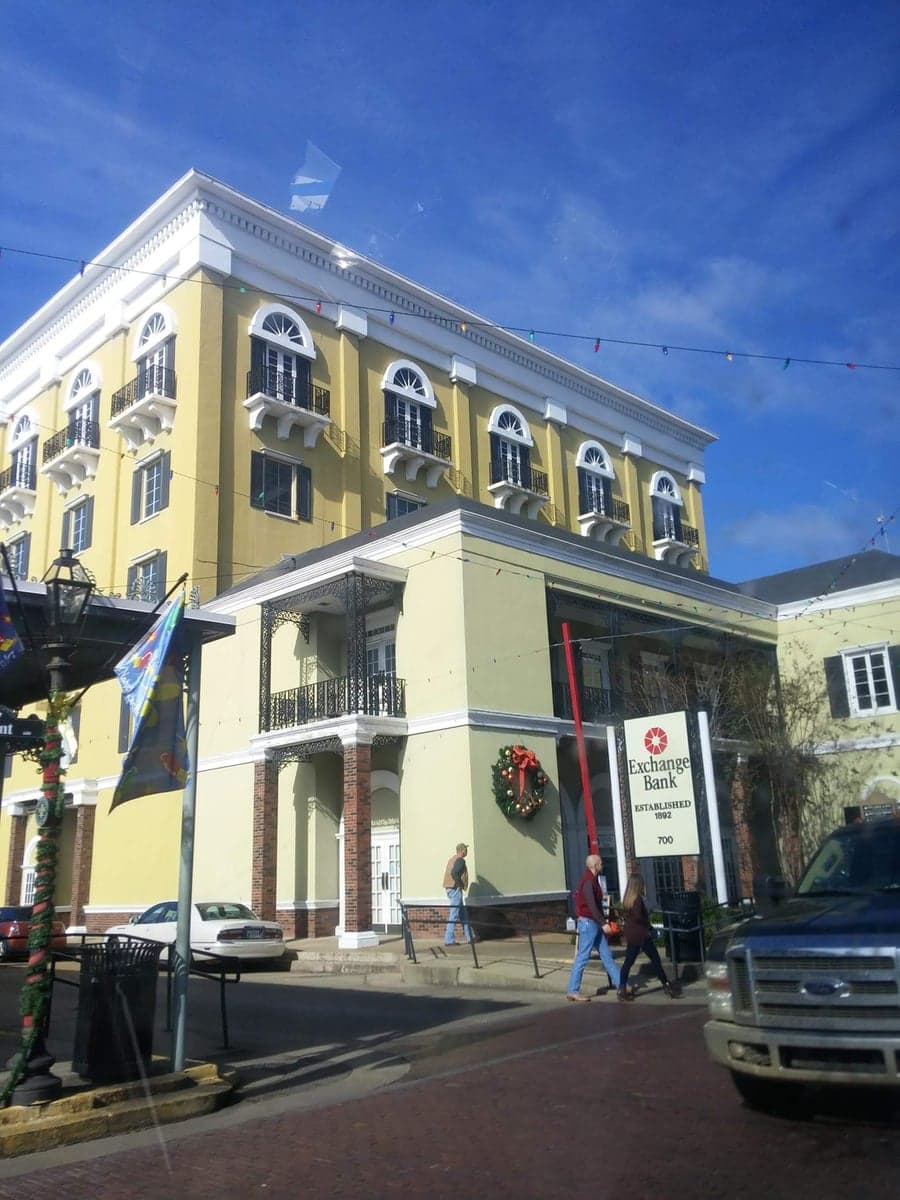
Photo: Wikipedia
Political ClimatePolitical Climate in Natchitoches, LA
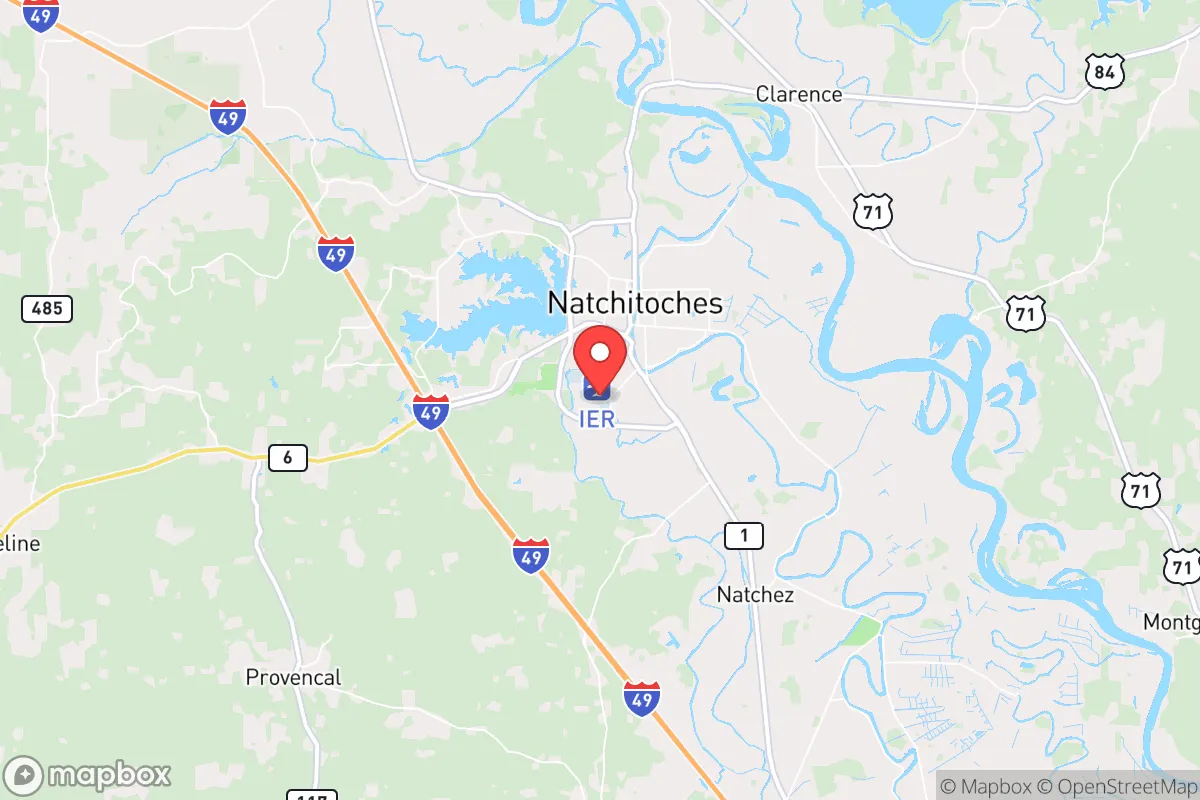
District shown is the primary district for this city’s centroid. Cities may span multiple districts.
Local Political AnalysisPolitical Analysis of Natchitoches, LA
Natchitoches leans solidly Democratic, with a Cook PVI of D+8 that makes it one of the more reliably blue areas in northwest Louisiana. That wasn't always the case—this town used to be a lot more balanced, with folks voting more on local character than party lines. But over the last decade or so, the shift has been real, driven mostly by the university crowd and new folks moving in from bigger cities. You'll still find plenty of conservative voices here, especially among the older families and rural folks just outside town, but the overall trajectory is definitely trending left.
How it compares
Drive 30 minutes south to Alexandria, and you're in a completely different world—that area leans more Republican, with a PVI around R+12 or so. Same goes for smaller towns like Many or Coushatta, where the politics are much more traditional and the local government stays out of your business. Natchitoches, by contrast, has that college-town feel where progressive ideas get a louder hearing. The contrast is stark: you can be in a diner in Natchitoches hearing about climate action and equity initiatives, then drive 20 miles and hear folks talking about property rights and school choice like it's 1995. That split creates a real tension, especially when state-level policies from Baton Rouge clash with what the city council here wants to push through.
What this means for residents
For folks who value personal freedom and limited government, the trend here is a bit worrying. You're seeing more local ordinances that nibble at property rights—things like stricter rental inspections, noise curfews that get enforced selectively, and zoning changes that make it harder to run a small business out of your home. The city council has also gotten more comfortable with tax hikes for "community programs" that sound nice but often come with strings attached. If you're a gun owner, you'll still find plenty of support at the state level, but locally, you might catch side-eye at a city meeting if you bring up Second Amendment issues. The school board has also shifted, with more emphasis on social-emotional learning and DEI training than on core academics or parental input. It's not a full-blown progressive takeover yet, but the foundation is being laid, and it's worth keeping an eye on.
One thing that hasn't changed much is the cultural conservatism of the older generation—you'll still see folks flying the flag and praying before city council meetings. But the younger crowd, especially at Northwestern State University, is pushing for more "inclusive" policies that sometimes feel like they're more about signaling than substance. The real test will come in the next few election cycles: if the city council flips further left, you can expect more regulations on everything from short-term rentals to public gatherings. For now, Natchitoches remains a place where you can still have a quiet life if you keep your head down, but the political winds are shifting, and not necessarily in a direction that respects the old-school values of personal responsibility and limited government. If you're thinking of moving here, just know that the local politics are becoming a bigger part of daily life than they used to be.

State Political ClimatePolitical Climate in Louisiana
State Political AnalysisPolitical Environment in the State
Louisiana has long been a reliably red state in federal elections, but its political climate is far more complex than a simple partisan label suggests. The state has voted for the Republican presidential candidate in every election since 2000, with Donald Trump carrying it by nearly 20 points in 2020 and again in 2024. However, this conservative lean coexists with a deeply entrenched Democratic stronghold in New Orleans and a history of populist, often anti-establishment, politics that can make the state feel like a wild card. Over the past two decades, the shift has been unmistakable: the once-dominant "Blue Dog" Democrats have all but vanished from statewide office, replaced by a solidly Republican trifecta in the legislature and governor’s mansion, a trajectory driven by suburban and rural realignment.
Urban vs. rural divide
The political map of Louisiana is a study in stark contrasts. The state’s two major population centers, New Orleans and Baton Rouge, anchor the Democratic vote. Orleans Parish routinely delivers 80%+ of its ballots to Democratic candidates, powered by a coalition of Black voters, progressive whites, and a growing transplant population. Baton Rouge, home to the state capital and LSU, is more competitive but still leans Democratic in most statewide races, with East Baton Rouge Parish often voting blue by 10-15 points. Meanwhile, the vast rural and suburban expanse of the state is overwhelmingly Republican. The North Louisiana region, anchored by Shreveport and Monroe, is a GOP stronghold, with Caddo and Ouachita parishes trending redder each cycle. The Acadiana region, including Lafayette and Lake Charles, has also shifted hard right, with Lafayette Parish flipping from a swing county to a reliable +20 Republican margin. The Florida Parishes (north of Lake Pontchartrain), including Mandeville and Covington, are among the most conservative suburbs in the South, often voting +30 or more for Republicans. The real story is the collapse of Democratic support in small-town and rural Louisiana—places like Alexandria and Houma that once elected conservative Democrats now vote Republican by landslides.
Policy environment
Louisiana’s policy environment is a mixed bag for conservatives. On the plus side, the state has no personal income tax on most retirement income, and the corporate tax rate was cut from 8% to 7.5% in 2021. The state is a right-to-work state, and its tort reform efforts have made it more business-friendly than its neighbors. However, the sales tax burden is among the highest in the nation, with a combined state and local rate that can exceed 10% in some parishes. On education, Louisiana has a robust school choice program, including the Louisiana Scholarship Program and a thriving charter school sector, particularly in New Orleans. The state also passed a near-total abortion ban in 2022, with no exceptions for rape or incest, reflecting its conservative legislative majority. Election laws are moderately restrictive: voter ID is required, and early voting is limited to seven days. The state has not expanded Medicaid under the Affordable Care Act, a point of pride for many conservatives, though it leaves a coverage gap for low-income adults. The regulatory environment is generally light, but the state’s heavy reliance on oil and gas revenue means that environmental regulations can be a flashpoint, with industry often getting its way in the legislature.
Trajectory & freedom
Over the past five years, Louisiana has moved decisively toward expanding personal liberty in several key areas. In 2024, the state passed a constitutional carry law, allowing permitless concealed carry of firearms, a major win for gun rights advocates. The same year, the legislature passed a parental rights bill that requires schools to notify parents of any changes to a student’s mental or physical health, effectively banning transgender policies without parental consent. The state also enacted a law banning the teaching of critical race theory in K-12 public schools, and in 2023, it passed a law prohibiting gender-affirming care for minors. On the economic freedom front, the state has resisted Medicaid expansion and has not implemented a state-level minimum wage above the federal floor. However, there are warning signs: New Orleans and Baton Rouge have both passed local ordinances that expand non-discrimination protections for LGBTQ individuals, and the city of New Orleans has a sanctuary city policy that limits cooperation with federal immigration enforcement. The state legislature has pushed back, passing a law in 2024 that bans sanctuary city policies, but the tension between local and state authority remains a live issue.
Civil unrest & political movements
Louisiana has a history of political activism that can flare up quickly. The most visible recent flashpoint was the 2020 protests in New Orleans and Baton Rouge following the murder of George Floyd, which included property damage and clashes with police. The state also saw significant protests in 2023 over a proposed oil and gas project in St. James Parish, which pitted environmental activists against industry supporters. On the right, the Louisiana Republican Party has been energized by the rise of the "MAGA" wing, with groups like the Louisiana Conservative Caucus pushing for stricter election integrity laws and opposing any form of vaccine mandates. The state’s immigration politics are relatively muted compared to border states, but the influx of migrants into New Orleans has become a local issue, with the city’s sanctuary policy drawing criticism from state leaders. Election integrity remains a hot-button topic: the 2020 election saw no major fraud in Louisiana, but the legislature has nonetheless passed laws requiring stricter voter ID and banning ballot drop boxes. The state also saw a brief secessionist movement in 2021, with a group called "Louisiana Secession" gaining some online traction, but it never translated into real political power.
Projection
Looking ahead five to ten years, Louisiana’s political trajectory is likely to continue its rightward drift, but with important caveats. The state’s population is aging and slowly declining, with out-migration to Texas and Florida. The growth areas are the conservative suburbs of Baton Rouge and New Orleans, like Prairieville and Slidell, which will only reinforce the GOP’s dominance. However, New Orleans is becoming more progressive and diverse, and if it continues to attract young, educated transplants, it could become a more potent Democratic counterweight. The biggest wildcard is the state’s economy: if the oil and gas industry declines, the state could face a fiscal crisis that might force tax increases or spending cuts, potentially alienating the conservative base. The legislature is likely to continue passing culturally conservative bills on education, guns, and abortion, but the real test will be whether the state can address its chronic infrastructure problems and high crime rates in Baton Rouge and New Orleans without resorting to government overreach. For now, the state remains a solidly conservative place to live, but one where local control and individual liberty are constantly being negotiated.
For a new resident, the bottom line is this: Louisiana offers a genuinely conservative state government that respects gun rights, parental authority, and local control, but you’ll need to navigate a high sales tax and a state that still has some old-school Democratic holdouts in its urban cores. If you’re moving to a place like Mandeville or Lafayette, you’ll find a community that shares your values. If you’re moving to New Orleans, you’ll be in a blue island that pushes back against state policy. Either way, the state’s political climate is one where your vote matters, and where the culture wars are fought in the open, not behind closed doors.
* Values derived from national, state, county, city and local statistics and may differ in a specific area. Last updated: 2026-05-01T01:04:54.000Z
Narrative content on this page is AI-generated and may contain mistakes. Verify any details that matter before acting on them.
ReloMaps may earn a commission from affiliate links at no extra cost to you.

