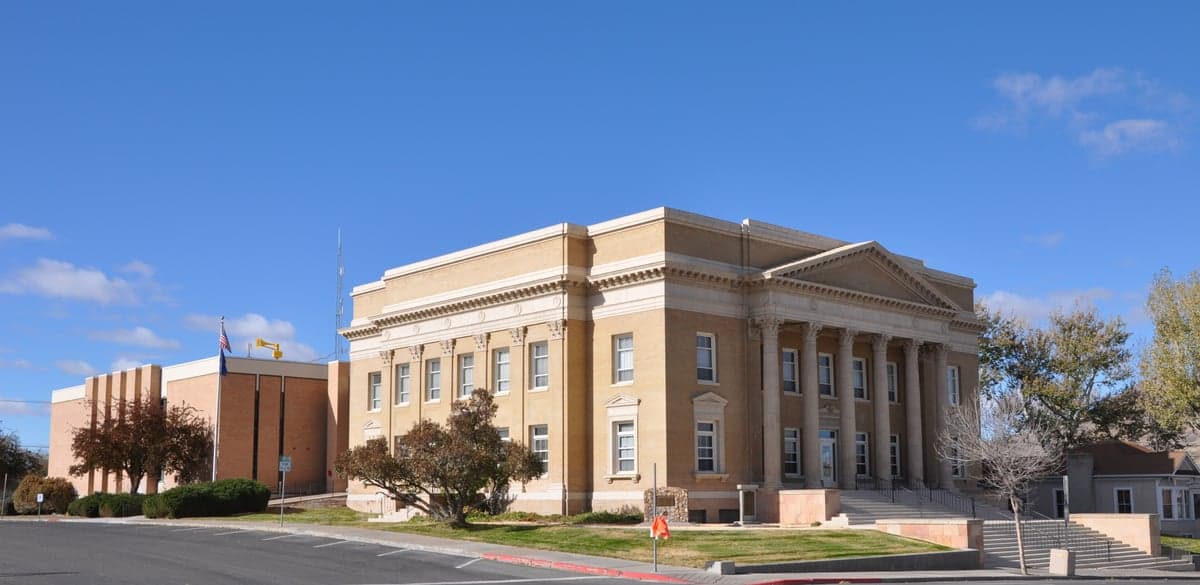
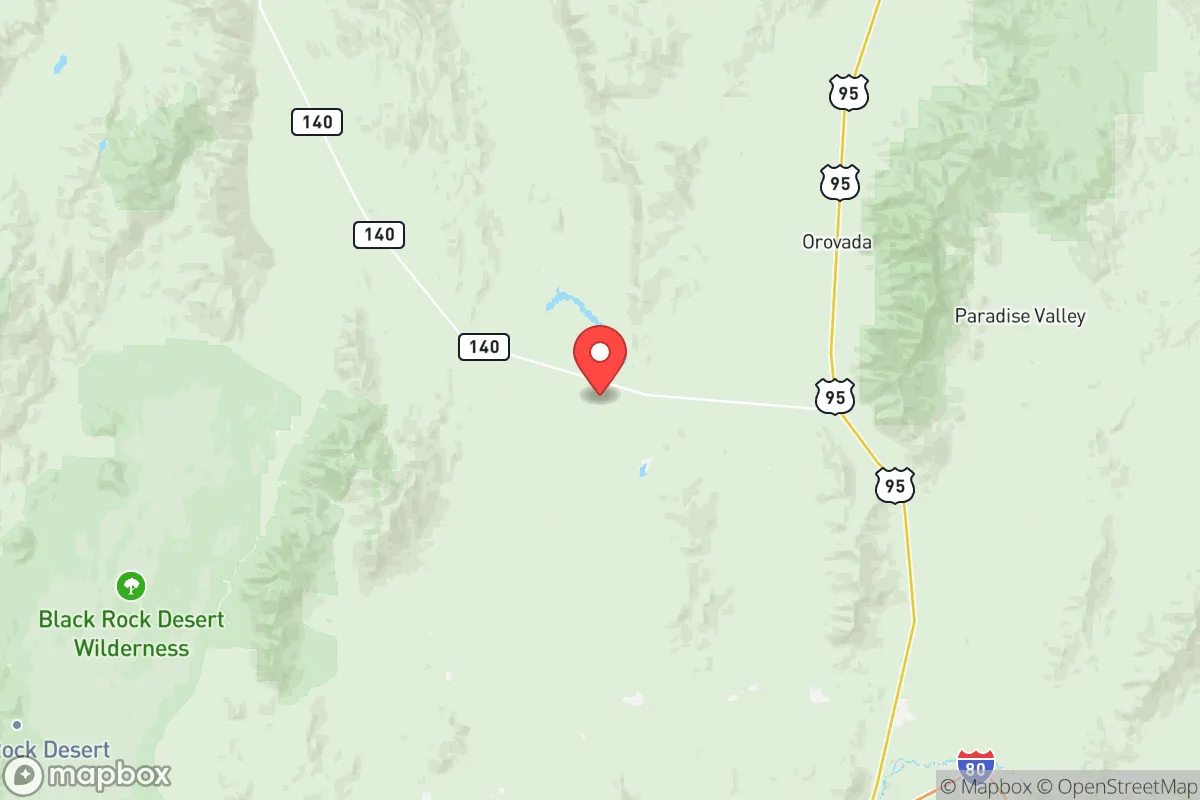
Photo: Wikipedia
Demographics of Humboldt County
Affluence Level in Humboldt County
A middle-class area roughly in line with national averages across income, home values, education, and employment.
People of Humboldt County
Humboldt County, Nevada, today is a sparsely populated, resource-driven community of 17,299 residents, defined by its rural character, a strong Hispanic minority presence, and a cultural identity rooted in mining and ranching. The county’s population is notably less diverse than Nevada as a whole, with a 64.7% white majority and a 26.9% Hispanic population, while foreign-born residents make up just 4.3% of the total. With only 19.8% of adults holding a college degree, the workforce is heavily oriented toward blue-collar industries, and the population is concentrated in the small cities of Winnemucca, the county seat, and the historic mining towns of Golconda, Paradise Valley, and McDermitt. The people here are characterized by a self-reliant, independent streak, shaped by generations of boom-and-bust cycles in mining and agriculture, and a deep skepticism of distant government.
Settlement & growth (pre-1960)
Long before European contact, the Humboldt River Valley was home to the Northern Paiute and Shoshone peoples, who lived a nomadic lifestyle centered on seasonal hunting and gathering. The river corridor, which runs east-west through the county, was a vital travel and trade route. The first significant non-Native presence came with the 1840s California Trail and the 1849 Gold Rush, which brought thousands of emigrants through the Humboldt River Valley, though few stayed. Permanent settlement began in earnest after the 1860 discovery of silver and gold in the region, leading to the founding of Winnemucca in 1868 as a railroad town on the Central Pacific Railroad. The town quickly became a supply hub for surrounding mining camps.
The major population wave in the late 19th and early 20th centuries was driven by mining booms. Cornish miners, known as "Cousin Jacks," arrived in the 1870s to work the silver mines around Golconda and Paradise Valley, bringing with them hard-rock mining expertise. Basque sheepherders began migrating from the Pyrenees in the 1880s, drawn by the open-range ranching opportunities in the high desert. They established a strong cultural footprint in Winnemucca and McDermitt, where Basque boarding houses and sheep camps became fixtures. The 1900s saw an influx of Italian and Irish immigrants, also drawn to mining and railroad work. The Dust Bowl of the 1930s pushed a small number of displaced farmers from Oklahoma and Texas into the county, but the population remained small and stable, hovering around 5,000 through the 1940s.
The post-World War II era brought a new wave of domestic migration tied to the expansion of open-pit gold mining. The discovery of the Carlin Trend gold deposit in the 1960s, though centered in neighboring Eureka County, spurred exploration and development in Humboldt County, particularly around Valmy and Orovada. This period also saw the growth of the ranching industry, with families from the Great Basin region moving in to manage cattle operations on the vast sagebrush steppe. By 1960, the county’s population had reached 5,708, still overwhelmingly white and native-born, with a small but established Hispanic community of Mexican-American railroad workers and farm laborers.
Modern era (post-1965)
The 1965 Hart-Cellar Act had a limited direct impact on Humboldt County, as the region did not attract the large-scale immigration seen in coastal cities. However, the act’s loosening of quotas did facilitate a gradual increase in Hispanic immigration, primarily from Mexico, starting in the 1970s. These new arrivals were drawn by jobs in the mining industry, particularly at the large gold mines near Winnemucca and Golconda, and by agricultural work in the alfalfa and potato fields around Orovada and Paradise Valley. By 1990, the Hispanic share of the population had risen to roughly 12%, and it has since grown to 26.9% as of 2024. This community is largely concentrated in Winnemucca, where a distinct Mexican-American enclave has formed around the downtown area, with Spanish-language businesses and a Catholic parish serving as cultural anchors.
The post-1965 period also saw a significant domestic migration wave, driven by the 1970s energy crisis and the subsequent boom in gold prices. The 1980s and 1990s brought a new influx of workers from the Rust Belt and the Mountain West, attracted by high wages in the mining sector. These migrants were predominantly white and often came from states like Utah, Idaho, and Montana, reinforcing the county’s existing cultural character. The East/Southeast Asian population, at 1.3%, is small and largely consists of Filipino and Chinese workers employed in mining and healthcare, with no distinct ethnic enclave. The Indian subcontinent population is effectively zero (0.0%), and the Black population remains negligible at 0.7%.
Suburbanization has been minimal in Humboldt County due to its low population density and vast distances. The only notable suburban-style development has occurred on the outskirts of Winnemucca, where new subdivisions have been built since the 2000s to accommodate mining and energy workers. These areas are predominantly white and middle-class, with larger lots and a more family-oriented character than the older downtown core. The county’s population grew by 8.5% between 2010 and 2020, driven by the 2010s gold mining boom and the construction of the TS Power Plant near Valmy, but growth has since plateaued as mining automation has reduced labor demand.
The future
Humboldt County’s population is likely to remain stable or grow slowly over the next 10-20 years, with no major demographic transformation on the horizon. The Hispanic community, now at 26.9%, is expected to continue growing gradually through both immigration and higher birth rates, potentially reaching 30-35% of the population by 2040. This growth is concentrated in Winnemucca, where the enclave is likely to become more established and integrated into the local economy, but is unlikely to spread significantly to smaller towns like McDermitt or Paradise Valley, which remain overwhelmingly white and native-born. The white population, while still the majority, is aging and declining in absolute numbers, as younger residents often leave for college or urban jobs and do not return.
The county is not tribalizing into distinct enclaves in the way that larger metropolitan areas are; instead, it is experiencing a slow homogenization, with the Hispanic community gradually assimilating into the broader ranching and mining culture. Intermarriage rates are high, and Spanish is not replacing English as a dominant language outside of specific neighborhoods. The East/Southeast Asian and other minority populations are too small to form meaningful enclaves and are likely to remain so. The biggest wildcard is the energy transition: if lithium mining and geothermal energy development expand in the region, it could attract a new wave of skilled workers from outside the area, potentially diversifying the population slightly. However, the county’s remote location, limited housing stock, and lack of urban amenities will likely prevent any rapid change.
For someone moving in now, Humboldt County remains a place where the cultural identity is firmly rooted in the 19th-century ethos of hard work, self-reliance, and resource extraction. The population is becoming slightly more Hispanic, but the overall character is stable, conservative, and resistant to outside influence. New arrivals, particularly those from urban areas, will find a community that values neighborliness but is wary of newcomers who do not share its work ethic and political leanings. The county is not becoming more diverse in the way that the rest of Nevada is; it is, instead, slowly absorbing its Hispanic minority into a traditional Western ranching and mining culture that has changed little in a century.

* Values derived from national, state, county, city and local statistics and may differ in a specific area. Last updated: 2026-05-12T10:01:33.000Z
Narrative content on this page is AI-generated and may contain mistakes. Verify any details that matter before acting on them.
ReloMaps may earn a commission from affiliate links at no extra cost to you.

