Photo: Wikipedia
Demographics of New Albany, IN
Affluence Level in New Albany, IN
A below-average socioeconomic profile. Incomes, home values, and educational attainment trail the U.S., with higher poverty and unemployment.
People of New Albany, IN
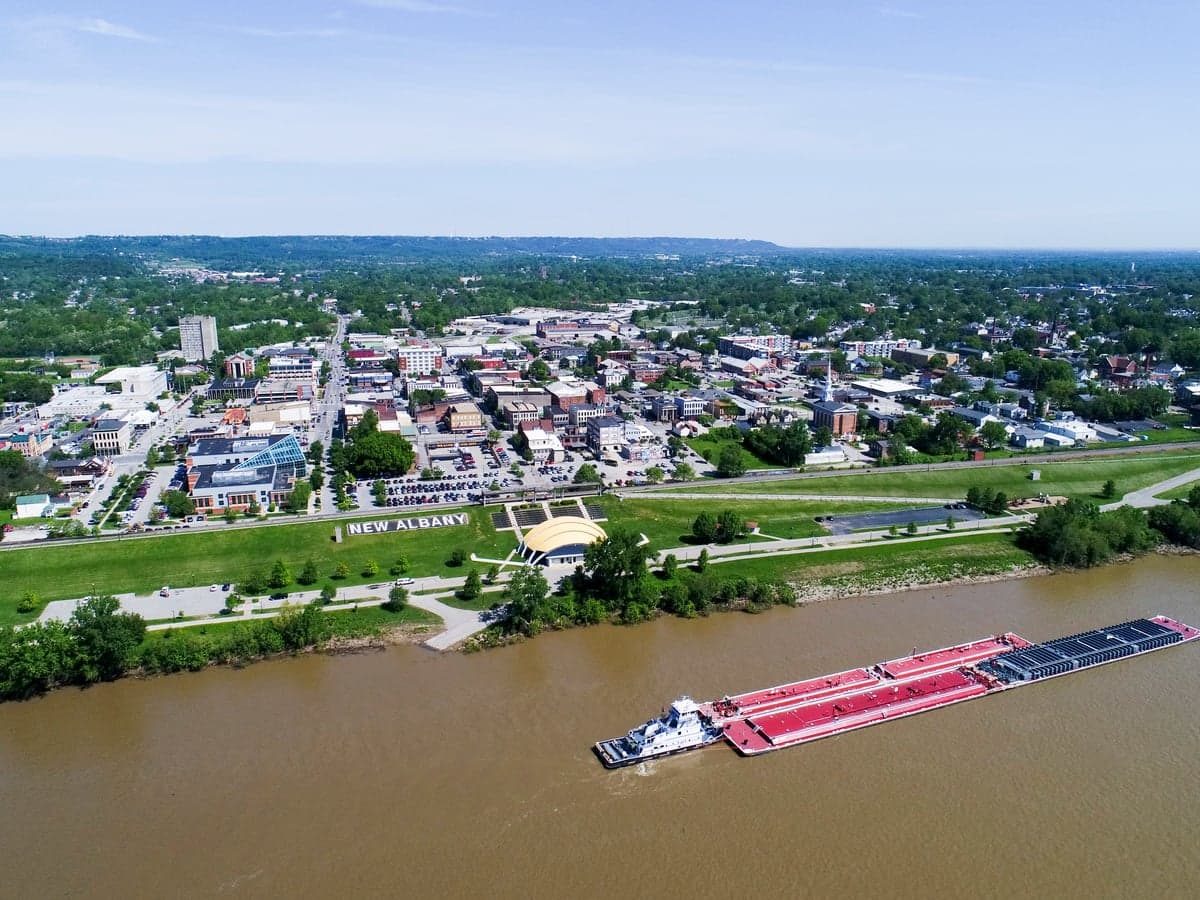
New Albany, Indiana, is a historic Ohio River city of 37,589 residents where the population is overwhelmingly native-born (97.6%) and predominantly white (80.0%), with a modest but growing Hispanic community (5.4%) and a smaller Black population (8.3%). The city’s character is shaped by its deep roots in German and Irish Catholic settlement, its post-industrial economic shift toward healthcare and logistics, and its role as a more affordable, family-oriented alternative to neighboring Louisville, Kentucky. With only 22.8% of adults holding a bachelor’s degree, New Albany retains a working-to-middle-class identity, distinct from the more educated suburbs to its north. The population is slowly diversifying, but the city remains a largely homogeneous, family-focused community with a strong sense of local history.
How the city was settled and grew
New Albany was founded in 1813 on a land grant along the Falls of the Ohio, drawing its first wave of settlers from Virginia, Kentucky, and Pennsylvania—mostly English-speaking farmers and merchants who built the early downtown along Main Street. The real demographic transformation came in the 1840s and 1850s, when German and Irish Catholic immigrants arrived in large numbers, fleeing famine and political unrest. The Germans settled heavily in the East End neighborhood, building St. Mary’s Catholic Church and establishing breweries, bakeries, and woodworking shops. The Irish concentrated in the West End near the riverfront, working on the steamboat docks and the Louisville & Nashville Railroad. By 1860, New Albany was Indiana’s largest city, a shipbuilding and railroad hub that attracted a small free Black population, who formed a community in the South End around what is now State Street. The post-Civil War era saw a slowdown in immigration, with the city’s growth driven by natural increase and the expansion of the furniture and glass industries through the early 1900s.
Modern era (post-1965)
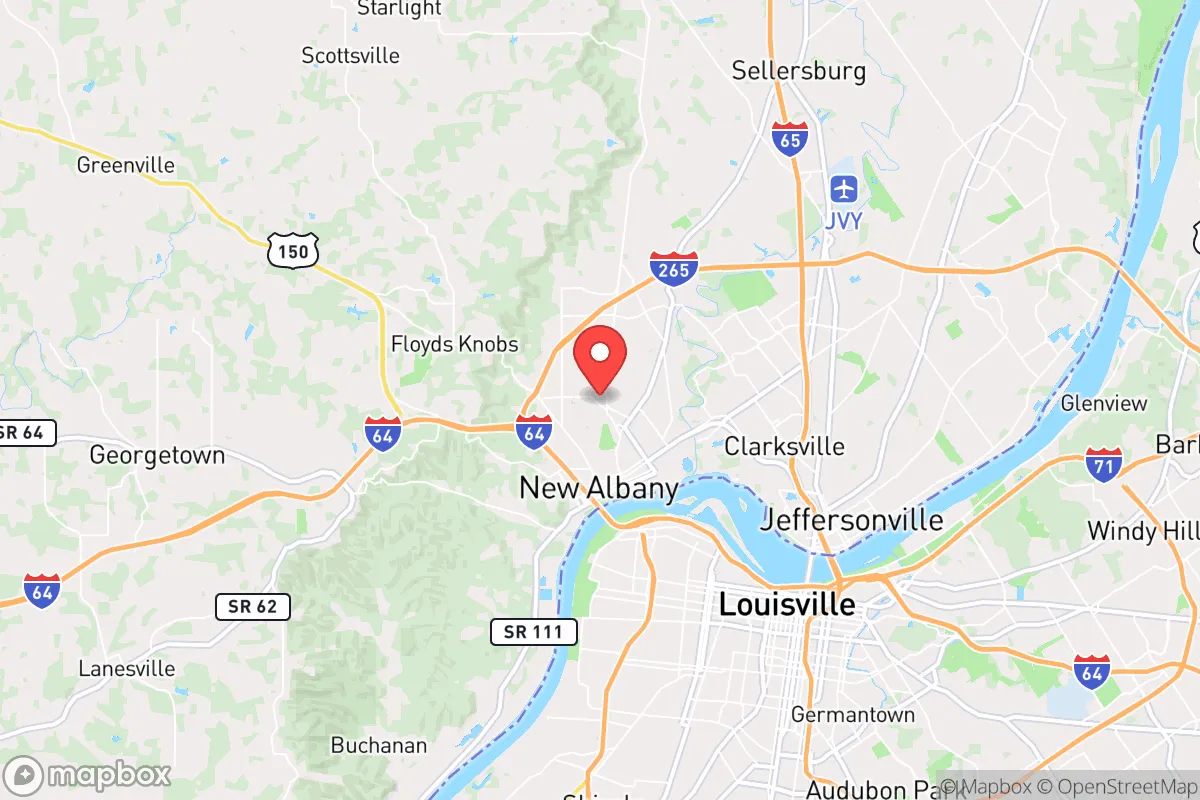
After the 1965 Immigration and Nationality Act, New Albany received very few new foreign-born residents—the foreign-born share today is just 2.4%, far below the national average. The city’s modern demographic story is one of domestic migration: white families moved from older urban neighborhoods to new subdivisions in the Grant Line Road corridor and the Silver Creek area during the 1970s and 1980s, following the construction of I-265 and the expansion of the River Ridge Commerce Center. The Black population, which had been concentrated in the South End and parts of the West End, declined slightly as some families moved to more integrated suburbs like Clarksville and Jeffersonville. The Hispanic population began to grow in the 1990s, primarily Mexican and Central American immigrants drawn to construction and warehouse jobs; they settled mainly in the West End and along Charlestown Road, where a small cluster of Hispanic-owned businesses now operates. The East/Southeast Asian population (0.6%) and Indian-subcontinent population (0.5%) remain tiny, with no distinct ethnic enclave—most are professionals employed by the nearby Baptist Health Floyd hospital or the regional logistics sector.
The future
New Albany’s population is projected to remain stable or grow slowly, with the most significant change being the gradual increase of the Hispanic share, which could reach 8–10% by 2040 if current trends hold. The white population is aging and slowly declining, while the Black share is likely to plateau or shrink slightly as younger Black families choose more diverse suburbs. The city is not tribalizing into distinct ethnic enclaves—rather, it is slowly homogenizing into a predominantly white, native-born population with a small but visible Hispanic minority concentrated in the West End. The East/Southeast Asian and Indian communities are too small to form enclaves and are likely to assimilate into the broader population. The biggest demographic wildcard is the potential for new development at the River Ridge Commerce Center, which could attract younger, more educated workers from Louisville, but the city’s low college attainment rate and limited housing stock in the Downtown and East End neighborhoods may limit that influx.
For someone moving to New Albany today, the city offers a stable, family-oriented environment with a strong sense of local history and a population that is slowly diversifying but remains overwhelmingly white and native-born. The West End is the most diverse area, while the Grant Line Road corridor and East End are predominantly white and middle-class. The city is not becoming a melting pot—it is becoming a slightly more Hispanic version of its historic self, with little change in the Black, Asian, or Indian shares. New Albany is a good fit for those seeking an affordable, safe, and historically rooted community where the population is stable and the pace of change is slow.

* Values derived from national, state, county, city and local statistics and may differ in a specific area. Last updated: 2026-04-22T08:27:11.000Z
Narrative content on this page is AI-generated and may contain mistakes. Verify any details that matter before acting on them.
ReloMaps may earn a commission from affiliate links at no extra cost to you.

