
Photo: Wikipedia
Quality of Life in Hillsborough County
A livable area that tracks near national norms for affordability, walkability, and neighborhood health.
What does Quality of Life tell us?
Quality of Life measures an area by evaluating factors like cost of living, nearby amenities, country club access, airport proximity, socioeconomic signals and neighborhood character. For large states, this is a general average — quality of life can vary dramatically between metro areas, suburbs, and rural communities within the same state.
What does this tell us?
Quality of Life measures an area by evaluating factors like cost of living, nearby amenities, country club access, airport proximity, socioeconomic signals and neighborhood character. For large states, this is a general average — quality of life can vary dramatically between metro areas, suburbs, and rural communities within the same state.
Cost of Living
34% above national average
91%
The Real Cost of Living in Hillsborough County for 2026
| Tier | Individual | Family (4) |
|---|---|---|
| Survival | $24k | $46k |
| Comfortable | $75k | $110k |
| Luxury | $165k+ | $256k+ |
| Elite (Top 5%) | $194k+ | $301k+ |
Quality-of-Life Analysis
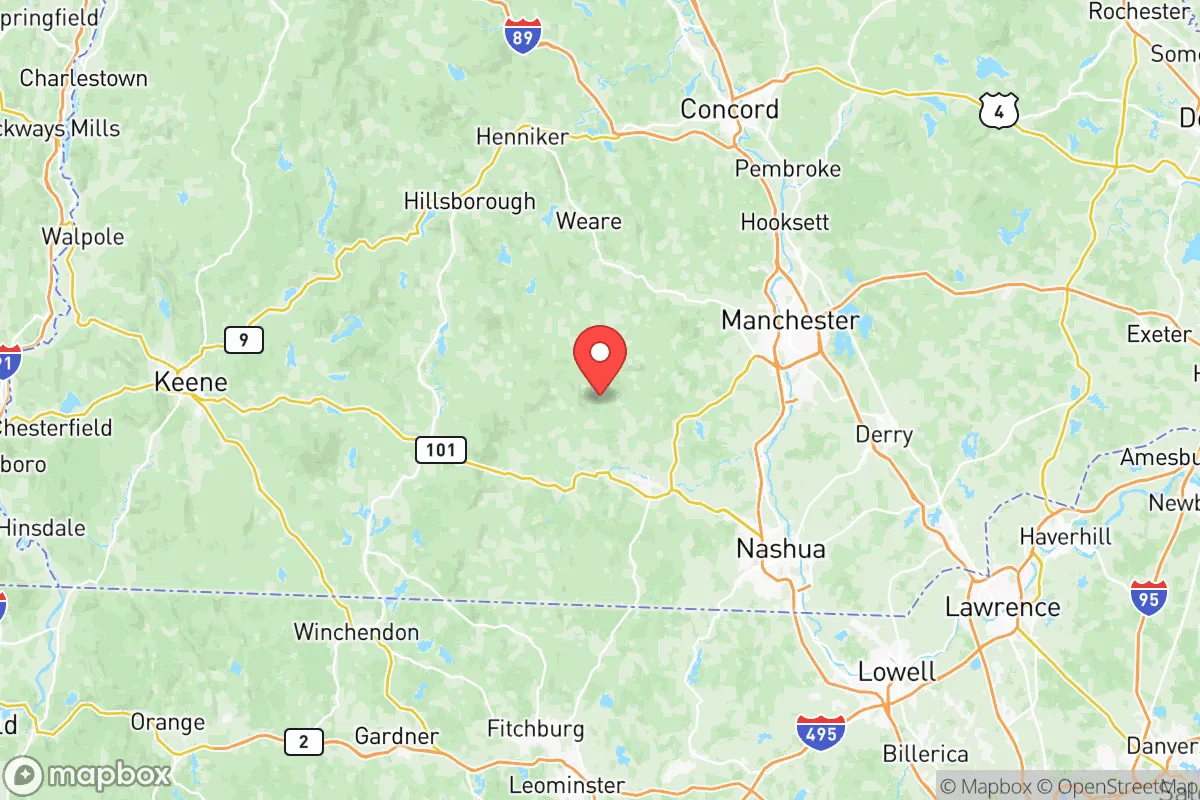
Hillsborough County, New Hampshire, offers a broad quality-of-life spectrum that ranges from dense urban centers to quiet rural towns, making it one of the most diverse counties in the state. The county’s two largest cities, Manchester and Nashua, anchor the southern tier with employment hubs, cultural amenities, and higher-density living, while northern and western towns like Goffstown, New Boston, and Greenfield provide small-town character and open space. Residents choose Hillsborough County based on their tolerance for commuting, desire for walkability, and budget, with the county’s overall cost-of-living index of 134 (100 = U.S. average) reflecting its position as one of New Hampshire’s more expensive regions.
Largest town(s) & population centers
Manchester, the state’s largest city (population ~115,000), is the county’s primary urban center, offering a walkable downtown with the SNHU Arena, the Currier Museum of Art, and a growing restaurant scene. Daily life here revolves around a mix of historic mill buildings converted into apartments and lofts, plus suburban-style neighborhoods in the north and east ends. Nashua (population ~90,000) is the second-largest city, with a strong technology and manufacturing base anchored by companies like BAE Systems and Nashua Corporation. Its downtown along the Nashua River features a pedestrian-friendly Main Street, while the southern edge borders Massachusetts, drawing cross-border commuters. Both cities have average commute times near the county’s 27-minute mean, though Manchester’s sprawl can push some drives to 35 minutes. Public transit is limited to Manchester Transit Authority and Nashua Transit System buses; most residents rely on cars. Median rent in the county is $1,532, with Manchester and Nashua commanding slightly higher rents for newer units near downtown.
Smaller towns & rural pockets
Outside the urban core, Hillsborough County contains dozens of smaller communities that range from dense suburbs to genuinely rural areas. Bedford and Merrimack are affluent suburbs of Manchester and Nashua respectively, with excellent schools, large-lot subdivisions, and retail corridors like the Mall of New Hampshire in Bedford. Goffstown offers a historic village center and access to the Uncanoonuc Mountains for hiking, while Hollis and Brookline remain largely rural with working farms and conservation land. Further north, New Boston and Mont Vernon are sparsely populated towns where homes sit on multi-acre lots and residents commute 30–40 minutes to Manchester or Nashua. Greenfield and Wilton are among the most rural, with populations under 2,000 and no major retail; residents rely on nearby Milford or Peterborough for groceries. These areas attract buyers seeking land, privacy, and lower property taxes relative to the urban core, though services like high-speed internet can be inconsistent.
Cost & lifestyle range
The cost-of-living spread across Hillsborough County is wide. At the high end, Bedford and Hollis have median home values well above the county’s $385,500 average, often exceeding $600,000 for single-family homes, with property taxes around 2.0% of assessed value. These towns offer top-rated school districts, low crime, and proximity to employment centers. At the lower end, Manchester’s older neighborhoods (e.g., the West Side) and parts of Nashua’s Crown Hill area have median home values closer to $300,000, with more rental options under $1,400. Rural towns like Greenfield and Wilton offer lower purchase prices (median around $350,000) but longer commutes and fewer amenities. The county’s average commute of 27 minutes masks a stark divide: urban residents often commute under 20 minutes, while rural dwellers may drive 40+ minutes to reach Manchester or Nashua. Lifestyle preferences drive the choice — walkable urbanism in Manchester’s downtown versus a five-acre homestead in Mont Vernon.
Hillsborough County suits a wide range of residents, from young professionals and families seeking urban energy in Manchester or Nashua to remote workers and retirees who prioritize space and quiet in towns like New Boston or Greenfield. The county’s mix of employment density, school quality, and housing stock means that nearly any lifestyle preference can be accommodated, provided the budget aligns with the chosen town’s cost profile. Those who thrive here are typically comfortable with car dependence outside the urban cores and value the trade-off between New Hampshire’s lower taxes and the higher housing costs relative to national averages.

Crime in Hillsborough County
Lower crime rates than 82% of comparable U.S. locations.
Violent CrimeViolent Crime Analysis
Property CrimeProperty Crime Analysis
Crime Analysis
Hillsborough County, New Hampshire, presents a mixed safety picture: its overall violent crime rate of 116.3 per 100,000 residents and property crime rate of 817.2 per 100,000 are well below national averages, but the county’s two largest cities—Manchester and Nashua—experience elevated crime compared to surrounding towns. Residents in suburban communities like Bedford, Merrimack, and Hollis enjoy some of the lowest crime rates in the state, while urban neighborhoods in Manchester and Nashua contend with higher incidents of theft, burglary, and occasional violence. The contrast is sharpened by progressive prosecutorial policies in those cities, which critics argue contribute to recidivism and public safety concerns.
Crime in context
Hillsborough County’s violent crime rate of 116.3 per 100,000 is roughly one-third the national rate of 380 per 100,000 and below the New Hampshire state average of approximately 140 per 100,000. Property crime at 817.2 per 100,000 is less than half the U.S. rate of 1,954 per 100,000 and also under the state’s property crime average of about 1,100 per 100,000. These figures make Hillsborough one of the safer counties in the Northeast by raw numbers. However, the county’s two urban hubs—Manchester (population 115,000) and Nashua (population 91,000)—pull the county average upward. Both cities are served by district attorneys elected on progressive platforms that emphasize diversion programs, reduced cash bail, and alternatives to incarceration. In Manchester, the Hillsborough County North Attorney’s office has faced criticism for declining to prosecute certain low-level drug and property offenses, a policy that some law enforcement officials say emboldens repeat offenders. Nashua’s judicial district, part of Hillsborough County South, has similarly adopted restorative justice initiatives that, while well-intentioned, have been linked to higher rates of shoplifting and car breakouts in the downtown core. The result is a county where the overall statistics look favorable, but residents in the largest cities express growing unease about visible disorder and property crime.
What residents experience
For most Hillsborough County residents, daily life is safe. Suburban towns like Bedford, Amherst, and Hollis report violent crime rates below 50 per 100,000, and property crime is largely limited to occasional unlocked-car thefts. In Manchester and Nashua, however, residents experience a different reality. Property crime—especially theft from vehicles, bicycle theft, and package porch piracy—is a frequent nuisance. Violent crime, while rare, clusters in specific areas: Manchester’s downtown
* Values derived from national, state, county, city and local statistics and may differ in a specific area. Last updated: 2026-05-15T01:37:07.000Z
Narrative content on this page is AI-generated and may contain mistakes. Verify any details that matter before acting on them.
ReloMaps may earn a commission from affiliate links at no extra cost to you.

