Photo: Wikipedia
Demographics of Cibola County
Affluence Level in Cibola County
A below-average socioeconomic profile. Incomes, home values, and educational attainment trail the U.S., with higher poverty and unemployment.
People of Cibola County
Cibola County’s 27,059 residents form one of New Mexico’s most culturally distinct populations, defined by a strong Native American presence and a deep Hispanic heritage. The county is roughly one-quarter Native American (with Acoma, Laguna, and Zuni pueblos as the dominant tribal communities), one-third Hispanic, and less than one-fifth non-Hispanic white, with only 1.4% foreign-born—far below state and national averages. With an 18.8% college-attainment rate and a sparse, rural character, the population is anchored in historic villages and reservation lands rather than suburban sprawl, giving the area an identity shaped more by centuries-old settlement patterns than by recent migration.
Settlement & growth (pre-1960)
Human habitation in what is now Cibola County stretches back over a thousand years, with Ancestral Puebloan peoples building cliff dwellings and farming along the Zuni and Rio San Jose drainages. The modern tribal communities of Acoma Pueblo (known as Sky City, continuously inhabited since at least 1150 CE) and Laguna Pueblo (established around 1300 CE) are direct descendants of these early cultures. The Zuni people, whose main reservation lies in the western part of the county, also trace their roots to the prehistoric period. Spanish exploration reached the area in 1539–1540, when the Coronado expedition sought the fabled Seven Cities of Cíbola—a myth that gave the county its name but failed to materialize. By the late 1600s, Spanish colonists had established small ranches and missions, though Native communities largely retained control of their lands through a series of land grants and Spanish recognition of pueblo sovereignty.
After the Mexican War of Independence (1821) and the U.S. takeover following the Mexican-American War (1848), the region saw only modest Anglo-American settlement through the mid-19th century. The arrival of the Atlantic and Pacific Railroad in the 1880s transformed the area by connecting it to national markets. The railroad depot in Grants—named after Canadian brothers John and Angus Grant who ran a trading post—became the county’s commercial hub. Early Anglo settlers in Grants and the surrounding valleys worked as ranchers and farmers, while Hispanic families from older Spanish land-grant communities in San Rafael and Cubero continued their pastoral traditions. The discovery of uranium in the 1950s near Grants triggered a mining boom that drew workers from across the Southwest, including Navajo laborers from the eastern part of the reservation and Anglo engineers from the West and Midwest. By the 1960 census, the county’s population had risen to roughly 10,000, with Grants emerging as a classic Western mining town with a mixed Native, Hispanic, and Anglo workforce.
Modern era (post-1965)
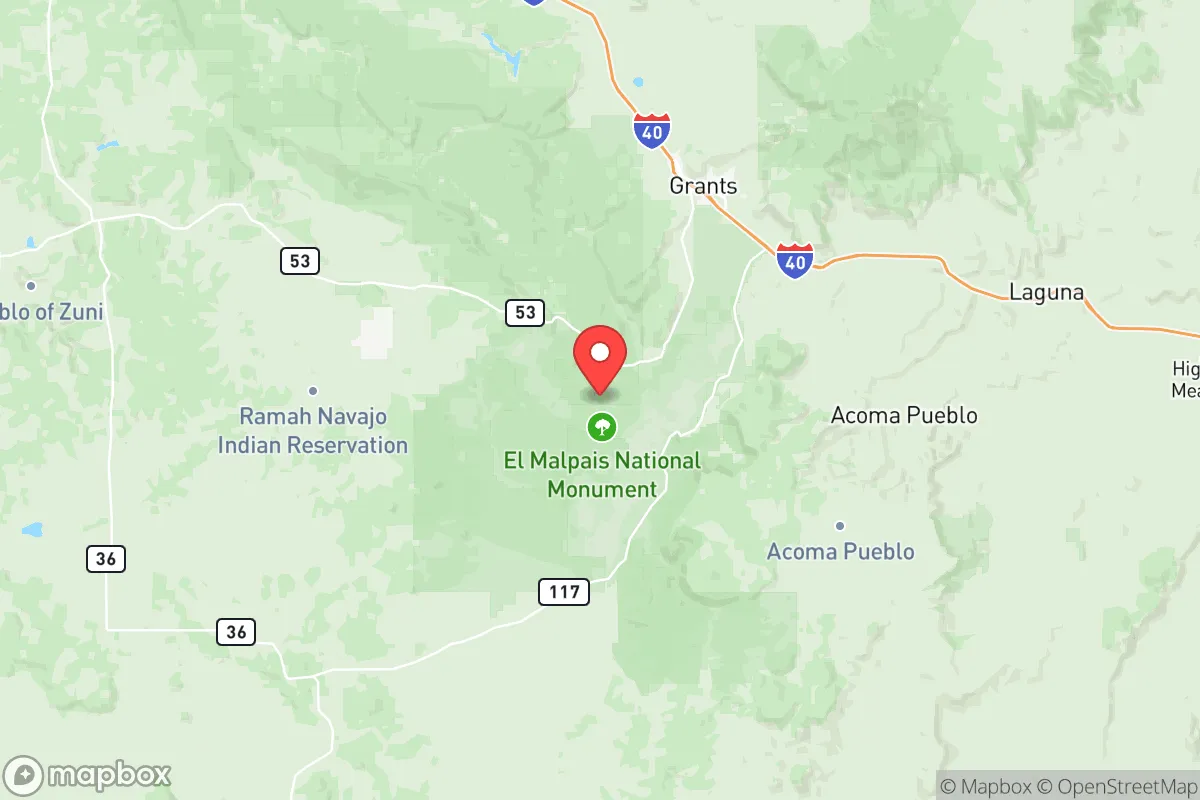
The post-1965 period in Cibola County is defined less by the Hart-Cellar immigration wave—which had minimal impact here given the 1.4% foreign-born share—and more by the collapse of the uranium industry and the reassertion of tribal identities. After the 1979 Church Rock uranium mill spill in neighboring McKinley County and the subsequent worldwide decline in uranium demand, mining in the Grants mineral belt shut down by the early 1990s. The population, which peaked near 20,000 in 1980, declined as workers left. Those who remained were disproportionately Native American and Hispanic families with deep local roots. The county’s non-Hispanic white share fell from roughly 40% in 1980 to under 20% by 2020, as many Anglo mining families relocated to Albuquerque or out of state. Meanwhile, the Acoma, Laguna, and Zuni pueblos grew through natural increase and some return migration of tribal members from urban areas. The Hispanic population, concentrated in Grants, Milan, and the Spanish-heritage farming villages of Seboyeta and San Rafael, remained stable at roughly a third of the total, with families continuing in education, healthcare, and tribal government work. The small East/Southeast Asian community (0.6%) and Black community (1.9%) are largely associated with temporary professional placements or historical railroad ties, not sustained immigration. Indian-subcontinent residents (0.1%) are negligible. Grants now functions as a regional service center for the pueblos, with the city’s economy dependent on tribal casinos, the Cibola National Forest, remnant mining reclamation, and the nearby El Malpais National Monument.
The future
Demographic trends suggest Cibola County will continue to homogenize around its Native American and Hispanic populations, rather than diversifying through immigration. The foreign-born rate is the lowest in New Mexico, and no refugee or new-immigrant settlement program operates in the county. Domestic in-migration is limited to a small number of retirees seeking low land prices and a few remote workers drawn by the area’s scenery and solitude—but housing shortages and limited broadband in many rural areas constrain growth. The Native American population, which is relatively young, is expected to grow through higher birth rates, while the white population is projected to slowly decline through out-migration and aging. The county’s 27,000 population has been essentially flat since 2000. Over the next 10–20 years, tribal economic development (especially the expansion of the Pueblo of Acoma’s Sky City Casino and the Laguna-operated businesses) will likely anchor the local job base. Grants may see slight population stabilization as regional health and education hubs consolidate. However, the broader trend is one of demographic consolidation: the county is becoming less white, more Native, and more Hispanic, with little cultural disruption from new arrivals.
For someone moving to Cibola County today, the area offers a place where Native traditions and Spanish colonial history are not museum pieces but living, everyday realities. The population’s future will be shaped by tribal sovereignty, modest natural increase, and the challenge of retaining young adults who often leave for college and do not return. It is a community where belonging is often tied to family and pueblo affiliation rather than to economic dynamism—ideal for those seeking authentic rural life rooted in centuries of continuous habitation, but less suited to those expecting cosmopolitan diversity or rapid growth.

* Values derived from national, state, county, city and local statistics and may differ in a specific area. Last updated: 2026-05-20T23:33:32.000Z
Narrative content on this page is AI-generated and may contain mistakes. Verify any details that matter before acting on them.
ReloMaps may earn a commission from affiliate links at no extra cost to you.

