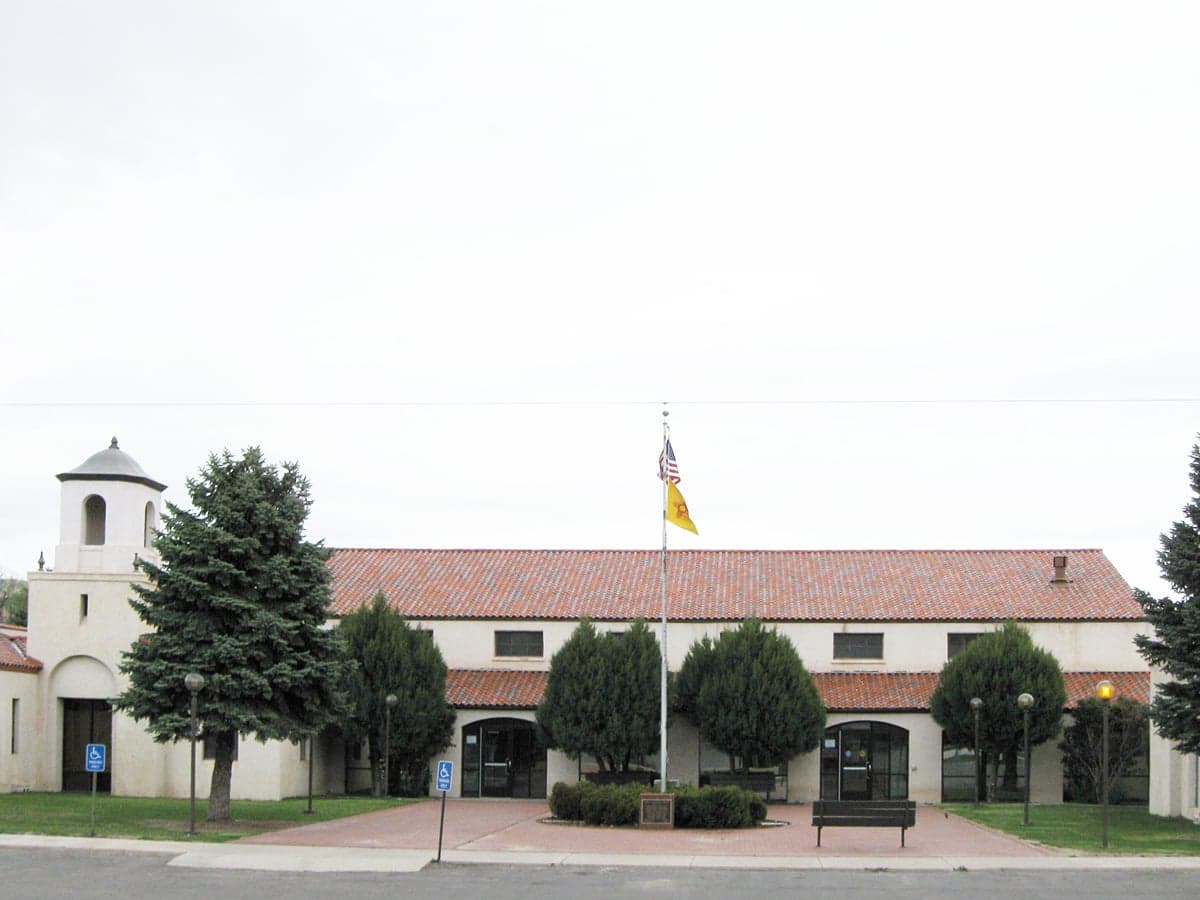
Photo: Wikipedia
Political ClimatePolitical Climate in Cibola County
Showing district-level results — no local-only data available.
Local Political AnalysisPolitical Analysis of Cibola County
Cibola County sits dead-even on the Cook PVI—a rarity in New Mexico where the state as a whole leans D+3. That “EVEN” rating isn’t an accident; it reflects a real tug-of-war between the conservative-leaning communities around Grants and Milan and the more progressive influences coming from the tribal pueblos and the growing government-sector workforce in the county seat. Over the past decade, the county has drifted leftward in presidential elections—Obama won by a slim margin in 2012, Clinton by a wider one in 2016, and Biden carried it by about 7 points in 2020—but local offices and bond measures still regularly swing right, especially in precincts outside the Grants city limits. The trajectory feels like a slow, grinding shift toward progressive policy, but the fight isn’t over. Ranchers, miners, and retirees in places like San Rafael and Bluewater still vote their conscience, and that keeps the county from falling in line with the rest of the state.
How it compares
New Mexico’s D+3 rating is driven by the heavily Democratic counties around Albuquerque, Santa Fe, and the southern Rio Grande Valley. Cibola, by contrast, is a battleground at half the state’s scale. Where the state legislature in Santa Fe has turned reliably blue—pushing expansions of gun control, energy regulation, and public-sector union power—Cibola County’s commission remains split, with Republicans holding two of five seats after the 2024 election. The difference is most visible in the towns: Grants itself is a swing microcosm, with its newer subdivisions leaning Democratic while the older neighborhoods near the uranium mines vote red. Milan trends more conservative, anchored by the working-class families tied to mining, trucking, and the interstate. The tribal pueblos—Acoma and Laguna—vote heavily Democratic, often by margins of 70-30 or higher, which is the single biggest factor keeping the county competitive. Compare that to the rest of New Mexico, where the Native American vote is diluted by the massive Democratic margins in Albuquerque and Santa Fe. Here, that tribal turnout is concentrated enough to swing a whole county, but it hasn’t yet flipped it permanently.
What this means for residents
For people living in Cibola, the political balance matters day-to-day. When the state government in Santa Fe passes new mandates—like the 2023 requirement for paid family leave or the stricter methane-emission rules for oil and gas—those laws hit locally, but the county commission has pushed back with resolutions opposing unfunded state mandates. That’s a small win for personal freedom, but it’s getting harder. The real concern is how progressive policy creeps into land use and water rights. Out here, your property is your property, and the idea of Santa Fe bureaucrats dictating how you can drill a well or build a shed doesn’t sit well. The 2021 attempt to impose a statewide moratorium on new groundwater permits in the San Juan Basin (which includes Cibola’s western edge) was fought off, but the pressure keeps coming. Residents in places like Paguate and San Fidel watch the state’s environmental agenda closely; they know the next round could reach their backyards. For now, the split commission and the moderate Republicans holding the line give people breathing room, but the long-term trend toward Santa Fe-style governance is a worry you hear at every coffee shop in Grants.
Culturally, Cibola County is a mix of Hispanic farming traditions, Native American sovereignty, and Western independence, and that blend creates a local politics that doesn’t fit neatly into national labels. The county’s refusal to impose a local minimum wage above the state’s $12.00 floor stands out—a deliberate choice to keep government small. Likewise, the sheriff’s office has publicly stated it won’t enforce any future state red-flag gun law that overrides the Second Amendment. That kind of local pushback is rare in New Mexico’s blue counties and is one reason Cibola remains a place where conservative values still have a fighting chance. If you’re looking for a corner of New Mexico where the state’s liberal drift hasn’t fully washed ashore, this is it. But you have to keep an eye on the margins—registration numbers are slowly shifting, and the next redistricting could make the county’s swing status harder to hold.

State Political ClimatePolitical Climate in New Mexico
State Political AnalysisPolitical Environment in the State
New Mexico has a Cook PVI of D+3, but that number hides a state that is deeply split and has drifted leftward over the past two decades, driven almost entirely by metro Albuquerque and the liberal stronghold of Santa Fe. The Democratic coalition here is dominant statewide, but it's a coalition held together by a mix of Native American and Hispanic voters plus a growing wave of out-of-state transplants from California and Colorado who tend to vote blue. Republicans still hold serious sway in the eastern and southern oil patch and ranching counties, but they've lost the governorship and both legislative chambers since the early 2010s, and the trend line is unmistakable: if you're looking for a state that's trending toward progressive governance, this is it.
Urban vs. rural divide
Anchored by the Albuquerque metro—which alone accounts for about a third of the state's population—New Mexico's blue vote is concentrated in three counties. Bernalillo County (Albuquerque) and Santa Fe County together deliver a 100,000+ vote margin for Democrats every cycle, and Las Cruces in Doña Ana County adds another 20,000. These three metros set the statewide agenda. By contrast, the eastern plains—places like Roswell, Hobbs, and Clovis—are solid red, with voters who work in oil and gas, ranching, and agriculture. The oil towns of Lovington and Jal are deep red islands. Lea County, home to Hobbs, voted 70% Republican in the last presidential cycle. The rural northern counties, including many tribal areas, lean heavily Democratic but with lower turnout. The political reality is that Albuquerque and Santa Fe dictate the policy direction, and the rest of the state is along for the ride. A conservative mover settling in Clovis or Carlsbad will find a very different political environment than one moving to Santa Fe, even if they're paying the same state income tax.
Policy environment
New Mexico's tax structure is a mixed bag for a conservative. There's no state property tax to speak of—property taxes are set locally and are low by national standards—but the state relies heavily on a gross receipts tax that functions as a hidden sales tax on nearly everything, including services. The state income tax is progressive, topping out at 5.9%, though the top bracket kicks in at a relatively low $200,000 for married filers. On the regulatory side, the legislature has been aggressive: the Energy Transition Act (2019) mandates 100% carbon-free electricity by 2045, which has serious implications for the oil and gas industry that employs a big chunk of the rural workforce. The state's education system consistently ranks near the bottom nationally in K-12 outcomes, despite per-pupil spending that's above the national average—tea leaves that point to systemic dysfunction. Healthcare is dominated by state-run Medicaid expansion (about 40% of the population is on it) and a limited private insurance market. On election law, New Mexico has automatic voter registration, same-day registration, no-excuse absentee voting, and 14 days of early voting—all hallmarks of a system that tilts toward maximizing turnout, which in practice benefits Democrats. There's no voter ID law requiring a photo ID; a utility bill or bank statement suffices.
Trajectory & freedom
The trajectory over the past five years has been unmistakably leftward, which is concerning if you value personal liberty in the classical sense. On gun rights, New Mexico passed a red flag law (HB 129) in 2021 and then a universal background check bill into law as well. The governor has talked about further restrictions, including a ban on carrying firearms at polling places and in the state capitol. On parental rights, the state passed the Family and Medical Leave Act in 2022, creating a taxpayer-funded paid leave program that employers and employees both pay into, and the Healthy Workplaces Act mandates paid sick leave for nearly all workers—both of which are popular but add compliance costs and reduce flexibility. On medical autonomy, New Mexico has some of the most expansive medical and recreational marijuana laws in the region, with legal cannabis sales since 2022, but the same legislature has been hostile to natural immunity and medical freedom arguments. The state also passed the 2023 abortion law that removed nearly all restrictions and preempts local ordinances—meaning even conservative cities like Hobbs cannot enforce their own local bans on abortion facilities. On property rights, the state has a well-deserved reputation for slow-moving water rights adjudication and complex land-use rules, especially in Santa Fe County. The 2024 legislative session brought a state-level Equal Rights Amendment to the ballot, which voters approved, adding a layer of legal uncertainty around single-sex spaces and religious accommodation. The aggregate effect: freedom as conservatives understand it—freedom from state overreach, freedom to run a business, freedom of conscience—has been shrinking.
Civil unrest & political movements
New Mexico has seen its share of visible political activism, mostly on the left. The Albuquerque protests in 2020 included the toppling of the Spanish conquistador statue outside the county courthouse, and the city council voted to remove it permanently. Santa Fe has seen repeated protests around the Palace of the Governors for removal of that city's obelisk monument. On the right, there's a smaller but vocal strain of activism, especially in Otero County—the state's most conservative county, where commissioners in 2022 refused to certify local election results based on unfounded fraud claims, leading to a state Supreme Court intervention and a contempt finding. The Otero County standoff became the most visible election integrity flashpoint in the state, and echoes of that fight still resonate in local politics. On immigration, New Mexico is a sanctuary state by statute—SB 217 (2019) prohibits state law enforcement from coordinating with federal immigration authorities—which is a major point of tension in border-area communities like Deming and Alamogordo. Cross-border crime, drug trafficking, and illegal immigration are daily realities in the southern tier, and the state's official policy of non-cooperation frustrates many local sheriffs. There's no secession or nullification movement worth noting, but there's a persistent undercurrent of dissatisfaction in rural areas that feels like it could pop into something more organized if a specific issue—like a major gun ban or a property tax hike—galvanized it.
Projection
The demographic handwriting is on the wall. New Mexico's population is flat to slightly declining, but the composition is shifting: the state is losing native-born conservatives to Texas and the Sun Belt, while gaining out-of-state transplants from California, Colorado, and the Pacific Northwest who are moving into the Santa Fe and Albuquerque exurbs. These new arrivals lean overwhelmingly Democratic, with the means to afford housing in the increasingly expensive corridor between Santa Fe and Albuquerque. The oil and gas counties in the southeast are still booming economically, and they retain deep red voting habits—but they're a shrinking percentage of the statewide electorate as their population ages and younger workers move to metro areas. In 5-10 years, expect the D+3 to become D+5 or even D+6, with the gap widening more as rural areas continue to lose population and Santa Fe/Albuquerque absorb more progressive transplants. A new resident moving to Las Cruces or Rio Rancho in 2035 will likely find a state that has fully institutionalized its progressive policies from the past decade—state-funded health insurance expansions, stronger gun laws, mandated paid leave, and a court system that tilts further left. The window for conservative families and businesses to influence the trajectory is narrowing. If you're moving here to retire in Ruidoso or work in the Permian Basin, you can still live a comfortable life, but you'll be increasingly at odds with the political direction of the state capital.
For a conservative making the move, the bottom line is this: New Mexico offers low property taxes, beautiful landscapes, and a lower cost of living than neighboring Arizona or Colorado—but the state government is actively pulling in the opposite direction of where you likely want it to go. If you're settling in a red island like Carlsbad or Clovis, you can build a life and a community that largely insulates you from Santa Fe's worst impulses. But if you're moving to Albuquerque, Santa Fe, or even Las Cruces, you're going to be living under a policy regime that is increasingly progressive, expensive, and intrusive. Do your homework on the county and city you're targeting, because in New Mexico, the local difference is everything.
* Values derived from national, state, county, city and local statistics and may differ in a specific area. Last updated: 2026-05-20T23:33:32.000Z
Narrative content on this page is AI-generated and may contain mistakes. Verify any details that matter before acting on them.
ReloMaps may earn a commission from affiliate links at no extra cost to you.

