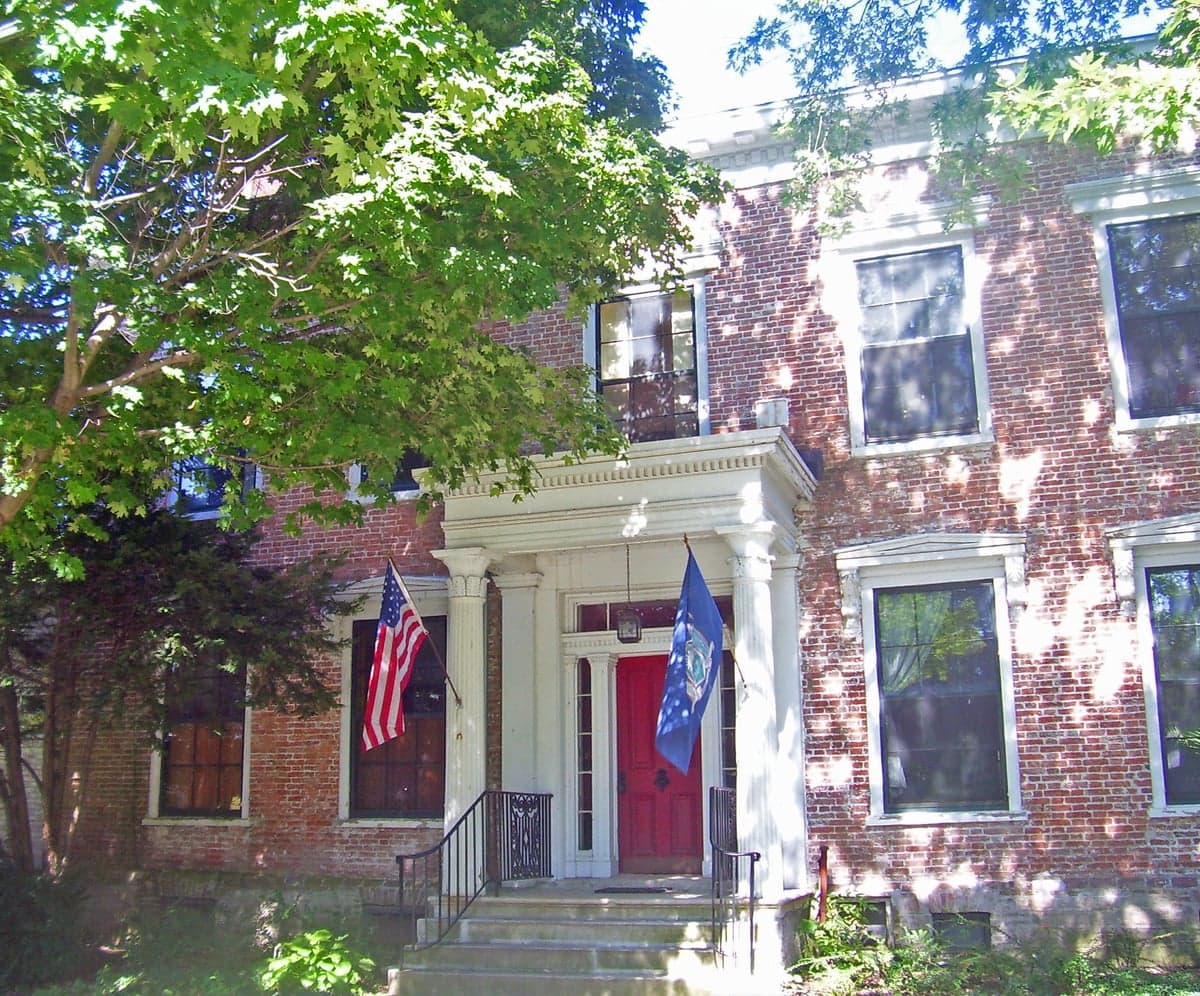
Photo: Wikipedia
Personal Sovereignty in Columbia County
Moderate friction. Expect trade-offs in some aspect of personal liberty and independence.
What does Personal Sovereignty tell us?
Personal Sovereignty measures your capacity for self-reliance and independence with minimal government friction. Higher scores mean fewer barriers between you and the way you want to live... but it assumes you have the space you need and good neighbors.
What does this tell us?
Personal Sovereignty measures your capacity for self-reliance and independence with minimal government friction. Higher scores mean fewer barriers between you and the way you want to live... but it assumes you have the space you need and good neighbors.
State Policy
Energy independence: Importer (12% of energy produced in-state)
Personal Liberty
Homesteading

Personal Liberty Analysis
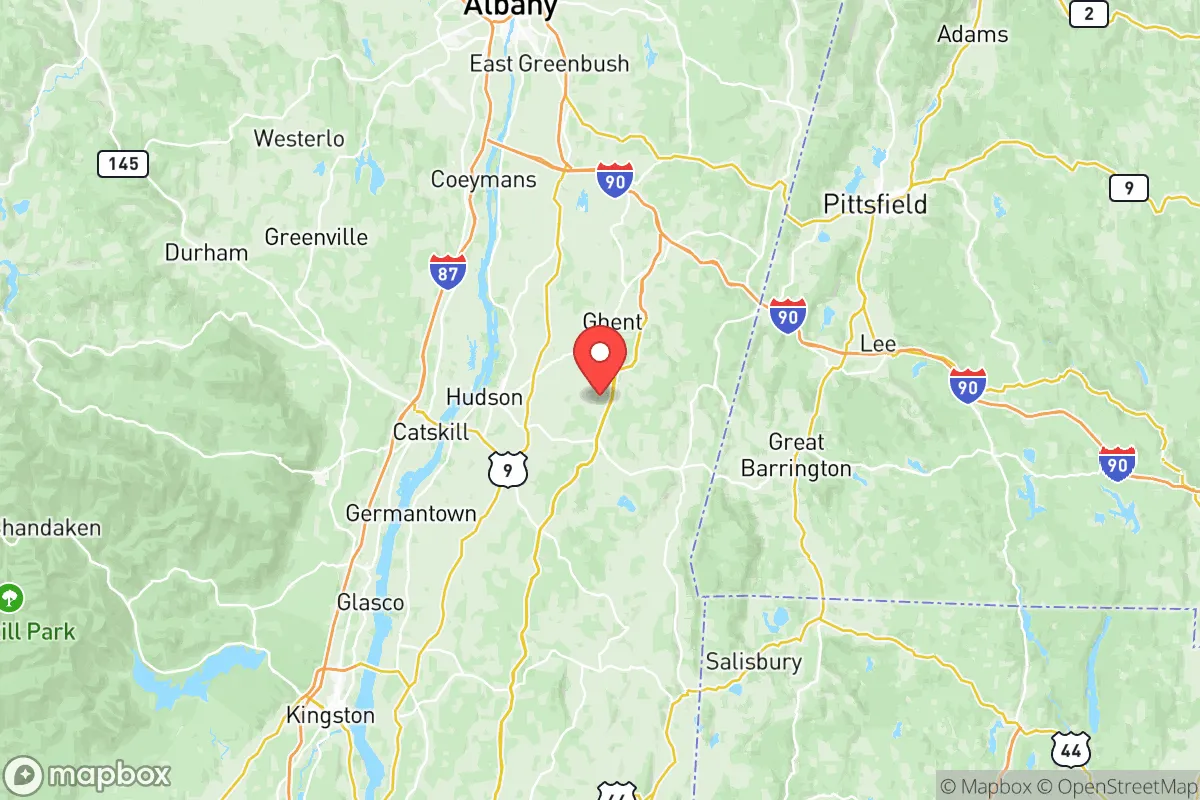
Columbia County, New York, offers a notably higher degree of personal sovereignty than much of the downstate region, but it is not a libertarian free-for-all; the county sits within a state with some of the nation's most restrictive gun laws and highest tax burdens, yet local enforcement and cultural attitudes in towns like Hudson, Chatham, and Kinderhook create a more permissive environment for self-reliance than the state's legal framework might suggest. For a relocation-minded individual or family prioritizing autonomy, the key is understanding where state-level constraints end and local reality begins.
Tax burden and regulatory posture: how Columbia County compares to the state
New York State imposes a heavy tax burden overall, ranking among the top five states for combined state and local tax rates. Columbia County's property tax rates are moderate by state standards, with an effective rate around 1.8% of assessed value in 2025, lower than Westchester or Albany counties but higher than many southern states. The county's regulatory posture is mixed: land-use regulations are generally less restrictive than in the Hudson Valley's more urbanized areas, but the state's Environmental Conservation Law and Agricultural Districts Law impose significant constraints on property use, particularly near wetlands or designated scenic areas. Towns like Ancram and Copake have more permissive zoning for agricultural and light commercial uses, while Hudson enforces stricter historic district regulations. The county's sales tax rate is 8%, and there is no local income tax beyond the state's progressive rate, which tops out at 10.9% for high earners. For a conservative-leaning reader, the tax burden is a real cost, but the regulatory environment—especially outside Hudson—is lighter than in New York City or Long Island.
Self-defense and gun law specifics: what you can and cannot do in Columbia County
New York's Concealed Carry Improvement Act (CCIA), enacted in 2022, requires a permit for carrying a concealed firearm, mandates 16 hours of training, and designates "sensitive locations" where guns are prohibited—including parks, libraries, and public transportation. Columbia County's Sheriff's Office is known for processing permits efficiently, with typical wait times of 3-6 months, and local gun culture is robust, with several gun shops and ranges in Valatie and Hillsdale. However, the state's ban on "assault weapons" and high-capacity magazines remains in effect, and magazine capacity is limited to 10 rounds. Open carry is generally prohibited without a permit, and the CCIA's sensitive location restrictions apply statewide, meaning even on private property, carrying near a school or daycare is restricted. For self-defense in the home, no permit is needed for a handgun kept in the residence, but transporting it requires a permit. The practical reality in Columbia County is that law-abiding gun owners can obtain permits and carry in most non-sensitive areas, but the legal landscape is far more restrictive than in states like Texas or Florida. The county's rural character means fewer sensitive locations than in urban areas, but the state's laws are uniformly enforced.
Self-reliance and homesteading viability: lot sizes, zoning, and off-grid feasibility
Columbia County is one of the more homestead-friendly areas in New York, with large tracts of agricultural land and permissive zoning in many towns. Minimum lot sizes vary: Ancram requires 3 acres for a single-family home, while Copake allows 1-acre lots in some zones, and Kinderhook has 2-acre minimums in rural districts. Off-grid living is feasible but constrained by state building codes and health department regulations. Solar panels are permitted without special permits in most towns, and net metering is available through the state's utility grid. Rainwater collection is legal for non-potable uses, but potable water must come from a well or municipal source. Composting toilets are allowed under state sanitary code if properly designed, but septic systems are required for new construction. Zoning in towns like Claverack and Ghent permits small-scale livestock, beekeeping, and market gardens as of right, while Hudson restricts agricultural uses within city limits. The county's Agricultural District program provides tax breaks for active farms, but requires a minimum of 7 acres and $10,000 in annual agricultural sales. For a family seeking a self-reliant lifestyle, Columbia County offers viable options, but the state's regulatory overhead—particularly for well and septic permits—adds time and cost compared to less regulated states.
Personal liberties: parental rights, medical autonomy, speech, and property
New York State has strong protections for parental rights in education, with a Parents' Bill of Rights enacted in 2023 that requires school districts to notify parents of curriculum changes and allows opt-outs for certain health instruction. Columbia County's school districts, including Chatham Central and Ichabod Crane in Valatie, generally follow state mandates but have local boards that can influence implementation. Medical autonomy is more constrained: New York has strict vaccine mandates for school attendance and healthcare workers, and the state's Public Health Law allows for mandatory treatment during public health emergencies. Religious exemptions for vaccines are not recognized. Speech and assembly are protected under the First Amendment, but the state's hate crime laws and anti-discrimination statutes impose penalties for certain types of speech. Property rights are strong in Columbia County, with no rent control or rent stabilization outside of Hudson, and the state's Eminent Domain Procedure Law requires just compensation and public hearings. The county's Right to Farm Law protects agricultural operations from nuisance lawsuits, which is a significant benefit for homesteaders. Overall, personal liberties in Columbia County are a mixed bag: strong on property and parental rights, but limited on medical autonomy and gun carry compared to more conservative states.
For a relocation-minded individual or family prioritizing personal sovereignty, Columbia County offers a middle ground: it is far more permissive than New York City or Westchester, with a strong rural culture, active gun community, and viable homesteading options, but it sits within a state that imposes high taxes, strict gun laws, and mandatory vaccine policies. Compared to areas like the Texas Hill Country or rural Idaho, the regulatory burden is heavier, but for those who need to stay in the Northeast for work or family, Columbia County is one of the more autonomy-friendly options in New York. The key is choosing the right town—Ancram for large-lot homesteading, Valatie for gun-friendly culture, Kinderhook for a balance of rural and suburban—and understanding that state-level constraints are non-negotiable. The county's real advantage is its local enforcement culture, which tends to be more hands-off than the state's laws suggest, making it a viable choice for those who value personal freedom within a high-regulation state.

* Values derived from national, state, county, city and local statistics and may differ in a specific area. Last updated: 2026-09-08T12:50:19.000Z
Narrative content on this page is AI-generated and may contain mistakes. Verify any details that matter before acting on them.
ReloMaps may earn a commission from affiliate links at no extra cost to you.

