 Popular
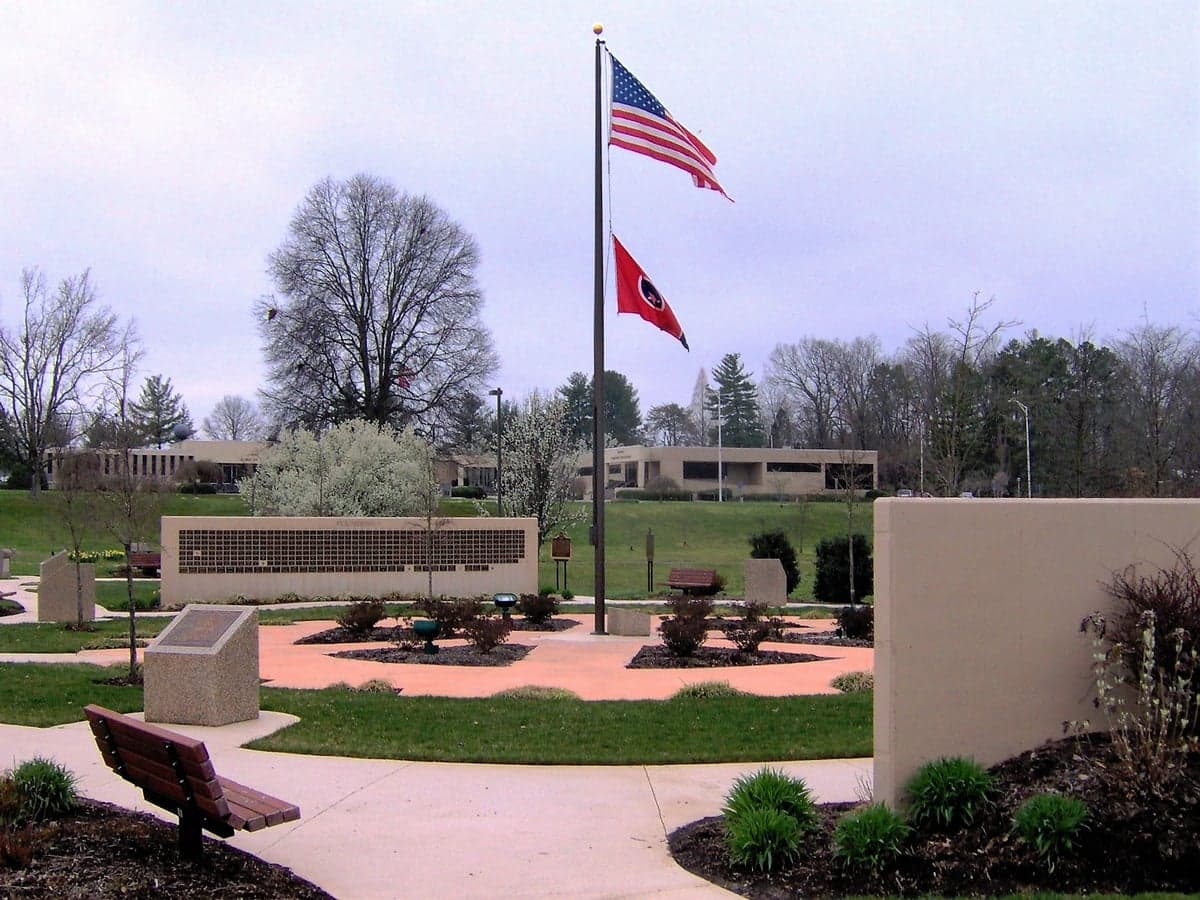
Photo: Wikipedia
Demographics of Oak Ridge, TN
Affluence Level in Oak Ridge, TN
A middle-class area roughly in line with national averages across income, home values, education, and employment.
People of Oak Ridge, TN
The people of Oak Ridge, Tennessee, today number roughly 32,088, forming a community shaped by its unique origin as a secret city of the Manhattan Project. The population is notably older and more educated than the national average, with 39.4% holding a college degree, and remains predominantly White (79.9%). Distinctive identity markers include a strong sense of civic pride tied to the city’s scientific heritage, a politically moderate-to-conservative leaning in local governance, and a quiet, suburban character that contrasts with its high-tech past.
How the city was settled and grew
Oak Ridge was not settled organically; it was forcibly created by the U.S. government in 1942 as a closed, secret city for the Manhattan Project. The original population of roughly 75,000 was a mix of military personnel, scientists, engineers, and construction workers, drawn from across the country by the promise of wartime work and high wages. The city was built from scratch on farmland, and its earliest neighborhoods were planned around the three major production sites: Y-12, K-25, and X-10. Elza Gate, the original entrance, housed many of the first construction crews and military police. Grove Center became the commercial and social hub for the early workforce, while the “A” and “B” neighborhoods (like the area around the Oak Ridge High School) were built for the scientists and engineers, featuring larger homes and more amenities. After the war, the city opened to the public in 1949, and a wave of permanent residents—many former workers who chose to stay—settled in established neighborhoods like West Hills and Pine Valley, which expanded during the 1950s and 1960s as the city transitioned from a wartime camp to a permanent municipality.
Modern era (post-1965)
Following the 1965 Hart-Cellar Act, Oak Ridge saw modest demographic shifts, though its foreign-born population remains low at just 3.2%. The city’s growth in the post-1965 era has been driven primarily by domestic in-migration, particularly of professionals and retirees attracted to the area’s low crime, good schools, and proximity to the Oak Ridge National Laboratory (ORNL) and the Y-12 National Security Complex. The Hispanic population, now 6.6%, began growing in the 1990s and 2000s, largely concentrated in the Woodland and East Oak Ridge neighborhoods, where affordable housing stock attracted service-industry workers. The Black population, at 6.1%, has remained relatively stable since the 1970s, with a historic concentration in the Scarboro neighborhood, which was originally built as segregated housing for Black workers during the Manhattan Project. East/Southeast Asian communities (2.5%) are a small but visible presence, primarily professionals and researchers affiliated with ORNL, and tend to settle in the West Hills and Emory Valley areas, which offer newer housing and proximity to the lab. The Indian-subcontinent population (0.2%) is negligible, and Arab communities are statistically insignificant.
The future
The population of Oak Ridge is slowly homogenizing in terms of race, but tribalizing by age and income. The city’s overall growth has been flat to slightly declining since its 1960 peak of 27,000, with recent gains driven by a small influx of younger families and professionals tied to ORNL expansions. The White population is aging in place, while the Hispanic and East/Southeast Asian communities are growing slowly but steadily, primarily through natural increase and limited new immigration. The Scarboro neighborhood remains a stable Black enclave, but younger Black residents are increasingly moving to newer subdivisions in West Hills and Pine Valley, diluting historic concentrations. The immigrant communities are not large enough to form distinct ethnic enclaves; instead, they are assimilating into the broader suburban fabric. Over the next 10–20 years, Oak Ridge will likely remain a predominantly White, college-educated, and older community, with gradual diversification driven by ORNL’s recruitment of international scientists and the spillover of Hispanic families from nearby Knoxville. The city is not becoming a melting pot, but a quiet, stable, and increasingly professional suburb.
For someone moving in now, Oak Ridge offers a low-crime, highly educated, and historically grounded community with a conservative-leaning local culture. The population is stable and not rapidly diversifying, meaning new residents—especially those from similar demographic backgrounds—will find a familiar social environment. The key trade-off is between the city’s strong sense of place and its limited demographic dynamism, making it best suited for families and professionals seeking predictability over change.

* Values derived from national, state, county, city and local statistics and may differ in a specific area. Last updated: 2026-05-01T04:37:31.000Z
Narrative content on this page is AI-generated and may contain mistakes. Verify any details that matter before acting on them.
ReloMaps may earn a commission from affiliate links at no extra cost to you.

