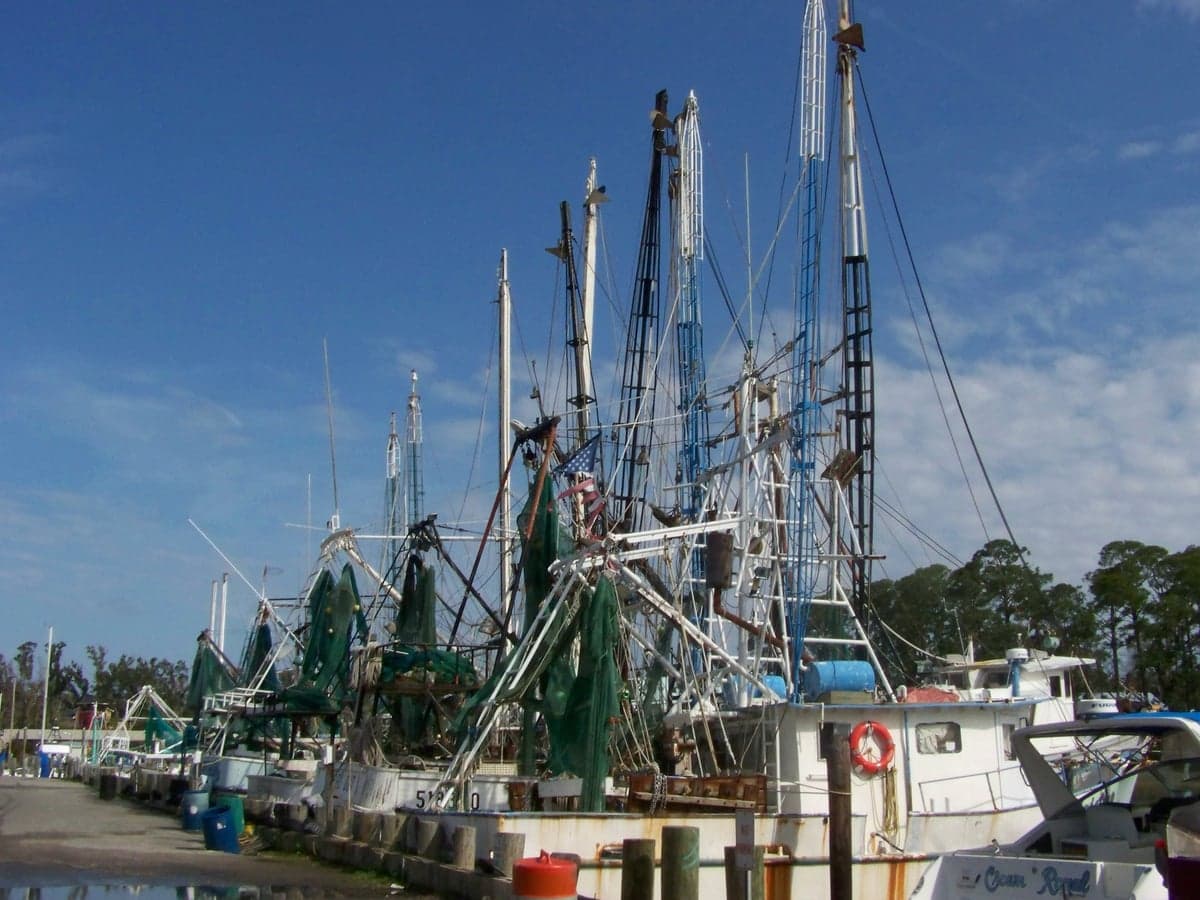
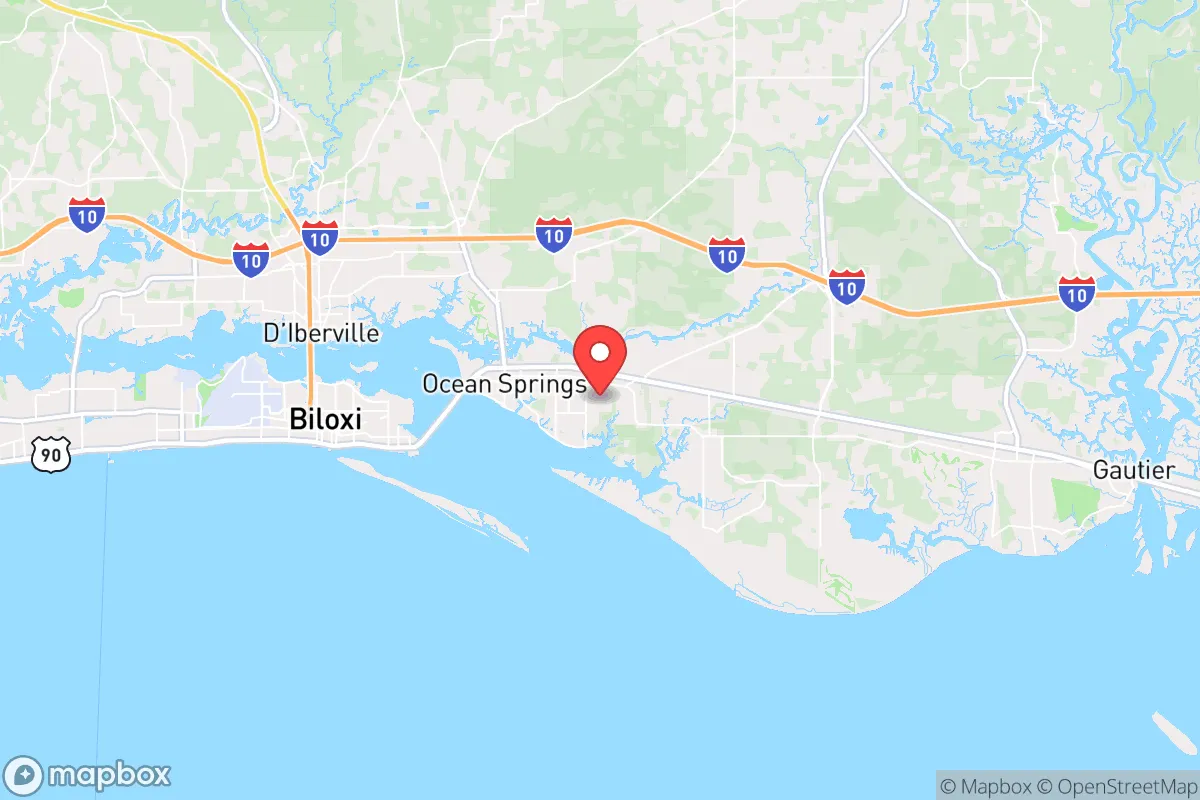
Photo: Wikipedia
Demographics of Ocean Springs, MS
Affluence Level in Ocean Springs, MS
A middle-class area roughly in line with national averages across income, home values, education, and employment.
People of Ocean Springs, MS
The people of Ocean Springs, Mississippi, today number 18,561, forming a community that is predominantly White (76.7%) with a notable Hispanic minority (8.4%) and smaller Black (7.6%) and East/Southeast Asian (3.2%) populations. The city is highly educated—45.8% of adults hold a college degree—and has a very low foreign-born share of just 1.4%, reflecting a population shaped more by domestic migration than international immigration. Ocean Springs carries a distinctive identity as a historic Gulf Coast arts town with a strong military-adjacent presence, blending old Southern families, recent Sun Belt transplants, and a small but established Vietnamese community.
How the city was settled and grew
Ocean Springs was originally inhabited by the Biloxi tribe, but European settlement began in 1699 when French explorers established Fort Maurepas, making it one of the oldest continuous settlements on the Gulf Coast. The town remained a small fishing and trading outpost through the 19th century, with its first major growth wave arriving after the railroad connected it to New Orleans and Mobile in the 1870s. Wealthy families from New Orleans built summer homes in what is now the Old Ocean Springs Historic District, establishing the city's early character as a resort and artist colony. A second wave came in the early 20th century with the expansion of the seafood industry, drawing Croatian and Sicilian immigrants who settled in the Front Beach area and along the waterfront. By mid-century, the population was overwhelmingly native-born White and Black, with Black families concentrated in the Gulf Hills and Pecan Park neighborhoods, historically separate from the White beachfront enclaves.
Modern era (post-1965)
The post-1965 period brought modest demographic change to Ocean Springs, driven primarily by domestic in-migration rather than the immigration waves that reshaped larger Southern cities. The 1969 opening of the Biloxi Bay Bridge and the expansion of Keesler Air Force Base in nearby Biloxi spurred suburban growth, with new subdivisions like Eastwind and Shearwater attracting military families and white-collar workers from outside the region. The Vietnamese community, though small at 3.2% East/Southeast Asian, arrived in the 1970s and 1980s as refugees and later as secondary migrants from other Gulf Coast cities, settling primarily in the St. Martin area on the city's northern edge. The Hispanic population, now 8.4%, grew steadily after 2000, driven by construction and hospitality jobs following Hurricane Katrina's rebuilding boom; these families have concentrated in the Washington Avenue corridor and newer apartment complexes near Highway 90. The Black population share has declined from roughly 15% in 1990 to 7.6% today, as many middle-class Black families moved to more affordable areas in Jackson County, while the White share has remained stable due to continued in-migration from other parts of Mississippi and Louisiana.
The future
Ocean Springs is likely to continue its trajectory as a homogenizing, predominantly White, college-educated enclave, with the Hispanic share growing slowly but remaining below 12% over the next decade. The city's high housing costs—median home values exceed $300,000—and limited rental stock will constrain further diversification, as younger families and lower-income households are priced out. The East/Southeast Asian community is plateauing, with second-generation Vietnamese adults often leaving for larger job markets in Houston or Atlanta. The Indian subcontinent population (0.1%) is negligible and unlikely to grow significantly given the absence of tech or medical anchor employers. The most notable trend is the continued in-migration of remote workers and retirees from the Midwest and Northeast, drawn by the arts scene and coastal lifestyle, which will reinforce the city's existing character rather than introduce new ethnic diversity.
For someone moving in now, Ocean Springs offers a stable, culturally cohesive community with strong schools and a low-crime reputation, but it is not a place of rapid demographic change or growing diversity. The population is becoming slightly more Hispanic and slightly less Black, while remaining overwhelmingly White and native-born. New arrivals should expect a town that values its historic identity and is likely to preserve it through zoning and development policies that limit rapid growth. The city is becoming more affluent and more educated, but also more expensive and less accessible to the working-class families that once defined its waterfront neighborhoods.

* Values derived from national, state, county, city and local statistics and may differ in a specific area. Last updated: 2026-05-03T19:50:54.000Z
Narrative content on this page is AI-generated and may contain mistakes. Verify any details that matter before acting on them.
ReloMaps may earn a commission from affiliate links at no extra cost to you.

