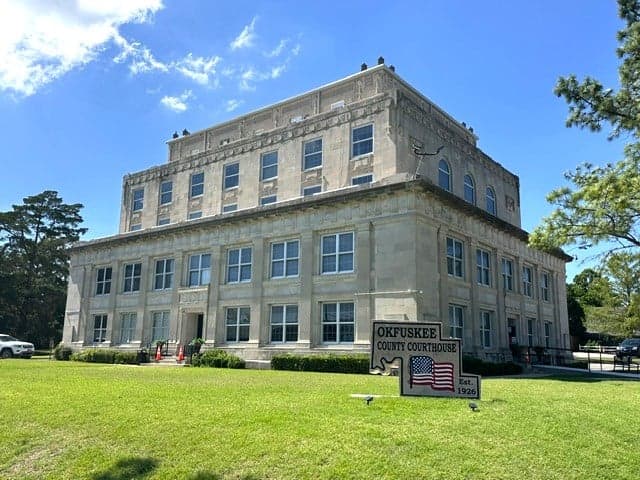
Photo: Wikipedia
Quality of Life in Okfuskee County
A livable area that tracks near national norms for affordability, walkability, and neighborhood health.
What does Quality of Life tell us?
Quality of Life measures an area by evaluating factors like cost of living, nearby amenities, country club access, airport proximity, socioeconomic signals and neighborhood character. For large states, this is a general average — quality of life can vary dramatically between metro areas, suburbs, and rural communities within the same state.
What does this tell us?
Quality of Life measures an area by evaluating factors like cost of living, nearby amenities, country club access, airport proximity, socioeconomic signals and neighborhood character. For large states, this is a general average — quality of life can vary dramatically between metro areas, suburbs, and rural communities within the same state.
Cost of Living
49% below national average
144%
The Real Cost of Living in Okfuskee County for 2026
| Tier | Individual | Family (4) |
|---|---|---|
| Survival | $11k | $21k |
| Comfortable | $22k | $32k |
| Luxury | $82k+ | $127k+ |
| Elite (Top 5%) | $104k+ | $161k+ |
Quality-of-Life Analysis
Okfuskee County, Oklahoma, offers a distinct quality-of-life spectrum that ranges from the modest conveniences of its largest town, Okemah, to the quiet, self-reliant lifestyle of its unincorporated communities and open rural stretches. With a cost of living index of 51—roughly half the national average—the county primarily attracts retirees, remote workers, and families seeking affordable land and a slower pace, while those needing daily urban amenities typically look toward Okemah or commute to larger employment hubs.
Largest town(s) & population centers
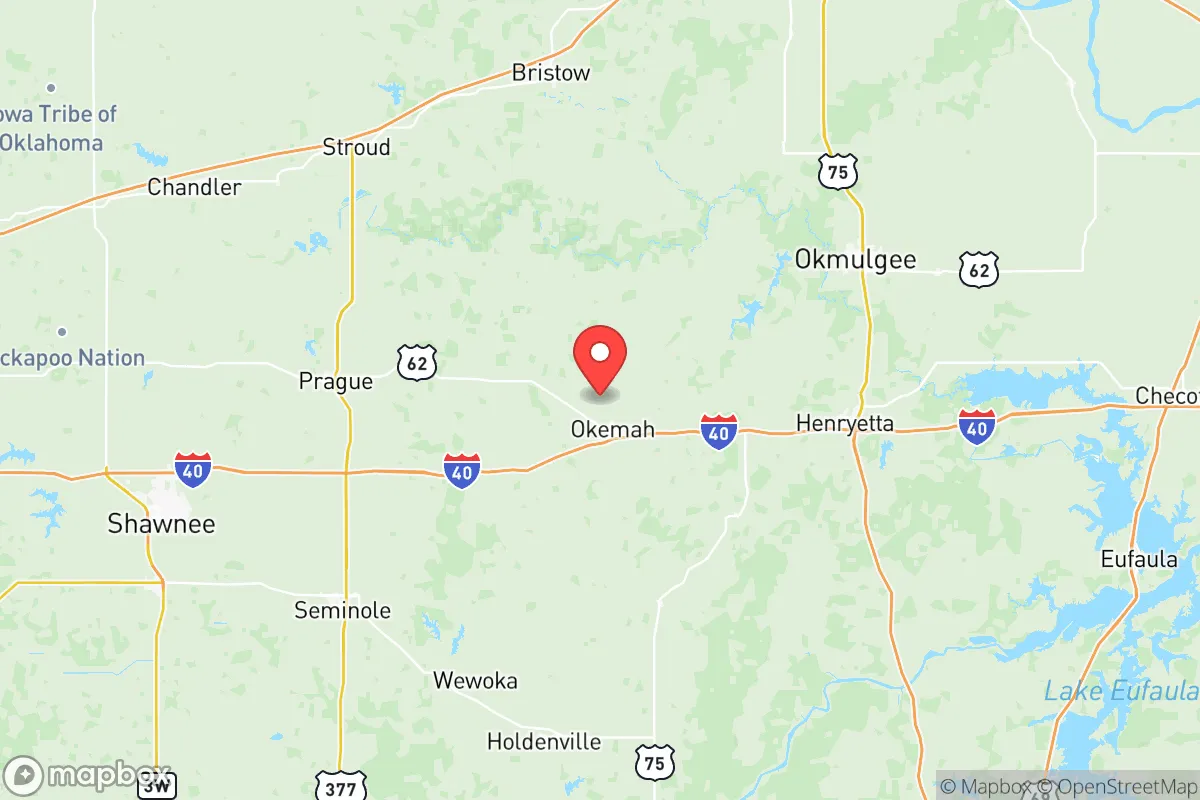
Okemah is the county seat and the only incorporated town with a population exceeding 1,000, serving as the primary commercial and social hub. Daily life here revolves around a compact downtown with locally owned businesses, a grocery store, and essential services like the county hospital and public schools. The town is known for its deep musical heritage—it hosts the annual Woody Guthrie Folk Festival—which gives it a cultural anchor rare for a community of its size. Residents in Okemah have access to a public library, a municipal pool, and several parks, but the retail and dining options are limited; most residents drive to Okmulgee (about 20 minutes south) or Shawnee (about 40 minutes west) for major shopping and chain restaurants. The average commute across the county is just over 27 minutes, reflecting the necessity of driving to work or services even for those living in town.
Smaller towns & rural pockets
Outside Okemah, the county is dotted with small communities that offer a more isolated, land-based lifestyle. Boley, a historic all-Black town founded in 1903, is one of the most notable, with a population under 1,000 and a strong sense of heritage centered on the Boley Rodeo and the Creek Nation community. Paden and Weleetka are unincorporated or very small towns that provide little more than a post office and a gas station, with residents relying heavily on Okemah or nearby towns for groceries and medical care. The rural pockets between these communities consist of working ranches, small farms, and acreage homesteads, where homes are often set far apart and paved roads give way to county gravel. These areas appeal strongly to those seeking privacy, hunting land, or a return to agrarian roots, but they come with trade-offs in terms of emergency service response times and school bus routes.
Cost & lifestyle range
The cost of living varies noticeably across the county, though it remains extremely low by national standards. In Okemah, the median home value sits at $110,800 and median rent at $689, offering affordable entry points for first-time buyers and renters. Homes in town are typically older, smaller, and on standard lots, with utilities and city services included. Moving into the rural areas around Boley or Paden, land prices drop further—raw acreage can be found for under $2,000 per acre—but buyers must factor in the cost of well water, septic systems, and longer drives for every errand. At the upper end of the spectrum, a few newer or renovated homes near Lake Okemah or on larger tracts can reach $200,000–$250,000, still far below the national median. The lifestyle range is therefore between town convenience (walkable downtown, neighbors close by, city water) and rural independence (more land, lower taxes, but total reliance on a vehicle).
Okfuskee County is best suited for those who value deep affordability, space, and community heritage over access to urban amenities. Retirees on fixed incomes, remote workers with reliable internet (available in Okemah and parts of the county via fixed wireless or satellite), and families looking to own land outright will find the most to gain here. Those who require frequent dining, entertainment, or specialized healthcare will likely find the trade-offs too steep, but for the right resident, the county offers a quality of life that is both economically freeing and culturally grounded.

Crime in Okfuskee County
Crime rates similar to the national median for U.S. locations.
Violent CrimeViolent Crime Analysis
Property CrimeProperty Crime Analysis
Crime Analysis
Okfuskee County, Oklahoma, reports a violent crime rate of 410.4 per 100,000 residents and a property crime rate of 1,835 per 100,000, placing it above national averages for both categories. While the county is largely rural, its crime dynamics are heavily influenced by the small towns within its borders, with significant variation in safety depending on location. The county seat of Okemah and the town of Boley experience the majority of reported incidents, while more remote areas like Paden and Clearview see lower crime volumes. Understanding where these crimes occur and how the local justice system operates is critical for anyone considering a move to the area.
Crime in context
Okfuskee County’s violent crime rate of 410.4 per 100,000 is roughly 17% higher than the national average of about 370 per 100,000, and significantly above the Oklahoma state average of approximately 450 per 100,000. The property crime rate of 1,835 per 100,000 is about 30% higher than the national average of roughly 1,400 per 100,000. These figures place Okfuskee County among the higher-crime rural counties in Oklahoma, though still below the most dangerous urban areas in the state. The county falls under the jurisdiction of the 24th Judicial District, which includes Okfuskee and Creek counties. Local law enforcement is primarily handled by the Okfuskee County Sheriff’s Office and the Okemah Police Department, with the Oklahoma Highway Patrol providing supplemental coverage on major routes like I-40 and US-62.
What residents experience
Property crime is the most common safety concern for Okfuskee County residents. Theft, burglary, and vehicle break-ins are the leading offenses, particularly in Okemah, which serves as the county’s commercial hub and sees higher foot traffic near its downtown and festival grounds. The annual Woody Guthrie Folk Festival draws thousands of visitors to Okemah each July, which historically correlates with a temporary uptick in property crime. In Boley, a historic all-Black town, residents report occasional burglaries but generally describe the community as tight-knit and watchful. Violent crime, while less frequent, is concentrated in specific areas: Okemah accounts for the majority of aggravated assaults and domestic violence calls, while the unincorporated areas around I-40 see drug-related incidents and occasional robberies. The town of Paden, with a population under 1,000, reports very few violent crimes, though property theft remains a concern. Castle, a small unincorporated community near the county’s western edge, is considered one of the quieter areas with minimal reported crime.
Neighborhood-level variation and justice system concerns
Crime is not evenly distributed across Okfuskee County. The most significant safety disparity exists between Okemah and the county’s smaller towns. Okemah, with roughly 3,200 residents, sees the highest concentration of both violent and property crimes, driven in part by its role as a regional service center and its location along I-40. In contrast, communities like Clearview and Paden report crime rates well below the county average, largely due to their small populations and limited commercial activity. The 24th Judicial District, which oversees prosecutions in Okfuskee County, has seen increasing concern among residents about progressive sentencing trends. District Attorney Carol Iski, who took office in 2023, has emphasized diversion programs and alternative sentencing for non-violent offenders. While these programs aim to reduce recidivism, critics argue they result in lighter sentences for property crimes and drug offenses, potentially emboldening repeat offenders. For residents in Okemah and Boley, where property crime is most acute, this approach has raised questions about whether the justice system is prioritizing public safety over offender rehabilitation. Those considering relocation should research specific neighborhoods in Okemah—particularly areas near the downtown corridor and the fairgrounds—while smaller towns like Paden and Castle offer a quieter, lower-crime alternative within the county.
* Values derived from national, state, county, city and local statistics and may differ in a specific area. Last updated: 2026-08-08T15:59:20.000Z
Narrative content on this page is AI-generated and may contain mistakes. Verify any details that matter before acting on them.
ReloMaps may earn a commission from affiliate links at no extra cost to you.

