Strategic Assessment of Orchid, FL
Meaningful friction. Expect exposure to either population pressure, blast zones, or natural disaster risk. Consider buying a retreat property.
What does the Strategic Assessment tell us?
Our Strategic Assessment grades tactical survivability of an area. Major population centers, military targets, fallout zones, natural disasters, and border exposure all drive risk — lower exposure means a more defensible position in a crisis.
This is heavily inspired by Joel Skousen's Strategic Relocation book. Highly recommended you checkout the book ($)What does this tell us?
Our Strategic Assessment grades tactical survivability of an area. Major population centers, military targets, fallout zones, natural disasters, and border exposure all drive risk — lower exposure means a more defensible position in a crisis.
This is heavily inspired by Joel Skousen's Strategic Relocation book. Highly recommended you checkout the book ($)Strategic Pillars

Key Distances
Regional Safe Places
Below is our recommended "safe zones" in Florida and the surrounding area based on our strategic heuristics. For most people, it's unrealistic to live in a “safe zone” full-time due to work, family or other personal reasons. They tend to be more rural. However, many of these areas are perfect for second homes and retreat properties that double as a vacation home or even a short-term rental.

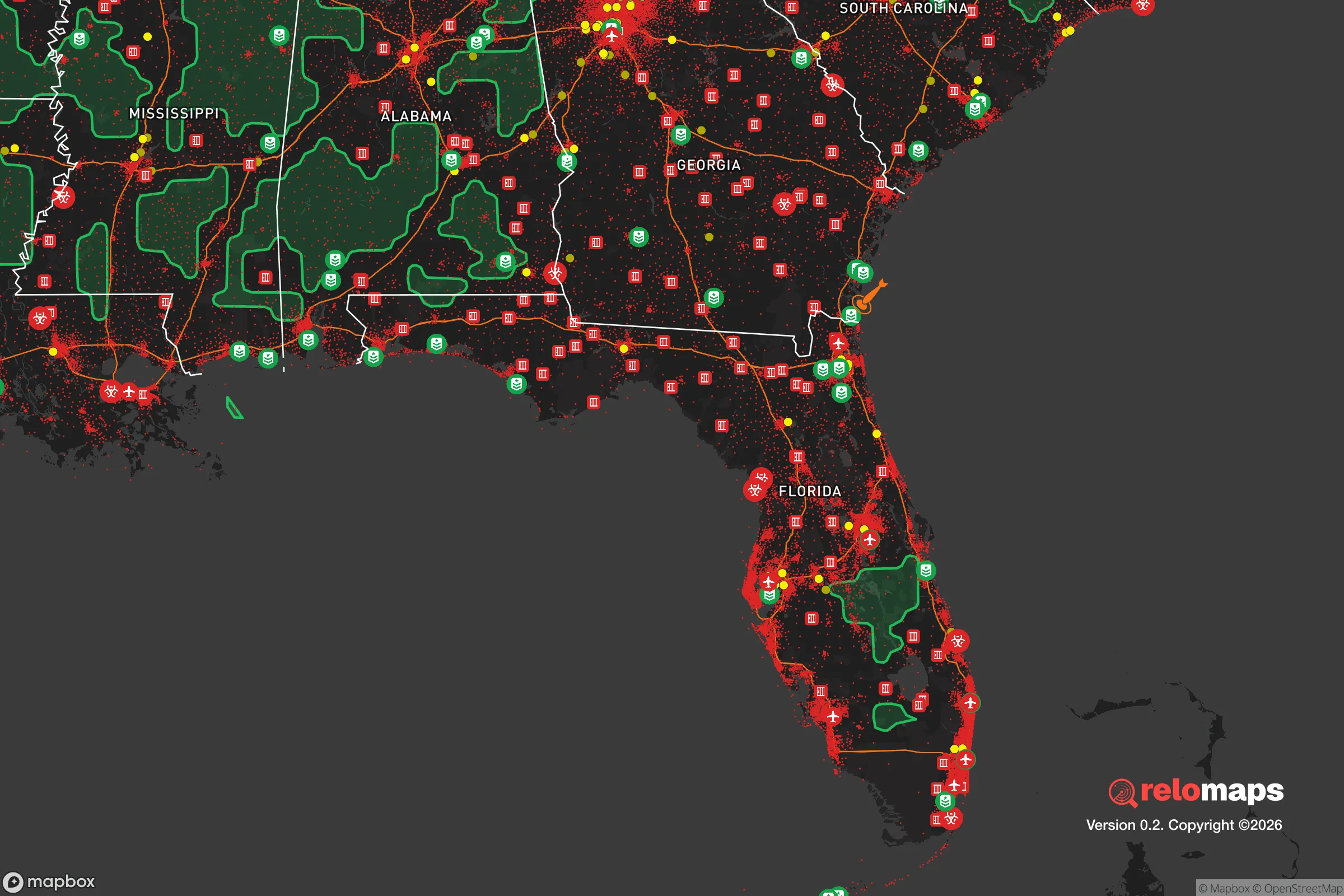


Important Note: For informational purposes only. This does not mean nothing bad ever happens in the green zones. Please use common sense. This is based on public data and modeled with AI. We tried to take a conservative approach but mistakes happen. We update this regularly as new information becomes available.
Solar Generator Recommendations
Backup power matters more here than in safer locations. We've picked three solar generators across budgets and capacity tiers — start with the budget unit if you only need a few essentials, or step up if you want to run a fridge and HVAC for days at a time.

Jackery Portable Power Station Explorer 300
Budget OptionPower on the Go: Weighing only 11 lbs, it's convenient to set up and store with book-sized foldable solar panels

BLUETTI Portable Power Station AC180
Designed for both indoor and outdoor scenarios, AC180 is highly capable as it has a robost capacity and continuous output power.

EF ECOFLOW DELTA Pro Ultra Power Station
Upgraded PickEcoFlow DELTA Pro Ultra is a whole-home energy system designed to grow with your family. Integrated with the Smart Home Panel 2, it scales to meet your evolving energy needs — keeping your home powered, intelligent, and secure through every stage of life.
We earn a commission, at no additional cost to you.
Strategic Assessment Analysis
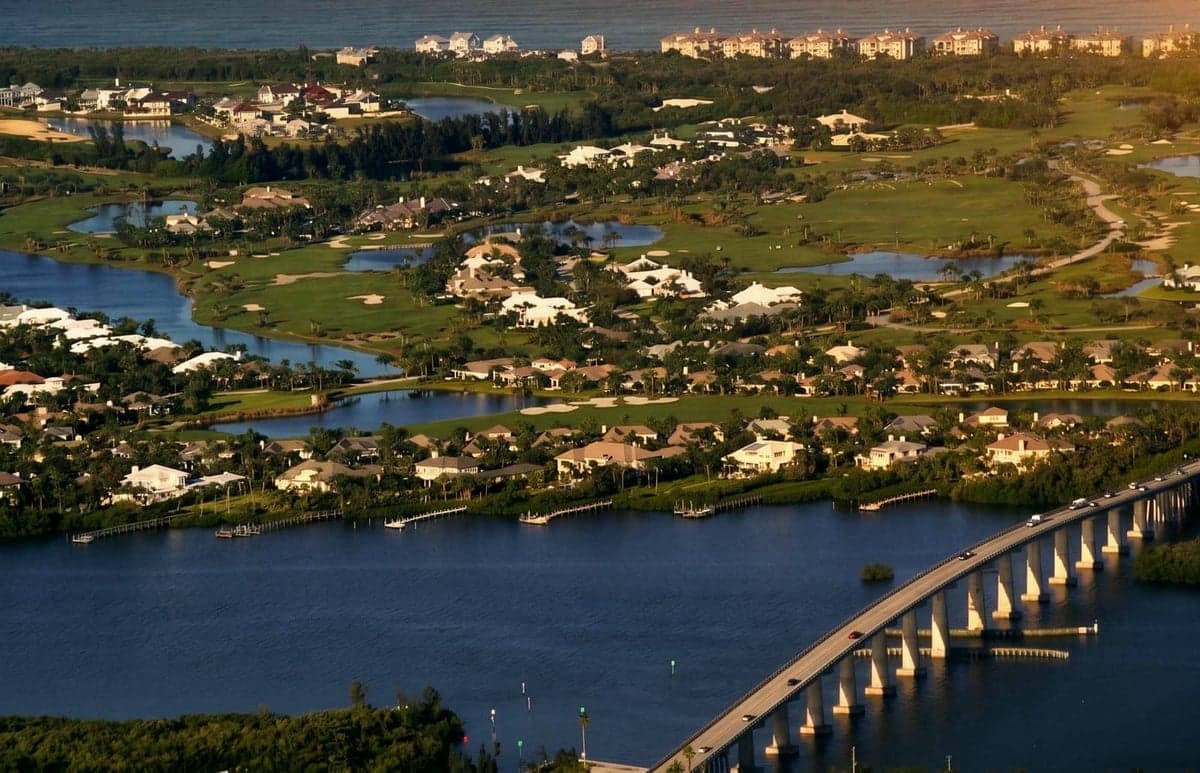
Orchid, Florida, presents a uniquely challenging strategic assessment for the conservative prepper. It is a tiny, affluent barrier island town on the Atlantic coast of Indian River County, offering a paradoxical blend of extreme natural beauty and extreme vulnerability. While its low population density and high property values suggest a degree of isolation and community cohesion, its location on a narrow strip of sand between the Atlantic Ocean and the Indian River Lagoon creates a set of resilience liabilities that are difficult to overcome. For the relocator seeking a long-term, defensible, and self-sufficient redoubt, Orchid is less a fortress and more a high-stakes gamble on the absence of major storms and civil unrest.
Geographic position and natural advantages: A barrier island's double-edged sword
Orchid's primary strategic advantage is its extreme insularity. With a year-round population hovering around 400-500 residents, the town is essentially a gated community writ large. Access is limited to a single bridge from the mainland (Wabasso Bridge), which is a natural chokepoint that could be controlled by a determined community. The surrounding Indian River County is politically conservative, with a strong rural and agricultural character inland, which aligns with the values of self-reliance and local governance. The area's natural advantages include a subtropical climate that allows for year-round gardening, abundant rainfall, and proximity to the vast freshwater resources of the St. Johns River basin to the west. The Indian River Lagoon itself is a rich estuarine ecosystem that could, in theory, provide a sustainable source of seafood—fish, crabs, and clams—if the water quality remains viable. For a relocator, the sense of physical separation from the mainland's chaos is a genuine psychological and tactical asset.
Risks, exposures, and proximity to fallout-relevant landmarks: The vulnerability of the sandbar
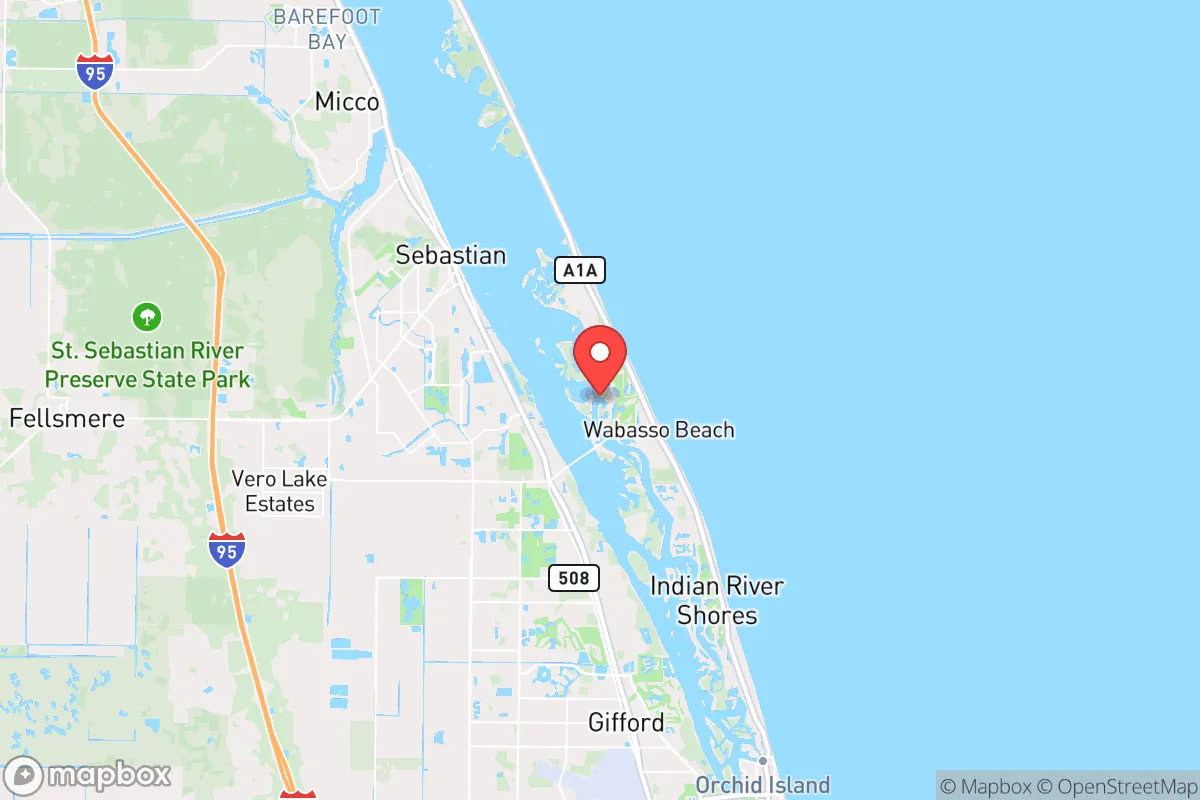
The risks associated with Orchid are severe and cannot be ignored. The most obvious is hurricane exposure. The town sits directly on the Atlantic, making it a prime target for storm surge, which can easily overtop the entire island. A Category 3 or higher storm would likely make the island uninhabitable for weeks or months, and the single bridge could be destroyed, turning Orchid into a literal island prison. Beyond weather, the proximity to major population centers is a double-edged liability. While Orchid feels remote, it is only 15 miles from Vero Beach (population ~17,000) and 35 miles from the sprawling metro of Palm Bay-Melbourne (population ~600,000). In a collapse scenario, these population centers would become zones of desperation. The single bridge would become a funnel for refugees, and the wealthy, isolated enclave of Orchid would be a prime target for looting and forced entry. Furthermore, the town is within 100 miles of the Kennedy Space Center and Cape Canaveral Space Force Station, which are high-value targets for any state-level adversary. A kinetic event or EMP attack on those facilities would create a direct fallout zone that could blanket Orchid. The area's reliance on a fragile, above-ground power grid and a single water main from the mainland makes it critically dependent on infrastructure that would fail first in a crisis.
Practical resilience for a relocator: Food, water, energy, and defensibility
For a relocator serious about self-sufficiency, Orchid presents a mixed bag. Water is the critical weakness. The island's water comes from the mainland via a single pipeline. There are no significant freshwater aquifers under the barrier island; the water table is brackish and shallow. Rainwater catchment is possible, but a single major storm could contaminate cisterns with salt spray. Food production is limited by the sandy, nutrient-poor soil. While raised beds and hydroponics can work, the salt air and occasional saltwater intrusion make traditional gardening a constant battle. The lagoon offers seafood, but it is also a known hotspot for toxic algae blooms (red tide and blue-green algae) that can make shellfish deadly. Energy independence is achievable with solar panels, but the hurricane risk means panels must be ground-mounted and easily storable, or they will become projectiles. A backup generator and a large fuel cache are non-negotiable. Defensibility is the one bright spot. The single bridge is a natural kill zone. A small, organized group could hold that bridge against a disorganized mob indefinitely. The town's layout—large lots, few roads, and a single entry point—makes it tactically simple to secure. However, that same defensibility becomes a trap if the bridge is destroyed or if the threat comes from the sea. A determined group arriving by boat could flank any land-based defense. The community itself is likely to be older, wealthy, and not necessarily prepper-minded, which means a relocator would likely be on their own or would need to build a small, trusted team from scratch.
The overall strategic picture for Orchid is one of high risk with a narrow path to viability. It is not a location for the novice prepper or the family seeking a low-stress retreat. It is a location for a well-funded, highly organized, and tactically minded individual or group who can afford to maintain a fully self-sufficient compound on the island, including their own water supply (desalination or massive cisterns), food production (greenhouses, aquaponics), and a robust security plan that accounts for both land and sea approaches. The conservative political climate of the county is a plus, but the physical geography is a profound liability. For those who can overcome the water and storm challenges, the isolation and defensibility of Orchid offer a rare combination of privacy and tactical advantage. For everyone else, the mainland of Indian River County—specifically the rural areas west of I-95—offers far better soil, water access, and escape routes, making it a more rational choice for long-term strategic relocation. Orchid is a beautiful, high-stakes outlier, best suited for those who view it as a temporary safe haven or a final redoubt, not a permanent, self-sustaining homestead.

* Values derived from national, state, county, city and local statistics and may differ in a specific area. Last updated: 2026-05-14T02:09:15.000Z
Narrative content on this page is AI-generated and may contain mistakes. Verify any details that matter before acting on them.
ReloMaps may earn a commission from affiliate links at no extra cost to you.

