Photo: Wikipedia
Strategic Assessment of Orem, UT
Workable tactical position. Some exposure to population density or targets, but generally defensible in a crisis.
What does the Strategic Assessment tell us?
Our Strategic Assessment grades tactical survivability of an area. Major population centers, military targets, fallout zones, natural disasters, and border exposure all drive risk — lower exposure means a more defensible position in a crisis.
This is heavily inspired by Joel Skousen's Strategic Relocation book. Highly recommended you checkout the book ($)What does this tell us?
Our Strategic Assessment grades tactical survivability of an area. Major population centers, military targets, fallout zones, natural disasters, and border exposure all drive risk — lower exposure means a more defensible position in a crisis.
This is heavily inspired by Joel Skousen's Strategic Relocation book. Highly recommended you checkout the book ($)Strategic Pillars

Key Distances
Regional Safe Places
Below is our recommended "safe zones" in Utah and the surrounding area based on our strategic heuristics. For most people, it's unrealistic to live in a “safe zone” full-time due to work, family or other personal reasons. They tend to be more rural. However, many of these areas are perfect for second homes and retreat properties that double as a vacation home or even a short-term rental.


Important Note: For informational purposes only. This does not mean nothing bad ever happens in the green zones. Please use common sense. This is based on public data and modeled with AI. We tried to take a conservative approach but mistakes happen. We update this regularly as new information becomes available.
Solar Generator Recommendations
Backup power matters more here than in safer locations. We've picked three solar generators across budgets and capacity tiers — start with the budget unit if you only need a few essentials, or step up if you want to run a fridge and HVAC for days at a time.

Jackery Portable Power Station Explorer 300
Budget OptionPower on the Go: Weighing only 11 lbs, it's convenient to set up and store with book-sized foldable solar panels

BLUETTI Portable Power Station AC180
Designed for both indoor and outdoor scenarios, AC180 is highly capable as it has a robost capacity and continuous output power.

EF ECOFLOW DELTA Pro Ultra Power Station
Upgraded PickEcoFlow DELTA Pro Ultra is a whole-home energy system designed to grow with your family. Integrated with the Smart Home Panel 2, it scales to meet your evolving energy needs — keeping your home powered, intelligent, and secure through every stage of life.
We earn a commission, at no additional cost to you.
Strategic Assessment Analysis
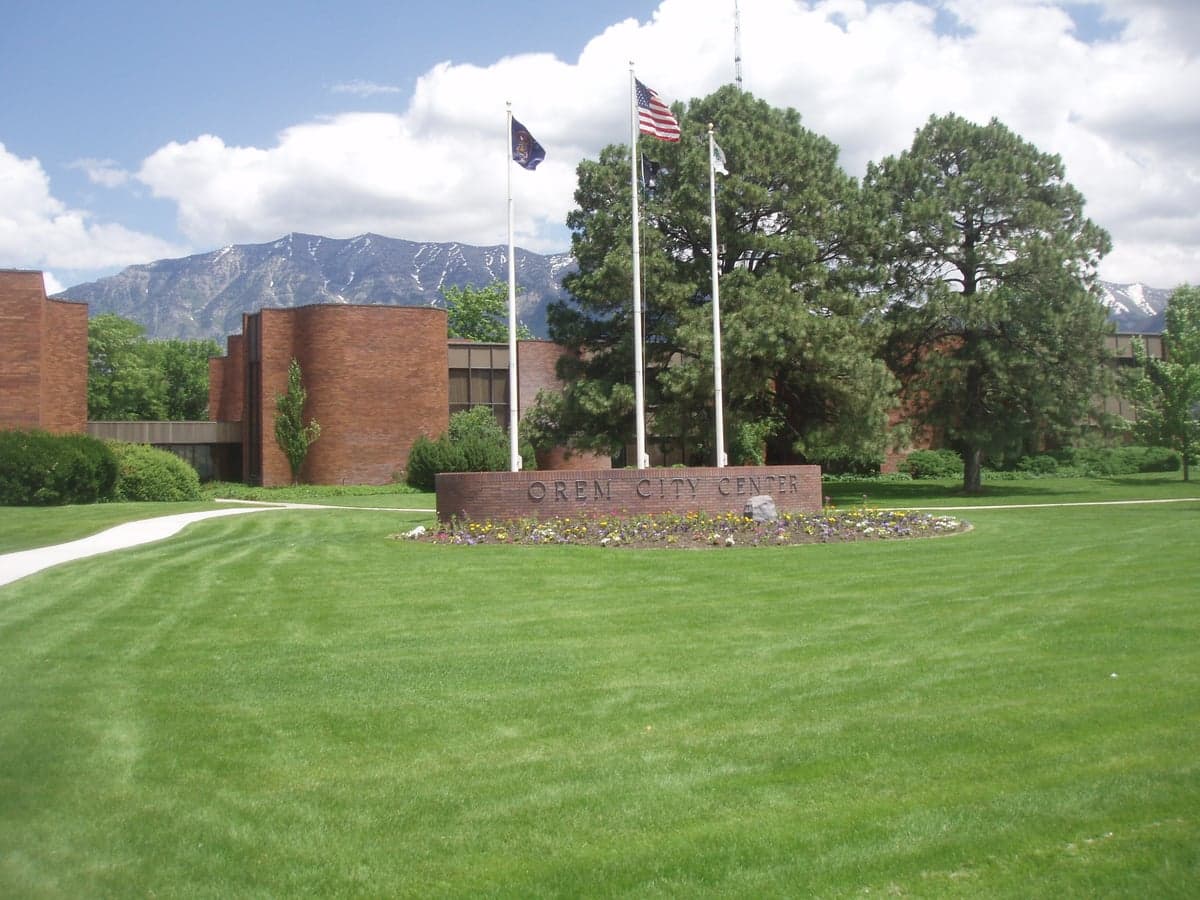
Orem, Utah, presents a mixed strategic picture for the conservative prepper. Its position along the Wasatch Front offers genuine natural-resilience advantages—mountain barriers, high-altitude agriculture, and a deep Mormon cultural foundation of self-reliance—but its proximity to the Salt Lake City metroplex and critical infrastructure targets introduces significant vulnerabilities. For a relocator weighing long-term survivability against daily convenience, Orem is a solid B-tier location: defensible enough to ride out moderate disruptions, but close enough to major fallout zones to demand a serious bug-out plan.
Geographic position and natural advantages for long-term survival
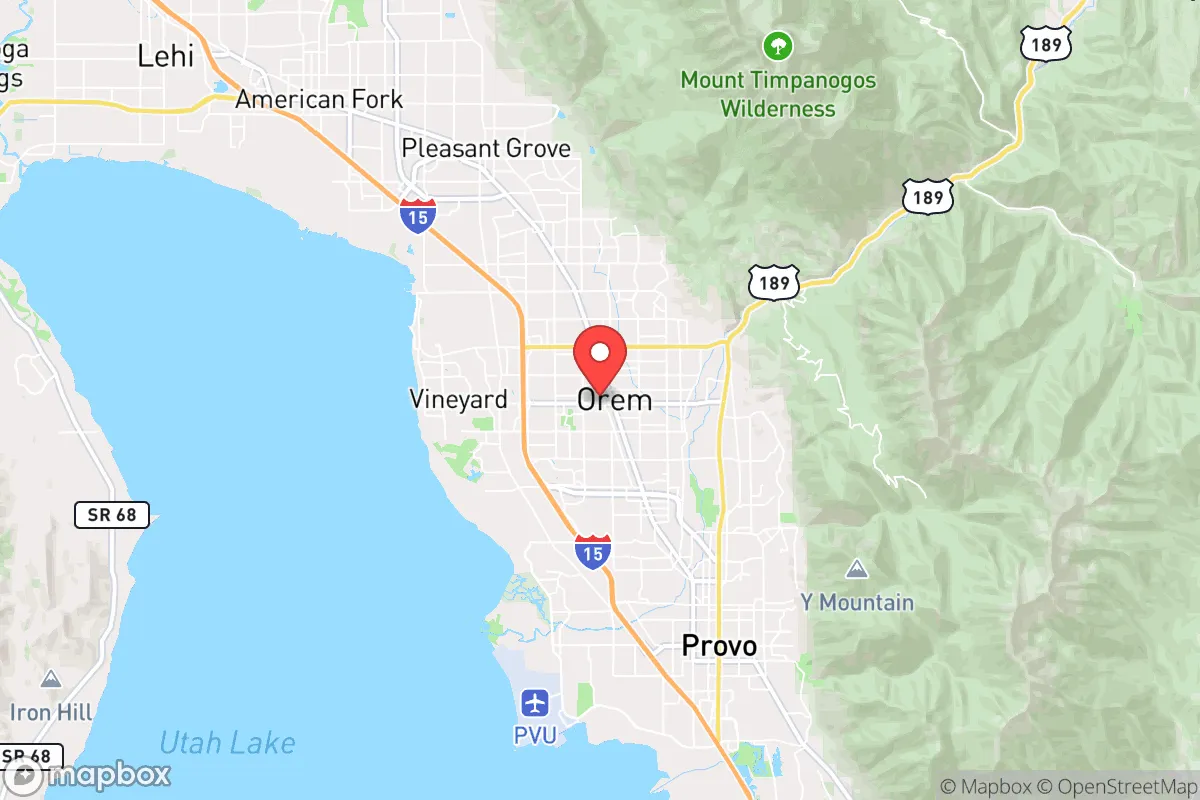
Orem sits at the base of the Wasatch Range, roughly 45 miles south of Salt Lake City, in Utah Valley. The surrounding geography provides several hard-to-replicate defensive assets. The Wasatch Mountains to the east create a natural barrier against overland approach from the Great Basin, while Utah Lake to the west offers a freshwater reservoir that, though impaired by agricultural runoff, is usable for non-potable needs with treatment. The valley floor sits at 4,700 feet, which means cooler summers and a shorter growing season than the Intermountain West average, but the region's volcanic soils and access to irrigation from the Provo River and Deer Creek Reservoir support reliable market gardening. For a family looking to establish a semi-self-sufficient homestead, the combination of mountain watershed, lake access, and arable benchland is rare in the contiguous U.S. The nearby Uinta-Wasatch-Cache National Forest provides timber, game, and emergency forage, though it's heavily trafficked by recreationists during normal times. The area's elevation also reduces the risk of airborne contaminants settling from a distant nuclear event—prevailing winds from the west tend to push fallout toward the Uinta Basin, not directly onto the valley floor.
Risks, exposures, and proximity to fallout-relevant landmarks
The single biggest strategic liability for Orem is its location within the Wasatch Front corridor. The area sits within 50 miles of Hill Air Force Base (a primary nuclear and conventional strike target), the Salt Lake City International Airport (a logistics hub for FEMA and military movements), and the Tooele Chemical Depot (a chemical weapons storage and disposal site). A coordinated attack or major EMP event affecting the Front would likely degrade power, communications, and transportation across the entire region for weeks. Orem itself is not a primary target—no major military installations, no ICBM silos, no national command centers—but it is in the blast-shadow of the Salt Lake City metroplex. A ground burst on Hill AFB would produce fallout that, depending on wind direction, could deposit dangerous levels of radiation in northern Utah County within hours. The 2020 Magna earthquake (5.7 magnitude) also demonstrated that the Wasatch Fault runs directly under the valley; a major rupture (estimated 7.0+ every 300-400 years) would level unreinforced masonry structures and disrupt gas, water, and sewer lines for months. For the prepper, this means Orem requires a robust underground shelter or a planned relocation to a more remote secondary site (e.g., the San Rafael Swell or the Book Cliffs) within a two-hour drive.
Practical resilience for a relocator: food, water, energy, and defensibility
On the practical side, Orem offers several resilience advantages that a relocator can exploit immediately. Water is the strongest asset: the Provo River and its tributaries provide a year-round surface flow that is unlikely to be contaminated by upstream industrial activity, and the local aquifer beneath Utah Valley is deep and well-recharged. A hand pump or solar-powered well on a small acreage can provide a family's needs indefinitely. Food is more complicated. The valley's agricultural base has shrunk dramatically as housing developments have consumed farmland, but the remaining operations—dairy, alfalfa, fruit orchards—still produce a surplus that can be bartered. The LDS Church's extensive network of bishops' storehouses and home storage centers in the area means that a significant portion of the population already maintains a 3- to 12-month food supply, creating a cultural expectation of preparedness that translates into a more resilient community. Energy is a vulnerability: Rocky Mountain Power's grid is aging and heavily dependent on coal and natural gas from out of state. Solar is viable (the valley averages 220 sunny days per year), but battery storage is essential for winter months when generation drops. Defensibility is moderate. Orem's suburban layout—cul-de-sacs, limited entry points from I-15, and a population that is largely armed and trained—makes it harder for organized looters to operate than in a sprawling city like West Valley City. However, the sheer density (over 100,000 people in 20 square miles) means that a prolonged grid-down scenario would create competition for resources within weeks. The best defensive strategy is to own property on the east bench, above the main traffic corridors, with a clear line of sight to the valley floor.
The overall strategic picture for a conservative relocator
Orem is not a survivalist's paradise—it is too connected, too populated, and too close to high-value targets to be a true retreat location. But for a relocator who needs to maintain a professional career while building a resilient lifestyle, it offers a rare balance. The cultural infrastructure of self-reliance (LDS preparedness, local gun culture, strong community networks) is genuine and functional, not performative. The natural resources—water, timber, game, arable land—are present in sufficient quantity to support a family through a moderate disruption. The risks are real but manageable with planning: a basement shelter, a secondary water source, a solar array with battery backup, and a bug-out vehicle pre-positioned for a rapid move east into the mountains. For the conservative prepper who cannot afford a full off-grid property in Montana or Idaho, Orem is a defensible compromise—a place where you can build a life that is both prosperous and prepared, as long as you never forget that the Wasatch Front is a target-rich environment and act accordingly.

* Values derived from national, state, county, city and local statistics and may differ in a specific area. Last updated: 2026-05-02T01:31:53.000Z
Narrative content on this page is AI-generated and may contain mistakes. Verify any details that matter before acting on them.
ReloMaps may earn a commission from affiliate links at no extra cost to you.

