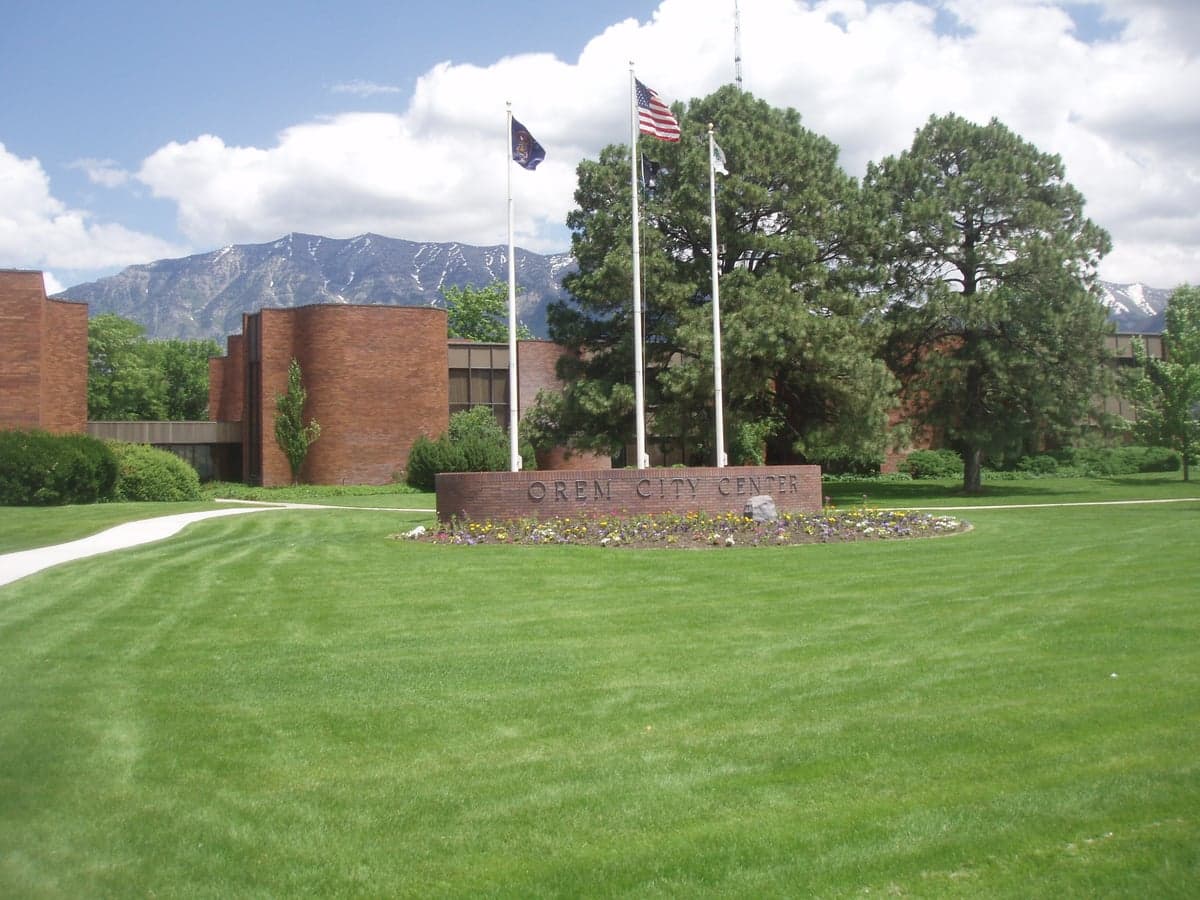
Photo: Wikipedia
Political ClimatePolitical Climate in Orem, UT
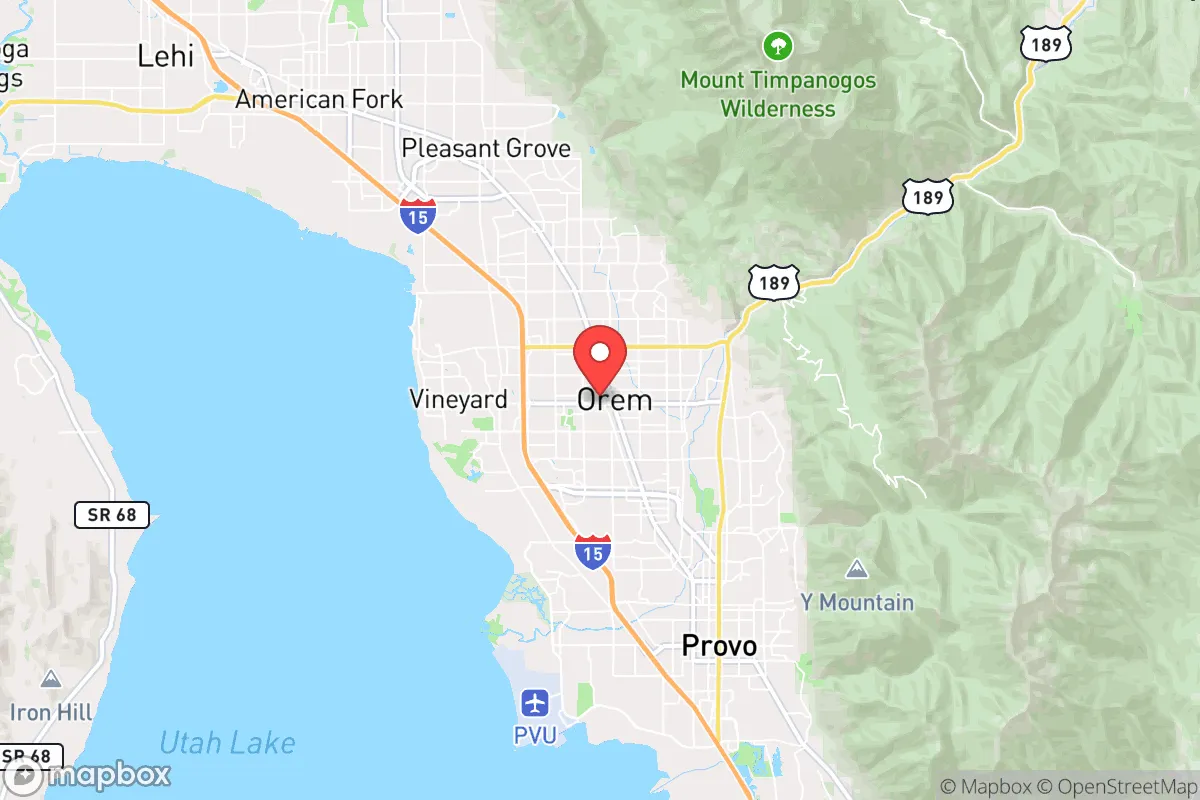
District shown is the primary district for this city’s centroid. Cities may span multiple districts.
Local Political AnalysisPolitical Analysis of Orem, UT
Orem, Utah, sits squarely in a deep-red stronghold, with a Cook PVI of R+10 that reflects decades of consistent conservative voting patterns. The city has long been a bedrock of traditional values, where the influence of Brigham Young University and the broader Utah County culture keeps the political pendulum firmly to the right. In recent years, though, there’s been a quiet but noticeable undercurrent of change—some of it driven by an influx of out-of-state transplants and younger families who bring more progressive ideas about land use, taxes, and local governance. If you’ve lived here as long as I have, you can feel the shift, and it’s worth keeping an eye on.
How it compares
Orem’s political climate is still far more conservative than what you’d find in Salt Lake City, about 45 minutes north, where the Cook PVI is closer to D+20 and the city council regularly pushes environmental and social policies that would never fly here. But even within Utah County, Orem is starting to look a little different from its neighbors. Provo, just to the south, has a younger, more transient student population that occasionally votes for more moderate candidates, especially on city council races. Meanwhile, towns like Alpine and Highland to the east remain rock-ribbed conservative, with lower turnout for any progressive ballot measures. The contrast is real: Orem’s older neighborhoods still lean heavily Republican, but newer developments near the University Place area are seeing more split-ticket voting, especially on school board and municipal issues. It’s not a blue wave, but it’s a crack in the foundation.
What this means for residents
For folks who value limited government and personal freedoms, the trend in Orem is a double-edged sword. On one hand, the city has historically kept zoning and business regulations light, which has allowed a thriving local economy with low property taxes and few hoops for small business owners. But as more progressive voices gain traction—especially on the city council and planning commission—there’s been talk of stricter land-use ordinances, higher impact fees, and even discussions about “affordable housing mandates” that could drive up costs for everyone. The real red flag, though, is the growing push for more government oversight in daily life. I’ve seen proposals for expanded public surveillance cameras downtown, stricter noise ordinances targeting backyard gatherings, and even a failed attempt to limit short-term rentals that would have stepped on property rights. If you’re the kind of person who believes the best government is the one that stays out of your way, these are warning signs worth watching.
Culturally, Orem still feels like a place where neighbors look out for each other and the local schools emphasize traditional values, but the policy battles are getting sharper. The biggest distinction from surrounding towns is the ongoing tension between preserving the city’s conservative, family-oriented character and accommodating the desires of newer residents who want more “urban-style” amenities and regulations. Long-term, if the progressive drift continues, Orem could lose the very things that made it attractive in the first place: low taxes, minimal red tape, and a community that trusts individuals to make their own choices. For now, it’s still a solid conservative haven, but the foundation is shifting—and anyone paying attention knows that once government starts reaching into your backyard, it’s hard to push it back out.

State Political ClimatePolitical Climate in Utah
State Political AnalysisPolitical Environment in the State
Utah is one of the most reliably Republican states in the nation, with a political climate that has been dominated by the LDS Church’s cultural influence and a deeply ingrained conservative ethos for generations. Over the past 20 years, the state has shifted from a near-monolithic GOP stronghold to a more nuanced landscape, where the Wasatch Front’s explosive growth is slowly introducing a libertarian-leaning, tech-savvy strain of conservatism alongside a small but vocal progressive minority. The 2024 presidential election saw Donald Trump win Utah by about 21 points, down from the 37-point margin in 2016, signaling a real but contained erosion of the GOP’s lockstep dominance.
Urban vs. rural divide
The political map of Utah is a study in contrasts. The Wasatch Front—anchored by Salt Lake City, Provo, and Ogden—is where the action is. Salt Lake County, home to over 1.1 million people, has become a purple battleground: it voted for Joe Biden in 2020 and went for Trump by a razor-thin 2 points in 2024. The city itself is a blue island, with progressive politics on display in its city council and mayor’s office, but the surrounding suburbs like Sandy and Draper remain solidly red. Provo and Orem in Utah County are the heart of the state’s conservative base, driven by BYU and the LDS Church’s headquarters—Trump won Utah County by 38 points in 2024. Head east into the rural counties—Duchesne, Uintah, San Juan—and you’ll find Trump winning by 70-80 points, with a frontier libertarian streak that distrusts both Washington and Salt Lake City. The divide isn’t just about party; it’s about lifestyle. Urbanites along the Wasatch Front are more likely to prioritize transit, environmentalism, and tech-friendly policies, while rural Utahns are fighting to preserve grazing rights, water access, and local control over land use.
Policy environment
Utah’s policy environment is a mixed bag for conservatives. On the plus side, the state has a flat income tax rate of 4.65% (down from 4.95% in 2024 thanks to a tax cut package), no state-level property tax on vehicles, and a regulatory climate that’s generally business-friendly. The Utah Legislature is dominated by a supermajority of Republicans who have passed school choice expansion (the Utah Fits All Scholarship program, which gives $8,000 per student for private or homeschool expenses), permitless carry for firearms (HB 76 in 2021), and a near-total abortion ban (trigger law effective in 2022). However, there are red flags. The state’s Alcoholic Beverage Control Commission still operates a state-run liquor monopoly, a vestige of LDS influence that frustrates libertarians. Education policy is a bright spot: Utah has one of the highest rates of parental involvement in the country, and the legislature has repeatedly rejected Common Core-style federal overreach. But the state’s rapid growth is straining infrastructure, and Salt Lake City’s progressive mayor, Erin Mendenhall, has pushed for more bike lanes and transit-oriented development that some see as a creeping urban agenda.
Trajectory & freedom
Utah is becoming more free in some areas and less free in others, and the trend is worth watching. On the positive side, the state has expanded gun rights significantly: permitless carry (HB 76), preemption laws that block local gun control (SB 115 in 2023), and a “stand your ground” law (HB 227 in 2021). Parental rights got a boost with the Utah Parental Rights in Education Act (HB 261 in 2023), which requires schools to notify parents about curriculum changes and prohibits instruction on sexual orientation or gender identity in K-3. Medical freedom took a hit with the state’s strict COVID-19 response—Utah had one of the longest mask mandates in the West, and Salt Lake County imposed business closures that many conservatives saw as government overreach. Property rights are a mixed bag: the state has strong protections against eminent domain abuse, but the Utah Inland Port Authority in Salt Lake City has been criticized for using tax increment financing to subsidize development, effectively picking winners and losers. The biggest freedom concern is the state’s election integrity record: Utah has universal mail-in voting (implemented in 2020), which some conservatives view as a vulnerability, though the state’s voter ID laws are relatively strong. The legislature has resisted calls for hand-counting or stricter ballot security, which remains a point of tension.
Civil unrest & political movements
Utah has seen its share of political flashpoints, though they’re less explosive than in coastal states. The “Utah County Republican Party” has been a hotbed of internal strife, with a faction of “America First” conservatives challenging the more establishment, LDS-aligned leadership. In 2022, the Utah GOP convention saw a wave of anti-establishment candidates win nominations, though most lost in the general election. Immigration politics are relatively calm—Utah has a “compact” with the federal government that allows local law enforcement to cooperate with ICE, and there are no sanctuary cities. However, the “Utah Refugee Resettlement” program has brought in thousands of refugees from Afghanistan, Ukraine, and the Congo, which has sparked some local debate but no major protests. The most visible civil unrest in recent years came from the “Black Lives Matter” protests in Salt Lake City in 2020, which were largely peaceful but included a few nights of property damage. The “Utah Patriot Movement” is active but small, with groups like the “Utah Citizens for Honest Government” holding rallies at the state capitol over election integrity. A new resident in St. George or Cedar City would notice a strong sense of community self-reliance, with little of the street-level activism seen in Portland or Denver.
Projection
Over the next 5-10 years, Utah’s political climate will be shaped by two forces: in-migration and generational change. The state is adding about 50,000 new residents per year, many from California, Colorado, and Washington. These newcomers tend to be wealthier, more educated, and more secular—they’re not turning Utah blue, but they are diluting the LDS cultural monopoly. The Wasatch Front will continue to purple, with Salt Lake County potentially flipping to a Democratic-leaning county by 2030. The rural areas will stay deep red, but their political power will shrink as the population concentrates. The Utah Legislature will likely remain Republican supermajority, but the internal fights will intensify between the “Mormon establishment” wing (pro-business, pro-education, cautious on social issues) and the “populist” wing (anti-establishment, pro-gun, skeptical of immigration). The biggest wildcard is the LDS Church’s stance: as the church becomes more moderate on some social issues (e.g., supporting LGBTQ+ nondiscrimination laws), it may alienate its more conservative members. A new resident moving to Lehi or Park City in 2026 should expect a state that remains conservative but is increasingly divided between a libertarian-leaning, tech-driven conservatism and a traditional, religious conservatism.
For a conservative single or parent considering a move, Utah offers a strong foundation: low taxes, school choice, gun rights, and a culture of self-reliance. But the cracks are showing. The state’s rapid growth is bringing urban problems—traffic, housing costs, and a more diverse political landscape—that will test its conservative identity. If you value a community where your kids can walk to school without fear, where the government mostly stays out of your business, and where the local culture still respects traditional values, Utah is a solid bet. Just keep an eye on Salt Lake City’s influence and the legislature’s willingness to stand firm against federal overreach. The state is still a beacon of freedom in the West, but it’s not immune to the winds of change.
* Values derived from national, state, county, city and local statistics and may differ in a specific area. Last updated: 2026-05-02T01:31:53.000Z
Narrative content on this page is AI-generated and may contain mistakes. Verify any details that matter before acting on them.
ReloMaps may earn a commission from affiliate links at no extra cost to you.

