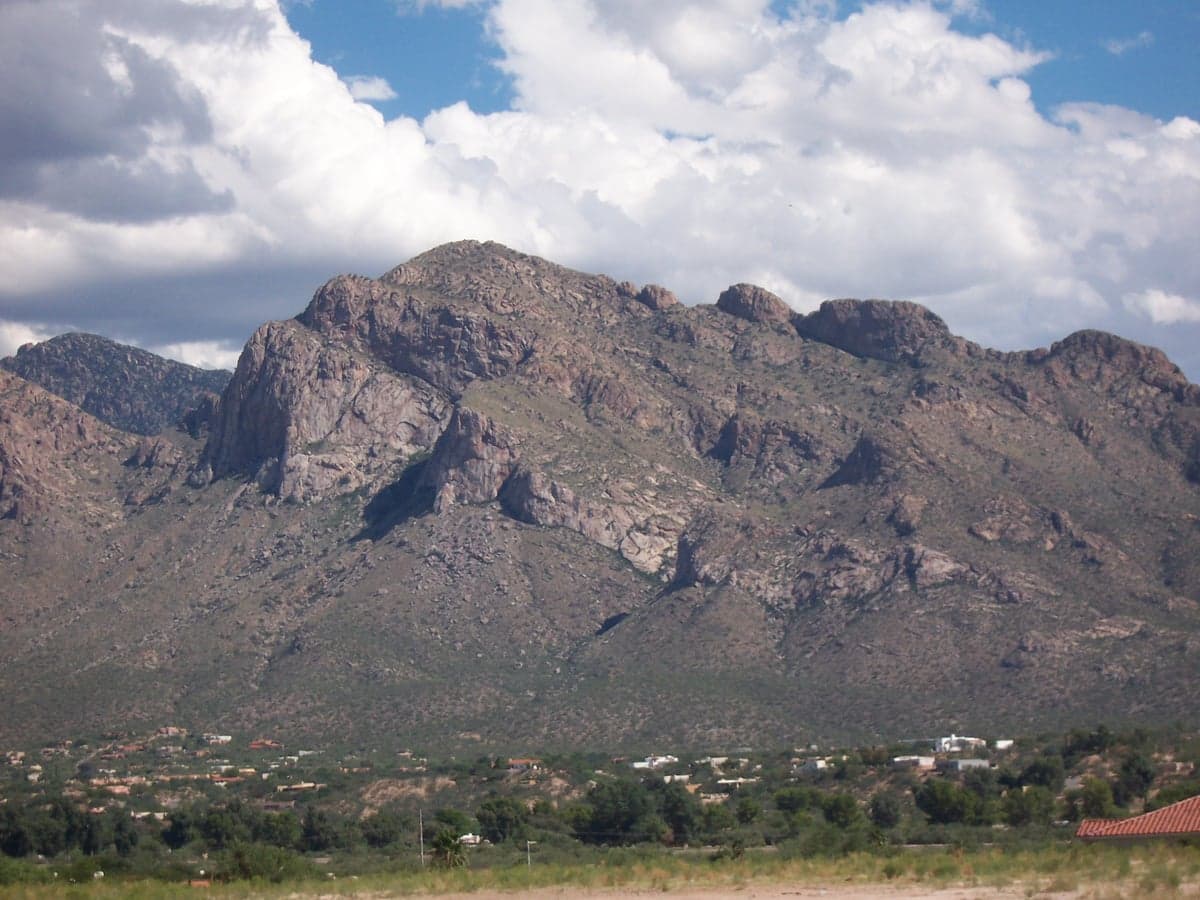
Photo: Wikipedia
Demographics of Oro Valley, AZ
Affluence Level in Oro Valley, AZ
An upper-middle-class area. Household wealth, education levels, and homeownership run ahead of national benchmarks.
People of Oro Valley, AZ
Oro Valley, Arizona, is a predominantly white, highly educated, and affluent community of 47,595 residents, characterized by its master-planned suburban layout and strong retiree and family presence. With a foreign-born population of just 2.6% and a 57.5% college-educated rate, the city stands out as one of the least ethnically diverse and most demographically stable municipalities in the Tucson metro area. The population is overwhelmingly native-born, with 76.3% identifying as white, 14.6% as Hispanic, 2.7% as East/Southeast Asian, 1.4% as Black, and 0.9% as Indian (subcontinent). This is a place where in-migration, not immigration, has shaped the population, and where the dominant cultural identity is that of an upscale, retirement-oriented Sun Belt suburb.
How the city was settled and grew
Oro Valley is a genuinely post-1900 community, with no colonial or 19th-century settlement history. The area was originally part of the Mexican land grant known as the Cañada del Oro, used for ranching and mining into the early 20th century. The first significant population wave came in the 1950s and 1960s, when Tucson's suburban expansion pushed northward. Early residential development concentrated in the Cañada del Oro district, where modest ranch-style homes were built for middle-class families working in Tucson's defense and aerospace sectors. The area remained sparsely populated until the 1970s, when the first master-planned communities emerged. The Rancho Vistoso development, launched in the 1980s, became the primary landing zone for affluent retirees and professionals from the Midwest and California, drawn by the climate, golf courses, and low taxes. These early waves were almost entirely white, non-Hispanic, and native-born, establishing the city's enduring demographic baseline.
Modern era (post-1965)
After the 1965 Hart-Cellar Act, Oro Valley saw virtually no direct immigration impact. The city's foreign-born share (2.6%) is among the lowest in Arizona, and the population growth that did occur came overwhelmingly from domestic in-migration. The 1990s and 2000s brought a second wave of white, college-educated professionals and retirees, many from California and the Northeast, who settled in newer master-planned enclaves like Honey Bee Canyon and Sun City Oro Valley (a 55+ community). These neighborhoods absorbed the bulk of the city's growth, reinforcing its character as an age-restricted and family-oriented suburb. The Hispanic population, at 14.6%, is largely concentrated in older, less expensive areas near the southern border of the city, such as the Oro Valley Country Club vicinity and some multifamily units along Oracle Road. The East/Southeast Asian community (2.7%) and Indian community (0.9%) are small but visible in the professional and medical sectors, with households scattered across Rancho Vistoso and newer subdivisions near the Oro Valley Hospital. The Black population (1.4%) remains very small, with no distinct ethnic enclave. The city's racial homogeneity is not a result of exclusionary policy but of its high housing costs and lack of rental density, which naturally filter for higher-income, predominantly white buyers.
The future
Oro Valley's population is heading toward further homogenization, not diversification. The city's housing stock is dominated by single-family homes on large lots, with limited multifamily development, which constrains the arrival of younger, more diverse households. The Hispanic share is expected to grow slowly, driven by natural increase and some spillover from Tucson's Hispanic-majority south side, but the city's high cost of entry will keep that growth modest. The East/Southeast Asian and Indian communities are likely to remain small and professional, concentrated in the medical and tech sectors, with no signs of forming ethnic enclaves. The white, non-Hispanic population will continue to dominate, though the retiree cohort may shrink slightly as younger families move in to fill new developments like the Naranja Town Center area. The city is not tribalizing into distinct ethnic enclaves; rather, it is remaining a relatively uniform, affluent suburb where income and lifestyle, not ethnicity, define the neighborhoods. The foreign-born share is unlikely to rise above 5% in the next decade, as Oro Valley lacks the rental stock, transit access, and entry-level jobs that attract immigrant populations.
For someone moving in now, Oro Valley is becoming an increasingly stable, high-cost, and demographically predictable community. It offers a safe, well-maintained environment with excellent schools and amenities, but at the price of ethnic and economic diversity. The city's future is one of slow, affluent growth, with little change in its racial or cultural composition. This is an ideal location for conservative-leaning families and retirees seeking a homogeneous, low-crime suburb with a strong sense of order and continuity, but it will not appeal to those looking for a multicultural or rapidly evolving urban environment.

* Values derived from national, state, county, city and local statistics and may differ in a specific area. Last updated: 2026-05-03T20:23:57.000Z
Narrative content on this page is AI-generated and may contain mistakes. Verify any details that matter before acting on them.
ReloMaps may earn a commission from affiliate links at no extra cost to you.

