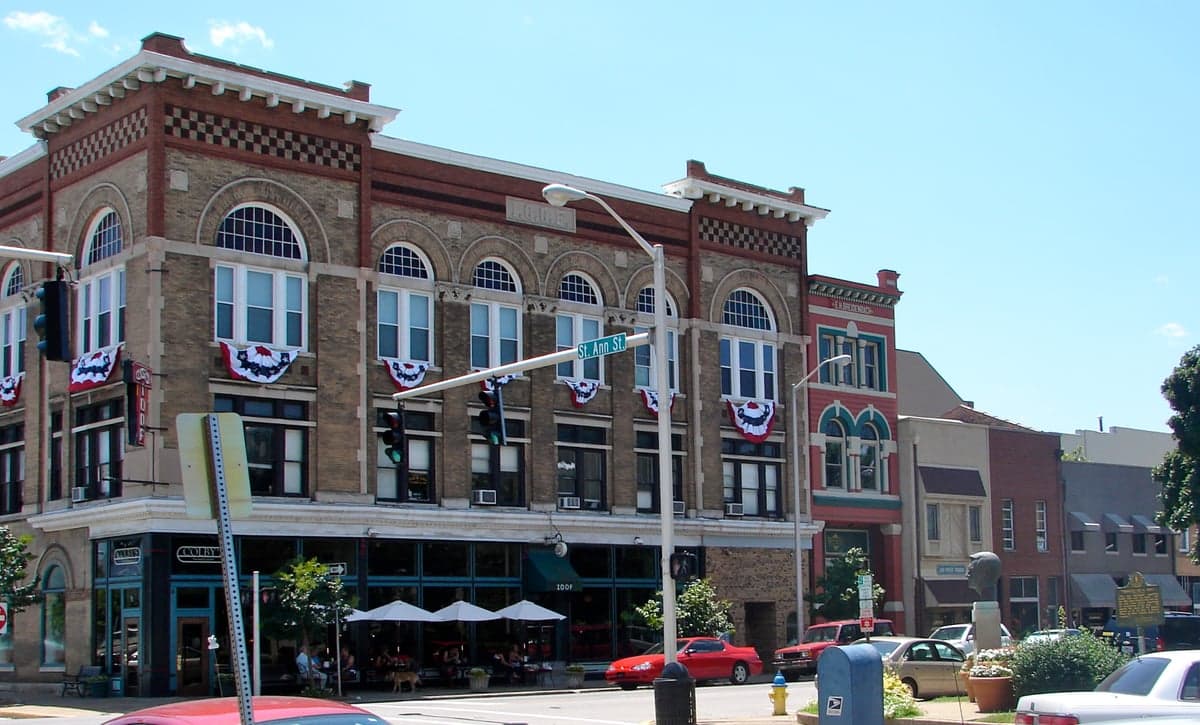
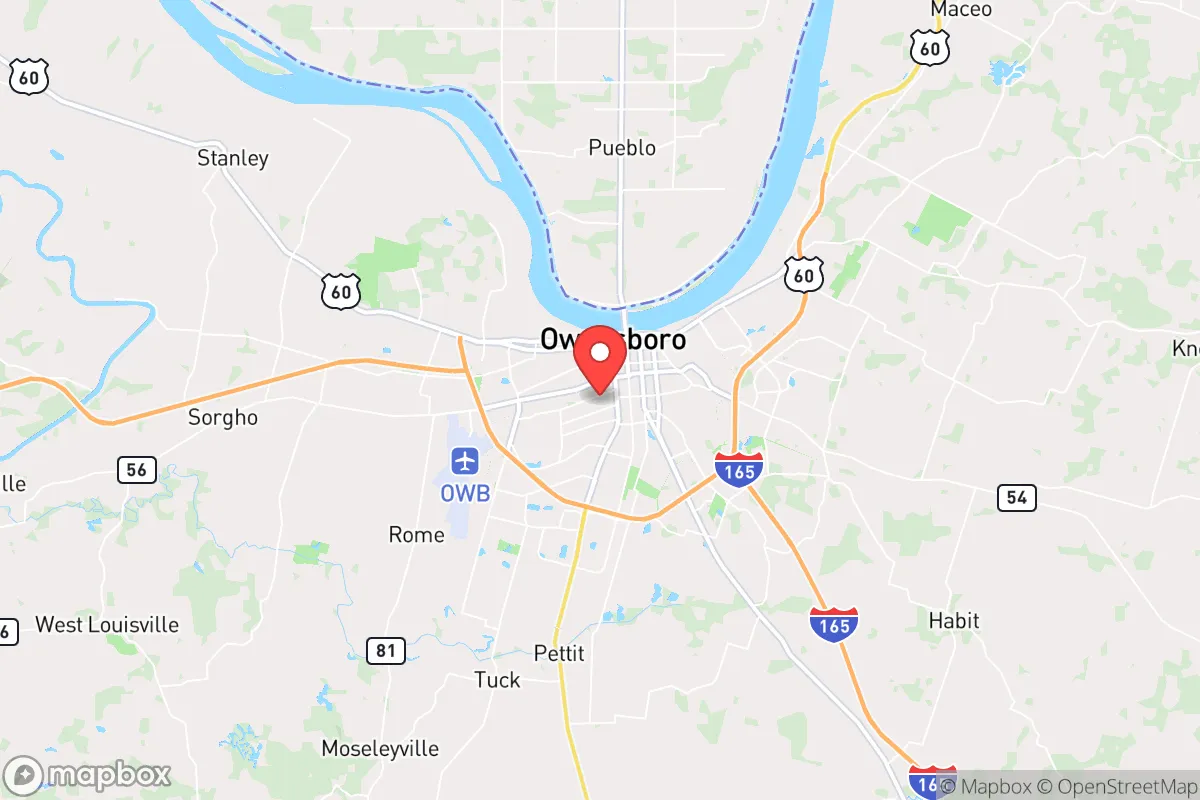
Photo: Wikipedia
Strategic Assessment of Owensboro, KY
Workable tactical position. Some exposure to population density or targets, but generally defensible in a crisis.
What does the Strategic Assessment tell us?
Our Strategic Assessment grades tactical survivability of an area. Major population centers, military targets, fallout zones, natural disasters, and border exposure all drive risk — lower exposure means a more defensible position in a crisis.
This is heavily inspired by Joel Skousen's Strategic Relocation book. Highly recommended you checkout the book ($)What does this tell us?
Our Strategic Assessment grades tactical survivability of an area. Major population centers, military targets, fallout zones, natural disasters, and border exposure all drive risk — lower exposure means a more defensible position in a crisis.
This is heavily inspired by Joel Skousen's Strategic Relocation book. Highly recommended you checkout the book ($)Strategic Pillars

Key Distances
Regional Safe Places
Below is our recommended "safe zones" in Kentucky and the surrounding area based on our strategic heuristics. For most people, it's unrealistic to live in a “safe zone” full-time due to work, family or other personal reasons. They tend to be more rural. However, many of these areas are perfect for second homes and retreat properties that double as a vacation home or even a short-term rental.
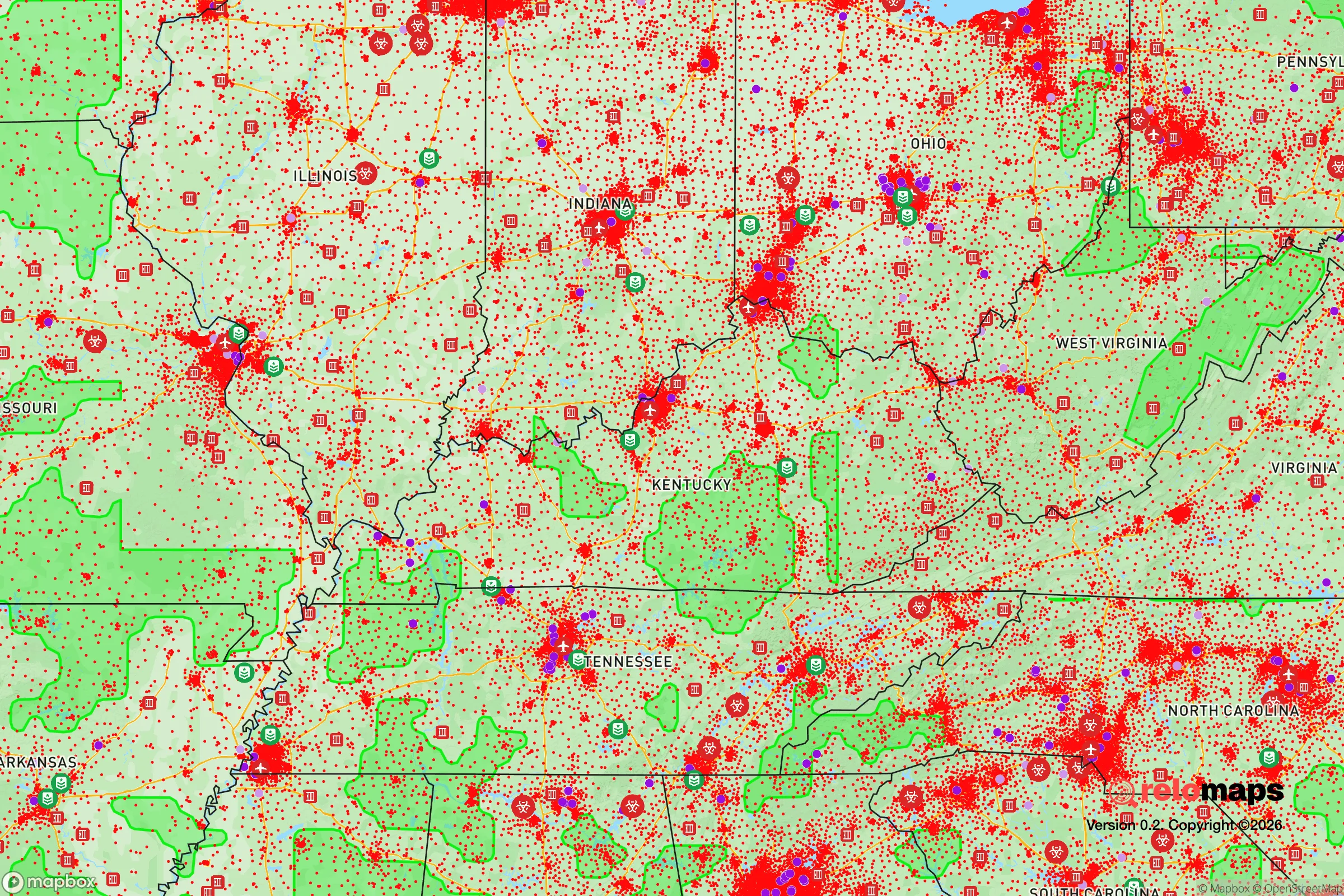
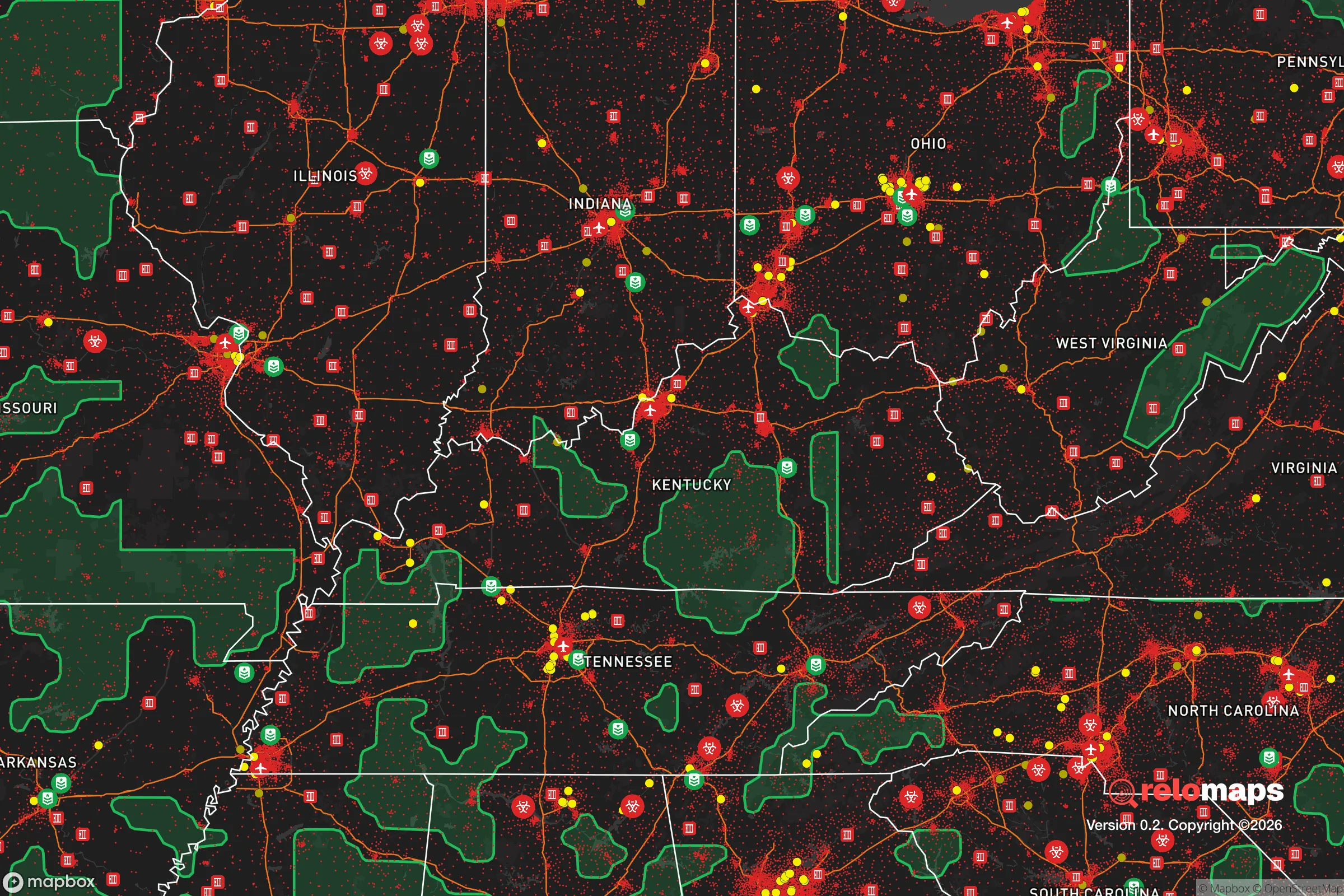


Important Note: For informational purposes only. This does not mean nothing bad ever happens in the green zones. Please use common sense. This is based on public data and modeled with AI. We tried to take a conservative approach but mistakes happen. We update this regularly as new information becomes available.
Solar Generator Recommendations
Backup power matters more here than in safer locations. We've picked three solar generators across budgets and capacity tiers — start with the budget unit if you only need a few essentials, or step up if you want to run a fridge and HVAC for days at a time.

Jackery Portable Power Station Explorer 300
Budget OptionPower on the Go: Weighing only 11 lbs, it's convenient to set up and store with book-sized foldable solar panels

BLUETTI Portable Power Station AC180
Designed for both indoor and outdoor scenarios, AC180 is highly capable as it has a robost capacity and continuous output power.

EF ECOFLOW DELTA Pro Ultra Power Station
Upgraded PickEcoFlow DELTA Pro Ultra is a whole-home energy system designed to grow with your family. Integrated with the Smart Home Panel 2, it scales to meet your evolving energy needs — keeping your home powered, intelligent, and secure through every stage of life.
We earn a commission, at no additional cost to you.
Strategic Assessment Analysis
Owensboro, Kentucky, sits in a sweet spot that resilience-minded relocators rarely find: close enough to regional infrastructure to be practical, far enough from major population centers to avoid the worst of cascading collapse scenarios. This Ohio River city of roughly 60,000 offers a blend of industrial backbone, agricultural surround, and geographic insulation that makes it a serious contender for those planning around civic unrest, supply chain disruptions, or mass casualty events. The key is understanding where its natural advantages end and where its exposure to fallout—both literal and figurative—begins.
Geographic position and natural advantages for long-term stability
Owensboro’s position on the southern bank of the Ohio River gives it a dual advantage: a reliable freshwater source and a natural barrier to the north. The river itself is wide enough here to act as a significant obstacle to any uncontrolled movement from Indiana or Illinois, should those areas become unstable. The surrounding terrain is the rolling, fertile land of the Western Kentucky Coal Field region—not mountainous, but with enough wooded hills and creek valleys to provide cover and microclimate advantages for those who know how to use them. The area sits outside the New Madrid Seismic Zone’s highest-risk band, though it would feel a major quake. More importantly, Owensboro is over 100 miles from Louisville, 150 miles from Nashville, and 200 miles from St. Louis—far enough that a major event in any of those cities would not immediately spill over. The local economy is anchored by industries that matter in a crisis: energy (coal and natural gas), food processing (Perdue, Green River Distilling), and manufacturing (Toyota’s nearby Princeton plant, though that’s 45 minutes away). That means the local workforce already knows how to keep critical systems running.
Risks, exposures, and proximity to fallout-relevant landmarks
No place is a fortress, and Owensboro has real vulnerabilities. The most obvious is the Ohio River itself: while it’s a resource, it’s also a vector. A chemical spill upstream—say from a derailment or a deliberate attack on industrial facilities in Evansville (30 miles upriver) or Cincinnati (200 miles upriver)—could contaminate the water supply for weeks. The city draws its drinking water from the river, and while treatment plants have protocols, a major event would strain them. There’s also the Fort Campbell military installation about 90 miles southwest, home to the 101st Airborne Division. In a mass casualty or martial law scenario, that base becomes a hub of activity—and a potential target. Owensboro is outside the immediate blast or fallout zone of any major strategic target, but it’s close enough that military traffic, refugees, or secondary effects could reach the area within hours. The Owensboro-Daviess County Regional Airport is small, but it could be used for FEMA or military logistics, drawing unwanted attention. On the plus side, there are no nuclear power plants within 50 miles (the nearest is in West Tennessee, over 150 miles away), and no major chemical weapons storage sites nearby. The biggest day-to-day risk is tornadoes—this is the southern edge of “Dixie Alley,” and violent storms are a seasonal reality. A direct hit on the downtown area or industrial parks could disrupt power, water, and supply chains for weeks.
Practical resilience for a relocator: food, water, energy, and defensibility
For a single individual or family looking to hunker down, Owensboro offers a surprisingly solid baseline. Local food production is robust: Daviess County is one of Kentucky’s top agricultural counties, with corn, soybeans, and livestock operations within a 20-minute drive. The city has multiple farmers’ markets (the Owensboro Regional Farmers’ Market runs April through October), and the surrounding countryside has plenty of small farms where a savvy relocator could barter or buy direct. Water is the bigger concern—the river is the primary source, but a well is feasible in the county’s rural areas. Inside city limits, you’re on municipal water, which means you’re dependent on the treatment plant’s resilience. Energy is a strength: Kentucky is a net electricity exporter, and Owensboro has its own coal-fired power plant (the Elmer Smith Station) plus natural gas infrastructure. The local grid is less likely to fail for extended periods than in coastal or mountain regions. For defensibility, the city itself is a mixed bag. The downtown and older neighborhoods have a traditional street grid with limited chokepoints. The best bet for a prepper is the rural fringe—areas to the south and east, toward the Pennyrile Forest and the Green River, where terrain gets hillier and roads become sparse. Property is still affordable: you can buy a 3-bedroom house on 5-10 acres within 15 minutes of town for under $250,000, which leaves budget for solar panels, a well, and a root cellar. The local gun culture is strong—Kentucky is a constitutional carry state, and Owensboro has multiple gun shops and ranges. The sheriff’s office and local PD are professional but not overbearing; in a crisis, they’d likely focus on protecting critical infrastructure rather than enforcing draconian orders.
The overall strategic picture for a conservative relocator
Owensboro isn’t a bug-out paradise in the mountains, and it’s not a remote compound in the desert. What it offers is something more practical for most people: a functioning small city with a real economy, real infrastructure, and a population that still believes in self-reliance. The political lean is solidly conservative—Daviess County voted +35 points for Trump in 2020, and the local culture reflects that in everything from church attendance to the prevalence of “no trespassing” signs. The downsides are real: the river risk, the proximity to Fort Campbell, and the fact that I-64 and the Audubon Parkway make it accessible from Louisville and Evansville. But for a relocator who wants to be part of a community that can actually hold together when things go sideways—rather than a lone wolf in the woods—Owensboro is one of the better bets in the Ohio Valley. The key is to buy on the rural edge, invest in your own water and power, and build relationships with local farmers and tradesmen before you need them. Do that, and this river town becomes a solid anchor in an uncertain future.

* Values derived from national, state, county, city and local statistics and may differ in a specific area. Last updated: 2026-04-21T10:47:14.000Z
Narrative content on this page is AI-generated and may contain mistakes. Verify any details that matter before acting on them.
ReloMaps may earn a commission from affiliate links at no extra cost to you.

