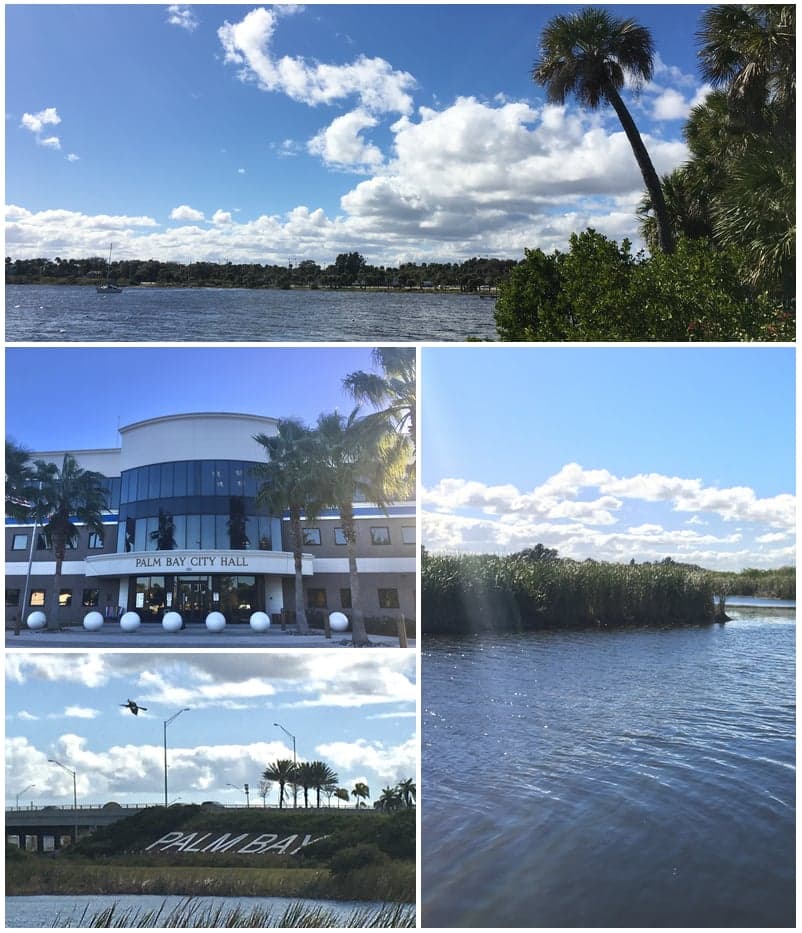
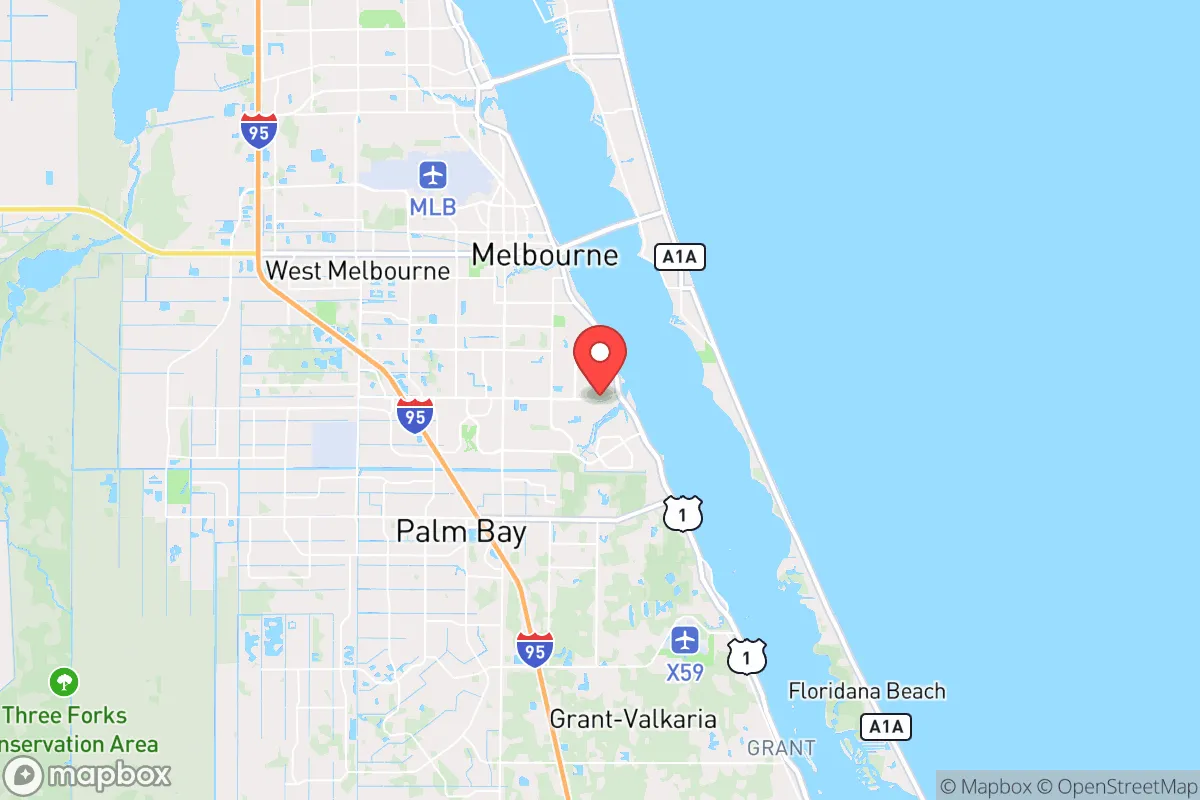
Photo: Wikipedia
Demographics of Palm Bay, FL
Affluence Level in Palm Bay, FL
A middle-class area roughly in line with national averages across income, home values, education, and employment.
People of Palm Bay, FL
Palm Bay, Florida, is a city of 125,273 residents defined by its rapid late-20th-century growth, a predominantly white but diversifying population, and a strong connection to the aerospace and defense industries. The city’s character is shaped by a mix of native Floridians, domestic migrants from the Northeast and Midwest, and a growing Hispanic and Black population, creating a suburban, family-oriented environment with a lower cost of living than coastal Brevard County. Distinctive identity markers include a high rate of homeownership, a sprawling layout with many unincorporated pockets, and a population that is less transient than nearby Melbourne. The city’s human history is one of successive waves drawn by land, jobs, and affordability, with each group settling into specific neighborhoods that still reflect their origins.
How the city was settled and grew
Palm Bay’s modern history begins in the 1950s, not with colonial settlement. The area was largely undeveloped pine flatlands until the General Development Corporation (GDC) began marketing cheap, subdivided lots to northern retirees and working-class families in the 1950s and 1960s. The original population was overwhelmingly white, drawn from the Northeast and Midwest by the promise of affordable land and a warm climate. These early settlers built homes in the Port Malabar and Bayside Lakes neighborhoods, which remain predominantly white, single-family-home areas today. The city’s population exploded from under 1,000 in 1960 to over 18,000 by 1970, driven by the nearby Kennedy Space Center and the expansion of Patrick Space Force Base. No significant pre-1900 settlement or agricultural community existed; Palm Bay is a pure Sun Belt suburb, planned and sold as a retirement and starter-home destination.
Modern era (post-1965)
The post-1965 era brought two major demographic shifts. First, the Hart-Cellar Act of 1965 opened immigration from Latin America and Asia, though Palm Bay’s foreign-born population remains low at just 3.9% — far below the national average. The small Hispanic community (19.7%) is concentrated in the Golfview and West Palm Bay areas, where Puerto Rican and Mexican families have established a modest presence. Second, domestic in-migration accelerated in the 1980s and 1990s as the space shuttle program drew engineers and technicians from across the country. This wave was also predominantly white, but it included a growing number of Black families moving from the Southeast for aerospace and service jobs. The Black population (17.4%) is most visible in the Lake Washington corridor and the Palm Bay Estates neighborhood, where homeownership rates are high. East/Southeast Asian communities (1.7%) are small and dispersed, with no single ethnic enclave, while the Indian subcontinent population (0.4%) is negligible. The city’s racial shift since 2000 has been driven by Hispanic and Black growth, while the white share has declined from over 70% to 53.2%. College education rates (22.6%) are below the national average, reflecting a workforce heavy in trades, manufacturing, and service roles rather than professional services.
The future
Palm Bay’s population is heading toward greater diversity, but it is not homogenizing into a single melting pot. Instead, distinct enclaves are solidifying: Port Malabar and Bayside Lakes remain overwhelmingly white and older, while Golfview and West Palm Bay are becoming majority Hispanic. The Black population is growing slowly but steadily, concentrated in the Lake Washington area, while East/Southeast Asian and Indian communities are plateauing due to limited professional job growth. The immigrant population is not expanding rapidly — the foreign-born share has remained below 4% for decades — meaning future diversity will come primarily from domestic migration of Hispanic and Black families seeking affordable housing. The next 10-20 years will likely see the white share drop below 50%, with Hispanic and Black populations each approaching 25-30%. The city will remain a working-to-middle-class suburb, with no signs of becoming a high-tech or professional hub. For a new resident, this means moving into a community that is becoming more diverse but remains spatially segregated by neighborhood, with a stable, family-oriented culture and limited upward mobility pressures.
Palm Bay is becoming a more diverse, lower-cost alternative to coastal Brevard County, but its future is one of slow demographic change rather than rapid transformation. For someone moving in now, the city offers affordable homeownership in established neighborhoods, a strong sense of local community, and a population that is increasingly Hispanic and Black but still anchored by a white, native-born majority. The key trade-off is between affordability and the limited economic dynamism that comes with a lower college education rate and a reliance on aerospace and service industries.

* Values derived from national, state, county, city and local statistics and may differ in a specific area. Last updated: 2026-09-21T19:02:03.000Z
Narrative content on this page is AI-generated and may contain mistakes. Verify any details that matter before acting on them.
ReloMaps may earn a commission from affiliate links at no extra cost to you.

