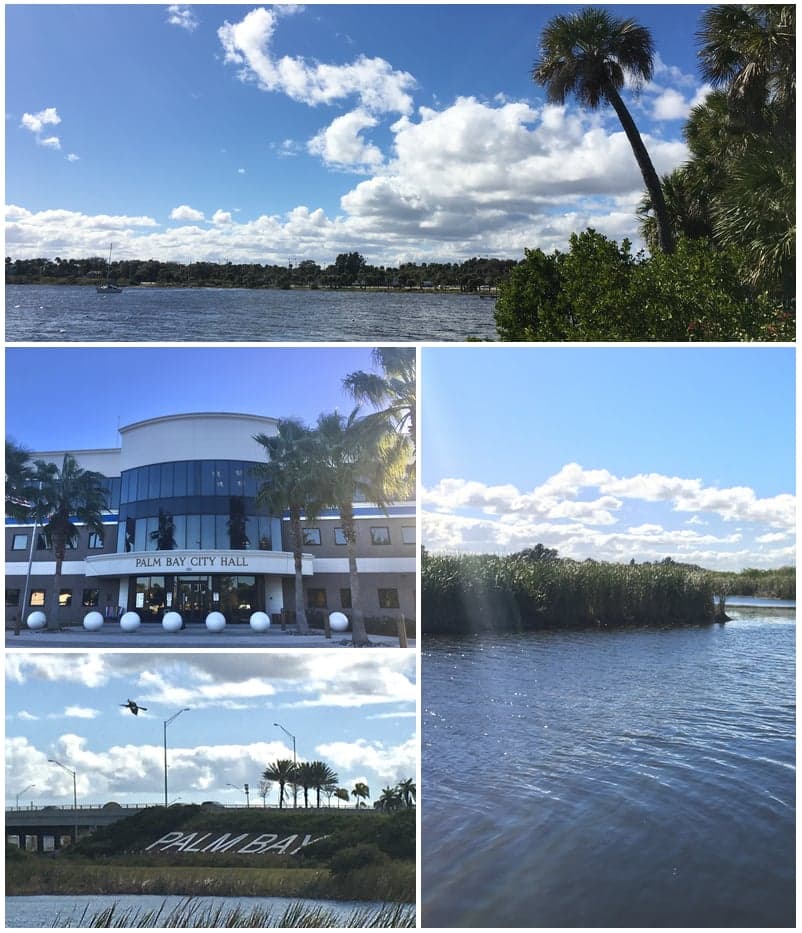
Photo: Wikipedia
Strategic Assessment of Palm Bay, FL
Meaningful friction. Expect exposure to either population pressure, blast zones, or natural disaster risk. Consider buying a retreat property.
What does the Strategic Assessment tell us?
Our Strategic Assessment grades tactical survivability of an area. Major population centers, military targets, fallout zones, natural disasters, and border exposure all drive risk — lower exposure means a more defensible position in a crisis.
This is heavily inspired by Joel Skousen's Strategic Relocation book. Highly recommended you checkout the book ($)What does this tell us?
Our Strategic Assessment grades tactical survivability of an area. Major population centers, military targets, fallout zones, natural disasters, and border exposure all drive risk — lower exposure means a more defensible position in a crisis.
This is heavily inspired by Joel Skousen's Strategic Relocation book. Highly recommended you checkout the book ($)Strategic Pillars

Key Distances
Regional Safe Places
Below is our recommended "safe zones" in Florida and the surrounding area based on our strategic heuristics. For most people, it's unrealistic to live in a “safe zone” full-time due to work, family or other personal reasons. They tend to be more rural. However, many of these areas are perfect for second homes and retreat properties that double as a vacation home or even a short-term rental.

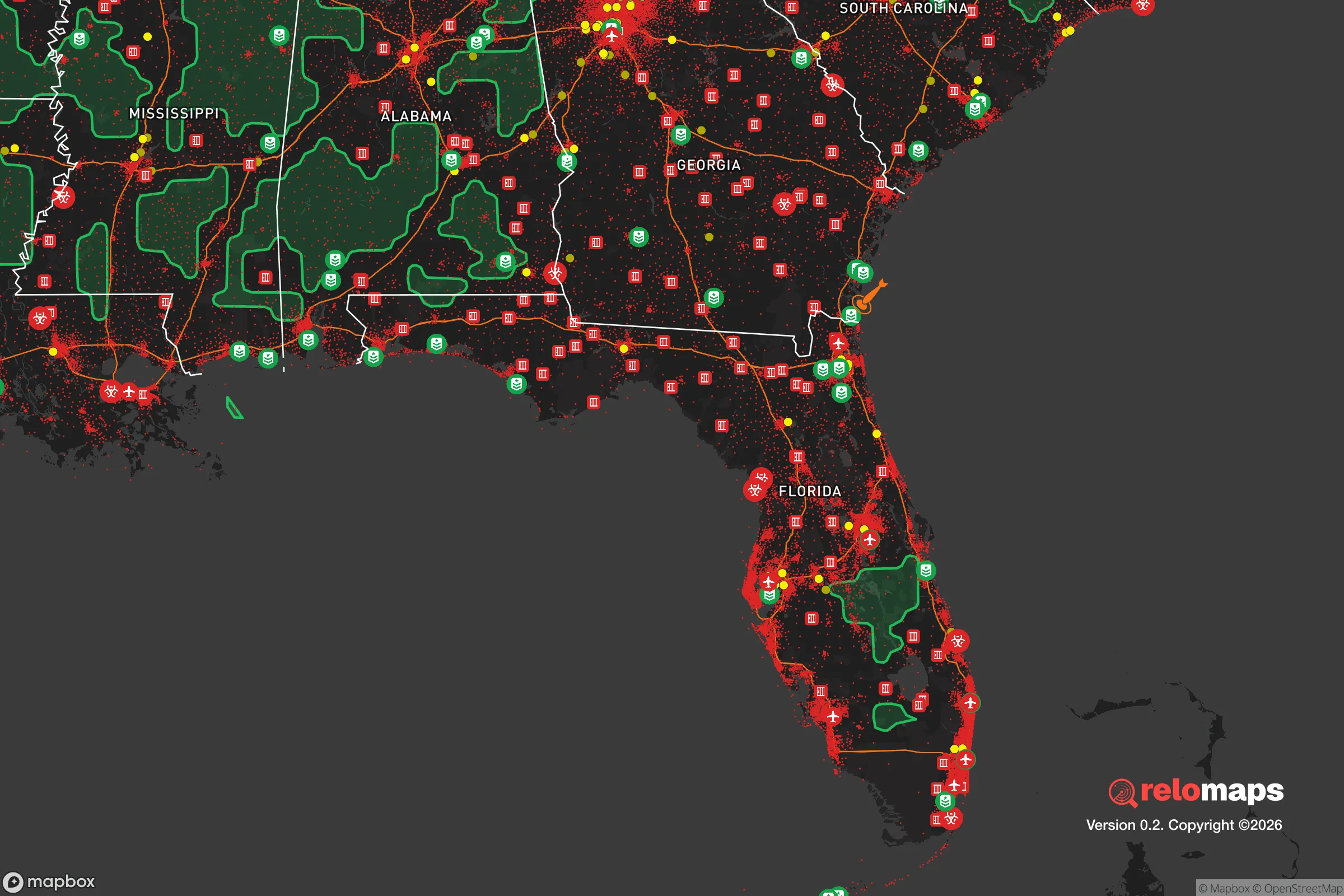


Important Note: For informational purposes only. This does not mean nothing bad ever happens in the green zones. Please use common sense. This is based on public data and modeled with AI. We tried to take a conservative approach but mistakes happen. We update this regularly as new information becomes available.
Solar Generator Recommendations
Backup power matters more here than in safer locations. We've picked three solar generators across budgets and capacity tiers — start with the budget unit if you only need a few essentials, or step up if you want to run a fridge and HVAC for days at a time.

Jackery Portable Power Station Explorer 300
Budget OptionPower on the Go: Weighing only 11 lbs, it's convenient to set up and store with book-sized foldable solar panels

BLUETTI Portable Power Station AC180
Designed for both indoor and outdoor scenarios, AC180 is highly capable as it has a robost capacity and continuous output power.

EF ECOFLOW DELTA Pro Ultra Power Station
Upgraded PickEcoFlow DELTA Pro Ultra is a whole-home energy system designed to grow with your family. Integrated with the Smart Home Panel 2, it scales to meet your evolving energy needs — keeping your home powered, intelligent, and secure through every stage of life.
We earn a commission, at no additional cost to you.
Strategic Assessment Analysis
Palm Bay, Florida, presents a mixed strategic picture for the conservative prepper. Its primary resilience advantage is its location on Florida's Atlantic coast, far enough south to avoid the worst of most hurricane tracks yet far enough from Miami to offer some buffer from the worst of urban collapse scenarios. However, its position within the I-95 corridor and proximity to Cape Canaveral—a high-value target in any major conflict—introduces significant vulnerabilities that any serious relocator must weigh carefully.
Geographic position and natural advantages for long-term survival
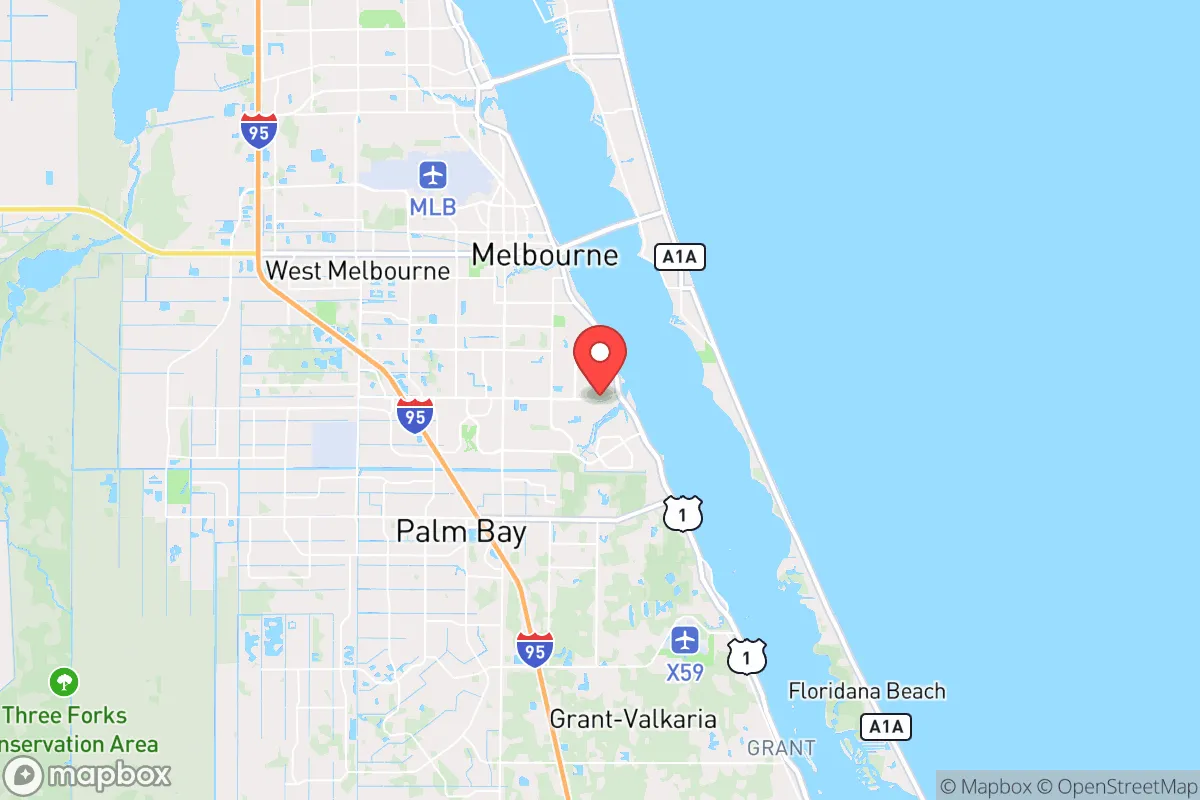
Palm Bay sits in Brevard County, roughly 70 miles southeast of Orlando and 170 miles north of Miami. The area's primary natural advantage is its access to the Indian River Lagoon and the Atlantic Ocean, providing multiple avenues for fishing, water collection, and potential evacuation by boat if roadways become impassable. The local climate is subtropical, with a growing season that allows for year-round food production—a critical factor for any long-term self-sufficiency plan. The terrain is relatively flat, with sandy soils that drain quickly, which is beneficial for both gardening and avoiding the flooding that plagues other parts of Florida. The region's aquifer, the Floridan Aquifer, is one of the most productive in the world, and many rural parcels in the western part of the county have access to well water, a key resilience asset. For a relocator seeking to establish a homestead with some degree of independence, the combination of water access, arable land, and a mild winter climate is genuinely attractive.
Risks, exposures, and proximity to high-value targets
The most serious strategic liability for Palm Bay is its proximity to Cape Canaveral Space Force Station and Patrick Space Force Base, located roughly 20 miles north. In any major conflict involving the United States, these are among the highest-value military targets on the East Coast. A kinetic or electromagnetic pulse (EMP) strike against the Cape would likely devastate the entire Brevard County region, including Palm Bay. Additionally, the area sits within the I-95 corridor, a primary evacuation route that would become a parking lot in any mass evacuation scenario. The risk of civil unrest is moderate but real: Palm Bay's population has grown rapidly, from roughly 100,000 in 2010 to over 125,000 today, and the city's infrastructure has not kept pace. The local economy is heavily dependent on the space industry and tourism, both of which are vulnerable to economic shocks. For the prepper, the key takeaway is that Palm Bay offers good natural resources but sits in a high-risk zone for targeted attacks and grid-down scenarios due to its military and infrastructure assets.
Practical resilience: food, water, energy, and defensibility
For a relocator serious about self-sufficiency, Palm Bay's practical resilience is a mixed bag. Water is the strongest asset: the Floridan Aquifer is shallow and accessible, and many properties in the western part of the county can be drilled for a well at reasonable cost. Rainwater collection is also viable, with the area receiving about 53 inches of rain annually. Food production is feasible: the growing season is nearly year-round, and citrus, vegetables, and even small livestock can be raised on a few acres. However, the soil is sandy and requires significant amendment, and the humidity can be hard on stored grains and supplies. Energy independence is achievable but requires investment: solar is viable, with the area averaging over 230 sunny days per year, but the risk of hurricanes means any solar setup must be robust and able to withstand high winds. Battery storage is essential, as grid outages are common during storm season. Defensibility is a concern: Palm Bay is a sprawling, low-density suburb with many cul-de-sacs and open lots, making it difficult to secure a perimeter. The city's police force is adequate for routine matters, but in a collapse scenario, the sheer number of people and the lack of natural chokepoints would make organized defense challenging. The best strategy for a prepper here is to secure a property on the western edge of the county, closer to the St. Johns River and the rural areas of Osceola County, where population density drops and natural barriers increase.
The overall strategic picture for the conservative relocator
Palm Bay is not a prepper's paradise, but it is a viable option for those who understand its trade-offs. The area offers genuine natural advantages—water, climate, and growing conditions—that are hard to find elsewhere on the East Coast. However, its proximity to high-value military targets and its position on a major evacuation corridor introduce risks that cannot be ignored. For the conservative relocator who is willing to invest in a well, solar, and a defensible property on the rural fringe, Palm Bay can work as a base for a resilient lifestyle. But for those seeking true isolation and security, the interior of the state—farther from the coast and from strategic targets—would be a stronger choice. The bottom line: Palm Bay is a decent option for the prepared, but it is not a bug-out location. It is a place to build a life with your eyes open, knowing that the same ocean that provides fish and breeze also brings hurricanes and, potentially, the attention of adversaries who know exactly where the Cape is.

* Values derived from national, state, county, city and local statistics and may differ in a specific area. Last updated: 2026-09-21T19:02:03.000Z
Narrative content on this page is AI-generated and may contain mistakes. Verify any details that matter before acting on them.
ReloMaps may earn a commission from affiliate links at no extra cost to you.

