Photo: Wikipedia
Demographics of Centre County
Affluence Level in Centre County
A middle-class area roughly in line with national averages across income, home values, education, and employment.
People of Centre County
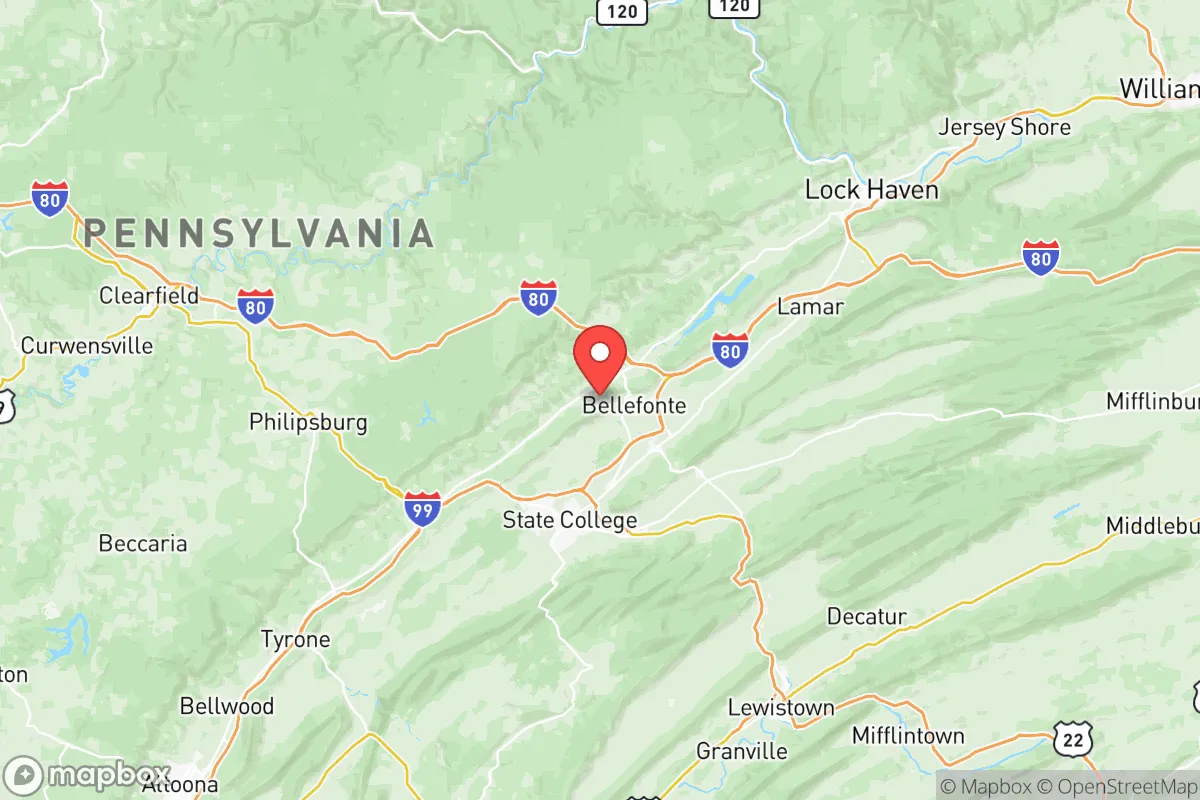
Today, Centre County, Pennsylvania, is home to roughly 158,000 residents, a population shaped by a unique blend of a dominant university culture and a deep-rooted rural and small-town character. The county is notably more educated than the national average, with 46.5% of adults holding a college degree, a figure driven largely by the presence of Penn State University in State College. While the population remains predominantly white at 83.5%, it is more diverse than much of rural Pennsylvania, with growing East and Southeast Asian (4.8%), Black (3.2%), and Hispanic (3.6%) communities, alongside a notable Indian subcontinent population of 1.3%. The county's identity is a constant negotiation between the transient, globally-minded university community and the multi-generational families rooted in its historic boroughs and townships.
Settlement & growth (pre-1960)
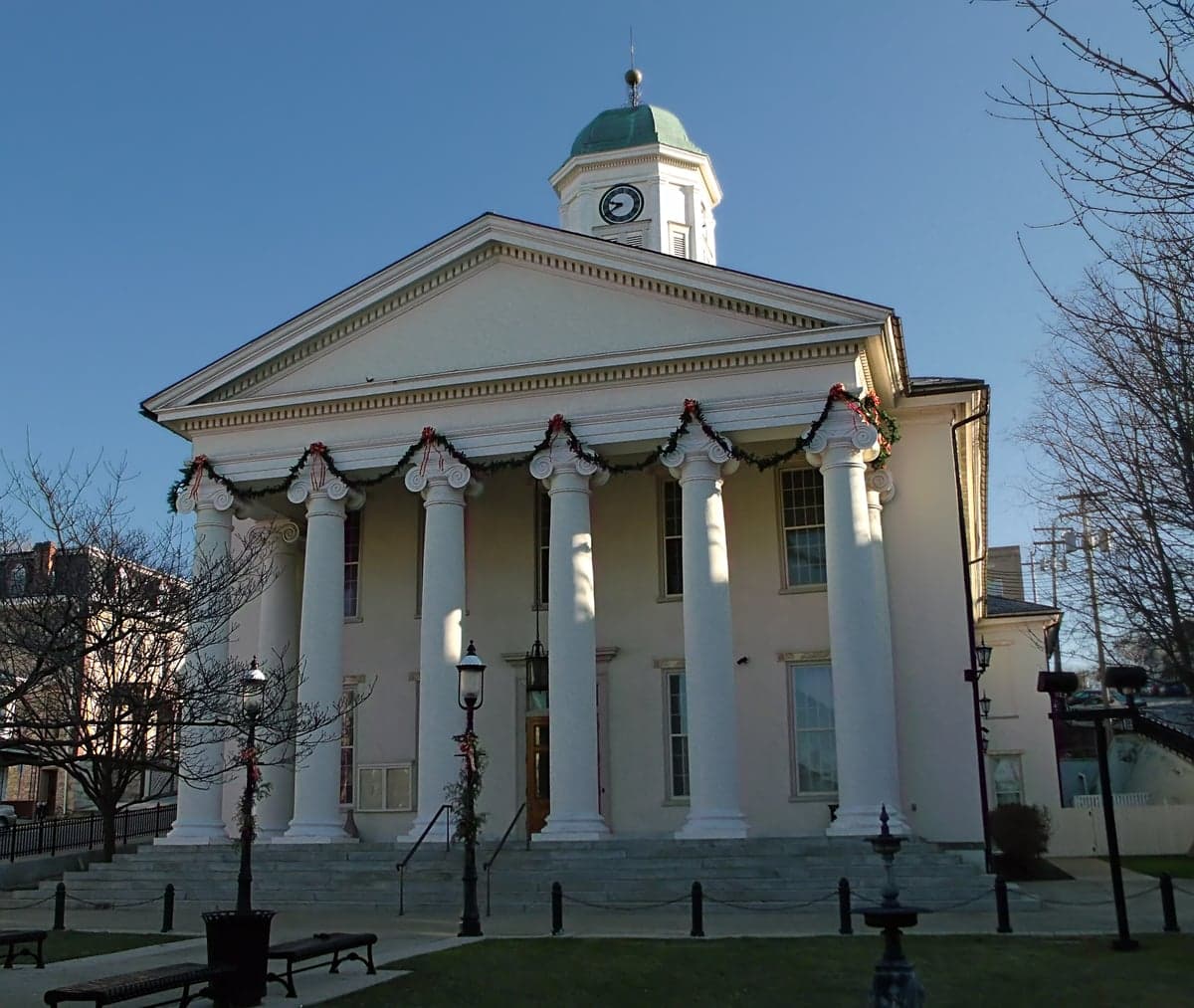
Long before European settlers arrived, the region that is now Centre County was the homeland of the Iroquoian-speaking Susquehannock people, and later, the Lenape and Shawnee used its valleys as hunting grounds. The area was a contested frontier between the British colonies and New France, with no permanent European settlement until after the French and Indian War. The first wave of permanent settlers, arriving in the 1760s and 1770s, were primarily of Scots-Irish and German descent. These families pushed into the Nittany and Penns Valleys, establishing farms and small communities. The town of Bellefonte, founded in 1795, quickly became the county's political and commercial hub, its iron-rich limestone deposits fueling a booming iron industry that attracted skilled Welsh and English ironworkers. Meanwhile, the village of Boalsburg, settled by Scots-Irish families, grew as a farming and stagecoach stop and later claimed the title of the birthplace of Memorial Day.
The 19th century saw the arrival of a smaller but significant wave of German and Italian immigrants, who found work in the region's limestone quarries and the burgeoning iron furnaces that dotted the landscape, such as those in Centre Hall and Milesburg. The most transformative event in the county's history was the founding of the Agricultural College of Pennsylvania in State College in 1855. For decades, the college grew slowly, but the passage of the Morrill Land-Grant Acts and the establishment of the Pennsylvania State College system in the late 19th and early 20th centuries began to draw faculty and students from across the state and nation. The arrival of the railroad further connected the county, but its population remained largely rural and agricultural through the first half of the 20th century, with small boroughs like Philipsburg serving as commercial centers for the surrounding farm and mining communities.
Modern era (post-1965)
The post-1965 era, driven by the Hart-Cellar Act and the massive expansion of Penn State University, fundamentally reshaped Centre County's demographics. The university's rise as a global research institution, particularly from the 1970s onward, began attracting a significant international population. The first major wave of new immigrants were East and Southeast Asian graduate students and faculty, primarily from China, South Korea, and Taiwan, who settled in and around State College and the adjacent College Township. This community has grown steadily and now constitutes 4.8% of the county's population, with a visible presence in the university's academic departments and a cluster of Asian grocery stores and restaurants along North Atherton Street. A separate, smaller wave of immigrants from the Indian subcontinent (1.3% of the population) followed a similar path, drawn by STEM and business programs at Penn State, and their families now form a distinct community within the State College area.
Domestically, the county has seen a steady influx of domestic migrants, though not from the Rust Belt decline seen in western Pennsylvania. Instead, Centre County attracts a mix of Penn State graduates who stay to work in the local economy, and retirees and remote workers drawn to the area's natural beauty and lower cost of living compared to major metros. This domestic migration has fueled suburban-style growth in townships surrounding State College, such as Patton Township and Ferguson Township, where new housing developments have sprung up. The county's Black and Hispanic populations, while still small at 3.2% and 3.6% respectively, have grown modestly, largely through university-related employment and family migration. The historic borough of Bellefonte, once the county's undisputed center, has seen a revival as a more affordable alternative to State College, attracting young families and professionals while retaining its historic character.
The future
Centre County's demographic trajectory is almost entirely tied to the fortunes of Penn State University. The population is projected to continue a slow, steady growth, driven by the university's expansion and its ability to attract international talent. The county is becoming more diverse, but this diversity is heavily concentrated in the State College area and is largely a function of the university's global draw. The East and Southeast Asian and Indian subcontinent populations are likely to grow as a share of the total, while the white, non-Hispanic population will continue to age and decline slightly in its rural areas. The county's cultural identity is evolving into a two-tiered system: a cosmopolitan, highly educated, and diverse core around the university, and a more traditional, rural, and politically conservative periphery in towns like Philipsburg and Snow Shoe. This divide is likely to persist, with the State College area becoming more diverse and the outlying areas remaining predominantly white.
For someone moving in now, Centre County offers a distinct choice. The State College area provides a vibrant, educated, and increasingly multicultural environment with a strong economy, while the surrounding boroughs and townships offer a quieter, more affordable, and deeply rooted Pennsylvania small-town life. The county's future is one of managed growth and demographic bifurcation, where the university's gravitational pull will continue to shape who lives here and where they choose to settle.

* Values derived from national, state, county, city and local statistics and may differ in a specific area. Last updated: 2026-08-09T14:23:24.000Z
Narrative content on this page is AI-generated and may contain mistakes. Verify any details that matter before acting on them.
ReloMaps may earn a commission from affiliate links at no extra cost to you.

