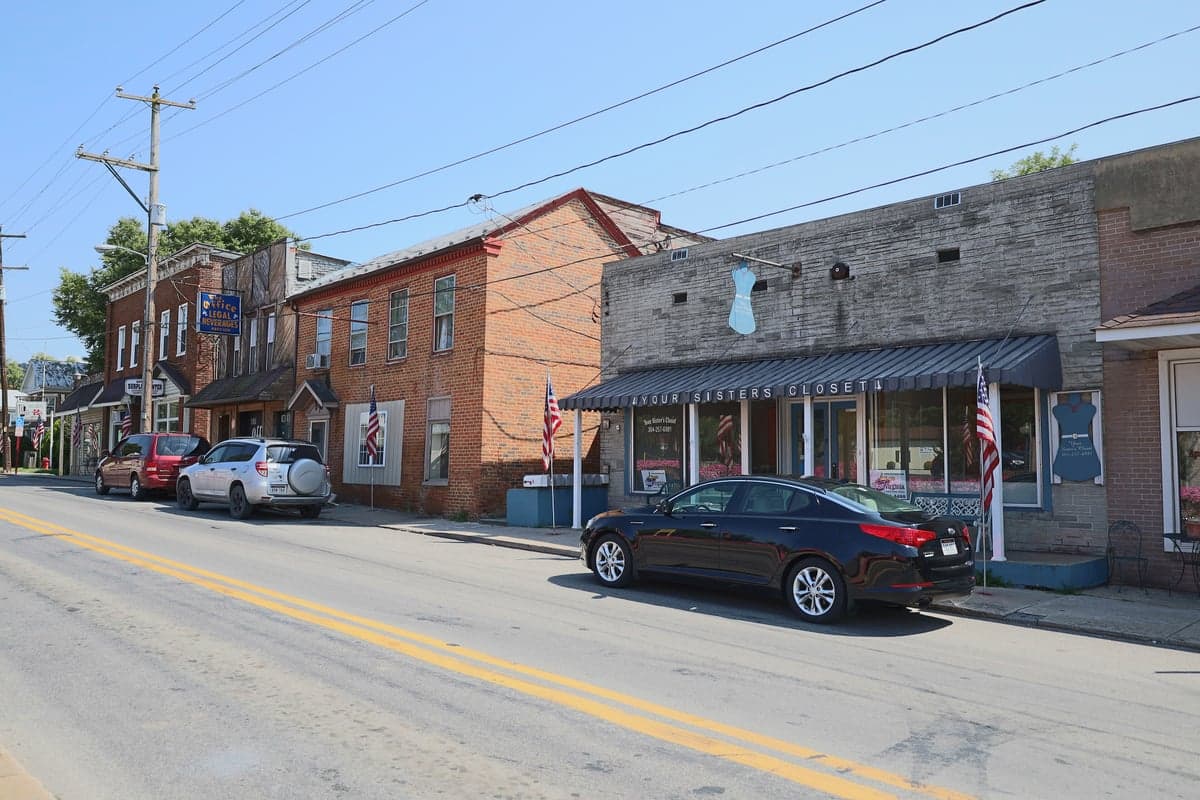
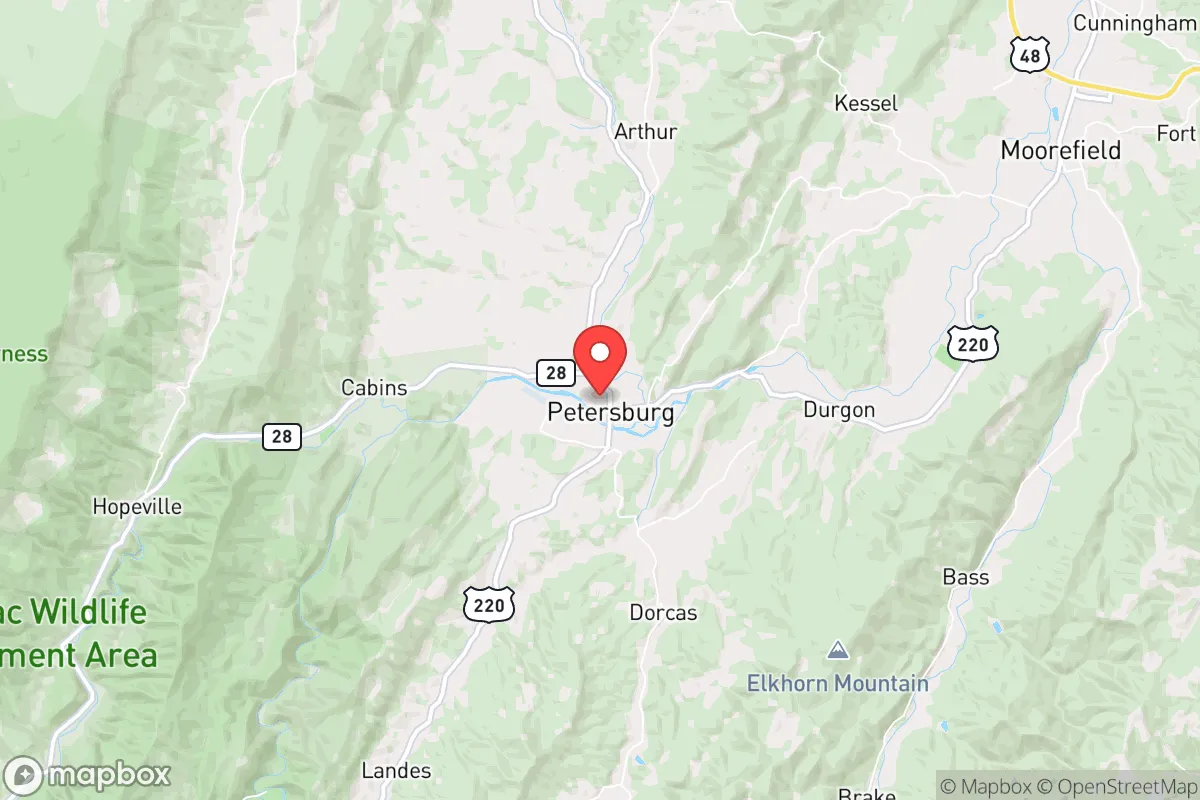
Photo: Wikipedia
Strategic Assessment of Petersburg, WV
Meaningful friction. Expect exposure to either population pressure, blast zones, or natural disaster risk. Consider buying a retreat property.
What does the Strategic Assessment tell us?
Our Strategic Assessment grades tactical survivability of an area. Major population centers, military targets, fallout zones, natural disasters, and border exposure all drive risk — lower exposure means a more defensible position in a crisis.
This is heavily inspired by Joel Skousen's Strategic Relocation book. Highly recommended you checkout the book ($)What does this tell us?
Our Strategic Assessment grades tactical survivability of an area. Major population centers, military targets, fallout zones, natural disasters, and border exposure all drive risk — lower exposure means a more defensible position in a crisis.
This is heavily inspired by Joel Skousen's Strategic Relocation book. Highly recommended you checkout the book ($)Strategic Pillars

Key Distances
Regional Safe Places
Below is our recommended "safe zones" in West Virginia and the surrounding area based on our strategic heuristics. For most people, it's unrealistic to live in a “safe zone” full-time due to work, family or other personal reasons. They tend to be more rural. However, many of these areas are perfect for second homes and retreat properties that double as a vacation home or even a short-term rental.
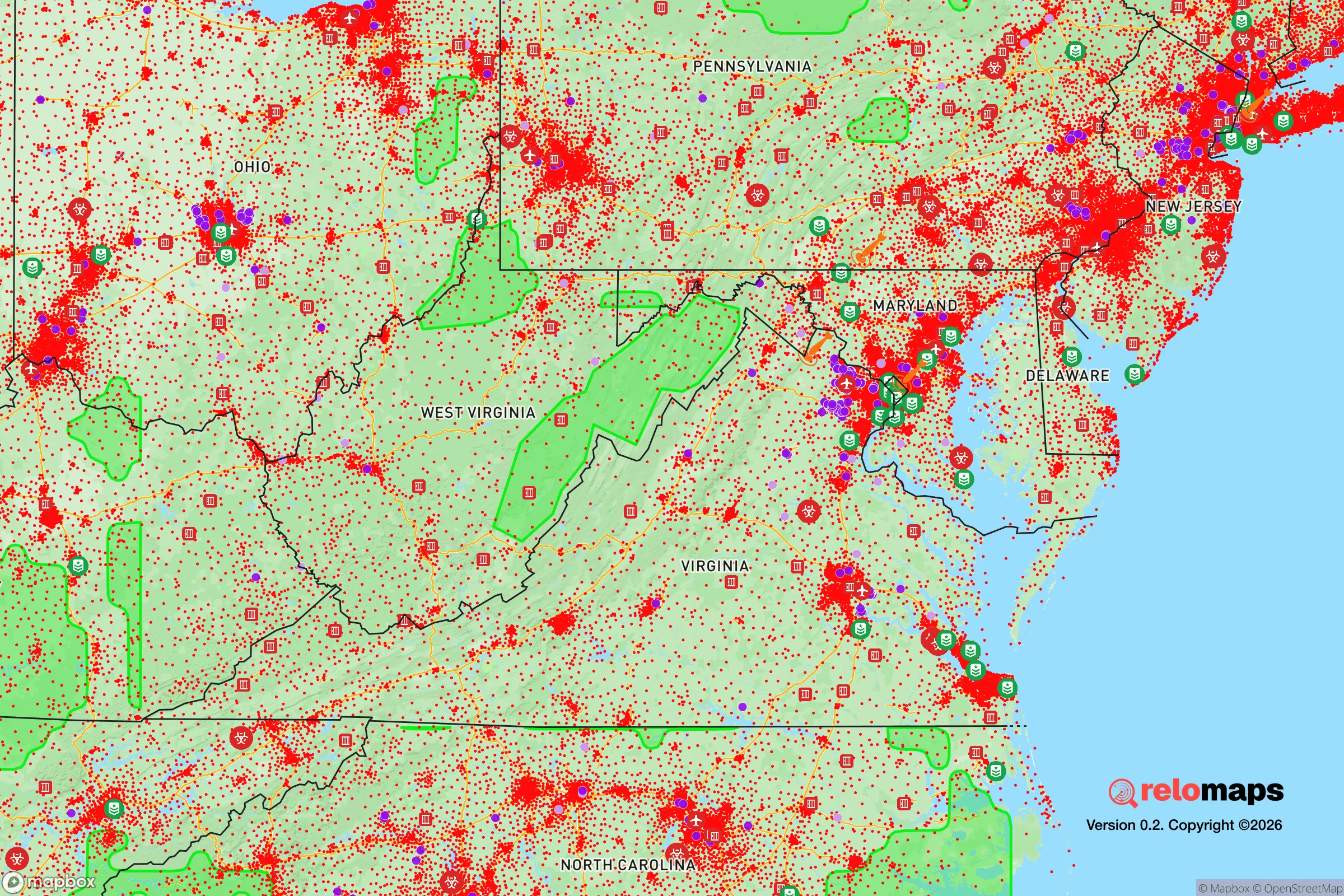
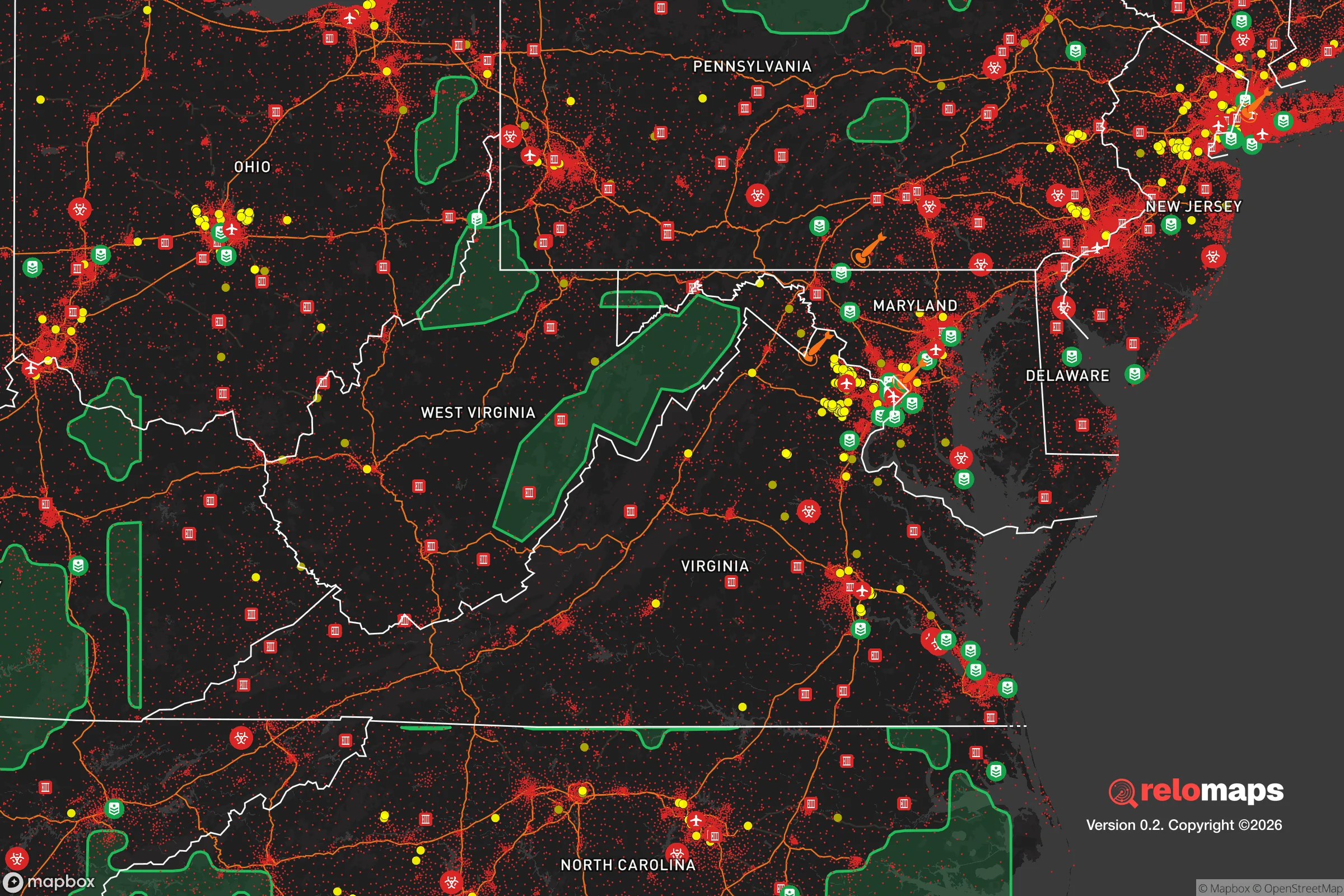


Important Note: For informational purposes only. This does not mean nothing bad ever happens in the green zones. Please use common sense. This is based on public data and modeled with AI. We tried to take a conservative approach but mistakes happen. We update this regularly as new information becomes available.
Solar Generator Recommendations
Backup power matters more here than in safer locations. We've picked three solar generators across budgets and capacity tiers — start with the budget unit if you only need a few essentials, or step up if you want to run a fridge and HVAC for days at a time.

Jackery Portable Power Station Explorer 300
Budget OptionPower on the Go: Weighing only 11 lbs, it's convenient to set up and store with book-sized foldable solar panels

BLUETTI Portable Power Station AC180
Designed for both indoor and outdoor scenarios, AC180 is highly capable as it has a robost capacity and continuous output power.

EF ECOFLOW DELTA Pro Ultra Power Station
Upgraded PickEcoFlow DELTA Pro Ultra is a whole-home energy system designed to grow with your family. Integrated with the Smart Home Panel 2, it scales to meet your evolving energy needs — keeping your home powered, intelligent, and secure through every stage of life.
We earn a commission, at no additional cost to you.
Strategic Assessment Analysis
Petersburg, West Virginia, sits in a geographic sweet spot that offers genuine strategic depth for those thinking about long-term resilience. Tucked into the Potomac Highlands of Grant County, this small town of roughly 2,500 people is far enough from major metropolitan corridors to avoid the worst of cascading collapse scenarios, yet close enough to access critical supplies and medical care if needed. The area’s low population density, rugged terrain, and distance from primary target zones make it a serious contender for anyone prioritizing self-sufficiency and security in an uncertain future.
Geographic position and natural advantages for long-term security
Petersburg’s location in the eastern panhandle of West Virginia places it in a natural fortress. The surrounding Allegheny Mountains and George Washington National Forest create a buffer zone that discourages casual traffic and provides ample cover for those who need to stay off the grid. The town sits at the confluence of the South Branch Potomac River, which offers a reliable water source—critical for any extended disruption of municipal systems. The area’s elevation, around 1,000 feet, reduces flood risk compared to lower-lying valleys, and the dense forest cover provides both concealment and a renewable resource for heating and construction. For a relocator, the key advantage is that Petersburg is roughly 90 miles from the Washington, D.C. metro area—close enough to monitor events, but far enough that a major event in the capital won’t immediately spill over. The nearest interstate, I-81, is about 30 miles west, which is a double-edged sword: it’s accessible for supply runs but not so close that it becomes a highway for refugees fleeing urban collapse. The local road network, including US-220 and WV-55, offers multiple egress routes into deeper wilderness, a feature that becomes invaluable if civil unrest or a mass casualty event forces a rapid retreat.
Risks, exposures, and proximity to fallout-relevant landmarks
No location is immune to risk, and Petersburg has its share of exposures that a prepper must weigh. The most significant concern is its proximity to the Washington, D.C. metro area, which is a high-value target for any state-level adversary or domestic terror group. A nuclear or radiological event in D.C. would send fallout patterns eastward, but Petersburg’s position west of the capital and the intervening mountain ranges offer some shielding. Still, prevailing winds in the region are variable, and a ground burst could push contamination into the Potomac watershed. The town is also within 150 miles of the Blue Ridge and Shenandoah regions, which host military installations like the Pentagon, Quantico Marine Corps Base, and Dahlgren Naval Surface Warfare Center. These are potential targets for a coordinated attack, and while Petersburg is not in the immediate blast zone, secondary effects like electromagnetic pulse (EMP) could disrupt power grids and communications across the entire eastern seaboard. On the plus side, Grant County has no major industrial or chemical facilities that would produce secondary hazards, and the nearest nuclear power plant—the North Anna facility in Virginia—is over 100 miles away, reducing the risk of a local meltdown scenario. The real vulnerability here is not direct attack but the secondary wave of refugees. If a mass casualty event or civic unrest empties D.C., Baltimore, or Richmond, Petersburg could see a surge of displaced people moving through on US-220. The town’s small size means it lacks the infrastructure to absorb a large influx, so a relocator should plan for self-sufficiency during the first 72 hours to two weeks, when outside help may be nonexistent.
Practical resilience for a relocator: food, water, energy, and defensibility
For the individual or family looking to hunker down, Petersburg offers a mix of advantages and gaps that require proactive planning. Water is the strongest asset: the South Branch Potomac River runs year-round, and the area’s high water table means shallow wells are feasible for those who buy land with a drilled well. The local municipal water system draws from the river, but a prepper should assume it will fail during a grid-down event and have a backup filtration system like a Berkey or Sawyer. Food security is moderate. Grant County has a handful of small farms and orchards, but the growing season is short (roughly 140 days) due to elevation, so long-term self-sufficiency requires greenhouse investment or stockpiling. The local grocery store, Foodland, is adequate for routine resupply but will empty quickly in a crisis. A better strategy is to establish relationships with local hunters and farmers—deer, turkey, and small game are abundant in the national forest, and fishing in the Potomac is reliable. Energy is a mixed bag. The grid is served by Potomac Edison, and outages are common during winter storms, so solar panels with battery storage are a wise investment. The area’s tree cover means passive solar is limited, but wood stoves are standard in many homes and provide both heat and cooking capability. Defensibility is where Petersburg shines. The terrain is hilly and forested, with limited choke points on the main roads. A property set back from US-220 on a gravel road offers natural concealment and a clear line of sight for anyone approaching. The local sheriff’s office is small (about 10 deputies for the entire county), so law enforcement response times can be long in a crisis. This is not a negative for a prepared relocator—it means less interference and more room to operate, but it also means you cannot rely on outside help for security. The community itself is tight-knit and largely rural, with a culture of self-reliance that aligns with conservative values. Neighbors are likely to band together in a crisis, but a newcomer should invest time in building trust before an event occurs.
The overall strategic picture for Petersburg is one of calculated trade-offs. It offers a defensible, resource-rich environment that is far enough from major targets to survive a first-strike scenario, yet close enough to monitor the collapse of the eastern seaboard. The primary risk is not direct attack but the secondary effects of mass displacement and grid failure. For a relocator with a prepper mindset, the key is to arrive early, secure a property with a reliable water source and defensible position, and build local relationships before the crisis hits. Petersburg is not a bug-out location for a weekend warrior—it is a long-term homestead for those who understand that resilience is built, not bought. If you are serious about weathering the next decade of instability, this area deserves a hard look, but only if you are willing to put in the work to make it truly self-sufficient.

* Values derived from national, state, county, city and local statistics and may differ in a specific area. Last updated: 2026-05-01T08:02:59.000Z
Narrative content on this page is AI-generated and may contain mistakes. Verify any details that matter before acting on them.
ReloMaps may earn a commission from affiliate links at no extra cost to you.

