Photo: Wikipedia
Demographics of Pinedale, WY
Affluence Level in Pinedale, WY
A middle-class area roughly in line with national averages across income, home values, education, and employment.
People of Pinedale, WY
The people of Pinedale, Wyoming, today number 2,022, forming a predominantly white (83.0%) community with a significant Hispanic minority (14.0%) and a very small foreign-born population (2.6%). The city retains a strong Western, ranching, and energy-industry character, with nearly 40% of adults holding a college degree, reflecting a blend of longtime locals and professionals drawn by outdoor recreation and resource extraction. Pinedale is notably homogeneous in racial terms, with no recorded Black, East/Southeast Asian, or Indian subcontinent residents, making it one of the least diverse small cities in the state.
How the city was settled and grew
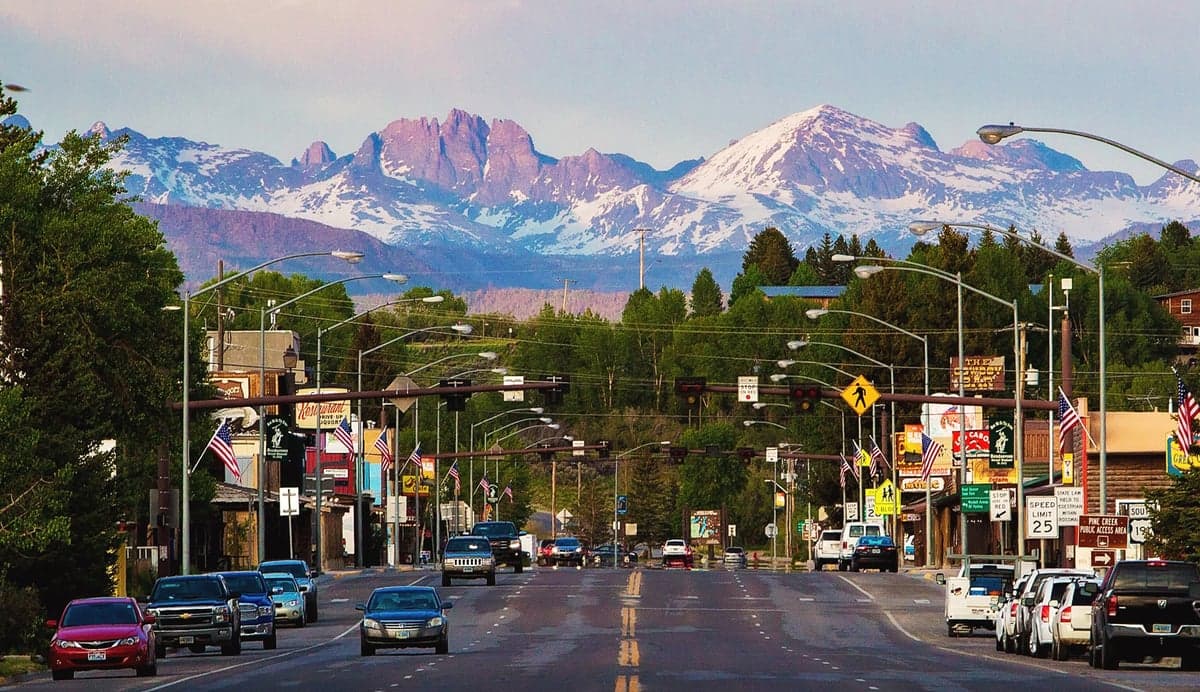
Pinedale’s human history begins with the Mountain Shoshone and other Native groups who used the Upper Green River Valley for seasonal hunting, but permanent Euro-American settlement did not begin until the 1870s. The town was formally platted in 1904 as a railroad terminus for the Wyoming Central Railway, drawing homesteaders, ranchers, and merchants. The original population was almost entirely of Northern European descent—English, Irish, German, and Scandinavian—who built the first homes and businesses along what is now Pine Street, the historic commercial core. Early subdivisions like Boulder Addition and South Pinedale housed the ranchers and railroad workers who formed the town’s economic base. A second wave arrived during the 1920s oil boom in the nearby Big Piney-La Barge fields, bringing roughnecks and their families to neighborhoods like East Pinedale, which grew as a working-class enclave. By 1950, the population had reached roughly 800, and the town remained overwhelmingly white, with a handful of Hispanic sheepherders and seasonal laborers living in bunkhouses on the outskirts.
Modern era (post-1965)
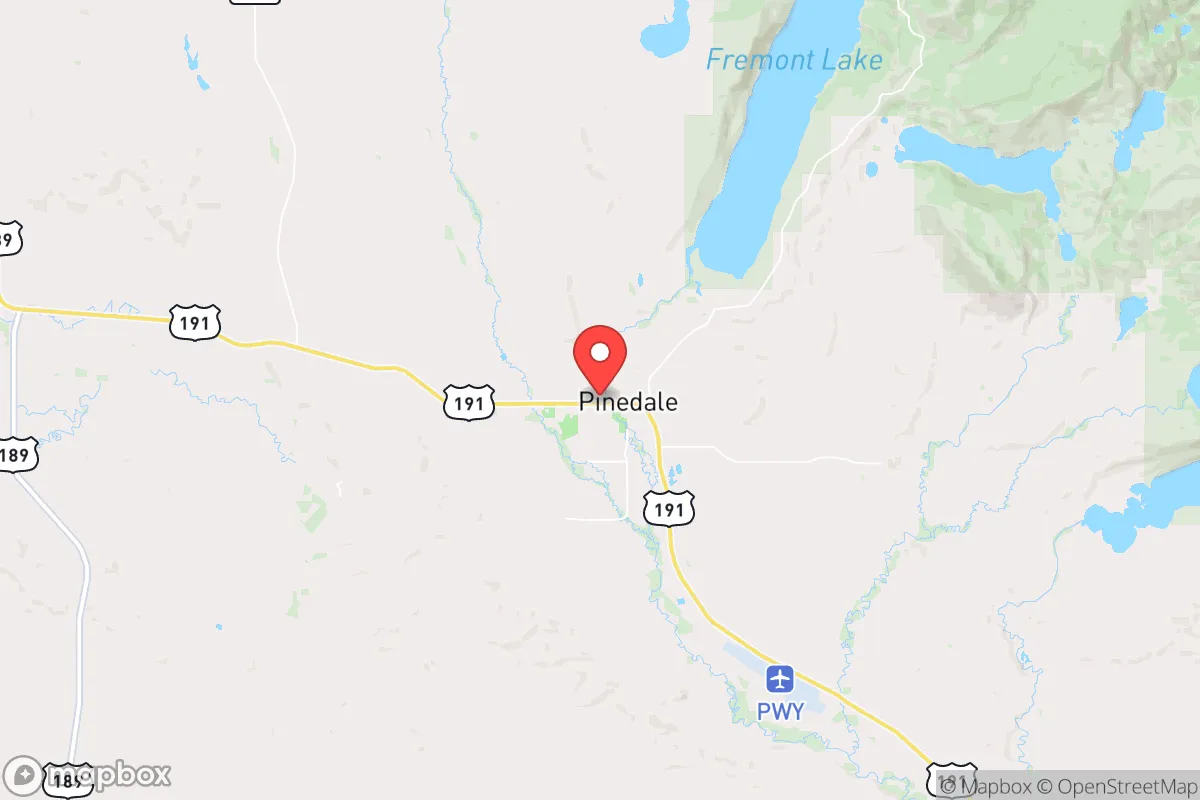
The modern demographic story of Pinedale is one of slow growth and limited diversification. The 1970s energy crisis spurred a second oil and gas boom, drawing workers from Texas, Oklahoma, and other Western states to the Sublette County area, but these migrants were overwhelmingly white and native-born. The Hispanic population began to grow noticeably in the 1990s and 2000s, driven by labor demand in the natural gas fields of the Jonah Field and Pinedale Anticline. Today, the 14.0% Hispanic share is concentrated in rental housing and mobile home parks in West Pinedale and along Highway 191, where many work in construction, service, and energy support roles. The white population remains dominant in the older, established neighborhoods: Pine Street Historic District retains its original ranching families, while newer subdivisions like Skyline Drive and White Pine Estates attract college-educated professionals in environmental consulting, tourism, and remote work. The foreign-born share (2.6%) is almost entirely Hispanic, with no measurable East/Southeast Asian or Indian subcontinent communities. The city’s racial homogeneity is reinforced by its remote location—over 100 miles from the nearest city of significant diversity (Rock Springs)—and by housing costs that have risen sharply since 2020, pricing out lower-income workers.
The future
Pinedale’s population is projected to remain stable or decline slightly over the next decade, as natural gas production plateaus and younger residents move to larger cities for education and employment. The Hispanic share is likely to grow modestly, potentially reaching 18-20% by 2035, as existing families have children and new workers arrive for service jobs in tourism and renewable energy (wind and solar projects are expanding in Sublette County). However, the city shows no signs of significant racial or ethnic diversification beyond this Hispanic growth. The white population is aging, and the college-educated cohort (39.9%) is increasingly drawn from outside the area, often buying homes in White Pine Estates or custom-built properties on the outskirts. The city is not tribalizing into distinct enclaves—Hispanic and white residents live in overlapping areas—but economic stratification is visible, with newer, higher-end subdivisions contrasting with older, lower-cost neighborhoods. No immigrant communities from Asia, Africa, or the Middle East are present or expected to form, given the lack of employment anchors or ethnic networks.
For someone moving to Pinedale now, the city offers a stable, culturally homogeneous community with a strong Western identity, a growing Hispanic workforce, and a professional class tied to energy and recreation. The population is not diversifying rapidly, but it is becoming slightly more Hispanic and more educated, while remaining one of the least racially diverse small cities in the Rocky Mountain region. New residents should expect a place where longtime ranching families, energy workers, and outdoor enthusiasts coexist in a tight-knit, politically conservative environment.

* Values derived from national, state, county, city and local statistics and may differ in a specific area. Last updated: 2026-04-21T11:36:24.000Z
Narrative content on this page is AI-generated and may contain mistakes. Verify any details that matter before acting on them.
ReloMaps may earn a commission from affiliate links at no extra cost to you.

