Photo: Wikipedia
Demographics of Prattville, AL
Affluence Level in Prattville, AL
A middle-class area roughly in line with national averages across income, home values, education, and employment.
People of Prattville, AL
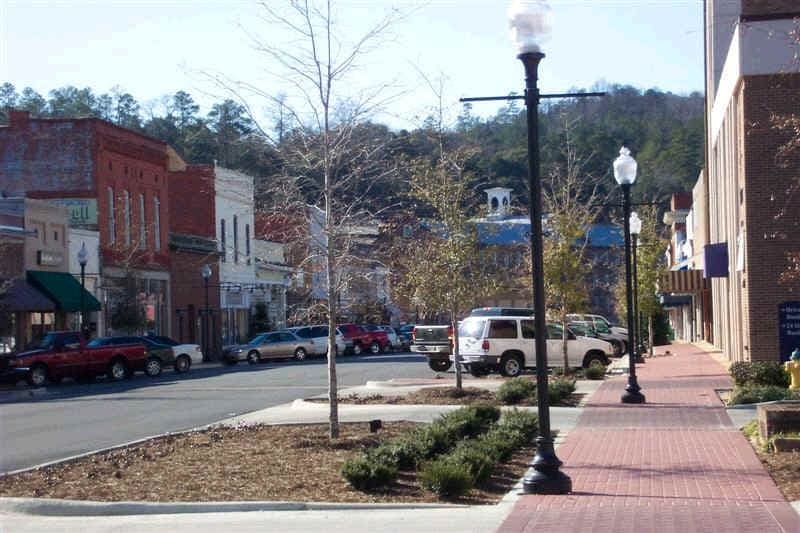
Prattville, Alabama, is a city of roughly 38,850 residents where the population is predominantly White (67.5%) and Black (21.8%), with a small but growing Hispanic community (4.3%) and a very low foreign-born share of just 1.7%. The city’s character is shaped by its historic role as a manufacturing hub and its modern identity as a family-oriented bedroom community for Montgomery and the River Region. Residents often describe Prattville as a place with a strong sense of local tradition, anchored by its historic downtown and the Autauga Creek mill district, yet increasingly diverse in its newer subdivisions. The population is notably well-educated, with 37.0% holding a college degree, and the city’s growth is driven primarily by domestic in-migration from other parts of Alabama and the Southeast.
How the city was settled and grew
Prattville was founded in 1839 by Daniel Pratt, a New Hampshire industrialist who established the Prattville Cotton Gin Manufacturing Company along Autauga Creek. The original population was a mix of skilled Northern mechanics and local laborers, many of whom were enslaved African Americans who built the mills and infrastructure. The historic Mill Village neighborhood, centered around the factory complex, housed these early workers in company-built cottages, creating a tightly knit industrial community. After the Civil War, freed Black families formed the Washington Park area, a historically African American neighborhood near the creek that remains a cultural anchor. The early 20th century brought a second wave of White mill workers from rural Alabama, who settled in the East Prattville district, a grid of modest homes east of the railroad tracks. By 1950, Prattville’s population was roughly 70% White and 30% Black, with the mill economy dominating daily life.
Modern era (post-1965)
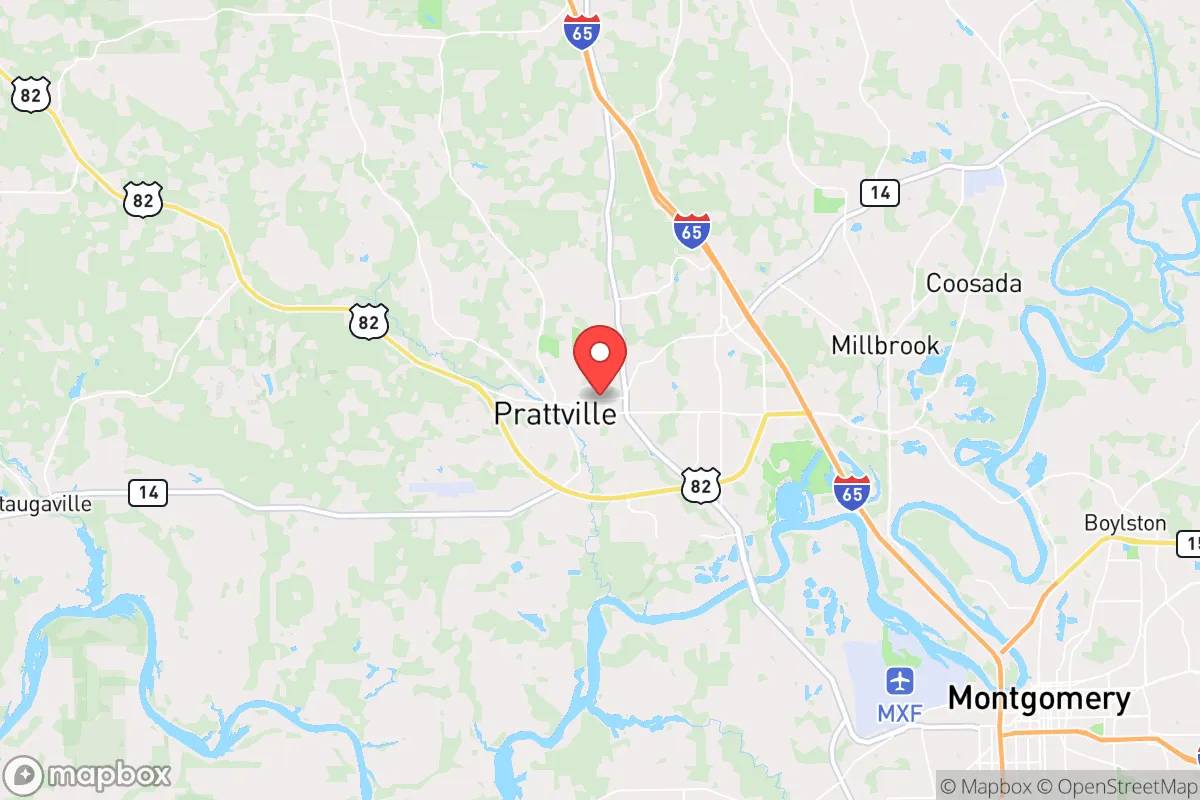
After the 1965 Immigration and Nationality Act, Prattville saw minimal foreign-born growth—the city’s foreign-born share remains just 1.7%, far below national averages. Instead, the post-1965 era was defined by domestic suburbanization. The construction of Interstate 65 in the 1970s turned Prattville into a commuter suburb for Montgomery, drawing White middle-class families to new subdivisions like Highland Park and Fairview Estates in the city’s northern and western edges. These neighborhoods are predominantly White, with homeownership rates above 80%. Meanwhile, Black families began moving out of historic Washington Park into newer, integrated subdivisions like Willow Creek and Ridgewood, though the city’s Black population share has remained stable at around 21-22% since 2000. The Hispanic population, now 4.3%, began growing in the 1990s, largely concentrated in the South Prattville area near the Autauga Creek industrial corridor, where many work in manufacturing and construction. East/Southeast Asian residents (1.2%) and Indian subcontinent residents (0.5%) are small but visible in professional fields, living mostly in the newer Lakeview and Deer Creek subdivisions built after 2000.
The future
Prattville’s population is slowly diversifying, but the trend is toward homogenization in established neighborhoods and gradual integration in newer developments. The White share has declined from 72% in 2010 to 67.5% today, while the Hispanic share has doubled from 2.1% to 4.3% over the same period. The Black population has remained steady, suggesting that most new Black residents are replacing those who leave rather than expanding the community. The foreign-born population is not growing rapidly—the 1.7% share is unchanged from 2010—meaning that future diversity will likely come from domestic migration of Hispanic and Asian families from other U.S. cities. The city’s annexation of land along the I-65 corridor is drawing new subdivisions like Autauga Creek Estates, which are attracting a mix of White and Black professionals from Montgomery. Over the next 10-20 years, Prattville will likely remain a predominantly White, family-oriented suburb with a stable Black minority and a slowly growing Hispanic presence, but it will not become a major immigrant destination. The city’s character will continue to be defined by its historic mill-town roots and its role as a quiet, affordable alternative to Montgomery.
For someone moving to Prattville now, the city offers a stable, low-crime environment with a clear sense of local history, but limited ethnic diversity. New residents will find that neighborhoods remain somewhat segregated by income and race, with older historic areas like Washington Park and Mill Village retaining their character, while newer subdivisions are more integrated. The population is educated and civically engaged, with a strong emphasis on schools and family life, making it a practical choice for conservative-leaning families seeking a predictable, community-oriented setting.

* Values derived from national, state, county, city and local statistics and may differ in a specific area. Last updated: 2026-04-19T19:06:40.000Z
Narrative content on this page is AI-generated and may contain mistakes. Verify any details that matter before acting on them.
ReloMaps may earn a commission from affiliate links at no extra cost to you.

