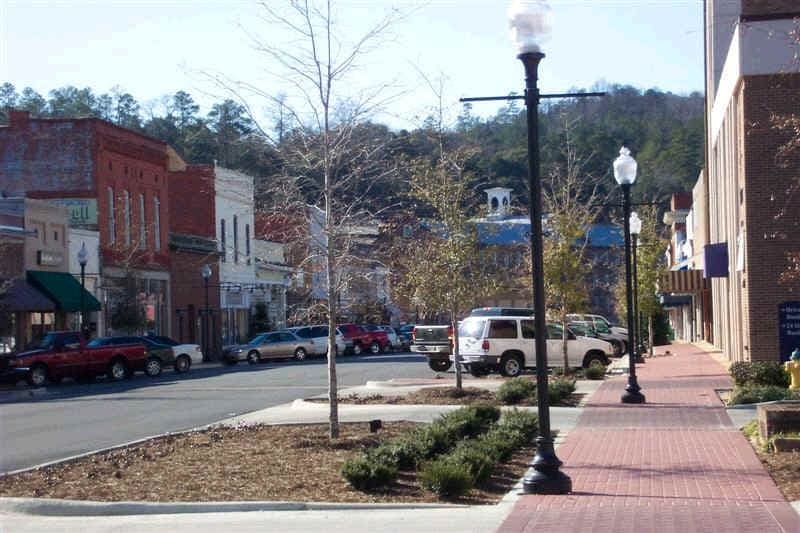
Photo: Wikipedia
Political ClimatePolitical Climate in Prattville, AL
District shown is the primary district for this city’s centroid. Cities may span multiple districts.
Local Political AnalysisPolitical Analysis of Prattville, AL
Prattville is about as solidly conservative as it gets in Alabama, and that’s not changing anytime soon. The Cook PVI of R+20 tells you the math, but the feel on the ground is even more pronounced—this is a place where traditional values and limited-government thinking aren’t just campaign slogans; they’re how most folks actually live their lives. The political trajectory here has been steady for decades, with no real signs of a shift toward the left, which is a relief for those of us who’ve watched other parts of the state start to wobble. You can still count on your neighbors to believe in personal responsibility, the Second Amendment, and keeping government out of your business.
How it compares
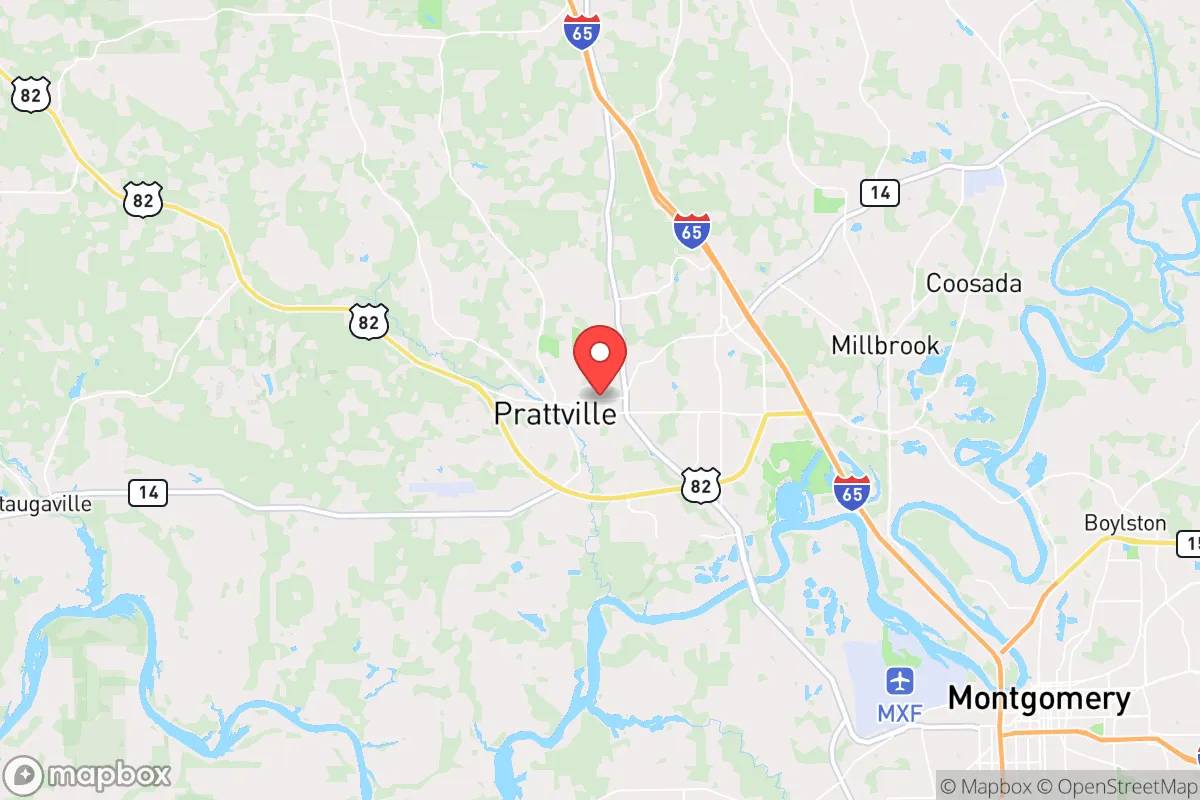
Drive 15 miles north to Montgomery, and you’re in a completely different world. The capital city leans Democratic, with a Cook PVI of D+15, and you can feel the difference in everything from local ordinances to the general attitude toward taxes and regulation. Prattville, by contrast, has held the line. We don’t have the progressive city council battles you see in places like Birmingham or Huntsville. Even compared to nearby Wetumpka or Millbrook, Prattville tends to be more reliably conservative in its voting patterns and local policy. The surrounding Autauga County is deep red, and that’s not an accident—it’s a reflection of a community that values freedom over government handouts and doesn’t buy into the idea that more laws equal a better life.
What this means for residents
For folks living here, the conservative climate means you’re not constantly fighting overreach in your daily life. Property taxes stay low, zoning is minimal, and you won’t find the kind of nanny-state rules that pop up in blue areas—like bans on plastic bags or strict noise ordinances that punish you for enjoying your own land. The schools and local government tend to focus on practical issues rather than social experiments. That said, there’s always a risk that outside pressure or federal mandates could try to force changes, especially on things like gun rights or school curriculum. So far, Prattville has resisted that well, but it’s something to keep an eye on as the national culture war heats up. The long-term outlook is good, though, because the people here are engaged and won’t quietly accept a loss of their freedoms.
One cultural distinction worth noting: Prattville has a strong sense of community rooted in church life and civic clubs, not in government programs. You’ll see more “We the People” than “Ask what your government can do for you.” There’s a healthy skepticism of any politician who promises to solve problems by expanding their own power. If you’re looking for a place where you can raise a family without constant political noise or bureaucratic headaches, this is it. Just don’t expect the local government to be your babysitter—they’ll leave you alone, and they expect the same in return.

State Political ClimatePolitical Climate in Alabama
State Political AnalysisPolitical Environment in the State
Alabama is a deeply conservative state, with Republicans holding every statewide elected office and supermajorities in both legislative chambers, a dominance that has only solidified over the past two decades. The state voted for Donald Trump by a 25-point margin in 2024, and the GOP’s grip extends from the governor’s mansion to the state school board. But if you’re looking to relocate here, you need to understand that this isn’t a monolith—the political climate varies dramatically depending on whether you’re in the booming suburbs of Madison or the Black Belt counties around Selma, and the real story is how the state’s conservative coalition is holding together even as national trends try to pull it apart.
Urban vs. rural divide
The political map of Alabama is a textbook case of the urban-rural split. The state’s few blue dots—Birmingham (Jefferson County), Montgomery, and Mobile—are Democratic strongholds, but they’re surrounded by deep-red suburbs and rural counties that swamp their votes. Jefferson County, home to Birmingham, went for Biden by 12 points in 2020, but the surrounding Shelby County voted for Trump by 30 points. The real action is in the fast-growing exurbs: Auburn and Opelika in Lee County are shifting right as new residents from Atlanta and the Northeast move in for lower taxes and better schools. Meanwhile, the Black Belt—counties like Lowndes and Wilcox—vote overwhelmingly Democratic but have shrinking populations, so their electoral weight is fading. The rural north, around Huntsville and Decatur, is reliably red but with a libertarian streak—people there care more about gun rights and low taxes than social issues.
Policy environment
Alabama’s policy environment is aggressively conservative, with a state income tax rate of 5% (flat) and no tax on Social Security benefits, making it attractive for retirees. The state has a right-to-work law, no state-level minimum wage above the federal $7.25, and a regulatory climate that the American Legislative Exchange Council consistently ranks as one of the most business-friendly in the country. On education, the state passed the Alabama CHOOSE Act in 2024, creating Education Savings Accounts worth up to $7,000 per child for private school or homeschooling expenses—a major win for school choice advocates. Healthcare is a mixed bag: Alabama did not expand Medicaid under Obamacare, leaving a coverage gap for low-income adults, but the state has some of the loosest telehealth laws in the South. Election laws are strict: voter ID is required, and the state purged 3,500 non-citizens from its rolls in 2024 after a data match with the DMV. The legislature also passed a law banning ballot drop boxes except in limited circumstances, a move that drew fire from progressives but was praised by election integrity groups.
Trajectory & freedom
On the freedom front, Alabama has been moving decisively in the direction of expanding personal liberty, especially on gun rights and parental control. In 2022, the state passed constitutional carry (permitless carry of a concealed firearm), joining 25 other states. The Alabama Parental Rights Protection Act (2024) requires schools to notify parents of any changes to a student’s health or well-being, including mental health services, and bans classroom instruction on sexual orientation or gender identity in K-5. Property rights got a boost with the Alabama Landowner Protection Act (2023), which limits eminent domain for private economic development. On medical freedom, the state banned COVID-19 vaccine mandates for public employees and contractors in 2021, and in 2023 it passed a law prohibiting discrimination against unvaccinated individuals. The only concerning trend is the state’s willingness to use tax dollars for corporate incentives—the Alabama Jobs Act gives generous tax breaks to big employers like Mercedes-Benz and Hyundai, which some conservatives see as crony capitalism. But overall, the trajectory is toward more freedom, not less.
Civil unrest & political movements
Alabama has seen relatively little civil unrest compared to other states, but there are flashpoints. The 2020 George Floyd protests in Birmingham turned violent, with looting and fires in the downtown area, leading to a heavy National Guard presence. Since then, the state has seen a rise in organized conservative activism, particularly around school board meetings in Madison and Hoover, where parents have pushed back against critical race theory and LGBTQ curriculum. Immigration politics are less heated here than in border states, but the legislature passed a law in 2024 requiring local law enforcement to cooperate with ICE detainers, and there’s a growing movement in Baldwin County (Gulf Shores) to restrict illegal immigration in the construction and hospitality sectors. Election integrity remains a hot topic: the 2022 Secretary of State race saw a Republican win on a platform of “clean rolls,” and the state’s 2024 voter purge was celebrated by conservative media. There’s also a small but vocal secessionist movement in north Alabama, centered around Jackson County, where some residents fly the “Republic of Alabama” flag at local festivals—mostly symbolic, but it reflects a deep distrust of federal authority.
Projection
Over the next 5-10 years, Alabama will likely become more conservative, not less, driven by in-migration from blue states. The Huntsville metro area, anchored by the Redstone Arsenal and NASA’s Marshall Space Flight Center, is adding 20,000 new residents a year, many from California and New York, and they’re voting Republican at higher rates than native Alabamians. The Black Belt will continue to lose population, reducing the Democratic base. The only wild card is the growing Hispanic population in Albertville and Russellville, which could shift some local elections if they naturalize and vote as a bloc—but so far, they’ve shown no signs of organizing politically. The state’s tax structure will likely move toward elimination of the income tax, as neighboring Tennessee and Florida have done, and school choice will expand further. Expect more preemption laws to block local ordinances on minimum wage, plastic bags, and rental regulations—the legislature is hostile to city-level progressivism. A new resident moving in now should expect to find a state that is stable, predictable, and increasingly aligned with traditional conservative values, with no serious threat of a political flip in the next decade.
For a conservative individual or family, Alabama offers a political climate that is reliably red, with a government that is actively expanding personal freedoms—especially on guns, school choice, and parental rights. The trade-off is that you’ll have to accept a lower level of public services (Medicaid expansion is dead, roads outside the metros are rough) and a tax code that still hits middle-class earners with a 5% income tax. But if you value a state where your vote counts, your kids aren’t exposed to progressive ideology in school, and your Second Amendment rights are secure, Alabama is a solid bet. Just know that the politics are more nuanced than the national headlines suggest—the real action is in the suburbs and exurbs, not the cities or the rural Black Belt.
* Values derived from national, state, county, city and local statistics and may differ in a specific area. Last updated: 2026-04-19T19:06:40.000Z
Narrative content on this page is AI-generated and may contain mistakes. Verify any details that matter before acting on them.
ReloMaps may earn a commission from affiliate links at no extra cost to you.

