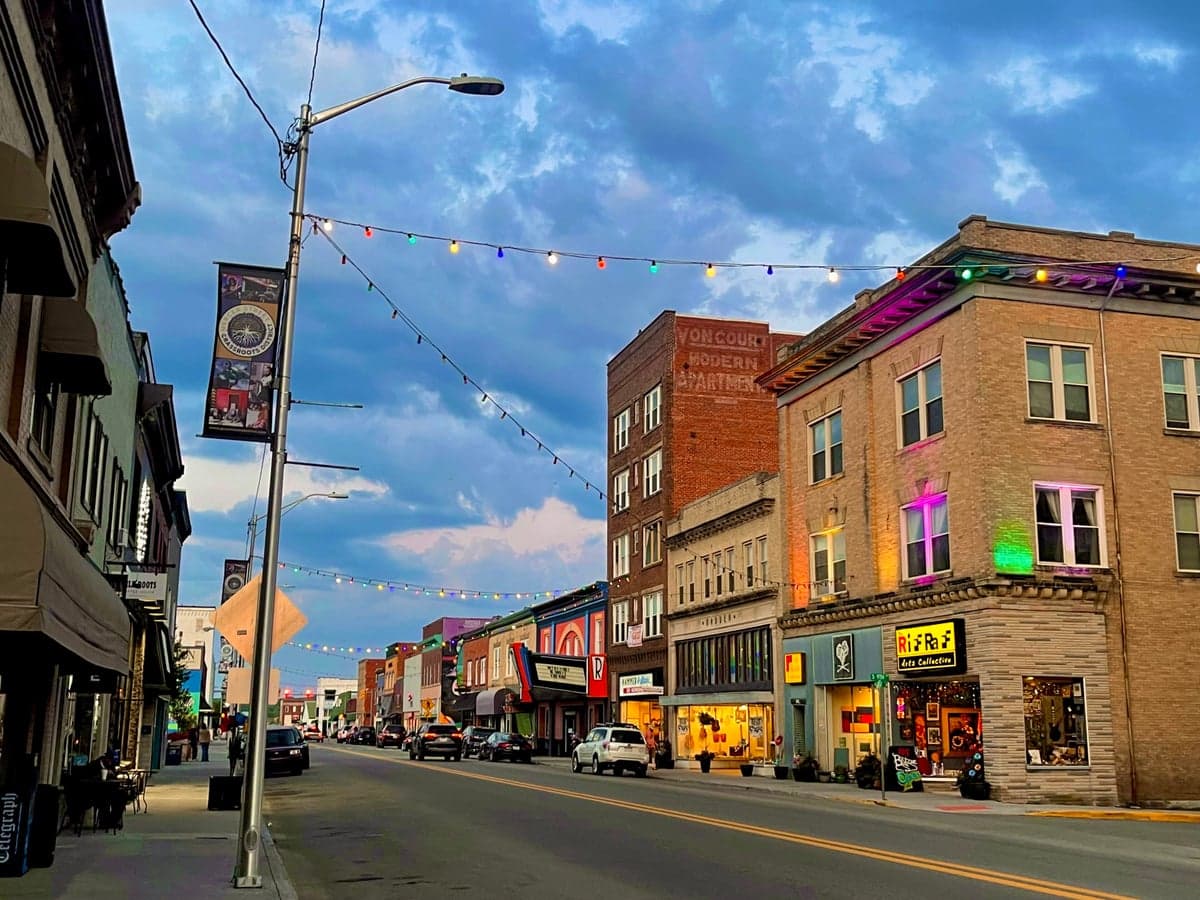
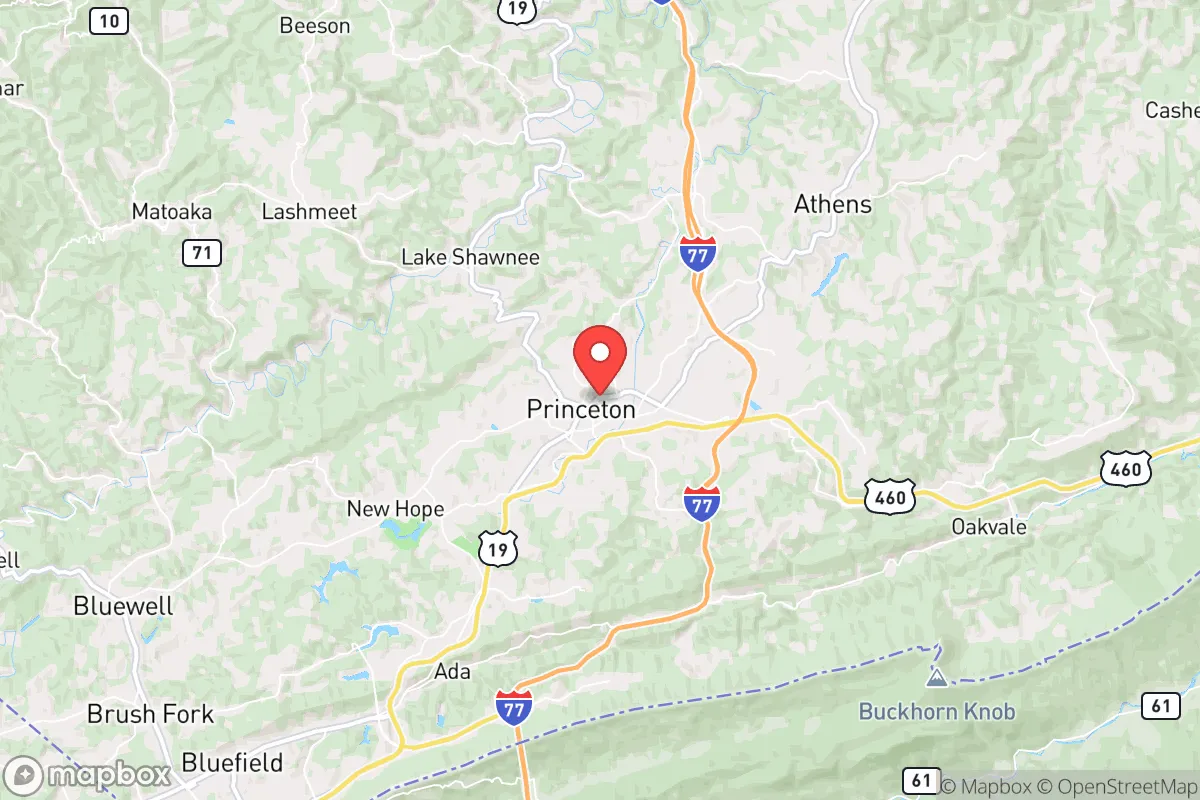
Photo: Wikipedia
Demographics of Princeton, WV
Affluence Level in Princeton, WV
A below-average socioeconomic profile. Incomes, home values, and educational attainment trail the U.S., with higher poverty and unemployment.
People of Princeton, WV
The people of Princeton, West Virginia, today form a small, predominantly white community of 5,780 residents, characterized by a strong sense of local identity and a slower pace of life. With 87.1% of the population identifying as white and a foreign-born share of just 0.2%, the city remains one of the least ethnically diverse in the region, reflecting its deep Appalachian roots. Distinctive markers include a high rate of native-born residents, a low college attainment rate of 19.2%, and a population that is notably older than the national median, with many families tracing their lineage back multiple generations. The city’s character is shaped by its history as a railroad and coal town, with a quiet, conservative social fabric that values self-reliance and community ties.
How the city was settled and grew
Princeton was founded in 1826 as the seat of Mercer County, strategically located along the path of the future Norfolk and Western Railway. The earliest settlers were primarily of English, Scots-Irish, and German descent, drawn by land grants and the promise of subsistence farming in the Appalachian foothills. The arrival of the railroad in the 1850s transformed Princeton into a regional hub for coal transport and timber, attracting a wave of laborers from surrounding rural areas. The historic Downtown district, centered on Main Street and Mercer Street, became the commercial and social heart, built by these early Anglo-American families. A second wave came during the early 20th century coal boom, when the Glenwood Park neighborhood was developed to house railroad workers and their families, many of whom were second-generation Appalachians moving off farms. The city’s growth plateaued after the 1950s as coal employment declined, leaving a population that was overwhelmingly native-born and white, with little in-migration from outside the region.
Modern era (post-1965)
Following the 1965 Hart-Cellar Act, Princeton experienced virtually no immigration-driven diversification. The foreign-born population remains at 0.2%, and the city’s demographic shifts have been driven entirely by domestic migration and natural change. The most notable trend has been suburbanization within Mercer County, with some younger families moving to newer subdivisions like Oakland Heights and Briarwood Estates, while older residents remained in the historic core. The Black population, at 4.1%, is concentrated in the East Princeton area near the former railroad yards, a legacy of limited African American settlement during the coal era. East/Southeast Asian residents (0.6%) are a tiny, scattered group, mostly professionals associated with the nearby Princeton Community Hospital. The Indian subcontinent population is effectively zero. The Hispanic share (0.5%) is negligible and largely transient, tied to seasonal agricultural work in surrounding counties. Overall, the modern era has seen Princeton become more residentially stable but also more demographically static, with little new blood from outside the region.
The future
Princeton’s population is projected to continue a slow decline, mirroring broader trends in southern West Virginia. The city is not homogenizing into a single enclave but rather tribalizing into distinct age-based and income-based pockets: older, long-term residents in the Downtown and Glenwood Park neighborhoods, and a slightly younger cohort in Oakland Heights and Briarwood Estates. Immigrant communities are not growing; the foreign-born share is so low that any increase would require a major economic shift, such as a new industrial employer. The next 10-20 years will likely see further aging of the population, with the college-educated share (19.2%) remaining low as younger adults leave for job opportunities in larger cities. For someone moving in now, Princeton offers a stable, culturally homogeneous environment where community ties are strong but economic and demographic dynamism is minimal.
Princeton is becoming a quieter, older, and more insular community, defined by its Appalachian heritage and a population that is overwhelmingly native-born and white. For a conservative-leaning individual or family seeking a low-cost, low-crime, and culturally familiar place, the city offers a predictable and rooted lifestyle. However, the lack of demographic diversity and limited economic growth mean that newcomers should expect a community that changes slowly, if at all, and where social networks are built on generations of local history.

* Values derived from national, state, county, city and local statistics and may differ in a specific area. Last updated: 2026-05-01T10:12:43.000Z
Narrative content on this page is AI-generated and may contain mistakes. Verify any details that matter before acting on them.
ReloMaps may earn a commission from affiliate links at no extra cost to you.

