Photo: Wikipedia
Quality of Life in Princeton, WV
A high quality of life with strong walkability, manageable living costs, healthy neighborhood signals, and solid amenity access.
What does Quality of Life tell us?
Quality of Life blends cost of living, nearby amenities, socioeconomic signals, and neighborhood character. City-level scores represent the whole municipality; individual neighborhoods can differ.
What does this tell us?
Quality of Life blends cost of living, nearby amenities, socioeconomic signals, and neighborhood character. City-level scores represent the whole municipality; individual neighborhoods can differ.
Cost of Living
41% below national average
The Real Cost of Living in Princeton, WV for 2026
| Tier | Individual | Family (4) |
|---|---|---|
| Survival | $13k | $25k |
| Comfortable | $22k | $33k |
| Luxury | $73k+ | $114k+ |
| Elite (Top 5%) | $86k+ | $134k+ |
134%
The Area Signal
A metric tracking the socioeconomic signals of the area.
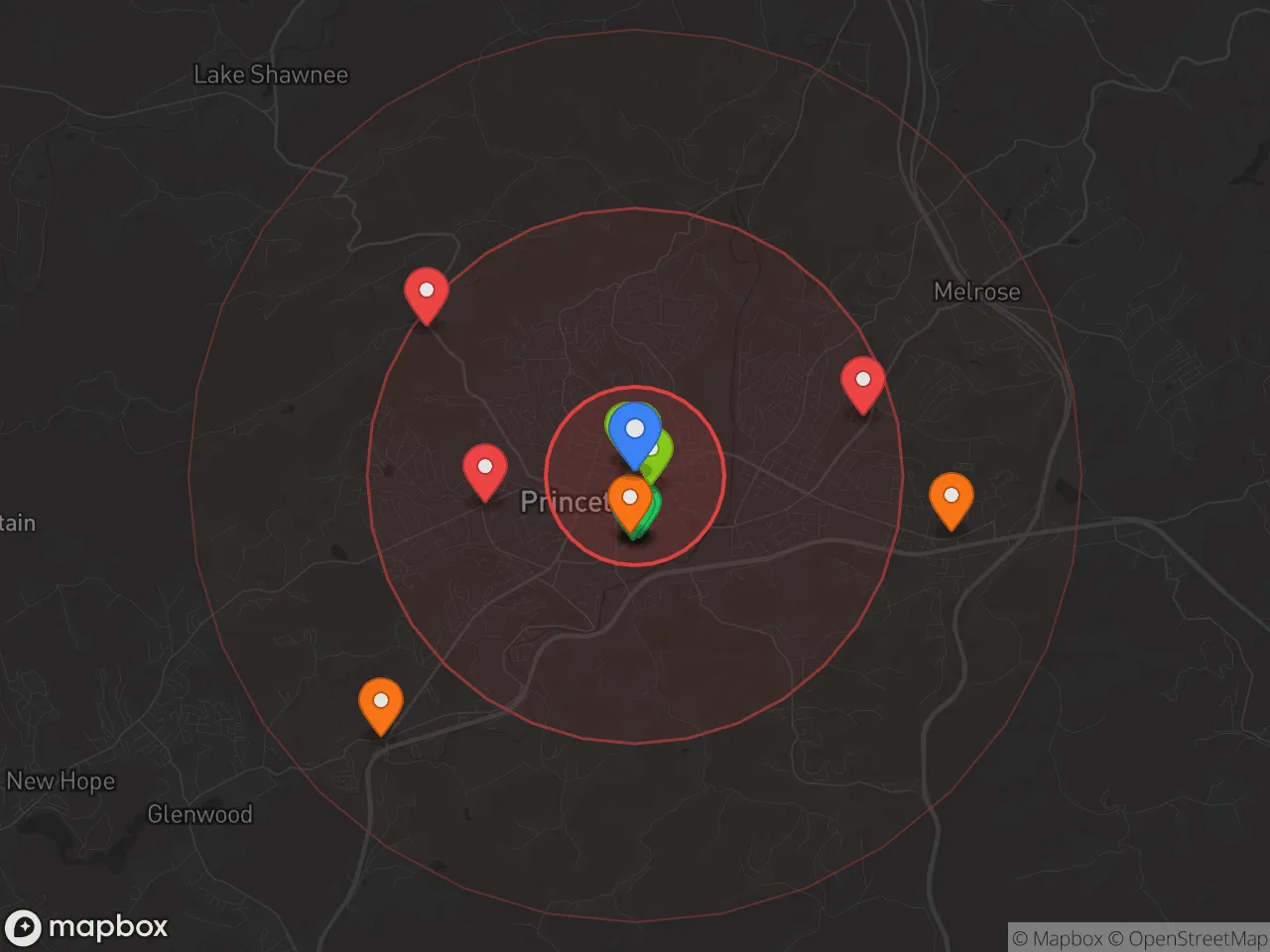
Hobbies
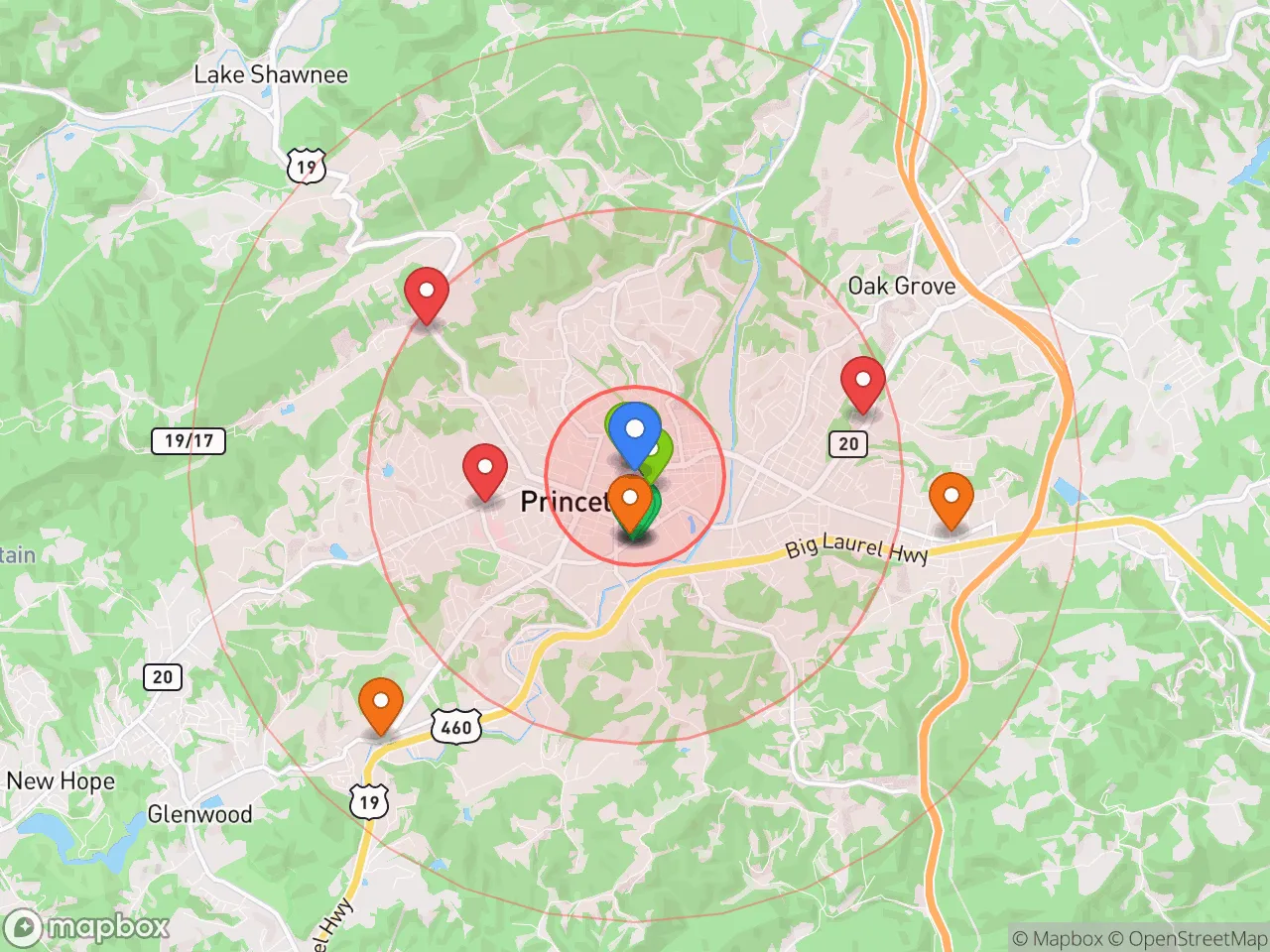
Explore the areaGroceries
2 within 10 miles
Gas
15 within 10 miles
Hospital
2 within 20 miles
Airport
CLT — Charlotte Douglas International
Post Office
USPS — 1000 Mercer Street, Princeton
Critical Amenities
Quality-of-Life Analysis
Princeton, West Virginia, offers a quality of life defined by small-town affordability and a slower pace, attracting a mix of retirees, remote workers, and families seeking lower costs. With a cost of living index of 59 (41% below the U.S. average), the area provides significant financial breathing room compared to national norms. The population skews older and more settled, with a median age around 42, reflecting a community where stability and routine often outweigh urban dynamism.
How housing costs and everyday expenses compare to nearby cities
Princeton’s housing market is a primary draw, with a median home value of $115,800 and median rent of $830—figures that are roughly half the national median. This affordability extends to utilities, groceries, and transportation, all of which run below the U.S. average. Compared to nearby Bluefield (about 15 miles east) or Beckley (30 miles north), Princeton is generally 5–10% cheaper for housing, though the gap narrows for everyday goods. The average commute of 18.9 minutes is notably short, well under the national average of 26 minutes, meaning less time and money spent on gas. For residents commuting to larger employers like Princeton Community Hospital or the Mercer County school system, this translates to tangible savings and more free time.
What daily life is like: schools, shopping, and local amenities
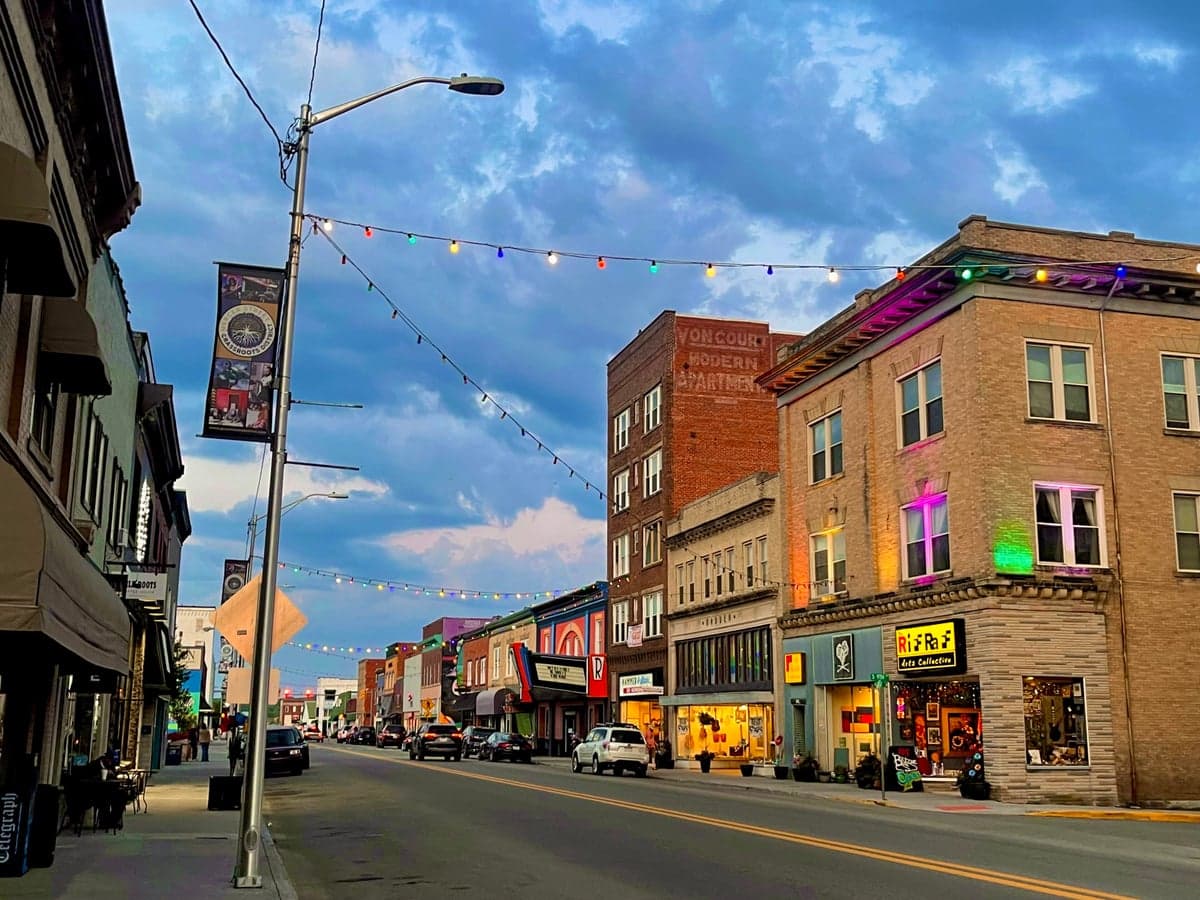
Daily life in Princeton revolves around a compact downtown core and nearby retail corridors along U.S. Route 460. The Mercer County School system serves the area, with Princeton Senior High School and Princeton Middle School being the primary public options; private alternatives are limited to a few religious schools within a 20-minute drive. Grocery shopping is served by a Walmart Supercenter and Food City, while dining options lean toward regional chains and local diners like the Princeton Restaurant. For outdoor recreation, the nearby Pipestem Resort State Park (15 minutes south) offers hiking, golf, and a seasonal aerial tram, while the Bluestone River provides fishing and kayaking. Cultural amenities are sparse—no major performing arts venue or museum exists in town—but the Chuck Mathena Center hosts community theater and concerts. Healthcare is anchored by Princeton Community Hospital, a 200-bed facility that also serves as a regional trauma center.
Who will thrive in Princeton’s low-cost, low-stress environment
Princeton is best suited for those who prioritize financial stability and a predictable routine over urban excitement. Retirees on fixed incomes benefit directly from the low housing costs and short commutes, while remote workers earning national salaries can stretch their dollars significantly—a $60,000 income here has the purchasing power of roughly $100,000 in a high-cost metro. Families with young children may find the school options adequate but should weigh the limited extracurricular and advanced placement programs against the savings. Young professionals seeking nightlife or career growth in tech or finance will likely find the area too quiet, as the job market is dominated by healthcare, education, and retail. For anyone comfortable with a slower, community-oriented lifestyle, Princeton delivers a quality of life that is both affordable and low-stress.

Crime in Princeton, WV
Generally safer than 69% of comparable U.S. locations.
Violent CrimeViolent Crime Analysis
Property CrimeProperty Crime Analysis
Crime Analysis
Princeton, West Virginia, presents a mixed safety profile, with property crime rates that exceed both state and national averages while violent crime remains below the national benchmark. The city’s overall crime index is higher than many similarly sized towns in southern West Virginia, driven largely by theft and burglary incidents. For prospective residents, understanding these numbers in context is essential for making an informed relocation decision.
Crime in context
Princeton’s reported violent crime rate of 220 incidents per 100,000 residents is notably lower than the U.S. average of approximately 380 per 100,000, but it sits slightly above West Virginia’s statewide rate of roughly 200 per 100,000. Property crime, however, tells a different story: the city’s rate of 923 per 100,000 exceeds both the national average (around 1,950 per 100,000) and the West Virginia average (about 1,600 per 100,000). This means Princeton’s property crime rate is roughly 1.5 times higher than the state norm. The disparity suggests that while serious violent offenses like homicide and aggravated assault are less common, residents face a heightened risk of theft, vehicle break-ins, and burglary. The Mercer County Sheriff’s Office and Princeton Police Department have noted that many property crimes are drug-related, reflecting broader regional challenges tied to opioid abuse.
What residents experience
Daily life in Princeton involves a heightened awareness of property security. Residents commonly report incidents of package theft, unlocked vehicle prowling, and occasional garage break-ins, particularly in neighborhoods near U.S. Route 460 and the I-77 corridor. Violent crime is less visible but does occur, with aggravated assault making up the majority of those incidents. The city’s proximity to the larger Bluefield metro area and its role as a regional retail hub (anchored by the Mercer Mall) attract transient traffic, which correlates with higher theft rates. Local law enforcement has implemented community policing initiatives and increased patrols in commercial districts, but staffing constraints limit proactive coverage. For families and retirees—two key demographic groups in Princeton—the property crime rate is the primary safety concern, while violent crime is generally not a daily worry for most law-abiding residents.
Neighborhood-level variation
Safety in Princeton varies noticeably by area. The downtown core and older residential streets near the historic district see lower crime rates, benefiting from closer police presence and neighborhood watch activity. In contrast, outlying subdivisions along the Athens Road corridor and areas near the Mercer Mall experience higher property crime, including vehicle theft and shoplifting. The East Princeton area, closer to the Bluefield line, has a mixed reputation, with some blocks reporting frequent break-ins. Newer developments on the city’s west side, such as those near the Princeton Community Hospital, tend to have fewer incidents. Prospective renters and buyers are advised to check local crime mapping tools and speak with current residents in specific neighborhoods, as block-by-block differences can be significant. Overall, Princeton is not a high-violence city, but its property crime rate demands practical precautions like secure parking, outdoor lighting, and home alarm systems.
* Values derived from national, state, county, city and local statistics and may differ in a specific area. Last updated: 2026-05-01T10:12:43.000Z
Narrative content on this page is AI-generated and may contain mistakes. Verify any details that matter before acting on them.
ReloMaps may earn a commission from affiliate links at no extra cost to you.

