Photo: Wikipedia
Demographics of Ranchester, WY
Affluence Level in Ranchester, WY
A middle-class area roughly in line with national averages across income, home values, education, and employment.
People of Ranchester, WY
Today, Ranchester, Wyoming, is a small, tight-knit community of 1,069 residents, characterized by its overwhelming racial and ethnic homogeneity—93.2% White, with a negligible 1.5% Hispanic population and no recorded foreign-born residents. The city’s identity is rooted in its rural, working-class character, shaped by ranching, railroad history, and a strong sense of local independence. With a college-educated rate of 33.8%, it sits slightly below the national average, reflecting a population that values practical trades and land-based livelihoods over academic credentialism. For those considering relocation, Ranchester offers a quiet, predictable social environment where nearly everyone shares a common cultural background and generational ties to the land.
How the city was settled and grew
Ranchester’s human history begins with the arrival of the railroad in the early 20th century. The town was officially founded in 1911 as a stop on the Chicago, Burlington & Quincy Railroad, which drew a wave of homesteaders and railroad workers, predominantly of Northern European descent—English, German, and Scandinavian immigrants seeking land under the Homestead Act. These early settlers built the core of what is now Old Town Ranchester, the historic district centered along Dayton Street, where modest frame houses and the original depot still stand. A second wave arrived during the Great Depression, when Dust Bowl refugees from the Plains—many of them of Scotch-Irish and German stock—moved into the area, settling in the South Side neighborhood near the Tongue River, where they established small farms and ranches. By mid-century, the population had stabilized around a few hundred, with the economy anchored by cattle ranching, sugar beet farming, and the railroad. No significant non-White settlement occurred during this period; the town remained almost entirely White, a pattern that persisted through the 1960s.
Modern era (post-1965)
After the 1965 Hart-Cellar Act reshaped U.S. immigration, Ranchester saw virtually no influx of foreign-born residents—the current foreign-born share remains at 0.0%. Instead, domestic in-migration from other parts of Wyoming and neighboring Montana drove modest growth. The 1970s and 1980s brought a small number of families from the oil and gas boom towns of the Powder River Basin, who settled in the Riverbend Addition, a subdivision developed along the Tongue River to accommodate workers at the nearby Decker Coal Mine. This area remains a predominantly White, blue-collar enclave. The 1990s and 2000s saw no significant racial diversification; the Hispanic share crept to just 1.5%, concentrated in a handful of households in the West End near the railroad tracks, where seasonal agricultural workers occasionally stayed. The Asian, Black, and Indian subcontinent populations are all recorded at 0.0%, reflecting the town’s continued lack of ethnic diversity. The North Ranchester district, developed in the 2000s, consists of newer single-family homes on larger lots, attracting retirees and remote workers from the region, but remains overwhelmingly White.
The future
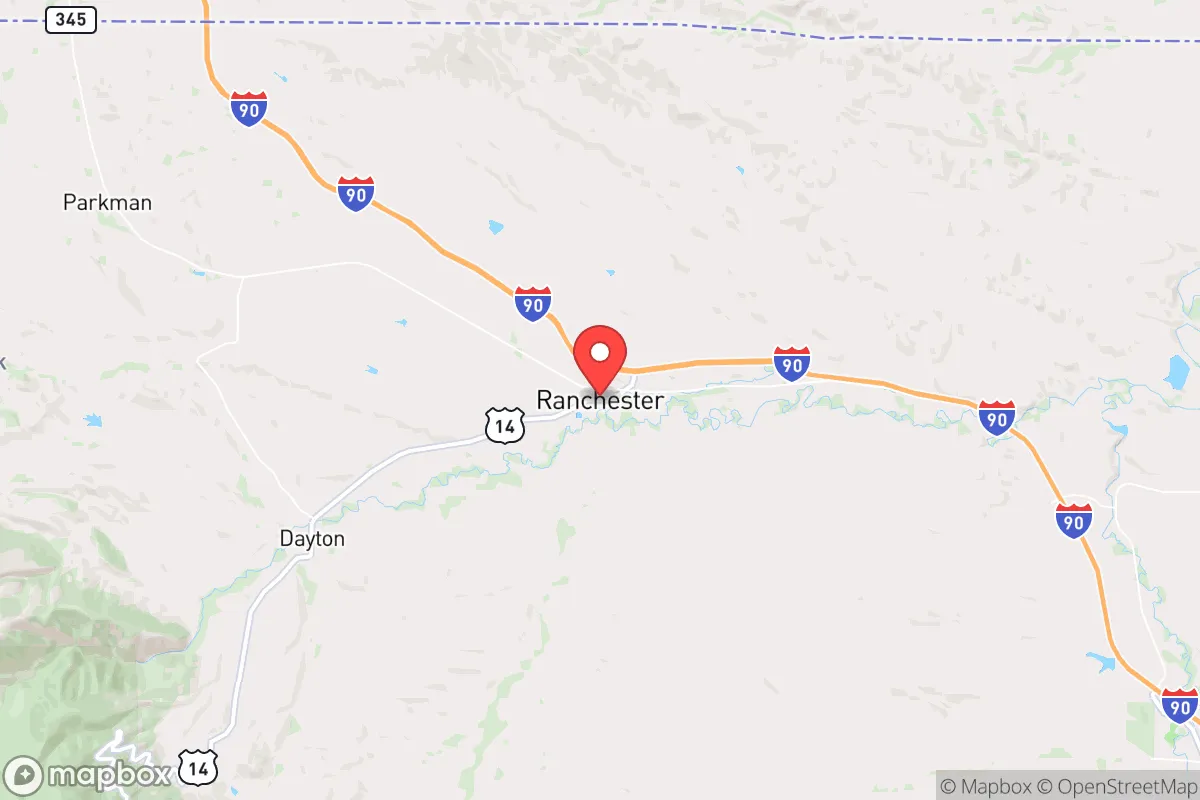
Ranchester’s demographic trajectory points toward continued homogeneity and slow, if any, growth. The population has hovered around 1,000 for decades, with no major employer or development project likely to attract significant in-migration. The town’s location—off the beaten path, 30 miles from Sheridan—limits its appeal to outsiders, and the lack of rental housing or entry-level jobs discourages younger, more diverse cohorts. The Hispanic share is projected to remain below 2%, as the area offers few opportunities for immigrant labor beyond occasional ranch work. The Dayton Street Corridor, the commercial spine, shows no signs of diversifying its business base. Over the next 10–20 years, Ranchester will likely become slightly older and more insular, with the college-educated share potentially rising as remote workers from Wyoming’s energy sector retire there. No new ethnic enclaves are expected to form; the town’s neighborhoods—Old Town, South Side, Riverbend, West End, and North Ranchester—will remain culturally and racially uniform.
For a prospective resident, Ranchester is a place where the population is not changing—it is aging in place, with little turnover or new blood. This means a stable, predictable community where neighbors know each other and the pace of life is slow, but also one with limited social diversity, few newcomers, and a demographic future that looks much like its past. If you value deep roots, shared cultural norms, and a quiet rural setting, Ranchester offers that in abundance; if you seek a dynamic or multicultural environment, this is not the place.

* Values derived from national, state, county, city and local statistics and may differ in a specific area. Last updated: 2026-05-03T20:39:38.000Z
Narrative content on this page is AI-generated and may contain mistakes. Verify any details that matter before acting on them.
ReloMaps may earn a commission from affiliate links at no extra cost to you.

