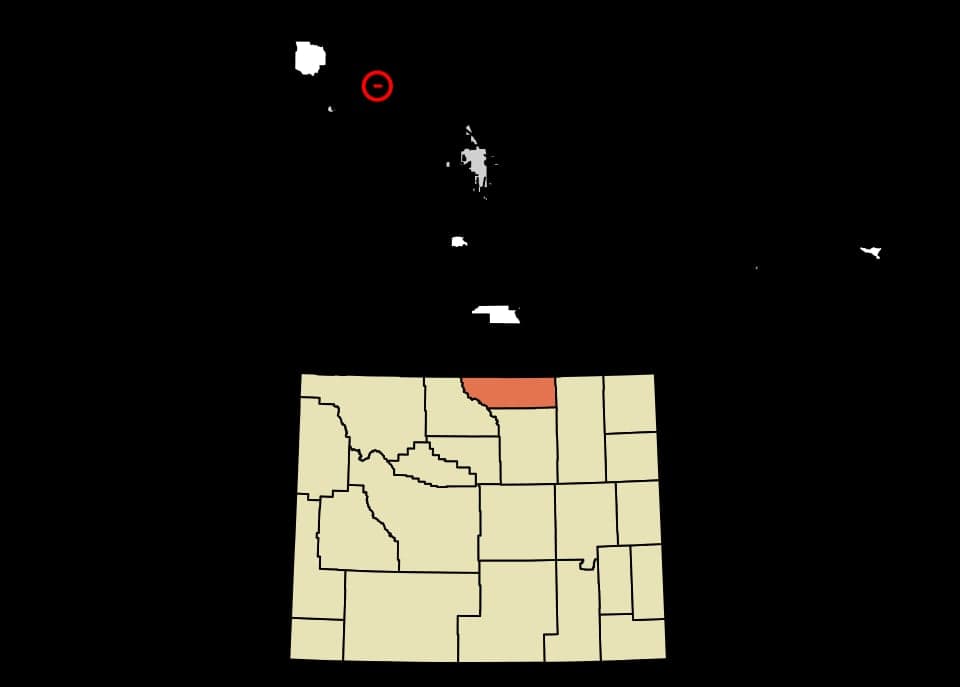
Photo: Wikipedia
Political ClimatePolitical Climate in Ranchester, WY
District shown is the primary district for this city’s centroid. Cities may span multiple districts.
Inherited from parent state — no local data available.
Local Political AnalysisPolitical Analysis of Ranchester, WY
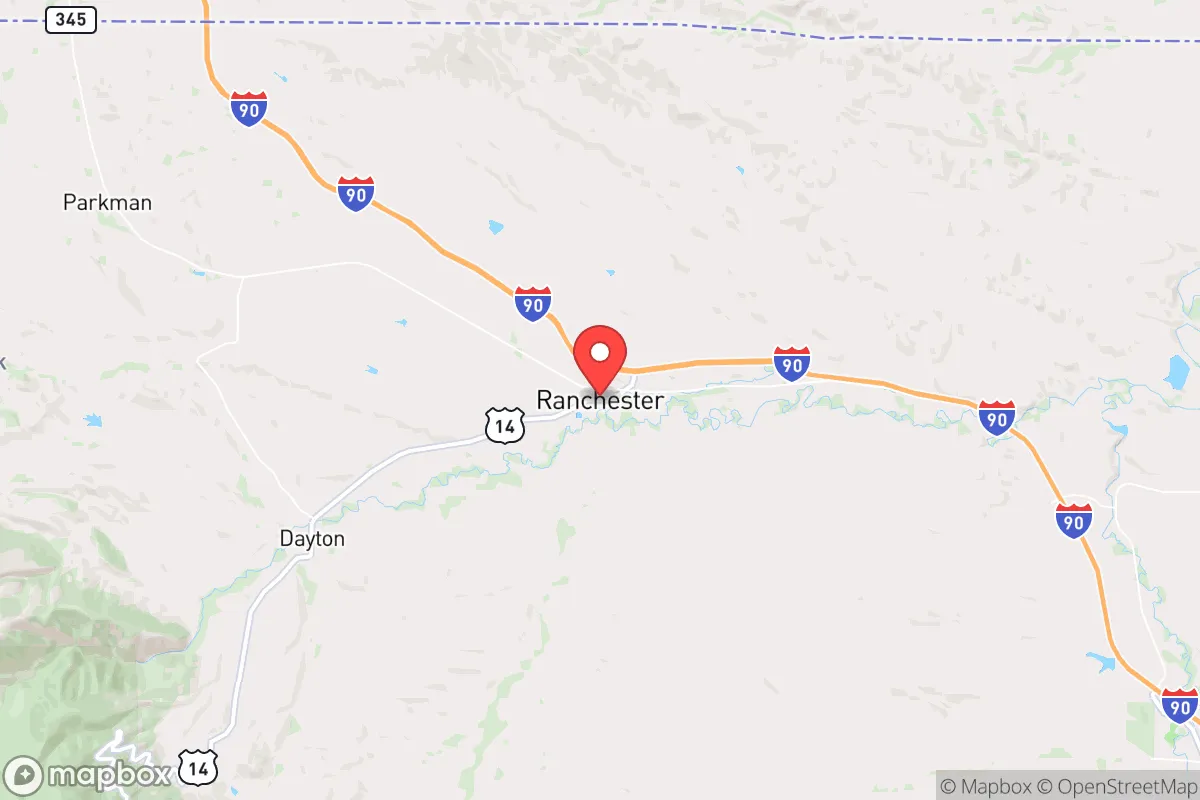
Ranchester is about as solidly conservative as it gets in Wyoming, with a Cook PVI of R+23 that puts it deep in the red column. This isn't a recent shift either—this area has been reliably Republican for generations, and the voting patterns reflect a deep-rooted commitment to limited government and personal liberty. If you look at the surrounding towns like Dayton and Sheridan, you'll see a similar conservative streak, though Sheridan has seen a bit more of an influx of out-of-state folks in recent years, which has nudged it slightly more moderate in local elections. Ranchester itself, though, remains a stronghold where traditional values and skepticism of federal overreach are the norm.
How it compares
Compared to the rest of Sheridan County, Ranchester stands out as the more reliably conservative anchor. While Sheridan city has a small but vocal progressive minority—mostly concentrated around the college and some of the newer transplants from places like California and Colorado—Ranchester's electorate is overwhelmingly Republican. The contrast is even sharper when you look at towns like Buffalo or Gillette, which are also conservative but have their own local dynamics. Ranchester's political climate feels more insulated from the coastal trends that have started creeping into other parts of the county. The local school board and town council elections here rarely see contested races from the left, and when they do, the results are lopsided. That's a good sign for anyone worried about government overreach into personal freedoms—there's no appetite here for the kind of progressive policies that restrict individual rights under the guise of public good.
What this means for residents
For someone moving here, the political climate means you can expect a government that mostly stays out of your business. Property taxes are low, zoning is minimal, and there's a general expectation that local officials will respect your right to live your life without unnecessary interference. The downside, if you can call it that, is that the community is tight-knit and expects you to pull your own weight—there's no safety net of government programs to fall back on, and people here take pride in that. The recent push from the state legislature to protect Second Amendment rights and push back against federal land management overreach has been popular here. You won't find the kind of mask mandates or business shutdowns that plagued other parts of the country during the pandemic, and that's a point of pride for long-time residents. The trajectory is concerning, though, if you look at the broader national trends—there's always the risk that federal policies could start to erode the local autonomy that makes Ranchester work.
Culturally, Ranchester is a place where people wave at each other on the street and actually mean it. The local rodeo and the annual Fourth of July parade are big deals, and there's a strong sense of community self-reliance. The biggest policy distinction you'll notice is the attitude toward land use—this is a place where private property rights are taken seriously, and any talk of federal conservation easements or land-use restrictions is met with deep skepticism. The local economy is driven by agriculture, energy, and small businesses, and the political culture reflects that. If you're looking for a place where the government respects your freedoms and the community has your back, Ranchester is hard to beat. Just don't expect it to change anytime soon—the people here like it the way it is, and they vote accordingly.

State Political ClimatePolitical Climate in Wyoming
State Political AnalysisPolitical Environment in the State
Wyoming is about as solidly Republican as a state can get, with a partisan lean that has only deepened over the past two decades. The GOP holds every statewide office, both U.S. Senate seats, the lone U.S. House seat, and supermajorities in the state legislature. In the 2024 presidential election, Donald Trump carried Wyoming with over 70% of the vote, a margin that has actually widened from the 68% he received in 2020. The state’s political DNA is rooted in a fierce independence and a deep skepticism of federal authority, making it a natural fit for conservatives who feel squeezed by coastal governance. However, the picture isn’t monolithic — there are real geographic and cultural divides that shape how politics plays out on the ground.
Urban vs. rural divide
The political map of Wyoming is defined by a stark contrast between its few small cities and its vast, sparsely populated rural expanse. The only real population center is Cheyenne (Laramie County), which leans Republican but is the most moderate part of the state — it’s home to state government workers and a growing number of remote workers drawn by lower costs. Casper (Natrona County) is more reliably conservative, anchored by the energy industry and ranching. Laramie (Albany County), home to the University of Wyoming, is the state’s lone blue dot — it voted for Joe Biden in 2020 and Kamala Harris in 2024, though by narrow margins. Meanwhile, Jackson (Teton County) is a wealthy resort town that also votes Democratic, but its influence is contained by its small population. The real engine of Wyoming’s conservatism is the rural interior — counties like Sublette, Lincoln, and Park routinely deliver 80-85% of their votes to Republican candidates. The divide isn’t just about population density; it’s about economic base. Rural counties depend on mineral extraction, agriculture, and tourism, all of which are deeply tied to federal land policy and property rights — issues that drive a libertarian-leaning conservative vote.
Policy environment
Wyoming’s policy environment is a conservative’s dream, but with some nuance. There is no state income tax, and the sales tax is a low 4% (with local options pushing it to around 6%). Property taxes are among the lowest in the nation, though a recent 2024 legislative session saw a push to further cap assessment increases — a response to rising home values in places like Sheridan and Buffalo. The state’s regulatory posture is aggressively pro-business, especially in energy, mining, and agriculture. Education policy is a mixed bag: Wyoming spends heavily per pupil (thanks to mineral revenue), but the state board of education has been a battleground over curriculum transparency and parental rights. In 2023, the legislature passed a Parents’ Bill of Rights (SF 133), requiring schools to notify parents of any changes to a student’s health or well-being — a direct response to progressive gender ideology in schools. Election laws are among the most secure in the nation: voter ID is required, same-day registration is not allowed, and the state uses paper ballots. There is no mail-in voting unless you have a valid excuse. Wyoming also passed a law in 2022 banning the use of private money to fund election administration — a direct shot at the Zuckerberg-funded 2020 operations.
Trajectory & freedom
Wyoming is moving in a direction that expands personal liberty, but not without friction. On gun rights, the state is a fortress: it passed a constitutional carry law in 2011, and in 2023 it enacted a Second Amendment Protection Act (SF 102) that prohibits state enforcement of any future federal gun bans or red-flag laws. On medical autonomy, Wyoming has been a leader in protecting the right to refuse vaccines — a 2021 law (HB 100) prohibits discrimination based on vaccination status, and a 2024 law (SF 9) bans vaccine mandates for state employees and contractors. Parental rights have been strengthened, as noted. However, there are warning signs. The state’s reliance on federal mineral royalties and land management means that federal overreach — like the Biden administration’s 2024 BLM rule on conservation leasing — directly threatens local control. There’s also a growing tension between the libertarian “leave us alone” ethos and the more socially conservative push to regulate things like abortion (Wyoming has a near-total ban, with exceptions only for rape, incest, and life of the mother, passed in 2023). The freedom trajectory is positive, but it requires constant vigilance against federal encroachment and internal cultural drift.
Civil unrest & political movements
Wyoming is not a hotbed of street protests, but there is a deep undercurrent of organized political activism, mostly on the right. The Wyoming Freedom Caucus, formed in 2021, has become a powerful force in the state legislature, pushing for lower taxes, school choice, and aggressive nullification of federal overreach. In 2023, they successfully blocked a proposed gas tax increase and forced a special session on property tax relief. On the left, activism is concentrated in Laramie and Jackson, where groups like the Wyoming Democratic Party and local environmental organizations have staged small protests against oil and gas leasing and the abortion ban. Immigration politics are muted — Wyoming has a very small foreign-born population (about 3%), but the legislature passed a law in 2023 (HB 209) requiring all state and local law enforcement to cooperate with federal immigration authorities, effectively banning sanctuary policies. There is no serious secession movement, but nullification rhetoric is common — in 2022, the legislature passed a resolution (SJ 3) calling for a convention of states to propose amendments to the U.S. Constitution, specifically to impose fiscal restraints and limit federal power. Election integrity controversies are minimal; the state’s secure voting system has not been a flashpoint. The most visible flashpoint for a new resident would likely be the tension between the energy industry and environmental groups, especially around the Powder River Basin coal fields and the Green River Basin natural gas fields.
Projection
Over the next 5-10 years, Wyoming is likely to become more conservative, not less, but with a growing libertarian streak. In-migration is accelerating, driven by remote workers and retirees fleeing high-tax states like California, Colorado, and Washington. These newcomers tend to be fiscally conservative and socially moderate, which could create friction with the more traditionalist, religious conservative base. The key battleground will be education — expect fights over school choice (vouchers are likely to pass within the next two years) and curriculum transparency. The energy transition will also reshape politics: as coal declines, the state will need to diversify its economy, which could lead to more support for tech and tourism — industries that tend to attract a slightly more moderate electorate. However, the state’s political culture is resilient. The Wyoming GOP has already moved to close its primary elections to unaffiliated voters (2023 law), a move that strengthens party discipline. The most realistic projection is a state that remains deeply red but becomes more internally divided between the “leave us alone” libertarians and the “traditional values” conservatives. For a new resident, expect a place where your personal freedom is respected, but where the community expects you to be a good neighbor — and where the federal government is seen as the primary threat to that freedom.
For a conservative individual or family considering relocation, Wyoming offers a rare combination of low taxes, strong gun rights, parental control in education, and a political culture that actively resists federal overreach. The trade-offs are real: harsh winters, limited job diversity outside of energy and government, and a social scene that can feel isolated if you’re not in one of the small cities. But if your priority is living in a state where the government is more of a partner than a boss, and where your vote actually matters in a primary, Wyoming is one of the last places in America that still feels like a republic rather than an administrative unit. Just be prepared to drive an hour for a decent grocery store — and to have your neighbors know your business. That’s the price of freedom here.
* Values derived from national, state, county, city and local statistics and may differ in a specific area. Last updated: 2026-05-03T20:39:38.000Z
Narrative content on this page is AI-generated and may contain mistakes. Verify any details that matter before acting on them.
ReloMaps may earn a commission from affiliate links at no extra cost to you.

