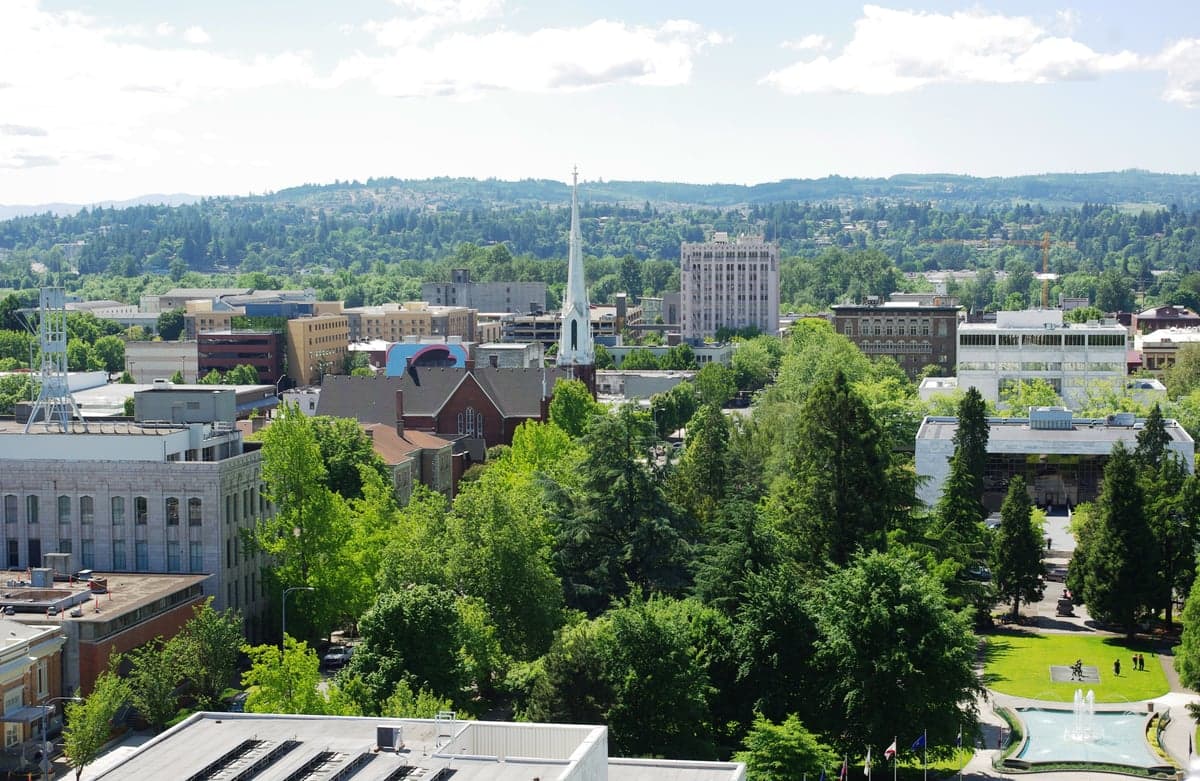
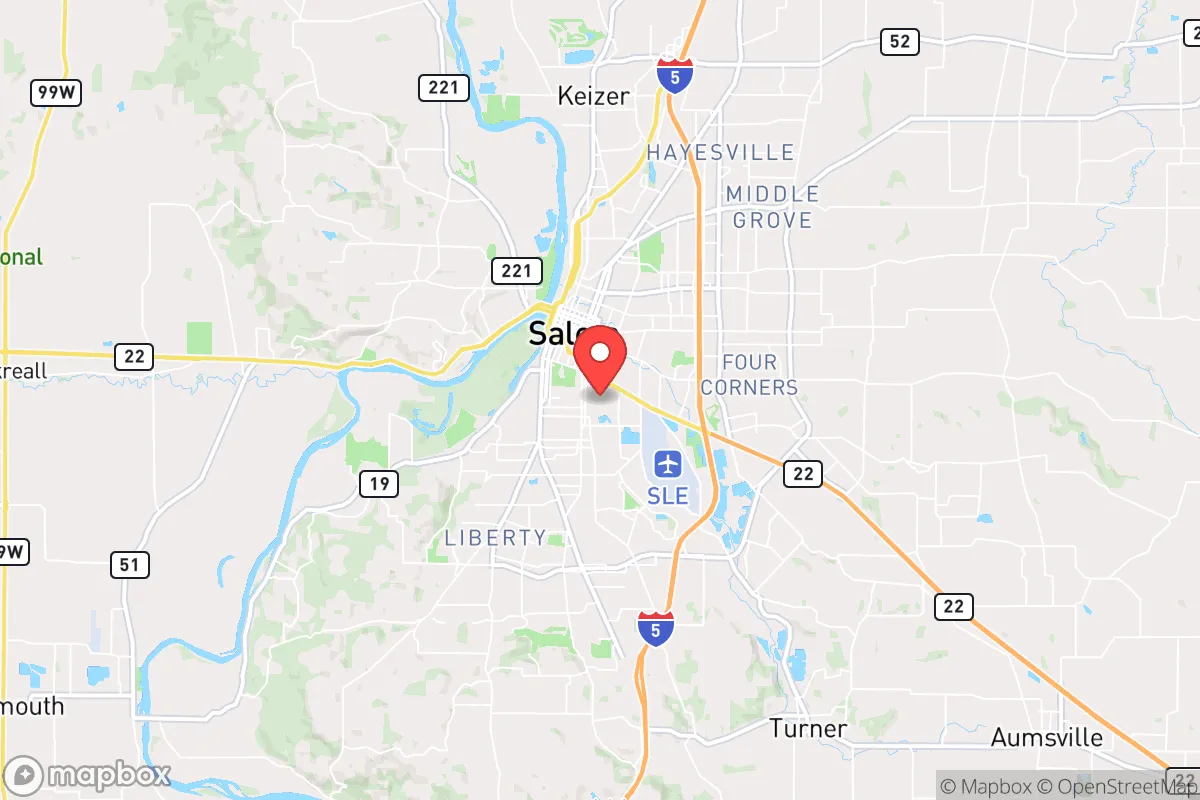
Photo: Wikipedia
Personal Sovereignty in Salem, OR
Viable for self-reliance. Generally workable, though some barriers may limit total independence.
What does Personal Sovereignty tell us?
Personal Sovereignty measures your capacity for self-reliance and independence with minimal government friction. Higher scores mean fewer barriers between you and the way you want to live... but it assumes you have the space you need and good neighbors.
What does this tell us?
Personal Sovereignty measures your capacity for self-reliance and independence with minimal government friction. Higher scores mean fewer barriers between you and the way you want to live... but it assumes you have the space you need and good neighbors.
State Policy
Energy independence: Importer (35% of energy produced in-state)
Personal Liberty
Homesteading

Personal Liberty Analysis
Salem, Oregon, presents a complex and often contradictory environment for personal sovereignty, one that demands careful scrutiny from anyone prioritizing autonomy and self-reliance. While the Willamette Valley offers abundant natural resources and a slower pace of life compared to Portland, the city sits squarely under the thumb of Oregon’s increasingly progressive state government, which has systematically eroded local control and individual freedoms over the past decade. For the survivalist or prepper, Salem is a place where the potential for self-sufficiency is constantly at odds with a regulatory apparatus that seems designed to limit it. The bottom line: you can carve out a degree of personal sovereignty here, but it will require constant vigilance, strategic property selection, and a willingness to operate within—or at the edges of—a dense web of state-level mandates.
Tax burden and regulatory posture: How Oregon’s state control limits local freedom
Oregon’s tax structure is a significant drag on personal sovereignty, with no sales tax but a state income tax that tops out at 9.9% on higher earners, one of the highest in the nation. This directly reduces the capital you can retain for your own preparedness projects, land purchases, or supply stockpiles. Property taxes in Marion County, where Salem is the seat, are moderate compared to Portland metro but still represent a perpetual lien on your land. More insidious is the regulatory posture: Oregon’s Land Use Planning system, established in the 1970s, severely restricts what you can do on your own property. Urban Growth Boundaries (UGBs) around Salem mean that even if you buy a few acres inside the boundary, you face heavy restrictions on building additional structures, running a home-based business, or subdividing land. Outside the UGB, Exclusive Farm Use (EFU) zoning is draconian—you can’t build a second dwelling for a family member or a workshop without a lengthy, expensive permitting process. This is a direct assault on the homesteading ethos: the state dictates how you use your land, not you.
Self-defense and gun law specifics: Navigating Oregon’s shifting legal landscape
For those who view the Second Amendment as a cornerstone of personal sovereignty, Salem is a high-risk environment. Oregon has moved aggressively to restrict gun rights, with Measure 114 (passed in 2022, but still tied up in court as of 2026) requiring a permit-to-purchase, a criminal background check, and a completed firearms safety course before buying any firearm. While the law is currently blocked by a Harney County judge, the political momentum is clear: the state wants to create a de facto registry and slow-walk purchases. Salem itself is a "home rule" city, but it has not passed its own magazine bans or safe storage ordinances—yet. The practical reality: if you move here, you must be prepared for a legal fight to keep your rights. Open carry is legal without a permit, but concealed carry requires a license (CHL) issued by the county sheriff, which in Marion County is generally shall-issue but can take 45-60 days. Stand-your-ground laws do not exist in Oregon; you have a duty to retreat if safely possible before using deadly force. For the prepper, this means your defensive plans must account for a legal system that presumes you are the aggressor.
Self-reliance and homesteading viability: Lot sizes, zoning, and off-grid feasibility
The viability of a self-reliant lifestyle in Salem depends entirely on where you land. Inside the city limits, typical residential lots are 6,000 to 10,000 square feet—enough for a substantial garden and a few chickens (hens only, no roosters, per city code), but forget about goats, pigs, or a serious rainwater catchment system. Salem’s zoning code explicitly prohibits "agricultural uses" on residential lots under 5 acres, meaning you cannot sell produce or eggs without a conditional use permit. Outside the UGB, in unincorporated Marion County, you can find 5- to 20-acre parcels, but EFU zoning restricts you to one single-family dwelling per parcel and prohibits any "commercial" activity not directly tied to farming. Off-grid feasibility is low: Oregon’s building codes require connection to the electrical grid if it’s available within 300 feet, and rainwater collection for potable use is heavily regulated by the Oregon Health Authority. Solar panels are allowed, but net metering rules are set by the state’s Public Utility Commission, not by you. The bottom line: you can grow your own food and generate some power, but true off-grid independence is nearly impossible without a fight with county planning.
Personal liberties: Parental rights, medical autonomy, speech, and property
This is where Salem’s sovereignty picture gets particularly grim for conservative-leaning individuals. Parental rights have been systematically undermined by Oregon’s 2023 "Parents Bill of Rights" law, which actually weakened existing protections—it allows schools to withhold information about a child’s gender identity or medical decisions from parents if the school deems it "necessary to protect the student." This is a direct violation of the family’s sovereignty. Medical autonomy is similarly constrained: Oregon has legalized assisted suicide (Death with Dignity Act) and has some of the most permissive vaccine mandates in the country for healthcare workers and schoolchildren. During the COVID-19 era, Salem-area hospitals enforced visitation bans and treatment protocols that many viewed as coercive, and the state’s public health authority retains broad emergency powers. Free speech is protected under the Oregon Constitution, but Salem’s city council has passed resolutions that create a hostile environment for conservative viewpoints, and public comment periods are often tightly controlled. Property rights are the weakest link: Oregon’s land use system means you do not truly own your land—you merely hold a conditional lease from the state, subject to their planning goals. For the prepper, this is the core issue: your ability to build, store, and defend is always subject to a bureaucrat’s approval.
In the broader Pacific Northwest context, Salem offers a middle ground between the outright hostility of Portland and the relative freedom of rural eastern Oregon. Your personal sovereignty here will be a constant negotiation with state-level mandates on guns, land use, and family autonomy. If you are willing to buy land outside the UGB, invest in legal counsel for zoning variances, and maintain a low profile, you can achieve a meaningful degree of self-reliance. But do not mistake Salem for a free haven—it is a place where the state’s hand is heavy, and your rights are only as secure as the next court ruling or legislative session. For the strategic relocation, it is a compromise: abundant water and fertile soil, but a government that views your independence as a problem to be managed.

* Values derived from national, state, county, city and local statistics and may differ in a specific area. Last updated: 2026-05-02T22:11:54.000Z
Narrative content on this page is AI-generated and may contain mistakes. Verify any details that matter before acting on them.
ReloMaps may earn a commission from affiliate links at no extra cost to you.

