Photo: Wikipedia
Demographics of San Luis Obispo, CA
Affluence Level in San Luis Obispo, CA
A middle-class area roughly in line with national averages across income, home values, education, and employment.
People of San Luis Obispo, CA
San Luis Obispo’s 48,039 residents form a highly educated, predominantly white-collar community with a distinctly Californian small-town character. The city is 70.5% white and 17.3% Hispanic, with a notably low foreign-born share of just 3.5%, reflecting a population shaped more by domestic in-migration than international immigration. Over half of adults (54.4%) hold a bachelor’s degree or higher, a figure that aligns with the city’s role as the home of California Polytechnic State University (Cal Poly) and a regional hub for professional services, healthcare, and government. The result is a community that feels both collegiate and conservative-leaning, with a strong emphasis on local agriculture, outdoor recreation, and a slower pace of life compared to coastal metros.
How the city was settled and grew
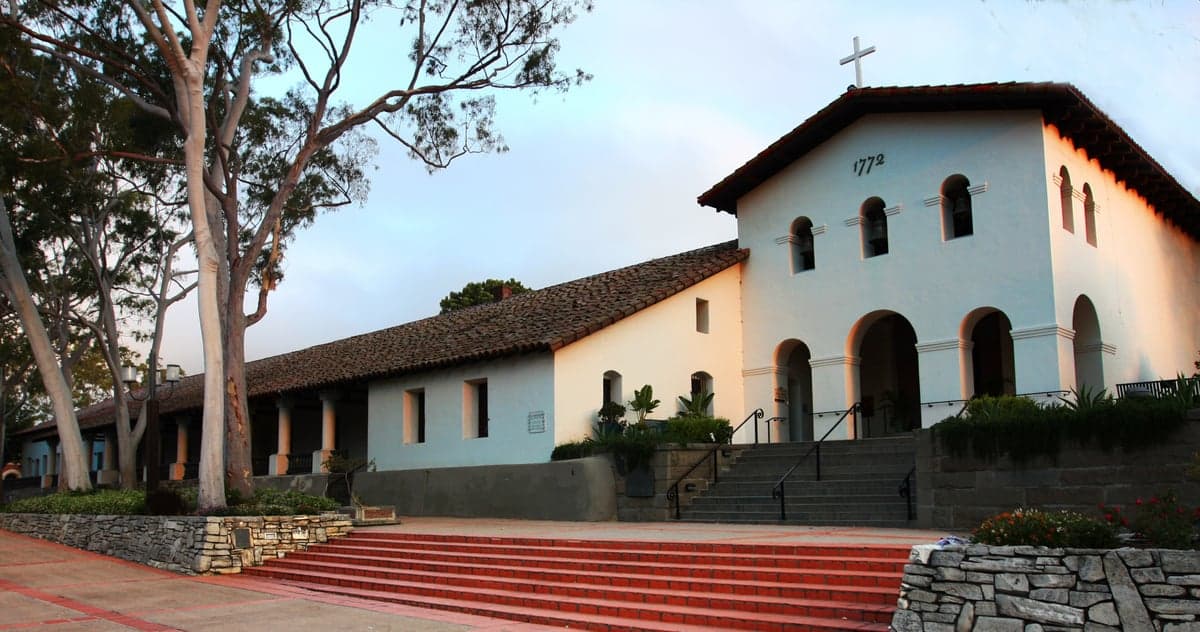
San Luis Obispo’s human history begins with the Chumash and Salinan peoples, who inhabited the area for thousands of years before Spanish colonization. The city itself was founded in 1772 as the fifth Spanish mission in California, Mission San Luis Obispo de Tolosa, drawing a small population of Spanish soldiers, missionaries, and converted Indigenous laborers. After Mexican independence in 1821, land grants such as the Rancho San Luis Obispo shifted control to Mexican ranchero families, who established cattle ranching as the dominant economy. The U.S. takeover in 1848 and California statehood in 1850 brought Anglo-American settlers, many of whom arrived during the Gold Rush era and stayed to farm, ranch, or open businesses. The arrival of the Southern Pacific Railroad in 1894 connected SLO to larger markets and spurred modest growth, with early Anglo and European immigrant families settling in the Downtown core and along the Marsh Street corridor. By the early 20th century, the city’s population remained small—under 5,000—and overwhelmingly white, with a small Chinese community that had built much of the railroad but faced exclusionary laws that limited its growth. The founding of Cal Poly in 1901 as a vocational school began the city’s long transformation into a college town, though significant population growth did not accelerate until after World War II.
Modern era (post-1965)
The post-1965 period brought the most dramatic demographic changes to San Luis Obispo, driven primarily by the expansion of Cal Poly and the rise of the city as a desirable retirement and lifestyle destination. The 1965 Hart-Cellar Act had limited direct effect here—foreign-born residents remain just 3.5% of the population—but the domestic migration patterns it enabled in California as a whole reshaped the state’s demographics indirectly. What transformed SLO was the steady influx of domestic migrants: professionals, retirees, and families drawn by the university, the mild climate, and the region’s reputation for safety and natural beauty. The Cal Poly campus and surrounding University Village area became the anchor for a transient student population of roughly 20,000, while permanent residents concentrated in established neighborhoods like Edna Valley to the south and Los Osos Valley to the west. The Hispanic share of the population grew from a small base to 17.3% by 2020, largely through domestic migration from other parts of California and multigenerational families already rooted in San Luis Obispo County. East and Southeast Asian residents (4.3%) and Indian-subcontinent residents (0.7%) are present but concentrated in professional and academic roles tied to Cal Poly and the county’s healthcare sector. The Black population remains very small at 1.2%, reflecting the broader demographics of California’s Central Coast. The Railroad District, historically a working-class and industrial area, has seen significant redevelopment and gentrification since the 2000s, drawing younger professionals and displacing some long-term residents.
The future
San Luis Obispo’s population is projected to grow slowly, constrained by strict urban growth boundaries, limited housing supply, and high home prices that filter for higher-income newcomers. The city’s demographic future points toward a continuation of current trends: an aging white population supplemented by younger, more diverse cohorts arriving for education and employment, but at a pace that will not dramatically shift the city’s overall character. The Hispanic share is likely to rise gradually, driven by natural increase and continued domestic migration from other parts of California, while the East/Southeast Asian and Indian populations will grow modestly, primarily through Cal Poly’s recruitment of out-of-state and international students and faculty. New residential development is concentrated in infill projects within the Downtown core and along the South Higuera Street corridor, where mixed-use apartments are attracting younger renters. The city’s cultural identity is evolving from a quiet agricultural college town into a more polished, amenity-rich small city, but the pace of change is slow enough that SLO retains its reputation as a relatively homogeneous, family-oriented, and politically moderate community.
For someone moving in now, San Luis Obispo offers a stable, highly educated, and predominantly white community where change is incremental rather than disruptive. The city’s demographic trajectory points toward gradual diversification, but the defining characteristics—high educational attainment, low crime, strong local governance, and a college-town atmosphere—are likely to persist for the foreseeable future. New residents should expect a tight housing market and a community that values preservation and quality of life over rapid growth.

* Values derived from national, state, county, city and local statistics and may differ in a specific area. Last updated: 2026-08-03T15:48:31.000Z
Narrative content on this page is AI-generated and may contain mistakes. Verify any details that matter before acting on them.
ReloMaps may earn a commission from affiliate links at no extra cost to you.

