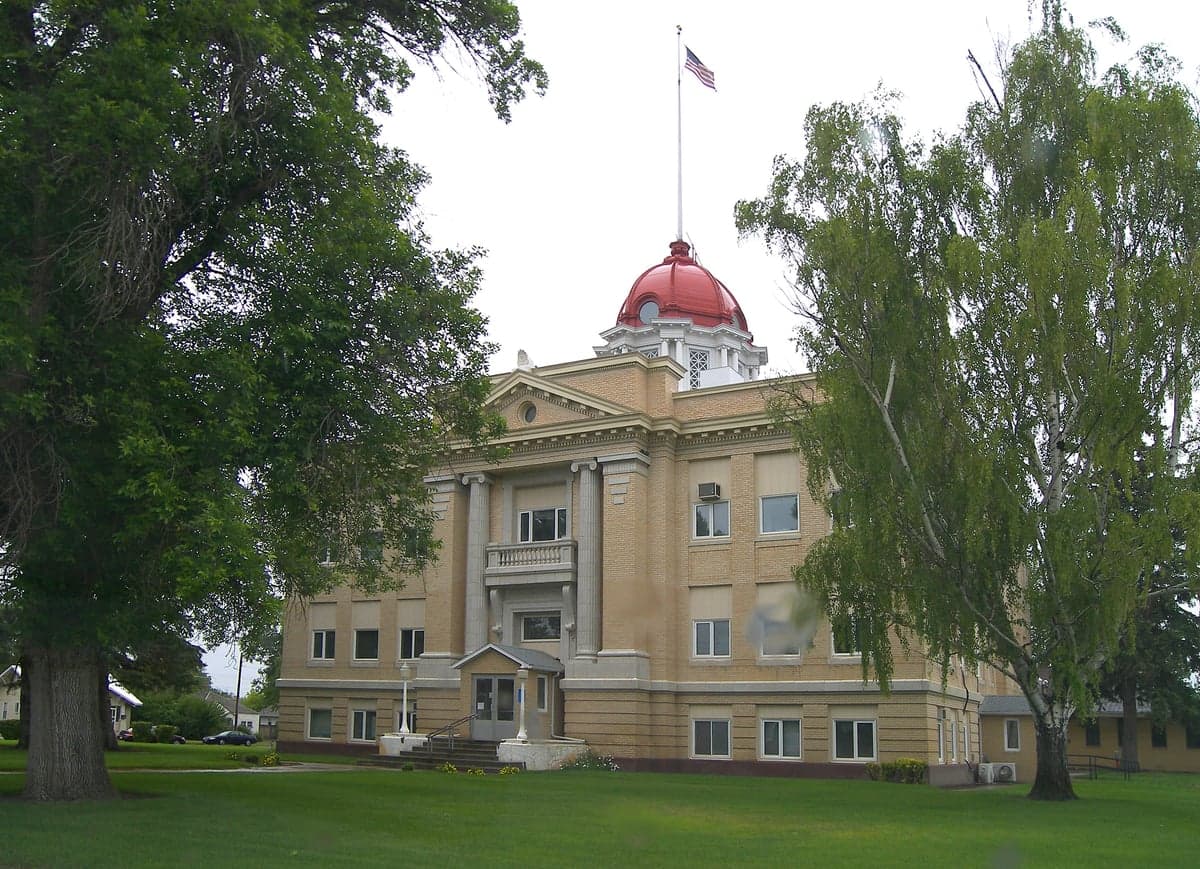
Photo: Wikipedia
Strategic Assessment of Sidney, MT
Workable tactical position. Some exposure to population density or targets, but generally defensible in a crisis.
What does the Strategic Assessment tell us?
Our Strategic Assessment grades tactical survivability of an area. Major population centers, military targets, fallout zones, natural disasters, and border exposure all drive risk — lower exposure means a more defensible position in a crisis.
This is heavily inspired by Joel Skousen's Strategic Relocation book. Highly recommended you checkout the book ($)What does this tell us?
Our Strategic Assessment grades tactical survivability of an area. Major population centers, military targets, fallout zones, natural disasters, and border exposure all drive risk — lower exposure means a more defensible position in a crisis.
This is heavily inspired by Joel Skousen's Strategic Relocation book. Highly recommended you checkout the book ($)Strategic Pillars

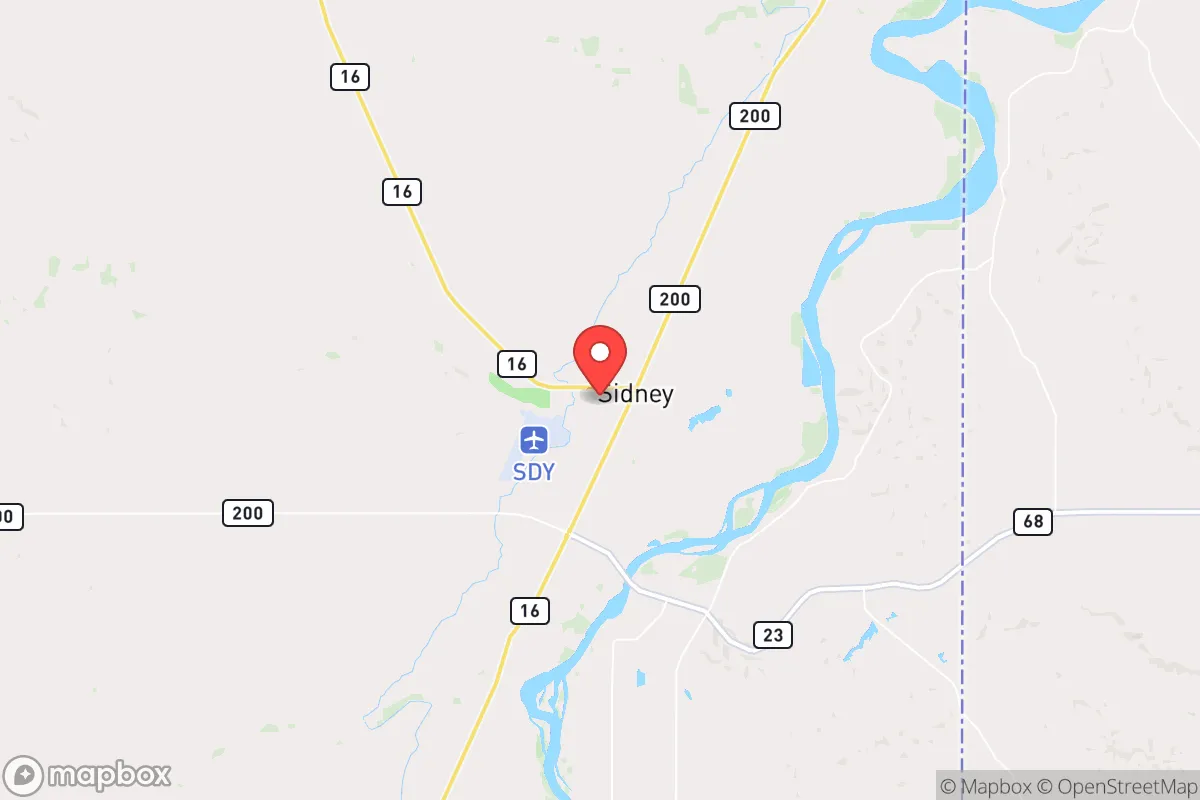
Key Distances
Regional Safe Places
Below is our recommended "safe zones" in Montana and the surrounding area based on our strategic heuristics. For most people, it's unrealistic to live in a “safe zone” full-time due to work, family or other personal reasons. They tend to be more rural. However, many of these areas are perfect for second homes and retreat properties that double as a vacation home or even a short-term rental.
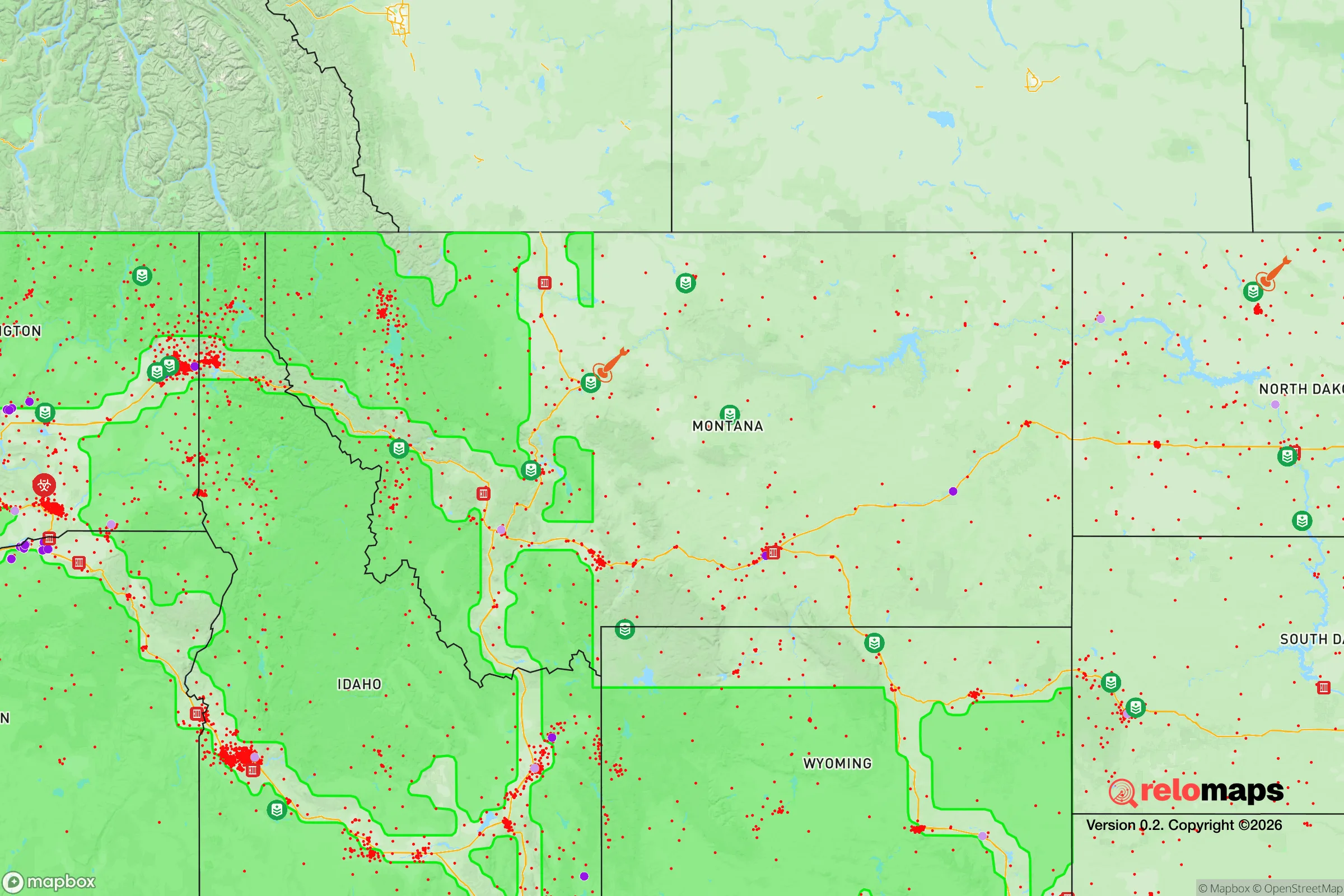


Important Note: For informational purposes only. This does not mean nothing bad ever happens in the green zones. Please use common sense. This is based on public data and modeled with AI. We tried to take a conservative approach but mistakes happen. We update this regularly as new information becomes available.
Solar Generator Recommendations
Backup power matters more here than in safer locations. We've picked three solar generators across budgets and capacity tiers — start with the budget unit if you only need a few essentials, or step up if you want to run a fridge and HVAC for days at a time.

Jackery Portable Power Station Explorer 300
Budget OptionPower on the Go: Weighing only 11 lbs, it's convenient to set up and store with book-sized foldable solar panels

BLUETTI Portable Power Station AC180
Designed for both indoor and outdoor scenarios, AC180 is highly capable as it has a robost capacity and continuous output power.

EF ECOFLOW DELTA Pro Ultra Power Station
Upgraded PickEcoFlow DELTA Pro Ultra is a whole-home energy system designed to grow with your family. Integrated with the Smart Home Panel 2, it scales to meet your evolving energy needs — keeping your home powered, intelligent, and secure through every stage of life.
We earn a commission, at no additional cost to you.
Strategic Assessment Analysis
Sidney, Montana, sits as a quiet outlier in the northern plains—a town of roughly 6,000 people that offers a rare combination of agricultural self-sufficiency, low population density, and distance from the major fault lines of American collapse. For the strategic relocator thinking in terms of decades, not years, Sidney’s primary advantage is its position: far enough from the chaos of the I-94 corridor and the Bakken oil fields to avoid the worst of transient crime and resource strain, yet close enough to the Yellowstone River and the Canadian border to provide both water security and a potential secondary egress route. The town’s economy, anchored by the Sidney Health Center and a steady agricultural base, has proven resilient through the 2020s, and its isolation—over 100 miles from the nearest metro of Billings—means that when national supply chains hiccup, Sidney’s local food networks and independent-minded population tend to hold steady longer than most.
Geographic position and natural advantages for long-term security
Sidney’s location in the far eastern reaches of Montana is its strongest card. The town sits on the Yellowstone River, a major tributary of the Missouri, providing a reliable surface water source that doesn’t depend on fragile municipal infrastructure. The surrounding Richland County is flat, open, and sparsely populated—roughly 2.5 people per square mile—which means that in a grid-down scenario, you’re not competing with millions for the same resources. The Canadian border is only 30 miles north, offering a potential fallback zone or trade route if things go truly sideways, though you’ll want to be aware of border security dynamics. The climate is semi-arid, with cold winters and hot summers, but the growing season is long enough for cold-hardy crops like wheat, barley, and alfalfa. For the prepper, this means you can realistically aim for food independence with a greenhouse and a well, something that’s far harder in the Pacific Northwest or the Northeast. The area is also outside the primary fallout zones of any major U.S. strategic targets—no major military bases, no ICBM silos within 100 miles, and no major population centers that would draw a first strike. The nearest significant infrastructure that might be a target is the oil and gas infrastructure around Williston, North Dakota, about 40 miles east, but that’s a secondary concern compared to the missile fields of the Dakotas or the refineries along the Gulf.
Risks, exposures, and proximity to fallout-relevant landmarks
No location is perfect, and Sidney has its vulnerabilities. The most immediate risk is the Bakken oil fields to the east and north. While the oil boom has cooled since its 2010s peak, the region still sees heavy truck traffic, pipeline infrastructure, and a transient workforce that can bring crime and social instability. In a mass casualty event or civil unrest scenario, the Williston-Bismarck corridor could become a chokepoint for refugees moving west, and Sidney sits right on the edge of that flow. You’re also within 150 miles of the Fort Peck Dam, a major hydroelectric and flood-control structure that, if compromised, could cause significant downstream disruption along the Missouri. On the nuclear front, the closest strategic targets are the Minot Air Force Base in North Dakota (about 200 miles east) and the Malmstrom AFB missile fields in central Montana (about 250 miles west). Neither is close enough for a direct blast or thermal pulse, but fallout patterns depend on wind direction. Prevailing winds in this region are from the west and northwest, which means fallout from a strike on Malmstrom would likely drift eastward, potentially passing over Sidney within 24-48 hours. A good basement, a radiation detector, and a two-week supply of potassium iodide are non-negotiable for any serious prepper here. The area also experiences occasional severe weather—tornadoes are rare but possible, and blizzards can shut down roads for days. The lack of redundant infrastructure means that a single downed power line can leave you in the dark for longer than you’d expect in a more connected area.
Practical resilience for a relocator: food, water, energy, and defensibility
For the individual or family looking to build a sustainable retreat, Sidney offers a surprisingly solid foundation. Water is the first concern, and the Yellowstone River provides a year-round source that can be filtered or treated. The local water table is also accessible via shallow wells in most of the county, so a hand pump or solar-powered well is a realistic backup. Food security is strong: Richland County is one of Montana’s top agricultural producers, with local farms growing wheat, corn, and sugar beets, and raising cattle. The Sidney Farmers Market and local co-ops mean you can build relationships with producers before any crisis hits. For energy, the area is windy enough for small-scale turbines, and solar works well in the summer months, though winter days are short. Natural gas is available in town, but for a rural property, you’ll want to plan for propane or wood heat. Defensibility is where Sidney shines. The town itself is compact and walkable, with a grid layout that’s easy to secure. The surrounding countryside is flat, which means long sightlines and no cover for approaching threats. A rural property with a good fence, a well, and a clear field of fire is entirely feasible. The local culture is heavily conservative, self-reliant, and armed—Montana has some of the most permissive gun laws in the country, and the local sheriff’s office is responsive but not overbearing. In a collapse scenario, you’re more likely to be dealing with isolated looters or desperate travelers than organized gangs, and the community’s existing social fabric—churches, volunteer fire departments, and agricultural cooperatives—provides a ready-made mutual aid network.
The overall strategic picture for Sidney is one of cautious optimism. It’s not a bug-out location for the unprepared—you need skills, supplies, and a plan to make it work long-term. But for the relocator who values distance from the chaos, access to water and farmland, and a community that won’t fold at the first sign of trouble, it’s one of the better options in the northern plains. The risks from the Bakken corridor and potential fallout are real but manageable with proper preparation. The isolation that makes it unattractive to the average American is exactly what makes it valuable to the strategic thinker. If you’re looking for a place to ride out the next decade of instability, Sidney deserves a serious look—just don’t expect it to stay quiet forever.

* Values derived from national, state, county, city and local statistics and may differ in a specific area. Last updated: 2026-04-29T22:31:04.000Z
Narrative content on this page is AI-generated and may contain mistakes. Verify any details that matter before acting on them.
ReloMaps may earn a commission from affiliate links at no extra cost to you.

