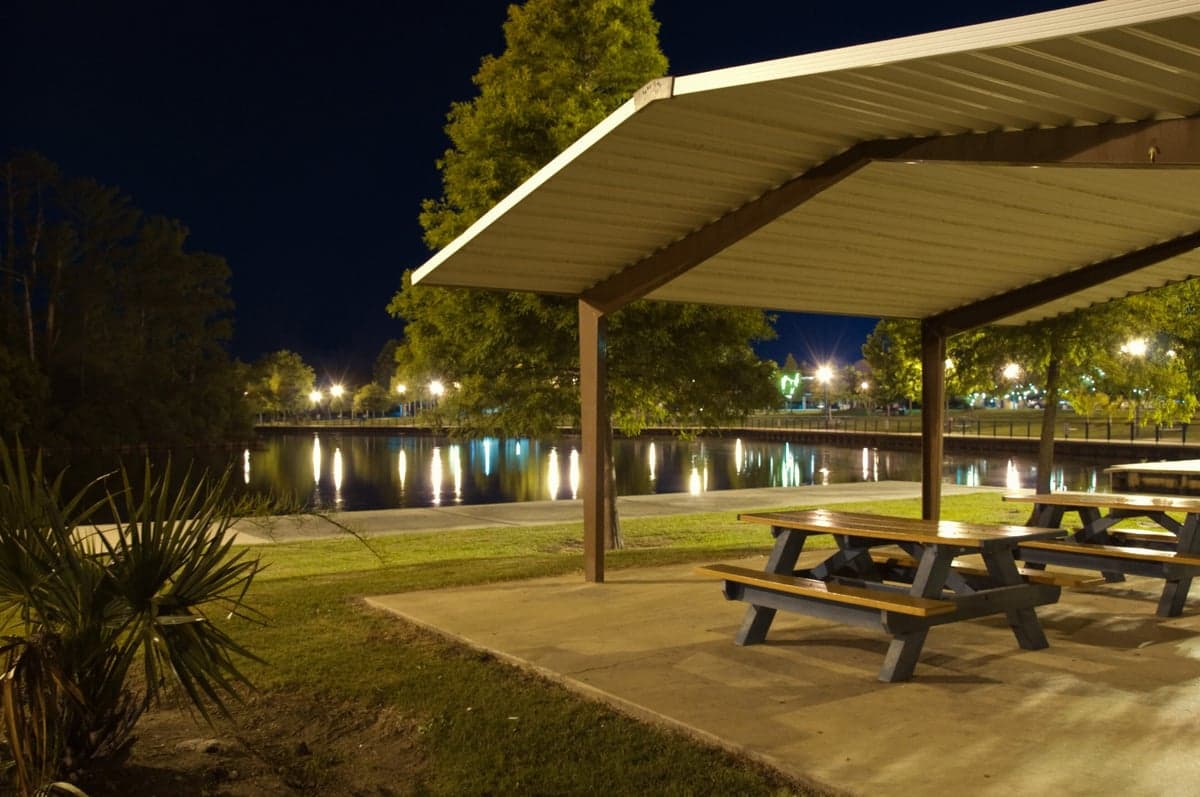
Photo: Wikipedia
Strategic Assessment of Slidell, LA
Meaningful friction. Expect exposure to either population pressure, blast zones, or natural disaster risk. Consider buying a retreat property.
What does the Strategic Assessment tell us?
Our Strategic Assessment grades tactical survivability of an area. Major population centers, military targets, fallout zones, natural disasters, and border exposure all drive risk — lower exposure means a more defensible position in a crisis.
This is heavily inspired by Joel Skousen's Strategic Relocation book. Highly recommended you checkout the book ($)What does this tell us?
Our Strategic Assessment grades tactical survivability of an area. Major population centers, military targets, fallout zones, natural disasters, and border exposure all drive risk — lower exposure means a more defensible position in a crisis.
This is heavily inspired by Joel Skousen's Strategic Relocation book. Highly recommended you checkout the book ($)Strategic Pillars

Key Distances
Regional Safe Places
Below is our recommended "safe zones" in Louisiana and the surrounding area based on our strategic heuristics. For most people, it's unrealistic to live in a “safe zone” full-time due to work, family or other personal reasons. They tend to be more rural. However, many of these areas are perfect for second homes and retreat properties that double as a vacation home or even a short-term rental.

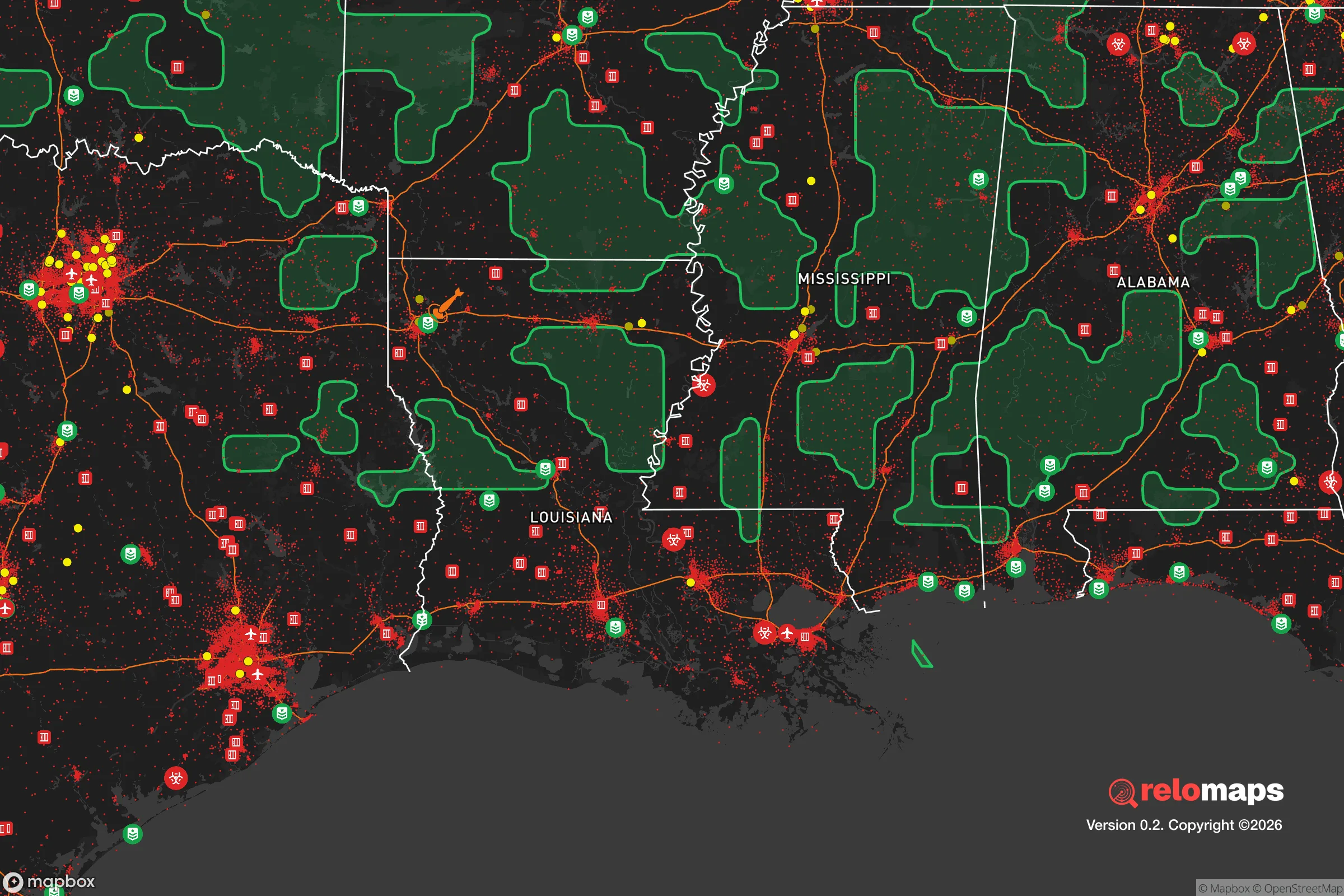


Important Note: For informational purposes only. This does not mean nothing bad ever happens in the green zones. Please use common sense. This is based on public data and modeled with AI. We tried to take a conservative approach but mistakes happen. We update this regularly as new information becomes available.
Solar Generator Recommendations
Backup power matters more here than in safer locations. We've picked three solar generators across budgets and capacity tiers — start with the budget unit if you only need a few essentials, or step up if you want to run a fridge and HVAC for days at a time.

Jackery Portable Power Station Explorer 300
Budget OptionPower on the Go: Weighing only 11 lbs, it's convenient to set up and store with book-sized foldable solar panels

BLUETTI Portable Power Station AC180
Designed for both indoor and outdoor scenarios, AC180 is highly capable as it has a robost capacity and continuous output power.

EF ECOFLOW DELTA Pro Ultra Power Station
Upgraded PickEcoFlow DELTA Pro Ultra is a whole-home energy system designed to grow with your family. Integrated with the Smart Home Panel 2, it scales to meet your evolving energy needs — keeping your home powered, intelligent, and secure through every stage of life.
We earn a commission, at no additional cost to you.
Strategic Assessment Analysis
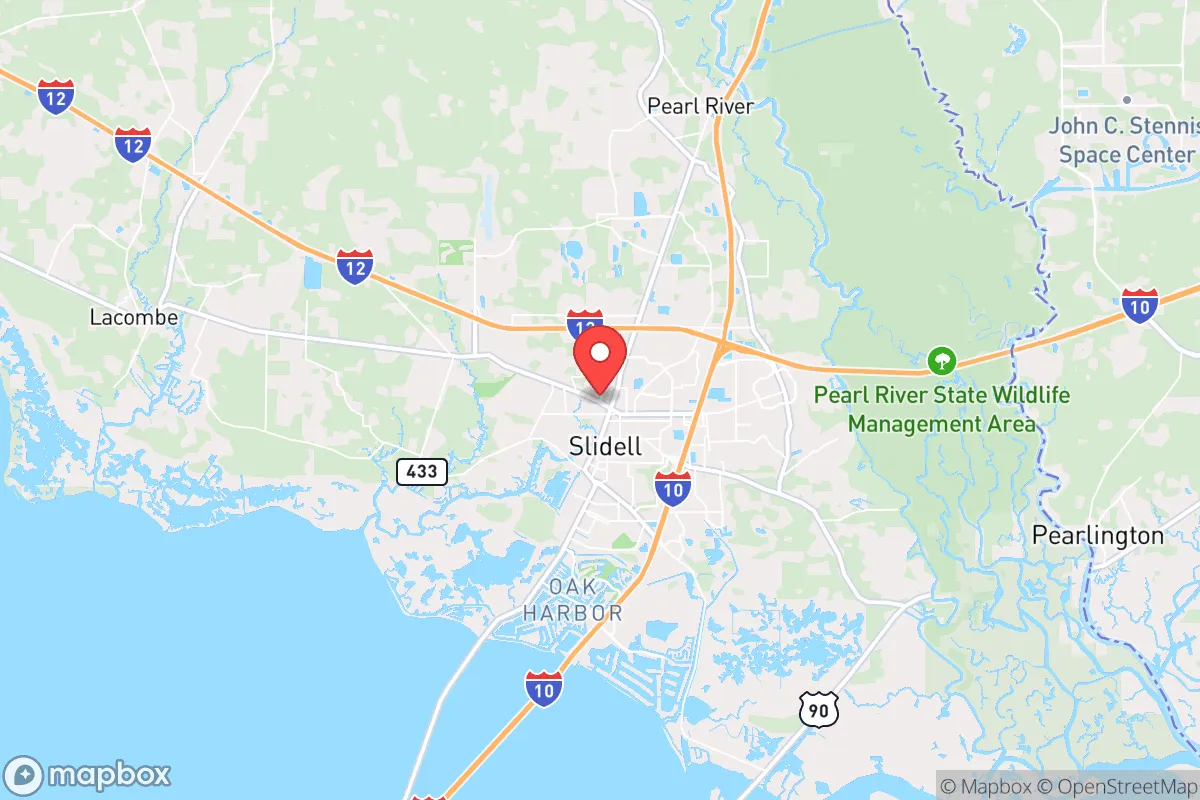
Slidell, Louisiana, offers a mixed strategic picture for the conservative prepper: it sits in a geographic sweet spot that balances proximity to critical infrastructure with a degree of natural buffer, but its location also places it squarely in the path of multiple high-consequence risks. The city’s position on the northeast shore of Lake Pontchartrain, roughly 30 miles from downtown New Orleans and 45 miles from the Mississippi state line, gives it a unique blend of access and isolation. For a relocator prioritizing resilience, Slidell’s primary advantage is its ability to leverage the lake as a natural barrier against the worst of New Orleans’ urban chaos, while still being close enough to tap into regional supply chains and medical resources—if those systems remain intact.
Geographic position and natural advantages for a prepper
Slidell’s geography is its strongest card. The city is sandwiched between the Pearl River to the east and Lake Pontchartrain to the south, creating a natural moat that limits approach vectors for any would-be threat—whether that’s civil unrest spilling out of New Orleans or a coordinated disruption event. The surrounding Honey Island Swamp and the Bogue Chitto National Wildlife Refuge provide dense, trackless terrain to the north and east, which can serve as both a buffer and a potential bug-out zone. For a relocator, this means you have multiple escape routes via US-11, I-10, and I-12, but also chokepoints that can be monitored or defended. The area’s elevation is modest—averaging 10 to 20 feet above sea level—but it’s higher than much of coastal Louisiana, reducing flood risk relative to New Orleans. The local soil is sandy loam, which drains well and supports gardening, a key consideration for long-term food security. Slidell’s position also places it within a two-hour drive of the Mississippi state line and the Florida panhandle, giving you options for deeper retreat if the Gulf Coast becomes untenable.
Risks, exposures, and proximity to fallout-relevant landmarks
The downsides are significant and cannot be ignored. Slidell’s proximity to New Orleans—a major port, petrochemical hub, and population center—makes it a secondary target for any large-scale disruption. The city is directly downwind of the Mississippi River Chemical Corridor, which stretches from Baton Rouge to New Orleans and contains dozens of refineries and chemical plants. A major industrial accident or a deliberate attack on that infrastructure could produce a toxic plume that would reach Slidell within hours. Additionally, the city sits near the Michoud Assembly Facility in New Orleans East, a NASA facility that builds rocket stages—a potential high-value target in a conflict scenario. On the natural disaster front, Slidell is in Hurricane Alley. The 2021 Hurricane Ida caused widespread power outages lasting weeks, with some areas without electricity for over a month. The storm surge from Lake Pontchartrain can inundate low-lying parts of the city, particularly along the lakefront and near the Pearl River. For a prepper, this means you need to plan for both man-made and natural cascading failures—and the two can compound each other. The local government’s response capacity is limited; St. Tammany Parish has a population of about 270,000, and emergency services can be overwhelmed quickly in a multi-parish event.
Practical resilience for a relocator: food, water, energy, and defensibility
For a relocator looking to set up a resilient homestead, Slidell offers a mixed bag. Water is a serious concern: the city draws its municipal supply from the Pearl River, which is vulnerable to saltwater intrusion during droughts and contamination from upstream industrial activity. A well is not a given—much of the area’s groundwater is brackish or high in sulfur, so you’ll need to budget for a deep well (200+ feet) and a reverse osmosis system if you want reliable off-grid water. Food production is viable but requires effort. The growing season runs from March to November, and you can raise vegetables, citrus, and even small livestock like chickens or goats. However, the humidity and pests (fire ants, mosquitoes, and feral hogs) make it a constant battle. Energy resilience is a weak point. The local grid is prone to outages from hurricanes and thunderstorms, and solar is viable but requires battery storage to handle the frequent cloud cover. Natural gas is available in most of the city, but the pipeline infrastructure is vulnerable to storm damage. Defensibility is moderate. Slidell’s suburban sprawl means most lots are on flat, open ground with limited natural cover. If you’re looking for a rural retreat, you’ll need to go north of I-12 into the Pearl River area or east into the swamp. The local culture is heavily law enforcement-friendly—St. Tammany Parish is a conservative stronghold with a strong sheriff’s department—but in a prolonged SHTF scenario, you cannot rely on outside help. Your best bet is to buy a property with a buffer of at least 5 acres, preferably with a creek or pond, and to harden it with fencing, a generator, and a well-stocked pantry. The local prepper community is small but active; you’ll find like-minded folks at gun shows in nearby Covington and through the Louisiana Sportsman forums.
Overall, Slidell is a viable but not ideal location for the conservative prepper. Its strengths—natural barriers, access to multiple retreat routes, and a politically aligned local population—are real, but they are offset by the city’s vulnerability to hurricane-induced infrastructure collapse and its proximity to high-value targets in New Orleans. If you are willing to invest in robust water and energy systems, and you have a plan to bug out north or east if the Gulf Coast becomes a war zone, Slidell can work as a base of operations. But if your priority is absolute isolation from population centers and industrial risk, you would be better served looking further north into Mississippi or west into the Texas piney woods. Slidell is a compromise—a place that offers some strategic depth without requiring you to go completely off-grid, but one that demands constant vigilance and preparation for the day when the lake turns from a barrier into a liability.

* Values derived from national, state, county, city and local statistics and may differ in a specific area. Last updated: 2026-05-01T18:16:56.000Z
Narrative content on this page is AI-generated and may contain mistakes. Verify any details that matter before acting on them.
ReloMaps may earn a commission from affiliate links at no extra cost to you.

