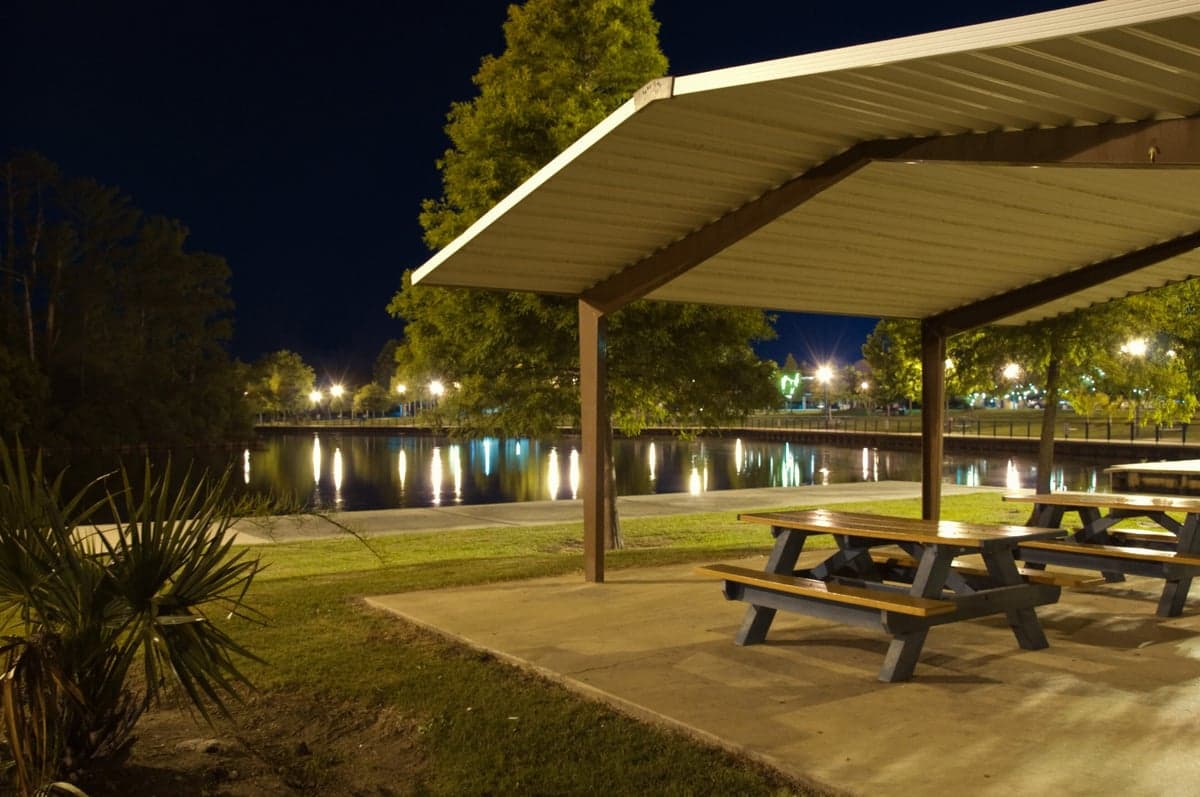
Photo: Wikipedia
Political ClimatePolitical Climate in Slidell, LA
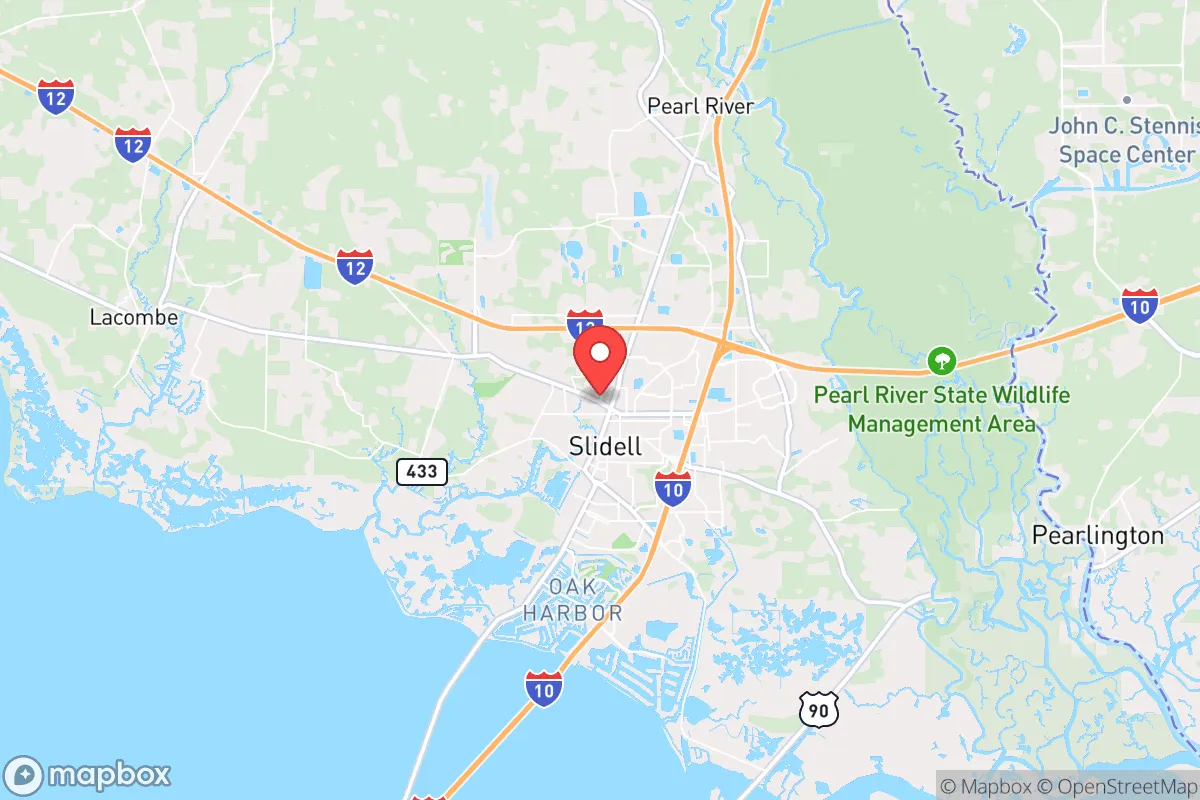
District shown is the primary district for this city’s centroid. Cities may span multiple districts.
Local Political AnalysisPolitical Analysis of Slidell, LA
Slidell is about as solidly conservative as it gets in Louisiana, and that's not changing anytime soon. The area carries a Cook PVI of R+19, which means it votes nearly 20 points more Republican than the national average. In 2024, St. Tammany Parish went for the GOP ticket by a massive margin, and Slidell itself has been a reliable red stronghold for decades. You don't see much of the political hand-wringing you get in New Orleans just across the lake—folks here are pretty clear on where they stand.
How it compares
Drive 20 minutes west into New Orleans, and you're in a completely different world—Orleans Parish is reliably blue, with a Cook PVI of D+27. That's a 46-point swing from Slidell. Even nearby Mandeville and Covington, while also conservative, have seen a bit more of that suburban drift toward moderation, especially among younger families moving in from out of state. Slidell, though, has held the line. The city's working-class roots, strong military presence (Naval Air Station Joint Reserve Base New Orleans is just down the road), and deep Catholic and Protestant traditions keep the political culture grounded in limited government, personal responsibility, and a healthy skepticism of federal overreach. You won't find many "defund the police" signs here—more like "Don't Tread on Me" flags flying from pickup trucks.
What this means for residents
For someone who values personal freedoms and wants to keep government out of their business, Slidell is a breath of fresh air. The local city council and parish government have generally resisted the kind of progressive social engineering you see in bigger cities—no mask mandates that lasted years, no heavy-handed business closures during the pandemic, and a real reluctance to raise property taxes. The school board has also pushed back against controversial curriculum changes, keeping the focus on basics and local control. That said, there's always a quiet concern among long-time residents that the creeping influence of national progressive trends—especially through media and federal funding strings—could start to erode that independence. The 2020 election cycle brought a wave of new activists to local politics, and while they haven't flipped anything yet, the energy is something to watch.
One thing that sets Slidell apart culturally is its strong sense of community self-reliance. You see it in the way people handle hurricane prep—nobody waits for FEMA to tell them what to do. The local churches, civic clubs, and volunteer fire departments are the real safety net, not government programs. Politically, that translates into a deep distrust of any proposal that sounds like "we're from the government and we're here to help." Whether it's zoning restrictions, environmental regulations that hurt local businesses, or state-level pushes for more centralized control over schools, the default reaction in Slidell is to ask: "Who's losing freedom here?" That skepticism isn't going away anytime soon, and for folks who value that kind of independence, it's exactly why they stay.

State Political ClimatePolitical Climate in Louisiana
State Political AnalysisPolitical Environment in the State
Louisiana has long been a reliably Republican state at the presidential level, voting for the GOP candidate by double digits in every election since 2008, but its state-level politics are far more nuanced, with a strong Democratic hold on local offices in New Orleans and Baton Rouge. The state’s overall partisan lean is solidly red, driven by a coalition of culturally conservative Cajun and rural voters, evangelical Protestants, and a growing suburban base. Over the last 15 years, the shift has been unmistakable: Democrats have lost their grip on the state legislature and governor’s mansion, with the GOP now holding supermajorities in both chambers and a Republican governor, Jeff Landry, who took office in 2024 after a decade of Democratic Governor John Bel Edwards.
Urban vs. rural divide
The political map of Louisiana is a textbook case of urban-rural polarization. New Orleans and its surrounding parishes—Orleans, Jefferson, and St. Bernard—are the state’s Democratic strongholds, powered by a diverse, union-heavy, and increasingly progressive electorate. Baton Rouge, home to the state capital and Louisiana State University, leans Democratic but is more competitive, with East Baton Rouge Parish voting blue by narrow margins in recent cycles. In contrast, the rest of the state is deeply red. The Acadiana region, centered on Lafayette and Lake Charles, is a Republican bastion where cultural conservatism and oil-and-gas industry ties dominate. The Florida Parishes north of Lake Pontchartrain—including Livingston, Tangipahoa, and St. Tammany—have become some of the most reliably GOP areas in the country, with St. Tammany Parish voting over 70% Republican in 2024. Rural parishes like Franklin, Tensas, and Concordia are overwhelmingly red, driven by low population density and strong evangelical influence. The only real outlier is Shreveport in the northwest, where Caddo Parish remains a Democratic holdout due to its significant Black population and union presence, but the surrounding parishes are solidly Republican.
Policy environment
Louisiana’s policy environment is a mixed bag for conservatives. On the plus side, the state has no personal income tax on Social Security benefits, and its corporate tax rate was cut from 8% to 7.5% in 2021, with a flat 4.25% individual income tax rate that is among the lowest in the South. The state is also a right-to-work state, meaning no forced union membership, and it has some of the weakest environmental regulations in the country, which has attracted petrochemical and manufacturing investment. However, the state’s sales tax is high—averaging over 9.5% combined state and local—and property taxes are relatively low, which can be a trade-off. On education, Louisiana has a robust school choice program, including the Louisiana Scholarship Program and a growing charter school sector, especially in New Orleans, which is now almost entirely charter-based. But the state’s public schools rank near the bottom nationally in test scores, and teacher pay is below the regional average. Healthcare is a sore spot: the state expanded Medicaid under the Affordable Care Act in 2016, which many conservatives view as a federal overreach, and the system remains strained, with high uninsured rates in rural areas. Election laws are moderately restrictive—voter ID is required, and early voting is limited to 7 days—but there have been no major election integrity controversies in recent cycles.
Trajectory & freedom
Louisiana has taken notable steps toward expanding personal freedom in the last few years, particularly under Governor Landry. In 2024, the state passed a near-total abortion ban with no exceptions for rape or incest, aligning with the post-Dobbs conservative agenda. Gun rights are strong: Louisiana is a permitless carry state (effective July 2024), and there are no state-level magazine capacity limits or assault weapon bans. The state also passed a parental rights in education law in 2023, requiring schools to notify parents of any curriculum changes related to sexuality or gender identity, and a law banning transgender athletes from female sports. On the economic freedom front, the state has been chipping away at occupational licensing requirements, but it still ranks in the middle of the pack nationally. The biggest red flag for freedom-minded residents is the state’s high incarceration rate—the highest in the country—driven by harsh sentencing laws and a powerful prison lobby. Landry has signaled support for criminal justice reform, but progress has been slow. Overall, the trajectory is toward more conservative governance, but the state’s deep-seated corruption and inefficiency remain a drag on liberty.
Civil unrest & political movements
Louisiana has a history of political flashpoints, but recent years have been relatively quiet compared to other states. The most visible unrest came in 2020, when New Orleans and Baton Rouge saw protests following the murder of George Floyd, with some property damage and clashes with police, but nothing on the scale of Portland or Seattle. The Black Lives Matter movement has a strong presence in New Orleans, but it has not translated into major policy wins beyond some police reform measures. On the right, the Louisiana Republican Party has been energized by the culture war issues, with groups like the Louisiana Family Forum and the Louisiana Right to Life Federation wielding significant influence in the legislature. Immigration politics are less heated here than in border states, but there is a growing concern among conservatives about the influx of migrants into New Orleans and Baton Rouge, with some local officials pushing for sanctuary city policies—a move that has been met with fierce opposition from the state legislature, which passed a law in 2024 banning sanctuary policies. Election integrity has not been a major controversy, though some conservative activists have raised concerns about the use of electronic voting machines, and the state has moved to require paper ballot backups. Secessionist rhetoric is virtually nonexistent; Louisiana is too culturally tied to the Union and too dependent on federal disaster aid to seriously entertain such ideas.
Projection
Over the next 5-10 years, Louisiana is likely to become more conservative, but the pace of change will be slower than in fast-growing states like Texas or Florida. The state’s population is stagnant—it lost a congressional seat after the 2020 census—and the demographic trends favor the GOP: the white, rural, and evangelical populations are shrinking, but the growing Hispanic and Asian populations in the Baton Rouge and New Orleans suburbs are not reliably Democratic, and many are culturally conservative. The biggest wildcard is New Orleans, which is losing population and becoming more progressive, but its political influence is waning as the rest of the state solidifies its red lean. In-migration is modest, mostly from other Southern states, and these newcomers tend to be conservative-leaning. The state’s economy, heavily dependent on oil and gas, faces headwinds from the energy transition, but the petrochemical industry is deeply entrenched and will fight any green policies. Expect more school choice expansion, further tax cuts, and continued resistance to federal mandates on healthcare and environmental regulation. The biggest risk for conservatives is the state’s chronic underfunding of infrastructure and education, which could eventually drive out the very families they hope to attract.
For a new resident, the bottom line is this: Louisiana offers a low cost of living, strong gun rights, and a culturally conservative environment that values family and faith. But you’ll have to accept high sales taxes, poor public schools in many areas, and a state government that is still wrestling with corruption and inefficiency. If you’re looking for a place where your values are respected and your freedoms are expanding, Louisiana is a solid bet—just don’t expect the rapid growth and dynamism of a Texas or a Florida. Stick to the suburbs of Baton Rouge or the Florida Parishes for the best mix of conservative politics and decent services, and avoid the urban cores of New Orleans and Shreveport if you want to steer clear of progressive politics and higher crime rates.
* Values derived from national, state, county, city and local statistics and may differ in a specific area. Last updated: 2026-05-01T18:16:56.000Z
Narrative content on this page is AI-generated and may contain mistakes. Verify any details that matter before acting on them.
ReloMaps may earn a commission from affiliate links at no extra cost to you.

