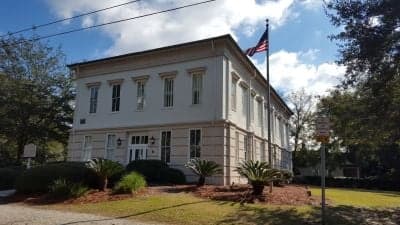
Photo: Wikipedia
Personal Sovereignty in Berkeley County
Viable for self-reliance. Generally workable, though some barriers may limit total independence.
What does Personal Sovereignty tell us?
Personal Sovereignty measures your capacity for self-reliance and independence with minimal government friction. Higher scores mean fewer barriers between you and the way you want to live... but it assumes you have the space you need and good neighbors.
What does this tell us?
Personal Sovereignty measures your capacity for self-reliance and independence with minimal government friction. Higher scores mean fewer barriers between you and the way you want to live... but it assumes you have the space you need and good neighbors.
State Policy
Energy independence: Importer (25% of energy produced in-state)
Personal Liberty
Homesteading

Personal Liberty Analysis
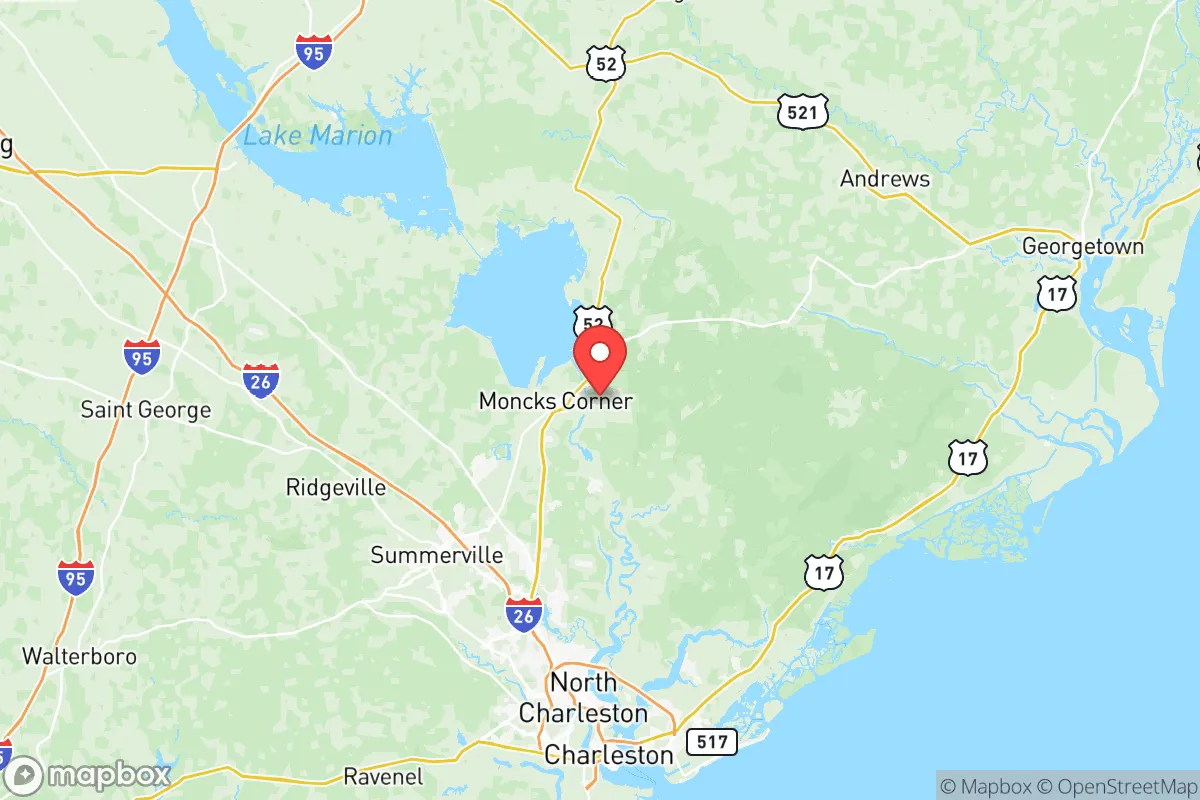
Berkeley County’s personal sovereignty profile breaks along a clear geographic fault that any survivalist or prepper needs to understand before buying land: the suburban crescent west of the Cooper River—places like Goose Creek, Hanahan, and the master-planned juggernaut of Cane Bay—operates under a web of HOA covenants, municipal codes, and density restrictions that mimic the very regulatory creep you’re trying to leave behind. Push east toward Bonneau, St. Stephen, and the Lake Moultrie shoreline, and you hit an entirely different governance reality: minimal zoning enforcement, no building permits for small outbuildings in unincorporated areas, and a county commission that has historically treated private landowners as adults capable of managing their own property. This isn’t a uniformly free landscape—your sovereignty depends entirely on where you plant your boots.
How the tax burden and regulatory climate stack up for small-scale operators
South Carolina’s flat state income tax (6.2% in 2026, with scheduled reductions) and zero tax on Social Security benefits give Berkeley County a structural advantage over high-tax havens like New York or California, but the local picture requires careful parsing. Berkeley County’s combined property tax millage (county + school + fire) lands around 280–340 mills depending on the fire district—manageable compared to Charleston County’s rates but higher than rural counties deeper inland. The real regulatory win for the sovereignty-minded lies in the unincorporated areas east of Moncks Corner: the county imposes no central zoning ordinance there, meaning you can erect a workshop, store equipment, or run a small-scale repair business from your land without wading through planning commission hearings. Contrast that with Goose Creek or Summerville’s enforcement of city-level codes on setbacks, noise, and junk vehicles—restrictions that regularly generate complaints among homeowners accustomed to rural freedom. The tradeoff: unincorporated Berkeley County has no municipal services beyond law enforcement and fire, so you own your water (well), your waste (septic), and your road maintenance entirely.
Self-defense rights and South Carolina’s gun law framework in practice
South Carolina is a constitutional carry state with a strong castle-doctrine and stand-your-ground statute, and Berkeley County’s Sheriff’s Office—led since 2018 by Sheriff Duane Lewis—has publicly affirmed these rights without the kind of administrative friction seen in more urbanized Lowcountry jurisdictions. Permitless carry for anyone 18 and older who can legally possess a firearm is the baseline, and the county’s gun culture is woven into daily life: you’ll see sidearms carried openly at fuel stops in Bonneau and concealed in the aisles of the Moncks Corner Tractor Supply without anyone blinking. The practical nuance for preppers is that Berkeley County’s zoning exemptions for unincorporated areas extend to home-based firearms businesses—a local gunsmith or private transfer service can operate without the layer of county-level licensing that would strangle such an enterprise inside the Charleston city limits. The state’s preemption law blocks municipalities from enacting their own gun restrictions, so Hanahan and Goose Creek cannot legally prohibit firearms on their own, though you’ll find private property restrictions—posted signage—more prevalent in the HOAs of Cane Bay than in the pinewoods around St. Stephen.
Feasibility of self-reliance and off-grid homesteading by location
If your vision of sovereignty involves well water, septic fields, solar panels, and minimal contact with the county permitting office, the eastern half of Berkeley County is where that vision lives. Unincorporated parcels in the Bonneau–St. Stephen corridor typically run 1–20 acres, with many tracts carrying no HOA covenant whatsoever—a critical distinction from the subdivisions popping up along Highway 176 toward Summerville. The county’s building code exempts structures under 200 square feet, so a storage shed, chicken coop, or generator enclosure won’t trigger inspection. Wells and septic systems must meet DHEC standards (think $5,000–$8,000 for a drilled well, $4,000–$7,000 for a septic), but those are one-time costs, not recurring bureaucratic hurdles. Solar feasibility is high—Berkeley County averages 210 sunny days per year—though net-metering policies with Duke Energy and Berkeley Electric Cooperative have tightened since 2020; you’ll want a battery-backed off-grid setup rather than relying on selling power back to the grid. The lakefront properties around Pinopolis and the Santee Cooper shoreline face additional DHEC water-adjacency restrictions, so the best homesteading value (and lowest regulatory friction) sits inland: think the wiregrass country between Bonneau and Wilson, where neighbors are measured in quarter-miles and county road maintenance is more rumor than reality.
Parental rights, medical autonomy, and freedom of speech in daily life
South Carolina’s Parental Rights in Education Act (passed in 2023) gives families in Berkeley County a statutory lever to review curriculum and opt children out of instruction they find objectionable—a real and enforceable tool, not a feel-good resolution. The Berkeley County School District, headquartered in Moncks Corner, has seen a shift toward conservative board majorities in recent cycles, and school board meetings have become arenas where parental sovereignty gets publicly tested, particularly around library content and gender-related policies. On medical autonomy, South Carolina never imposed a broad COVID-19 vaccine mandate for school attendance, and the state’s 2024 bill restricting medical mandates for minors adds another layer of protection for families skeptical of public health overreach. Freedom of speech is protected by state law and local culture alike—you can fly flags, post signs, voice opinions at county council meetings, or publish critique of local officials without the chilling effect found in more politically consolidated regions. The property boundary lines in rural Berkeley County are typically respected; the county does not enforce aesthetic codes on signage, paint colors, or landscaping in unincorporated areas, meaning your property reflects your preferences, not a design review committee’s.
Stacked against the broader Southeast, Berkeley County delivers a personal sovereignty package that rivals rural Georgia or East Tennessee while keeping you within 45 minutes of Charleston’s port and medical infrastructure—a strategic sweet spot for the survivalist who needs both buffer and access. It is not a libertarian utopia: the county’s rapid growth has brought HOA encroachment into formerly free areas (watch for the expansion of Cane Bay and the new development along Highway 17A), and South Carolina still has a state sales tax on groceries and equipment that nibbles at your budget. But for the conservative-leaning individual or family evaluating relocation through the lens of autonomy, Berkeley County’s unincorporated eastern townships—Bonneau, St. Stephen, Jamestown—offer a level of personal sovereignty that is increasingly hard to find within a day’s drive of the coast. The machinery of government is light here, the gun laws are strong, and the land still carries a price per acre that makes self-reliance affordable rather than aspirational.

* Values derived from national, state, county, city and local statistics and may differ in a specific area. Last updated: 2026-05-18T15:27:55.000Z
Narrative content on this page is AI-generated and may contain mistakes. Verify any details that matter before acting on them.
ReloMaps may earn a commission from affiliate links at no extra cost to you.

