Photo: Wikipedia
Personal Sovereignty in Spring Valley, NV
Viable for self-reliance. Generally workable, though some barriers may limit total independence.
What does Personal Sovereignty tell us?
Personal Sovereignty measures your capacity for self-reliance and independence with minimal government friction. Higher scores mean fewer barriers between you and the way you want to live... but it assumes you have the space you need and good neighbors.
What does this tell us?
Personal Sovereignty measures your capacity for self-reliance and independence with minimal government friction. Higher scores mean fewer barriers between you and the way you want to live... but it assumes you have the space you need and good neighbors.
State Policy
Energy independence: Importer (15% of energy produced in-state)
Personal Liberty
Homesteading

Personal Liberty Analysis
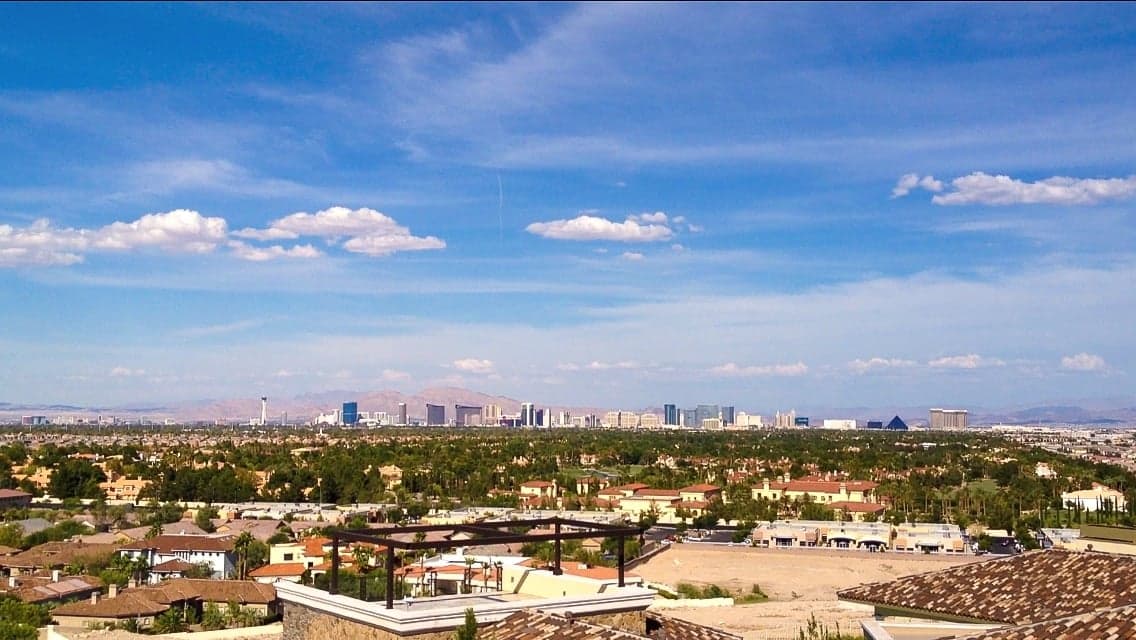
Spring Valley, Nevada, offers a notably high degree of personal sovereignty compared to most of the United States, largely because it sits within a state that has deliberately structured its laws to minimize government intrusion into daily life. The absence of a state income tax, a "shall-issue" firearm environment, and a general legislative posture of non-interference create a baseline of autonomy that is difficult to find in coastal or Midwestern states. For the survivalist or prepper, this is not a place where the state is your partner; it is a place where the state largely stays out of your way, leaving you to manage your own affairs, your own security, and your own future.
Tax burden and regulatory posture: how Nevada's structure protects your earnings
The most immediate expression of personal sovereignty in Spring Valley is financial. Nevada has no state income tax, meaning the money you earn is yours to keep, invest, or convert into supplies, land, and training without a state-level bureaucrat taking a cut. This is not a minor detail; it is a structural firewall against government overreach. Property taxes are also relatively low, with effective rates hovering around 0.6% of assessed value, and there is no state-level inheritance or estate tax. The regulatory environment mirrors this hands-off approach. Nevada does not have a state-level equivalent of California's strict environmental or labor regulations that can strangle small-scale homesteading or home-based businesses. Zoning in unincorporated Clark County, which includes Spring Valley, is generally permissive for residential uses, though you will want to verify specific HOA covenants if you buy in a planned community. The state's business licensing is straightforward, and there is no state-level personal property tax on vehicles or equipment. For the prepper, this means your resources are not constantly being siphoned off to fund programs you may not support, and your ability to pivot into self-employment or a side business is not hamstrung by red tape.
Self-defense and gun law specifics: what the "shall-issue" environment means for you
Nevada is a "shall-issue" state for concealed carry permits, meaning that if you meet the statutory requirements—typically a background check and a short course—the county sheriff must issue the permit. There is no subjective "good cause" requirement, no discretionary denial by a local official. Open carry is legal without a permit for anyone legally allowed to possess a firearm. Spring Valley sits within Clark County, but the state preempts most local firearm ordinances, so you are not subject to the patchwork of city-level bans that plague states like California or New York. Stand-your-ground laws are on the books, removing any legal duty to retreat before using deadly force in self-defense if you are lawfully present. Magazine capacity is not restricted by state law, and there is no state-level assault weapons ban. For the survivalist, this is a critical sovereignty metric: the state trusts you to be the first line of defense for your home and family. The only notable limitation is that private firearm sales between individuals do require a background check through a licensed dealer (a "universal background check" law passed in 2016), which is a point of friction but does not prevent ownership. Overall, the legal framework treats the armed citizen as a responsible actor, not a potential threat.
Self-reliance and homesteading viability: lot sizes, zoning, and off-grid feasibility
Spring Valley itself is a suburban community, with most residential lots ranging from a quarter-acre to half-acre. This is not raw rural land where you can disappear into the woods, but it is also not a dense urban core. The zoning in unincorporated Clark County allows for backyard chickens, small-scale vegetable gardens, and rainwater collection without special permits, provided you follow basic health codes. True off-grid living—solar panels with battery storage, well water, septic systems—is technically feasible on larger parcels, but you will need to navigate Clark County's building codes and permitting process for any permanent structure. The county does not prohibit solar, but grid-tied systems are the norm, and going fully off-grid requires a significant investment in battery capacity and possibly a generator. Water rights are a separate issue; Nevada is a prior-appropriation state, meaning you cannot simply drill a well on a suburban lot without a permit and proof of an existing water right. For the prepper, the realistic path in Spring Valley is not a remote homestead but a suburban fortress: a well-stocked home with solar backup, a deep pantry, and a network of like-minded neighbors. The climate—300+ days of sun—makes solar a reliable option, and the dry conditions mean less mold and rot for stored goods. If you want acreage for livestock or a fully self-sufficient operation, you will need to look further out, toward Pahrump or rural Nye County, but Spring Valley offers a solid middle ground for those who want proximity to infrastructure without sacrificing the ability to harden their home.
Personal liberties: parental rights, medical autonomy, speech, and property
Nevada's legal framework generally respects personal liberties, though it is not without nuance. Parental rights are strong: the state does not have a universal vaccine mandate for school attendance (though individual schools may require certain vaccines for enrollment, with medical and religious exemptions available). Homeschooling is straightforward, requiring only a notice of intent and basic educational records; there is no state-level curriculum approval or home inspection requirement. Medical autonomy is a mixed bag. Nevada has legalized recreational marijuana, which some preppers view as a liberty issue and others as a societal concern, but the key point is that the state does not criminalize personal choice in that arena. However, the state does have a prescription drug monitoring program, and there are limits on raw milk sales and some alternative medical practices. On speech and property, Nevada is solid. There is no state-level "hate speech" law that criminalizes expression, and property rights are protected by strong eminent domain statutes that require just compensation and a public purpose. The state's right-to-farm laws protect agricultural operations from nuisance lawsuits, which matters if you are considering livestock on a larger parcel. The biggest liberty concern for the survivalist is the potential for federal overreach, but Nevada's state government is not an active collaborator in that; it tends to defer to local control and individual choice.
In the broader landscape of American personal sovereignty, Spring Valley offers a compelling balance. It lacks the total autonomy of a remote Alaskan homestead or the legal vacuum of a county in Idaho's panhandle, but it also avoids the crushing regulatory burden of the West Coast or the Northeast. The absence of state income tax, the shall-issue firearm environment, the permissive zoning for self-reliance projects, and the respect for parental and property rights create a net-positive sovereignty score that is hard to beat in a metropolitan area. For the prepper or survivalist who needs to work, access healthcare, and maintain a social network while still maintaining a high degree of personal control over their life and security, Spring Valley is a strategic choice. It is not a libertarian utopia, but it is a place where the government's default answer is "yes" rather than "no," and that makes all the difference.

* Values derived from national, state, county, city and local statistics and may differ in a specific area. Last updated: 2026-04-29T01:41:44.000Z
Narrative content on this page is AI-generated and may contain mistakes. Verify any details that matter before acting on them.
ReloMaps may earn a commission from affiliate links at no extra cost to you.

