Photo: Wikipedia
Demographics of Spring Valley, NV
Affluence Level in Spring Valley, NV
A middle-class area roughly in line with national averages across income, home values, education, and employment.
People of Spring Valley, NV
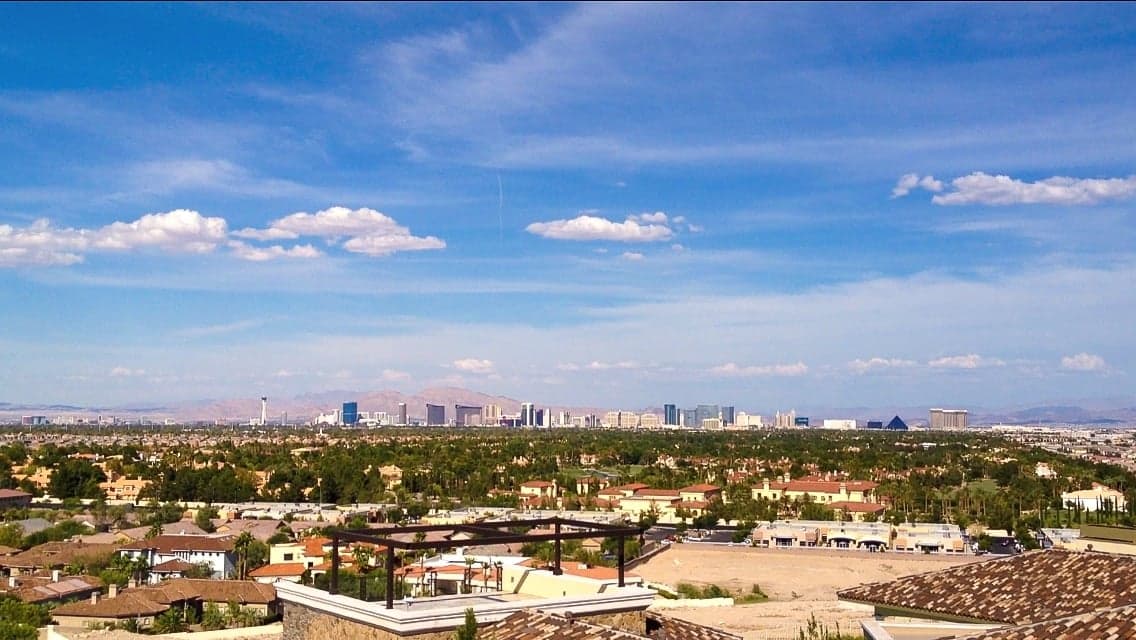
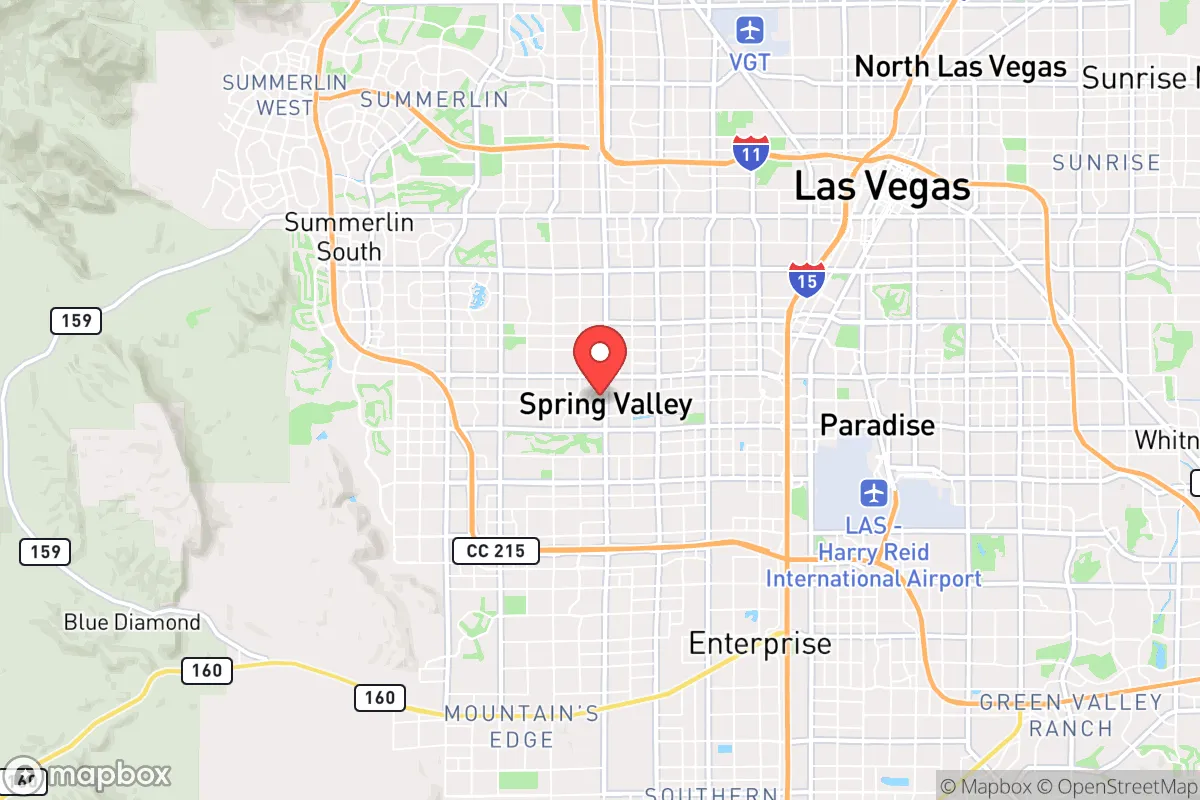
Spring Valley, Nevada, is a dense, unincorporated suburb of Las Vegas with a population of 219,913 that is one of the most ethnically diverse in the state. Its residents are a mosaic of white, Hispanic, Black, and East/Southeast Asian communities, with a notable 19.0% Asian share and a foreign-born population of 11.4%. The city is characterized by its family-oriented, middle-class character, with 31.0% of adults holding a college degree, and a strong sense of place defined by distinct neighborhoods that reflect its layered immigration history.
How the city was settled and grew
Spring Valley was never a pioneer-era settlement. Its history begins in earnest after World War II, when the Las Vegas Valley experienced explosive growth driven by the gaming and hospitality industries. The area that would become Spring Valley was largely undeveloped desert until the 1950s and 1960s, when master-planned subdivisions began to rise. The first major wave of residents were white middle-class families moving from older Las Vegas neighborhoods and other parts of the country, drawn by affordable housing and jobs at the Strip. These early settlers built the foundations of neighborhoods like Desert Shores and Spanish Hills, which remain predominantly white and affluent today. The community was officially designated as a census-designated place in 1980, but its population remained modest until the 1990s.
Modern era (post-1965)
The post-1965 Immigration and Nationality Act opened the door for a dramatic demographic shift. Spring Valley’s population surged in the 1990s and 2000s as new immigrant groups arrived. The largest influx came from East and Southeast Asia—particularly Filipino, Chinese, and Korean families—who were drawn to the area’s affordable housing, good schools, and proximity to service-industry jobs. These communities concentrated in neighborhoods like Spring Valley East and the area around Flamingo Road and Jones Boulevard, where Asian-owned businesses and churches now anchor the community. Hispanic residents, many from Mexico and Central America, also arrived in large numbers, settling in the southwestern parts of Spring Valley near the 215 Beltway, where they formed tight-knit enclaves. Black residents, who make up 12.4% of the population, moved in during the same period, often from other parts of the Las Vegas Valley, and are dispersed across the community but with a notable concentration in the central Spring Valley corridor near Sahara Avenue. Indian subcontinent residents (0.9%) are a small but growing presence, primarily in newer subdivisions near the western edge of the city. This wave transformed Spring Valley from a nearly all-white suburb into a multiethnic mosaic by the 2010s.
The future
Spring Valley’s population is trending toward further diversification, but not toward homogenization. The white share (36.8%) is declining slowly as older residents age in place and younger, more diverse families move in. The Hispanic share (23.9%) is expected to grow steadily, driven by both domestic migration and immigration, while the East/Southeast Asian share (19.0%) is likely to plateau as second-generation residents assimilate and disperse. The Black population (12.4%) is stable, with no major influx expected. The Indian subcontinent community, though small, is growing as tech and healthcare jobs attract professionals to the area. The city is not tribalizing into rigid enclaves—neighborhoods like the Lakes and Spring Valley Ranch are increasingly mixed—but distinct ethnic clusters persist, particularly in older subdivisions. Over the next 10–20 years, Spring Valley will likely become even more diverse, with the Hispanic and Asian shares converging toward parity with the white share. The foreign-born population may rise slightly but will remain below the Las Vegas average, as the city is more attractive to established families than to recent arrivals.
For someone moving in now, Spring Valley is a stable, family-oriented suburb where diversity is a lived reality rather than a slogan. It is not a melting pot in the classic sense—neighborhoods retain distinct ethnic characters—but it is a place where different groups coexist with minimal friction. The city’s future is one of gradual demographic blending, with a growing middle class that values schools, safety, and community. It is a solid choice for conservative-leaning families seeking a diverse but orderly environment with strong ties to the Las Vegas economy.

* Values derived from national, state, county, city and local statistics and may differ in a specific area. Last updated: 2026-04-29T01:41:44.000Z
Narrative content on this page is AI-generated and may contain mistakes. Verify any details that matter before acting on them.
ReloMaps may earn a commission from affiliate links at no extra cost to you.

