Demographics of Star Valley Ranch, WY
Affluence Level in Star Valley Ranch, WY
An upper-middle-class area. Household wealth, education levels, and homeownership run ahead of national benchmarks.
People of Star Valley Ranch, WY
The people of Star Valley Ranch, Wyoming, today form a small, tightly-knit community of 2,107 residents, characterized by its overwhelming racial homogeneity and a strong family-oriented, conservative ethos. With a population that is 89.7% white and a foreign-born share of just 0.9%, the city stands as one of the least ethnically diverse places in the state, a direct reflection of its settlement history and continued in-migration patterns. The community’s identity is rooted in its Mormon pioneer heritage, outdoor recreation lifestyle, and a deliberate pace of life that attracts those seeking to escape more urbanized, politically liberal environments.
How the city was settled and grew
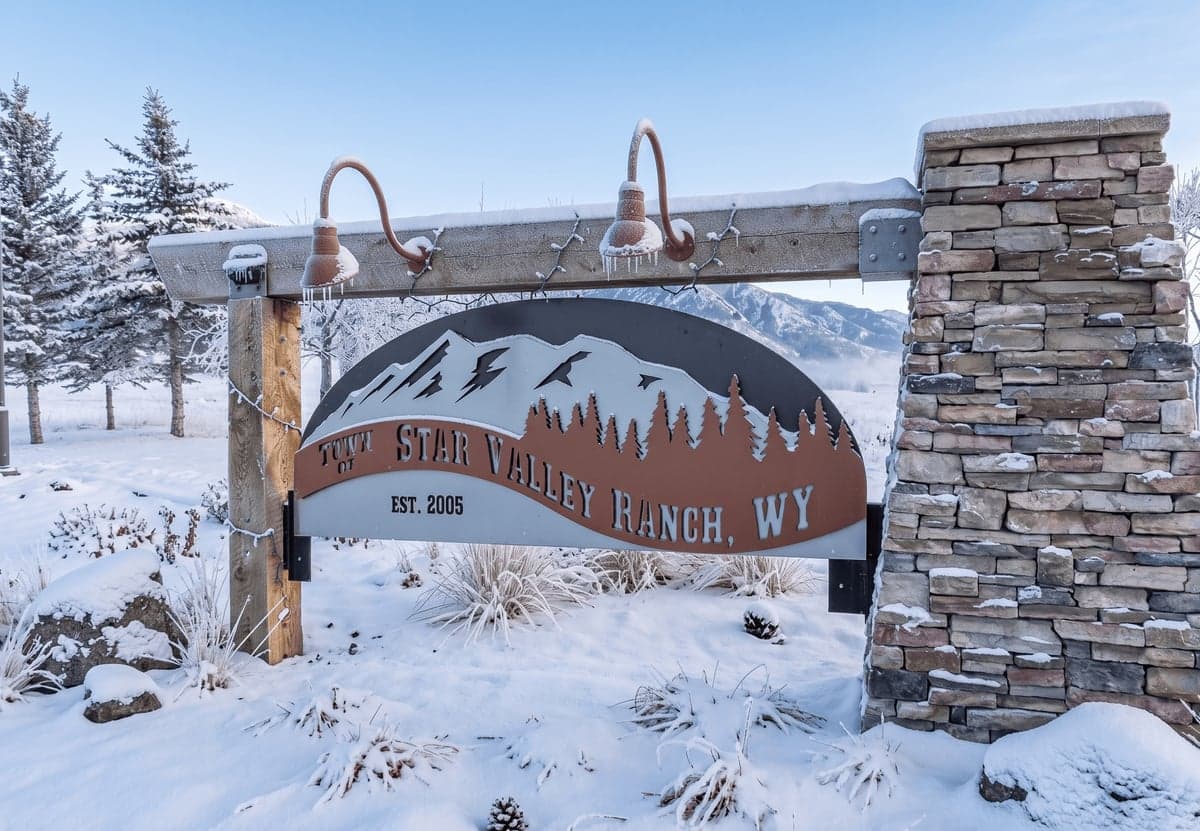
Star Valley Ranch was not settled in the traditional pioneer sense; it is a planned recreational community that began development in the 1970s, built on land that was historically part of the larger Star Valley ranching and farming region. The original population of the broader Star Valley area was drawn by the Church of Jesus Christ of Latter-day Saints (LDS) settlement push in the late 19th century, with families from Utah and Idaho establishing homesteads along the Salt River. The specific land that became Star Valley Ranch was originally part of the Alpine Ranches area, used for summer grazing by a handful of Mormon families. The modern subdivision was platted in the early 1970s by developers who marketed the area as a low-cost, high-altitude retreat for retirees and second-home buyers from the Intermountain West. The first wave of permanent residents, concentrated in the Moose Run and Elk Run neighborhoods, were predominantly white, middle-class retirees from Idaho and Utah who built modest log-style homes. A second wave in the 1990s brought younger families, many of whom were LDS members seeking affordable land and a rural lifestyle, settling in the Buffalo Ridge and Deer Run subdivisions. The city was formally incorporated in 2005, a move driven by residents who wanted local control over zoning and development to preserve the area’s low-density character.
Modern era (post-1965)
The modern demographic story of Star Valley Ranch is one of sustained, almost exclusive white in-migration, with no significant shifts from the Hart-Cellar Act or subsequent immigration waves. The 0.9% foreign-born population is negligible, and the 5.1% Hispanic share—likely concentrated among seasonal workers in the broader county’s agriculture and hospitality sectors—has not formed a distinct neighborhood within the city limits. The Indian Creek neighborhood, developed in the early 2000s, attracted a wave of younger families from Wyoming and Idaho, many of whom work remotely or commute to jobs in Alpine and Afton. The Silver Creek subdivision, built in the 2010s, drew a mix of retirees and telecommuters from Colorado and California, though the latter group remains small and has not altered the area’s political or cultural character. The city’s 0.3% Black population and 0.0% East/Southeast Asian and Indian subcontinent populations confirm that Star Valley Ranch has not experienced the diversification seen in many Western resort towns. The college-educated share of 35.3% is moderate, reflecting a population that values education but is not dominated by a professional class; many residents work in trades, ranching, or remote service-sector jobs.
The future
Star Valley Ranch’s population is projected to grow slowly, driven by domestic in-migration of white, conservative-leaning families and retirees from the Mountain West and Pacific Northwest. The city is homogenizing rather than diversifying, as new arrivals overwhelmingly match the existing demographic profile. The Hispanic share may rise slightly as workers in the broader Star Valley area’s construction and hospitality sectors seek affordable housing, but the city’s zoning restrictions and higher property values will likely limit this growth to single-digit percentages. The Buffalo Ridge and Moose Run neighborhoods are seeing infill development, but no new subdivisions are planned that would attract a different demographic. The next 10-20 years will likely see a continued aging of the population, with the retiree cohort growing as younger families are priced out by rising home values. The city will remain a predominantly white, LDS-influenced enclave with a stable, low-turnover population.
For someone moving in now, Star Valley Ranch offers a predictable, culturally uniform environment where conservative values, outdoor recreation, and community self-governance are the norm. The population is not heading toward greater diversity or urban-style amenities; it is solidifying as a quiet, homogeneous refuge for those who prioritize space, safety, and shared values over demographic variety or economic dynamism.

* Values derived from national, state, county, city and local statistics and may differ in a specific area. Last updated: 2026-04-21T10:51:55.000Z
Narrative content on this page is AI-generated and may contain mistakes. Verify any details that matter before acting on them.
ReloMaps may earn a commission from affiliate links at no extra cost to you.

