Photo: Wikipedia
Demographics of Summersville, WV
Affluence Level in Summersville, WV
A low-income area with significant economic hardship. Household wealth and educational attainment are well below national averages.
People of Summersville, WV
Summersville, West Virginia, is a small, predominantly white community of 3,397 residents, characterized by a strong Appalachian identity and a population density of roughly 1,100 people per square mile. The city is notably homogenous, with 92.3% of residents identifying as white, a foreign-born population of just 1.0%, and a college-educated rate of 30.3%. Its people are largely rooted in multi-generational families tied to the region’s coal, timber, and service industries, creating a tight-knit, conservative-leaning social fabric where newcomers are often measured by their willingness to integrate into local traditions.
How the city was settled and grew
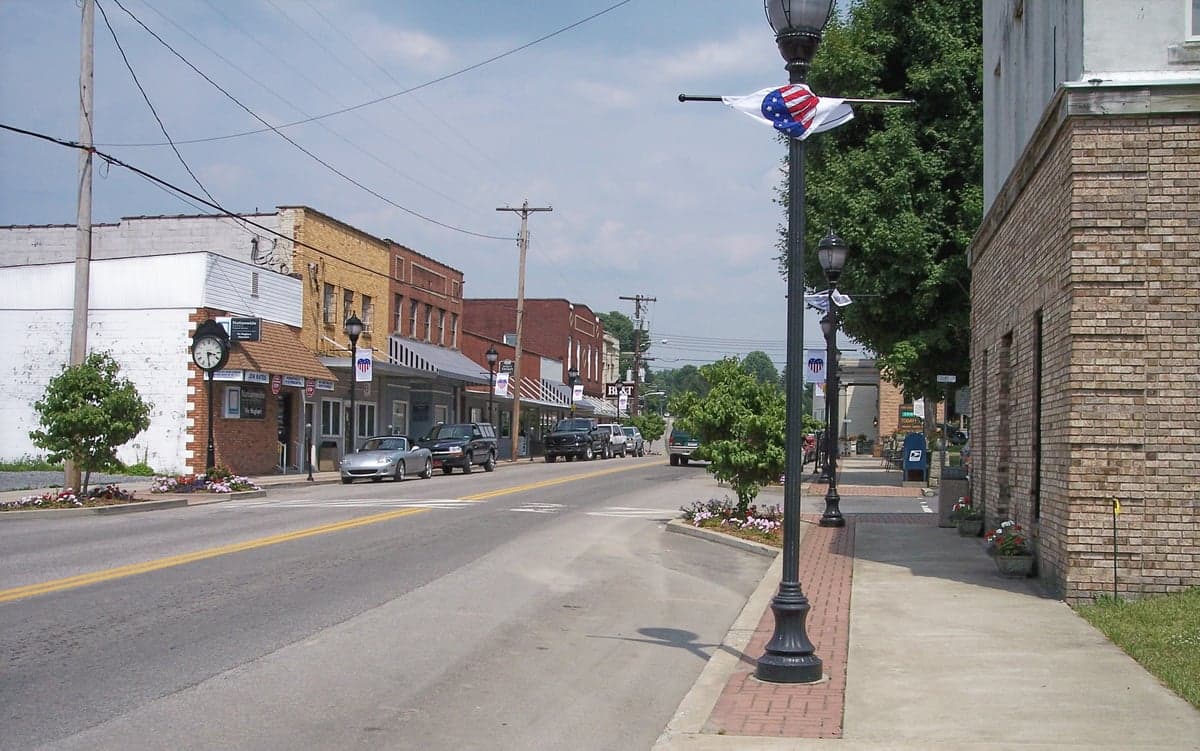
Summersville’s human history begins with European settlers of primarily Scots-Irish and German descent who moved into the Nicholas County area in the late 18th and early 19th centuries, drawn by land grants and the promise of subsistence farming in the Appalachian foothills. The town was formally established in 1824 and named after a local landowner, Lewis Summers. The first wave of settlers clustered around the Downtown Historic District, near the Gauley River, where gristmills and small trading posts formed the economic core. By the late 1800s, the arrival of the railroad and the rise of the timber and coal industries brought a second wave of laborers—mostly white migrants from other parts of West Virginia and neighboring states—who built homes in the Northside neighborhood, near the rail lines and early mining camps. These industries defined the town’s growth through the mid-20th century, with the population peaking around 3,800 in the 1950s before a slow decline set in as coal mechanization reduced labor demand.
Modern era (post-1965)
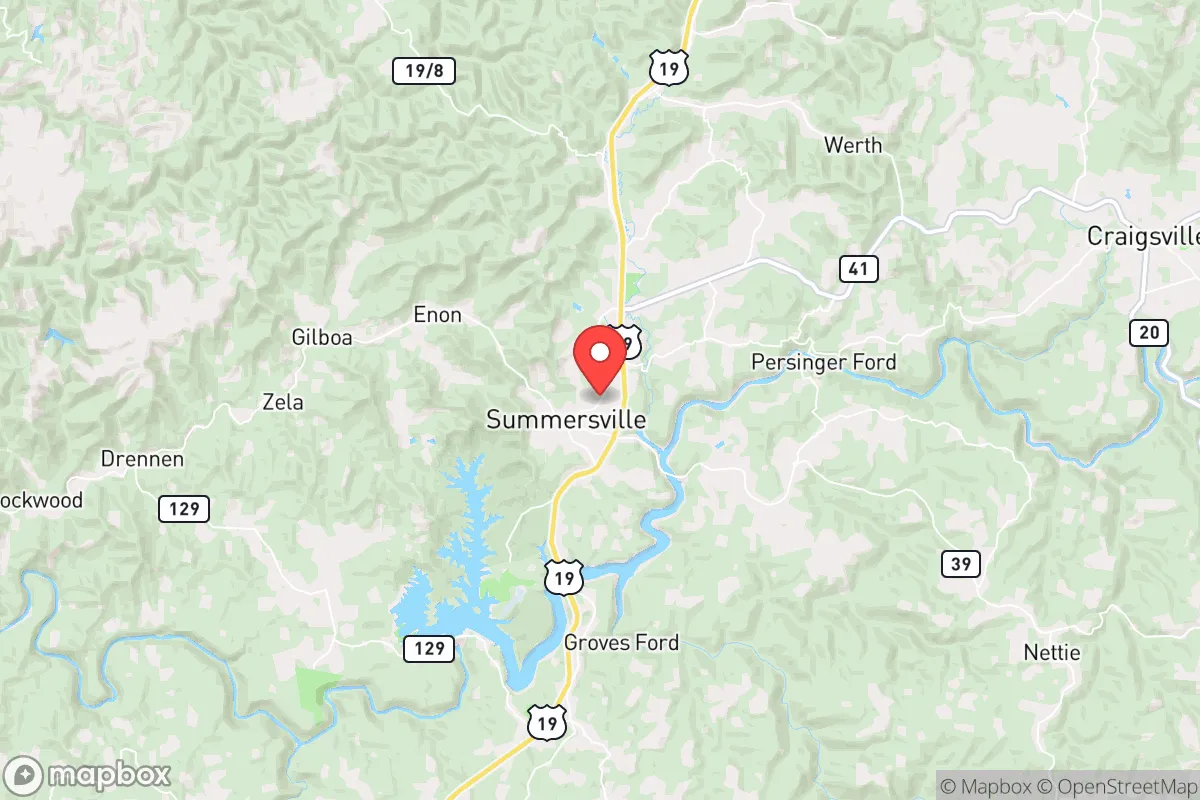
After the 1965 Hart-Cellar Act, Summersville saw virtually no impact from new immigration waves; the foreign-born share has remained below 2% for decades, and the city’s racial composition has stayed overwhelmingly white. The post-1965 period instead brought domestic in-migration from rural West Virginia and nearby counties, as people moved to Summersville for its role as a regional retail and healthcare hub. The Summersville Lake area, developed in the 1970s after the U.S. Army Corps of Engineers built the Summersville Dam, attracted some retirees and outdoor recreation workers, though the population never rebounded to its 1950s peak. The East Side neighborhood, near the Nicholas County Hospital and the high school, absorbed many of these newer residents, while the West End remained a quieter, older residential area with homes dating to the early 1900s. The Hispanic population, now at 2.3%, grew slightly in the 2000s, largely due to a small number of migrant workers in construction and service jobs, but they remain a minor presence concentrated in rental housing near the Route 19 corridor. The Black population (1.0%) and East/Southeast Asian population (0.0%) are negligible, reflecting the area’s limited economic pull for diverse groups.
The future
Summersville’s population is projected to remain stable or decline slightly over the next 10–20 years, as outmigration of young adults seeking jobs in larger cities offsets any modest in-migration of retirees or remote workers. The city is homogenizing rather than tribalizing—there are no distinct ethnic enclaves, and the small Hispanic and Black populations are dispersed rather than clustered. The foreign-born share is unlikely to rise significantly, given the lack of major employers or refugee resettlement programs in the region. The Summersville Lake area may see some growth if tourism and second-home development expand, but this will likely attract more white, middle-class retirees rather than diversifying the population. The Downtown Historic District is seeing slow reinvestment, but the overall demographic trajectory points toward an older, whiter, and slightly smaller community.
For someone moving in now, Summersville offers a stable, culturally homogeneous environment where community ties are strong and change comes slowly. It is not a place of rapid demographic transformation or ethnic diversity, but rather a traditional Appalachian town where newcomers—especially those who value quiet, outdoor recreation, and a conservative social ethos—can find a welcoming, if insular, home. The key trade-off is between the area’s low cost of living and safety, and the limited economic and cultural opportunities that come with a shrinking, aging population base.

* Values derived from national, state, county, city and local statistics and may differ in a specific area. Last updated: 2026-05-03T20:39:32.000Z
Narrative content on this page is AI-generated and may contain mistakes. Verify any details that matter before acting on them.
ReloMaps may earn a commission from affiliate links at no extra cost to you.

