Photo: Wikipedia
Demographics of Sunland Park, NM
Affluence Level in Sunland Park, NM
A below-average socioeconomic profile. Incomes, home values, and educational attainment trail the U.S., with higher poverty and unemployment.
People of Sunland Park, NM
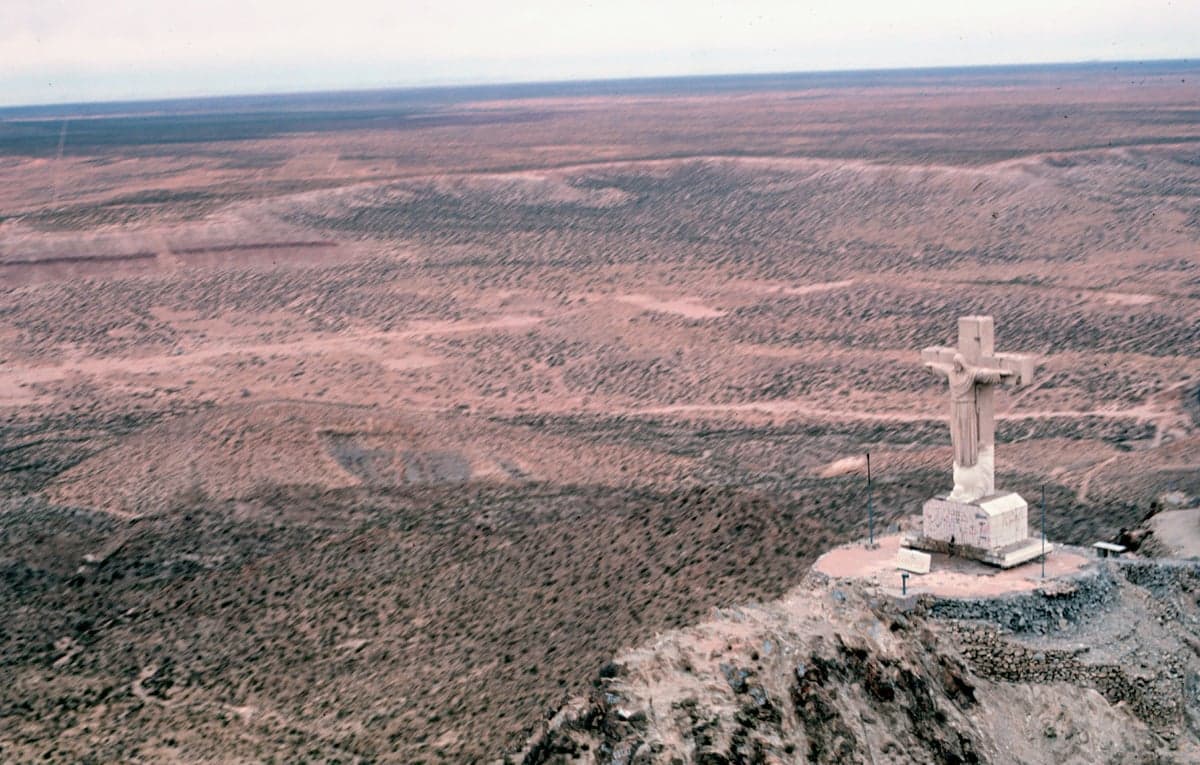
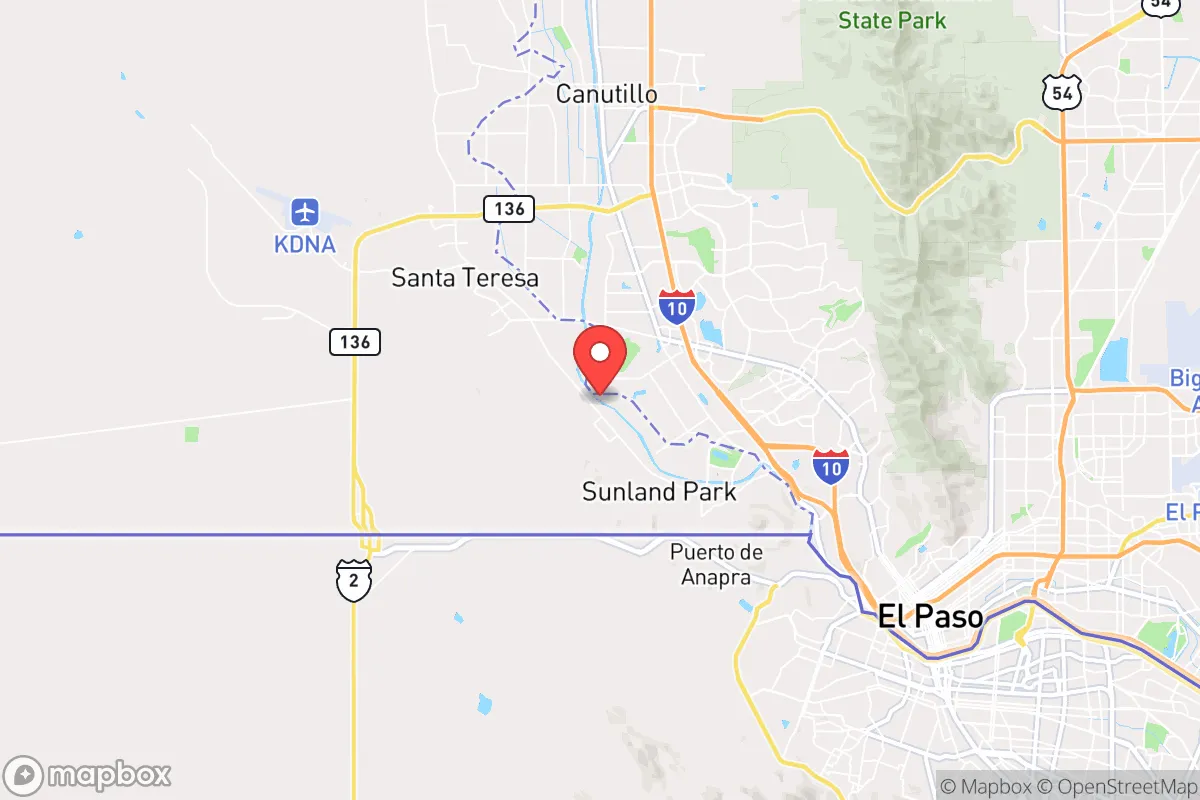
Today, Sunland Park, New Mexico is a densely settled border city of 17,085 residents defined overwhelmingly by its Hispanic heritage — 93.8% of the population identifies as Hispanic or Latino. The city is a working-class community with a strong Mexican-American character, where Spanish is widely spoken and daily life is shaped by the twin influences of the nearby U.S.-Mexico border crossing at Santa Teresa and the regional economy of El Paso, Texas. With a foreign-born population of 8.8% and only 22.2% of adults holding a college degree, Sunland Park remains a predominantly blue-collar, family-oriented enclave where generational ties to the region run deep.
How the city was settled and grew
Sunland Park's human history is not one of colonial-era Spanish settlement but of 20th-century development tied to the border economy and land speculation. The area was originally part of the vast Doña Ana Bend Colony Grant, a Mexican-era land grant that later passed into American hands after the Treaty of Guadalupe Hidalgo (1848). For decades, the land remained sparsely populated ranchland. The modern city's founding began in earnest after World War II, when the Sunland Park Racetrack & Casino opened in 1959, drawing a wave of Mexican-American workers from both sides of the border. These early residents settled in what is now the Historic Downtown Sunland Park corridor along McNutt Road, building modest adobe and cinder-block homes on small lots. A second wave arrived in the 1960s and 1970s as the Sunland Park Mall and surrounding commercial development attracted more families. The La Mesa neighborhood, located east of the racetrack, became a primary landing area for these mid-century arrivals — mostly Mexican immigrants and first-generation Mexican-Americans seeking affordable housing and proximity to El Paso jobs. By 1980, the city's population had grown to roughly 8,000, with Hispanics making up over 90% of residents, a pattern that has held ever since.
Modern era (post-1965)
The 1965 Hart-Cellar Immigration Act, which ended national-origin quotas, had a direct impact on Sunland Park by facilitating continued legal immigration from Mexico. Throughout the 1970s and 1980s, the Anapra neighborhood — the city's westernmost district, abutting the border fence — absorbed a significant influx of Mexican immigrants, many of whom worked in El Paso's construction, hospitality, and manufacturing sectors. Anapra remains the most heavily immigrant and Spanish-dominant part of Sunland Park today, with a noticeably younger median age and higher proportion of foreign-born households. Meanwhile, the Sunland Park Estates subdivision, developed in the 1990s and 2000s, attracted upwardly mobile Mexican-American families — often second- and third-generation residents — seeking newer, larger homes with yards. This created a subtle economic divide within the city: older, denser neighborhoods like La Mesa and Anapra versus the newer, more suburban Sunland Park Estates. The city's non-Hispanic population has always been tiny — White residents make up just 5.3%, Black residents 0.4%, and East/Southeast Asian and Indian populations are effectively zero. Sunland Park has never experienced significant Anglo or Asian in-migration, remaining a nearly monolithically Hispanic community throughout its modern history.
The future
Sunland Park's population is projected to continue growing slowly, driven by natural increase (high birth rates among the Hispanic population) and continued cross-border migration. The city is not homogenizing into a single identity but rather developing internal distinctions: Anapra remains a gateway for new immigrants, while Sunland Park Estates and the newer Vista del Valle subdivision (built post-2010) are becoming enclaves for established, English-dominant Mexican-American families. The foreign-born share (8.8%) is moderate for a border city — lower than nearby Anthony, NM (15%+) — suggesting that assimilation and second-generation growth are outpacing new immigration. Over the next 10–20 years, Sunland Park will likely remain overwhelmingly Hispanic, with a slowly rising share of college-educated residents as younger generations pursue degrees at Doña Ana Community College and UTEP. The city is not tribalizing into distinct racial enclaves because there are no other sizable racial groups to form them; instead, the internal divide will be between immigrant-heavy neighborhoods and more assimilated, middle-class subdivisions.
For a conservative-leaning individual or family considering relocation, Sunland Park offers a stable, family-oriented community with deep roots, low crime relative to nearby El Paso, and a strong sense of cultural continuity. The city is becoming slightly more educated and economically diverse, but its essential character — a Hispanic, working-class border town — is unlikely to change significantly. New arrivals should expect a community where English and Spanish coexist, where church and family are central, and where the pace of life is shaped by the rhythms of the border economy.

* Values derived from national, state, county, city and local statistics and may differ in a specific area. Last updated: 2026-04-22T09:12:26.000Z
Narrative content on this page is AI-generated and may contain mistakes. Verify any details that matter before acting on them.
ReloMaps may earn a commission from affiliate links at no extra cost to you.

