Photo: Wikipedia
Strategic Assessment of Sullivan County
Workable tactical position. Some exposure to population density or targets, but generally defensible in a crisis.
What does the Strategic Assessment tell us?
Our Strategic Assessment grades tactical survivability of an area. Major population centers, military targets, fallout zones, natural disasters, and border exposure all drive risk — lower exposure means a more defensible position in a crisis.
This is heavily inspired by Joel Skousen's Strategic Relocation book. Highly recommended you checkout the book ($)What does this tell us?
Our Strategic Assessment grades tactical survivability of an area. Major population centers, military targets, fallout zones, natural disasters, and border exposure all drive risk — lower exposure means a more defensible position in a crisis.
This is heavily inspired by Joel Skousen's Strategic Relocation book. Highly recommended you checkout the book ($)Strategic Pillars

Key Distances
Strategic Assessment Analysis
Sullivan County, Tennessee, offers a compelling strategic position for those prioritizing resilience and long-term stability, balancing relative isolation from major metropolitan vulnerabilities with practical access to essential infrastructure. Located in the northeastern corner of the state, the county anchors the Tri-Cities region—Bristol, Kingsport, and Johnson City—providing a population base of roughly 160,000 without the density or target profile of a major city. The area’s geography, nestled in the Appalachian foothills, provides natural advantages for self-sufficiency, while its distance from coastal threats and major industrial corridors reduces exposure to cascading failures. For a relocator assessing fallout risks, civic unrest scenarios, or supply chain disruptions, Sullivan County presents a defensible, resource-rich environment worth serious consideration.
Geographic position and natural advantages for long-term security
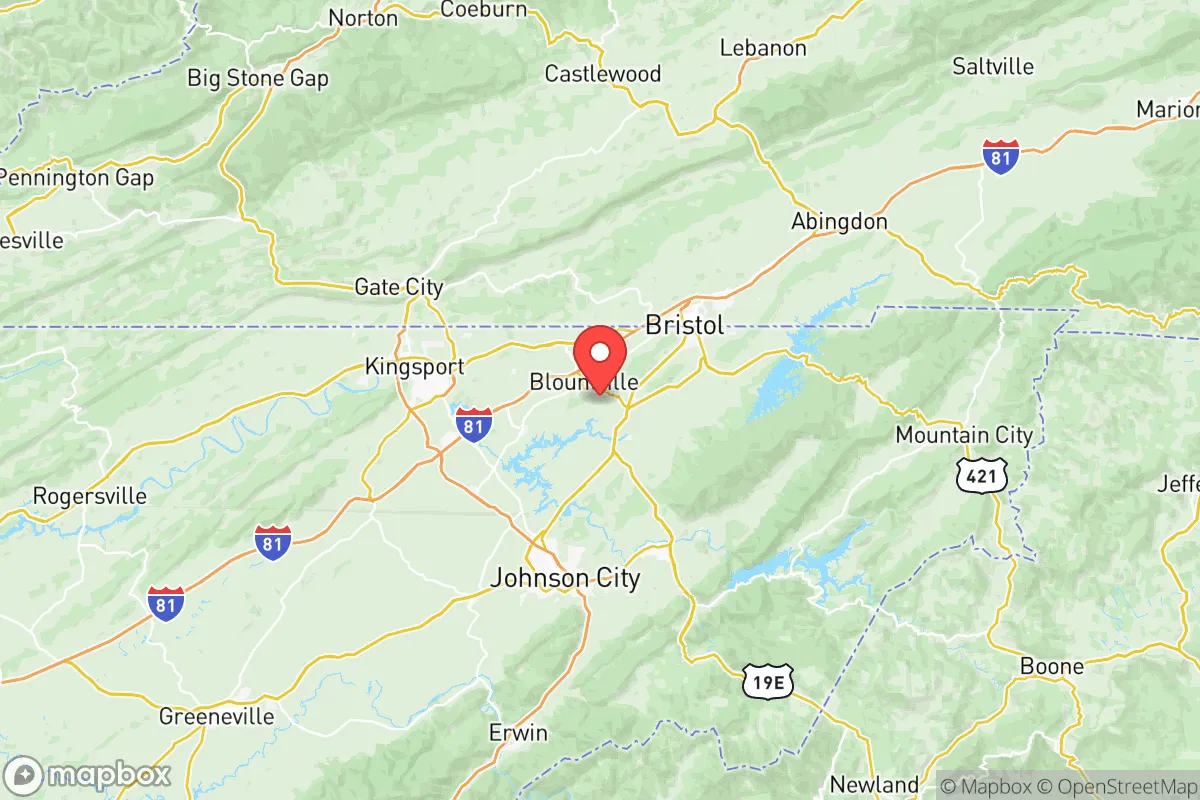
Sullivan County sits at the intersection of Tennessee, Virginia, and North Carolina, a tri-state location that offers multiple evacuation routes and jurisdictional flexibility. The county is roughly 90 miles from Knoxville and 120 miles from Asheville, placing it outside the immediate blast radius or fallout zones of those mid-sized cities while still allowing access to their medical and logistical resources. The Appalachian Mountains to the east and south provide natural barriers against prevailing weather patterns and potential airborne contaminants, while the Holston River and South Holston Lake offer reliable freshwater sources. The area’s elevation—ranging from 1,500 to 3,500 feet—reduces flood risk and provides defensible high ground for those with property in the ridges. Bristol, the county seat, straddles the Tennessee-Virginia line, giving residents dual-state access to emergency services, legal frameworks, and supply chains. The nearby Cherokee National Forest and extensive state game lands provide a buffer zone and potential foraging or hunting grounds, a tangible advantage for those planning for extended disruptions.
Risks, exposures, and proximity to fallout-relevant landmarks
No location is immune to risk, and Sullivan County has specific exposures that a strategic relocator must weigh. The most significant concern is the Tennessee Valley Authority’s (TVA) John Sevier Fossil Plant in nearby Rogersville, roughly 20 miles southwest of Kingsport, which handles coal and natural gas—a potential target for sabotage or accident. More critically, the East Tennessee Technology Park (ETTP) in Oak Ridge, about 100 miles southwest, is a former uranium enrichment site with ongoing environmental remediation; while not an active nuclear facility, its legacy contamination could pose secondary risks in a major event. The county itself hosts Eastman Chemical Company’s massive Kingsport plant, one of the largest chemical manufacturing sites in the U.S., employing over 7,000 people. This facility produces industrial chemicals and plastics, and a major accident or targeted disruption could create localized toxic plumes or supply chain shocks. On the military side, the nearest major base is Fort Campbell, roughly 250 miles west, which is far enough to avoid direct fallout from a base attack but close enough that military convoys or evacuations could funnel through the region. The Bristol Motor Speedway, while not a military target, could become a mass casualty or FEMA staging point in a crisis, drawing unwanted attention. The county’s proximity to Interstate 81—a major north-south corridor—means that refugee flows from the Northeast or Mid-Atlantic could pass through, potentially overwhelming local resources. For those prioritizing low-profile living, the more rural areas around Blountville and Piney Flats offer better separation from these risks than the Kingsport or Bristol city limits.
Practical resilience for a relocator: food, water, energy, and defensibility
For a single individual or family looking to establish a resilient homestead, Sullivan County delivers on the basics. Water is abundant: the Holston River, South Holston Lake, and numerous creeks and springs provide year-round surface water, and the county’s average annual rainfall of 45 inches supports rainwater catchment systems. Groundwater is generally accessible via wells in the valley areas, though ridge-top properties may require deeper drilling. Food production is viable: the growing season runs roughly April through October, with fertile limestone-based soils in the valleys suitable for vegetables, grains, and orchards. The county has a strong agricultural tradition, with local farmers’ markets in Bristol and Kingsport providing seed stock and livestock sources. For energy, TVA’s mix of hydro, coal, and nuclear provides grid reliability, but the mountainous terrain makes solar viable for off-grid setups, especially on south-facing slopes. Wood heating is practical given the surrounding forests, and many rural properties already have propane tanks for backup. Defensibility varies by location: the ridge-and-valley topography creates natural chokepoints, with narrow roads and limited access points to many hollows and coves. Properties in the Holston Valley or near South Holston Lake offer good visibility and limited approach routes, while those in the more open areas around Blountville are harder to secure. The county’s gun culture is strong, with multiple gun shops and ranges, and Tennessee’s permitless carry law (effective 2021) simplifies self-defense preparations. Medical infrastructure is adequate for routine needs—Bristol Regional Medical Center and Holston Valley Medical Center in Kingsport are Level II trauma centers—but for major trauma or specialized care, residents would need to rely on Johnson City or, in a worst case, self-treatment. The local law enforcement presence is moderate, with the Sullivan County Sheriff’s Office covering rural areas, but response times in remote hollows can exceed 30 minutes, making personal preparedness essential.
The overall strategic picture for Sullivan County is one of balanced viability for the conservative prepper or resilience-minded relocator. It avoids the extreme risks of coastal cities, major industrial corridors like Houston’s refinery row, or military-heavy zones like Fayetteville, while still offering enough population and infrastructure to support a non-isolated lifestyle. The county’s main liabilities—the Eastman chemical plant, the TVA fossil plant, and I-81 refugee risk—are manageable with careful property selection and a low-profile approach. For those willing to invest in well water, solar backup, and food storage, the area provides a solid foundation for weathering civil unrest, economic collapse, or natural disasters. It’s not a bug-out bunker in the wilderness; it’s a working, living community where a prepared individual or family can integrate, build relationships, and maintain a credible defense-in-depth. If you’re looking for a place that balances access with security, and community with self-reliance, Sullivan County deserves a hard look.

* Values derived from national, state, county, city and local statistics and may differ in a specific area. Last updated: 2026-05-20T09:47:44.000Z
Narrative content on this page is AI-generated and may contain mistakes. Verify any details that matter before acting on them.
ReloMaps may earn a commission from affiliate links at no extra cost to you.

