Photo: Wikipedia
Political ClimatePolitical Climate in Sullivan County
Showing district-level results — no local-only data available.
Local Political AnalysisPolitical Analysis of Sullivan County
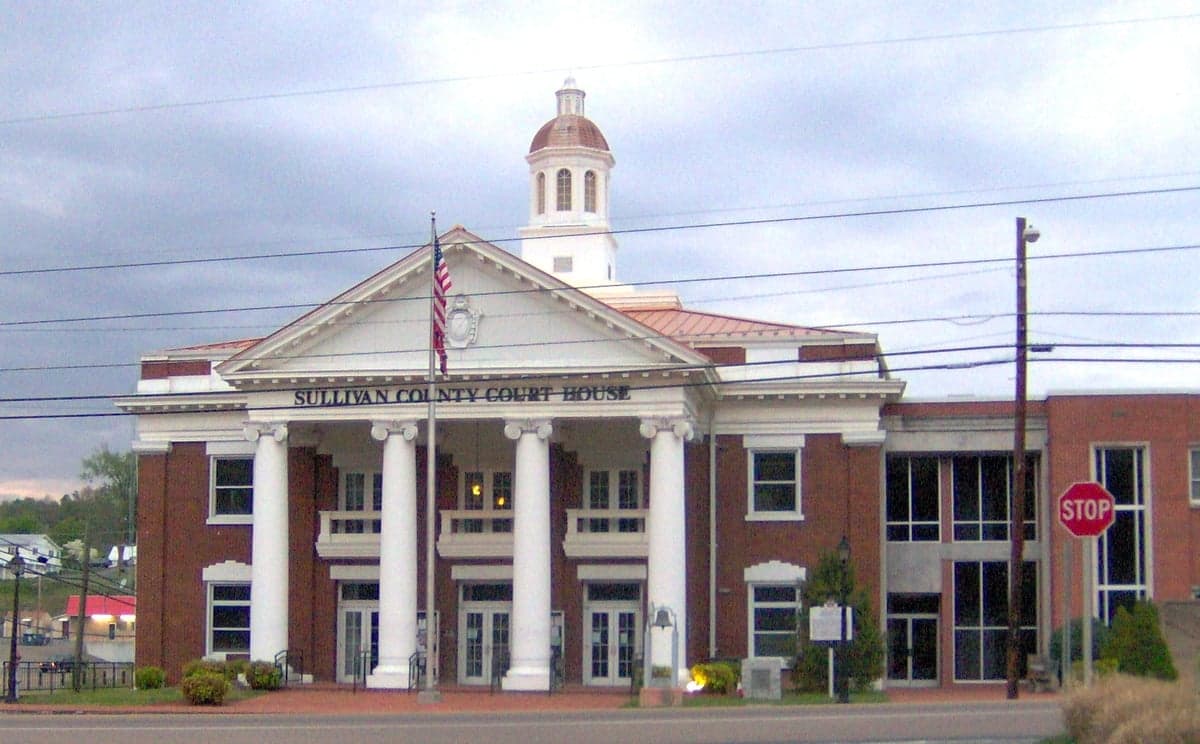
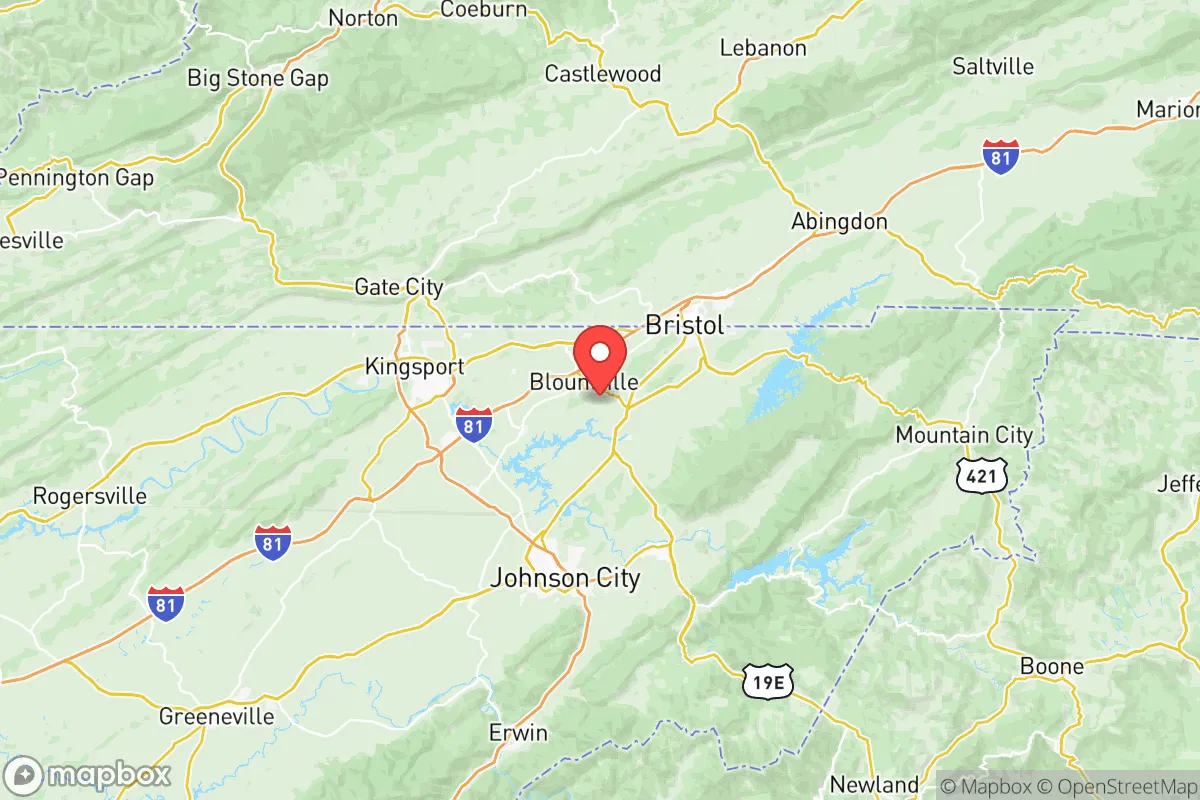
Sullivan County is about as reliably red as they come in Tennessee, and that’s not changing anytime soon. With a Cook PVI of R+29, it’s more than twice as conservative as the state as a whole (R+13), and that gap has actually widened over the last couple of cycles. The county hasn’t voted for a Democratic presidential candidate since 1996, and even then it was a squeaker. If you’re looking for a place where the old-school, live-and-let-live, small-government mindset still holds strong, this is it. But don’t think it’s a monolith—there are real pockets of blue, especially in the more urbanized areas, and the political vibe shifts noticeably depending on which part of the county you’re in.
How it compares
The state of Tennessee is already solidly conservative, but Sullivan County is in a different league. The R+29 PVI means that in a neutral national environment, Republicans here win by nearly 30 points. Compare that to the statewide R+13, and you’re looking at a place that’s roughly twice as Republican as the average Tennessee county. That’s not just a number—it shows up in local elections, where school board and county commission races are often decided in the GOP primary, not the general. The biggest contrast is with the more liberal parts of the state, like Nashville (Davidson County, D+23) or Memphis (Shelby County, D+17). Those areas are pushing progressive policies on everything from zoning to policing, while Sullivan County is still very much in the “keep government out of my business” camp. Even within the Tri-Cities region, Sullivan is the most conservative of the three—Johnson City (Washington County) is R+22, and Kingsport (Sullivan) is the anchor of the county’s rightward tilt.
What this means for residents
For folks who value personal freedom and limited government, Sullivan County is a breath of fresh air. You won’t see the kind of overreach you get in blue-run cities—no heavy-handed business mandates, no zoning fights over single-family homes, and no school boards pushing controversial curriculum that parents don’t want. The county has a strong Second Amendment culture, and property rights are taken seriously. That said, there are warning signs. The city of Bristol, which straddles the Virginia line, has a slightly more moderate streak—some precincts there have gone within 5 points in recent races, and the city council has occasionally flirted with progressive ideas like “equity” initiatives. Kingsport, on the other hand, is deep red, especially in the older neighborhoods and rural outskirts. The swing precincts are mostly in the suburban areas between the two cities, like Colonial Heights and Bloomingdale, where you’ll find a mix of retirees and younger families who still lean conservative but are less predictable on local issues. The long-term trend is a little concerning—some of the younger transplants from out of state are bringing more progressive voting habits, especially around environmental regulations and housing policy. If that shift continues, you could see the county’s R+29 edge start to erode, but that’s still a decade or more away.
Culturally, Sullivan County is distinct from the rest of Tennessee in a few ways. It’s part of the Appalachian region, which means a strong independent streak and a healthy skepticism of federal overreach. You won’t find the same evangelical political dominance you see in Middle Tennessee—here, it’s more about personal liberty and fiscal conservatism than social issues. The county also has a notable libertarian undercurrent, especially among the older manufacturing and farming communities. Policy-wise, that means lower taxes, fewer regulations, and a general hands-off approach from local government. If you’re looking for a place where you can live your life without a lot of bureaucratic nonsense, Sullivan County is still that place. Just keep an eye on the Bristol city limits and the new subdivisions going up—that’s where the political winds are starting to shift.

State Political ClimatePolitical Climate in Tennessee
State Political AnalysisPolitical Environment in the State
Tennessee is a solidly Republican state, carrying a Cook PVI of R+13, meaning it votes about 13 points more Republican than the national average in presidential elections. The dominant coalition is a mix of rural and suburban conservatives, with the state having voted for the GOP presidential candidate in every election since 2000, and by double digits since 2004. Over the last 10-20 years, the trajectory has been a steady march rightward, driven by in-migration from blue states and a growing exurban population, though the major metros have become more polarized, with Nashville and Memphis trending left while the rest of the state digs in.
Urban vs. rural divide
The political map of Tennessee is a classic tale of three distinct regions. The major metros—Nashville (Davidson County), Memphis (Shelby County), and to a lesser extent Chattanooga (Hamilton County) and Knoxville (Knox County)—are the blue islands. Nashville has become a progressive stronghold, with its city council pushing policies like sanctuary city rhetoric and defunding police debates, though the state legislature has repeatedly preempted them. Memphis is reliably Democratic, driven by a large African American population, but its influence is diluted by the surrounding suburbs. Meanwhile, the rest of the state—places like Franklin (Williamson County), Murfreesboro (Rutherford County), and Johnson City (Washington County)—are deeply red. Williamson County, just south of Nashville, is one of the wealthiest and most Republican counties in the nation, voting +40 points for Trump in 2020. The rural counties in Middle and East Tennessee, like Grundy County and Scott County, are among the most conservative in the country. The divide is stark: the three major metros account for about 40% of the state’s population but are increasingly outvoted by the growing exurbs and rural areas.
Policy environment
Tennessee’s policy environment is aggressively conservative, with a focus on low taxes and limited government. There is no state income tax on wages, a major draw for relocators from high-tax states like California or New York. The sales tax is high, around 7% state rate plus local add-ons, but the overall tax burden is low. The regulatory posture is business-friendly, with right-to-work laws and minimal zoning restrictions outside of major cities. On education, the state has expanded school choice through the Education Savings Account (ESA) program, which allows parents in certain counties to use public funds for private or homeschool expenses. The legislature also passed a law requiring schools to notify parents of any changes in a student’s health or emotional well-being, a key parental rights measure. Healthcare policy is limited; Tennessee did not expand Medicaid under the Affordable Care Act, and the state relies on a managed care system. Election laws have tightened: voter ID requirements are strict, and the state passed a law in 2023 making it a felony for election officials to send unsolicited absentee ballot applications. The overall posture is one of preempting local progressive initiatives, particularly from Nashville and Memphis.
Trajectory & freedom
Tennessee is becoming more free in many respects, particularly on gun rights and parental rights, but there are concerning trends on economic freedom and medical autonomy. In 2021, the state passed permitless carry (constitutional carry), allowing any law-abiding adult to carry a handgun without a permit. In 2023, the legislature passed a law banning gender-affirming care for minors, a major win for parental rights advocates. The state also passed a law in 2022 prohibiting private employers from requiring COVID-19 vaccines, a strong stand for medical freedom. However, property rights have seen some erosion: the state has used eminent domain for economic development projects, and there are ongoing battles over short-term rental regulations in tourist areas like Gatlinburg and Pigeon Forge. Taxation remains a bright spot, with no income tax and a gradual reduction of the sales tax on groceries. The trajectory is toward more individual liberty on social and medical issues, but with a heavy hand on local government preemption—the state frequently overrides Nashville and Memphis on issues like police oversight and minimum wage.
Civil unrest & political movements
Tennessee has seen its share of political flashpoints, particularly around the 2020 protests and the 2023 Nashville school shooting. In 2020, Nashville experienced significant protests following George Floyd’s death, with some turning violent and leading to property damage. The city’s progressive council later voted to defund the police by 10%, which the state legislature responded to by passing a law banning such cuts. In 2023, the Covenant School shooting in Nashville sparked a major political movement, with thousands of protesters—mostly from the left—demanding gun control. The Republican supermajority responded by passing a law to strengthen the state’s firearm preemption statute, preventing local governments from enacting their own gun restrictions. Immigration politics are relatively quiet, but there is a growing concern about illegal immigration in construction and agriculture, particularly in the Nashville and Memphis areas. There is no sanctuary city policy in Tennessee; the state passed a law in 2023 requiring law enforcement to cooperate with federal immigration authorities. Election integrity remains a hot topic; the 2020 election saw no major fraud in Tennessee, but the legislature has passed laws to tighten absentee voting and ban ballot drop boxes. A new resident would notice a palpable tension between the state government in Nashville and the city itself, with the state often acting as a check on the city’s progressive impulses.
Projection
Over the next 5-10 years, Tennessee is likely to become more Republican at the state level, but the urban-rural divide will deepen. In-migration from blue states—particularly California, Illinois, and New York—is accelerating, with many relocators settling in the Nashville exurbs like Spring Hill and Nolensville. These newcomers tend to be more moderate than native Tennesseans, but they are still voting Republican at higher rates than they did in their home states. The state’s population is projected to grow by 10-15% by 2030, with most growth in the red exurbs. However, Nashville and Memphis will continue to trend left, potentially leading to more state preemption battles. The biggest wild card is the 2026 gubernatorial election; if a moderate Republican wins, the state may soften some of its hardline stances. But given the supermajority, expect continued expansion of school choice, further gun rights protections, and more laws preempting local progressive ordinances. A new resident moving in now should expect a state that is increasingly conservative on social issues, but with a growing tension between the state and its major cities.
For a new resident, the bottom line is that Tennessee offers a low-tax, high-freedom environment for those who align with conservative values. You’ll find a state that respects gun rights, parental authority, and limited government, but you’ll also need to navigate a growing urban-rural divide. If you’re moving to the Nashville suburbs or a rural county, you’ll feel right at home. If you’re moving to downtown Nashville or Memphis, expect a more progressive local government that is often at odds with the state. The state is a safe bet for conservatives, but keep an eye on the demographic shifts—the newcomers may change the political calculus over the next decade.
* Values derived from national, state, county, city and local statistics and may differ in a specific area. Last updated: 2026-05-20T09:47:44.000Z
Narrative content on this page is AI-generated and may contain mistakes. Verify any details that matter before acting on them.
ReloMaps may earn a commission from affiliate links at no extra cost to you.

