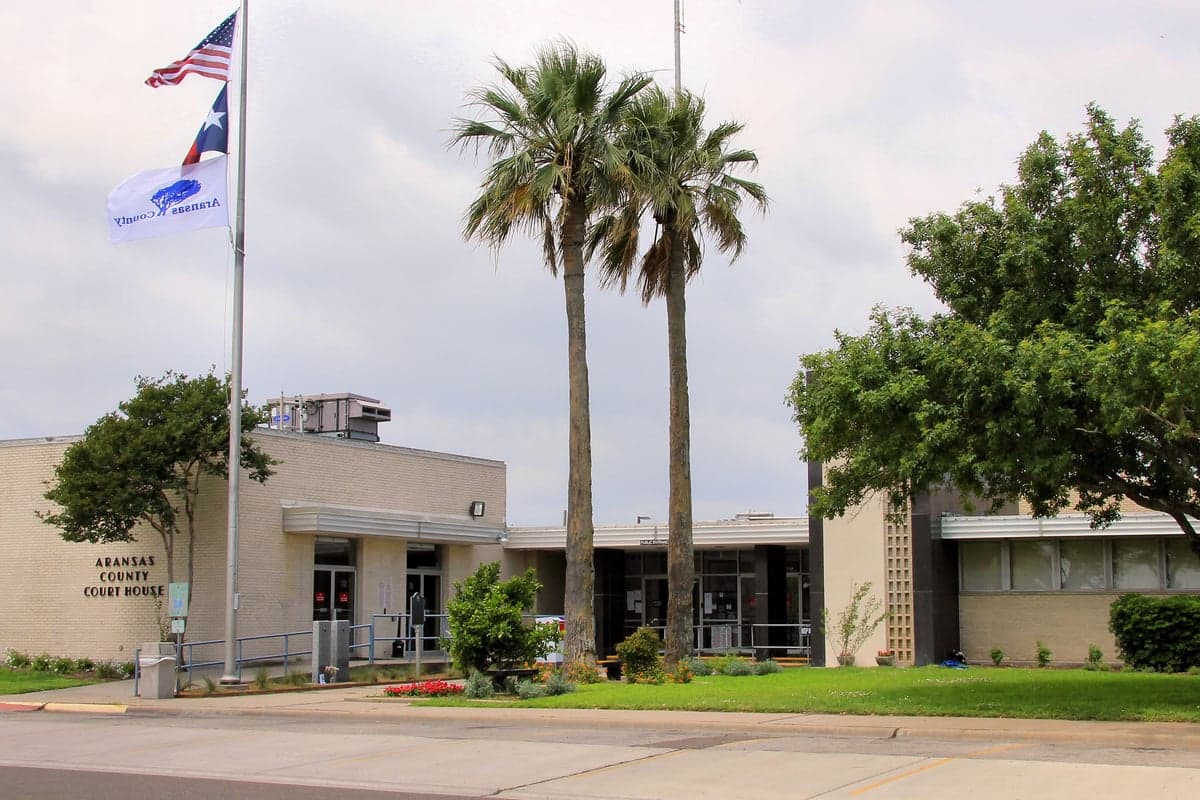
Photo: Wikipedia
Personal Sovereignty in Aransas County
Strong independent fundamentals that actively favor personal liberty and low regulation.
What does Personal Sovereignty tell us?
Personal Sovereignty measures your capacity for self-reliance and independence with minimal government friction. Higher scores mean fewer barriers between you and the way you want to live... but it assumes you have the space you need and good neighbors.
What does this tell us?
Personal Sovereignty measures your capacity for self-reliance and independence with minimal government friction. Higher scores mean fewer barriers between you and the way you want to live... but it assumes you have the space you need and good neighbors.
State Policy
Energy independence: Net exporter (220% of energy produced in-state)
Personal Liberty
Homesteading

Personal Liberty Analysis
Aransas County, Texas, offers a notably high degree of personal sovereignty, grounded in Texas’s broad preemption laws, low state income tax, and a culture of self-reliance that permeates communities from Rockport to Fulton and Lamar. The county’s regulatory posture is light-touch relative to urban Texas, with no county-wide zoning in unincorporated areas and a property tax burden that, while not the lowest in the state, remains manageable for those who prioritize autonomy. For a relocation-minded individual or family valuing personal freedom, Aransas County presents a strategic balance: the Gulf Coast lifestyle with the legal and practical infrastructure to live largely unbothered by overreaching government.
Tax burden and regulatory posture in Aransas County
Texas’s lack of a state income tax is the foundational advantage, and Aransas County adds no local income tax. The primary tax burden is property tax, with the county’s effective rate hovering around 1.8% to 2.2% of assessed value depending on the specific city and school district. Rockport and Fulton, the two incorporated cities, impose their own property taxes on top of county and school levies, but these are moderate by coastal Texas standards. Unincorporated areas like Lamar and Holiday Beach have no city tax, though they still pay county and school taxes. The regulatory environment is permissive: Texas law preempts most local ordinances on short-term rentals, tree removal, and building codes beyond state minimums. In practice, this means a landowner in rural Aransas County can build a shed, park an RV, or run a small home business without navigating a thicket of permits. The county does enforce basic health and safety codes (septic, well water), but the overall posture is “yes, unless there’s a clear danger,” not “no, unless you get permission.”
Self-defense and gun law specifics in Aransas County
Texas is a constitutional carry state, and Aransas County fully reflects that. Since 2021, any adult legally eligible to possess a firearm can carry openly or concealed without a permit. The county sheriff’s office in Rockport is known for a pro-Second Amendment stance, and there are no local ordinances restricting magazine capacity, firearm types, or storage requirements. The county’s gun culture is robust: the Rockport Gun Club and several private ranges serve the area, and hunting is common on private land and in nearby Aransas National Wildlife Refuge. Stand-your-ground and castle doctrine laws apply statewide, meaning no duty to retreat in any place you are lawfully present. For a self-defense-minded resident, the legal environment is as favorable as any in the United States. The only practical nuance is that Rockport and Fulton are small towns where law enforcement response times are generally under 10 minutes, but in rural areas like Copano Village or Bayside, response can stretch to 20-30 minutes, making personal preparedness more than a theoretical exercise.
Self-reliance and homesteading viability across Aransas County
Homesteading and off-grid living are genuinely viable in Aransas County, but the feasibility varies sharply by location. Unincorporated areas like Lamar, Holiday Beach, and the rural stretches between Rockport and Bayside offer lots as large as 1 to 5 acres with minimal zoning restrictions. There is no county-wide building code for single-family homes in unincorporated areas, though you must comply with state-mandated septic system regulations and well water testing. Off-grid solar is legal and common; the county does not prohibit rainwater collection, composting toilets, or alternative energy systems. However, the Texas Gulf Coast’s humidity and hurricane risk mean that any off-grid setup must be robust—concrete piers, elevated structures, and storm-rated windows are practical necessities, not regulatory impositions. In contrast, Rockport and Fulton have city building codes that require permits for new construction and major renovations, and lots are typically smaller (under half an acre). For a serious homesteader, Lamar and the rural areas near Copano Bay offer the best combination of land availability and regulatory freedom. The county’s agricultural exemption for property tax is available for parcels of 10+ acres used for farming, ranching, or timber, which can significantly lower the tax burden for larger homesteads.
Personal liberties: parental rights, medical autonomy, speech, and property
Texas law strongly protects parental rights, and Aransas County schools—Aransas County Independent School District (ACISD)—operate with a conservative ethos. Parents have broad authority to opt children out of curriculum they object to, and the district does not enforce mask or vaccine mandates beyond state law. Medical autonomy is similarly robust: Texas prohibits any state or local mandate for COVID-19 vaccines, and the state’s ban on gender-affirming care for minors (enacted in 2023) is in effect here. For those who value medical freedom, Aransas County is a safe harbor. Free speech is protected by the Texas Religious Freedom Restoration Act and local norms; Rockport’s public spaces see political signs and religious expression without controversy. Property rights are strong: Texas’s private property rights laws limit eminent domain, and the county has no rent control or landlord licensing. The only notable constraint is the Texas Coastal Management Program, which imposes some restrictions on development within the coastal zone (roughly the area within 1,000 feet of the mean high tide line). This affects waterfront properties in Rockport, Fulton, and Holiday Beach, requiring a coastal construction permit for new structures or major renovations. For inland parcels, property rights are nearly absolute.
Overall, Aransas County ranks among the more sovereignty-friendly areas in Texas for a coastal county. It lacks the extreme libertarian ethos of rural West Texas counties like Loving or King, but it also avoids the regulatory creep seen in Travis or Harris counties. The combination of no income tax, constitutional carry, minimal zoning in unincorporated areas, and strong parental and medical rights creates an environment where a family or individual can live with a high degree of personal autonomy. The trade-offs are real: hurricane risk, limited healthcare infrastructure (the nearest Level 1 trauma center is in Corpus Christi, 30 miles away), and a slower pace of life. For someone who values freedom over convenience, Aransas County is a solid choice—not a utopia, but a place where the government largely stays out of your way.

* Values derived from national, state, county, city and local statistics and may differ in a specific area. Last updated: 2026-10-16T15:12:52.000Z
Narrative content on this page is AI-generated and may contain mistakes. Verify any details that matter before acting on them.
ReloMaps may earn a commission from affiliate links at no extra cost to you.

