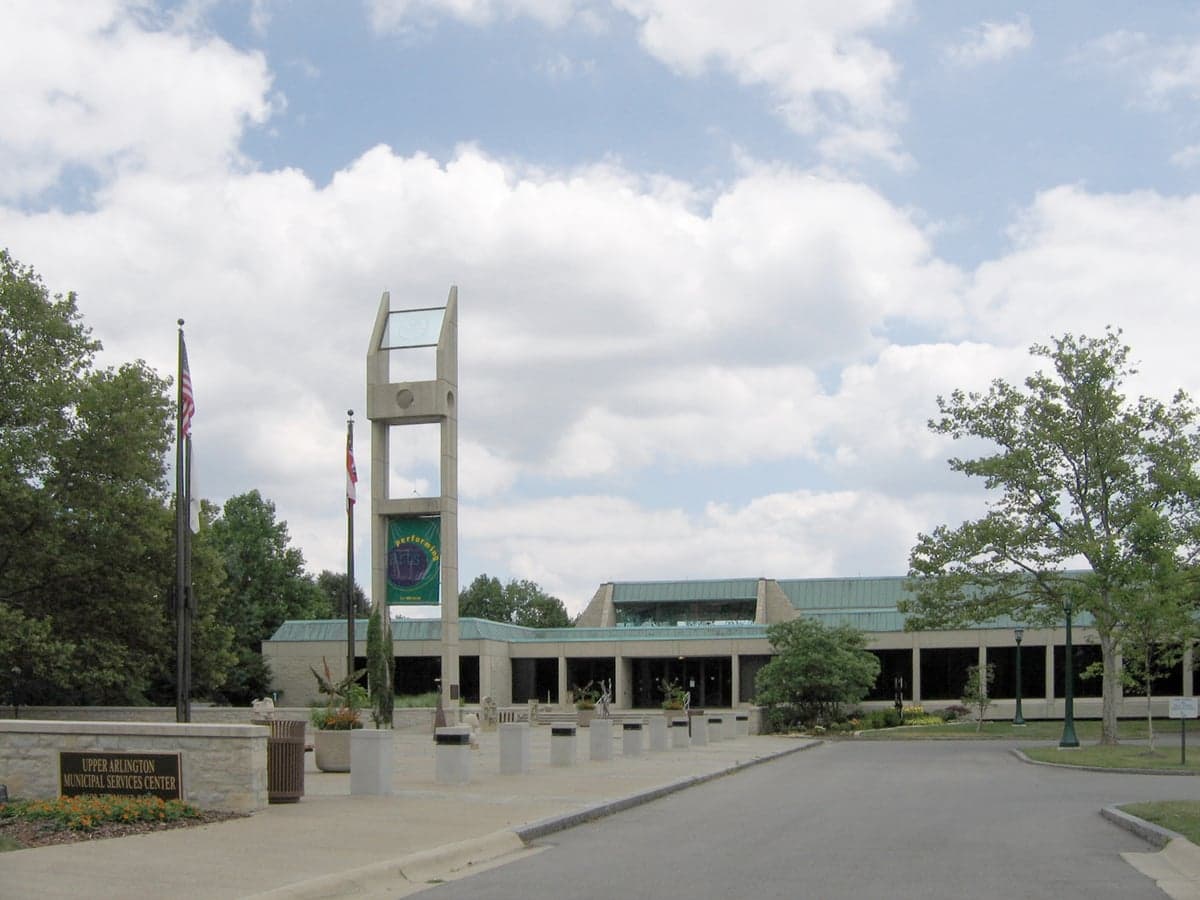
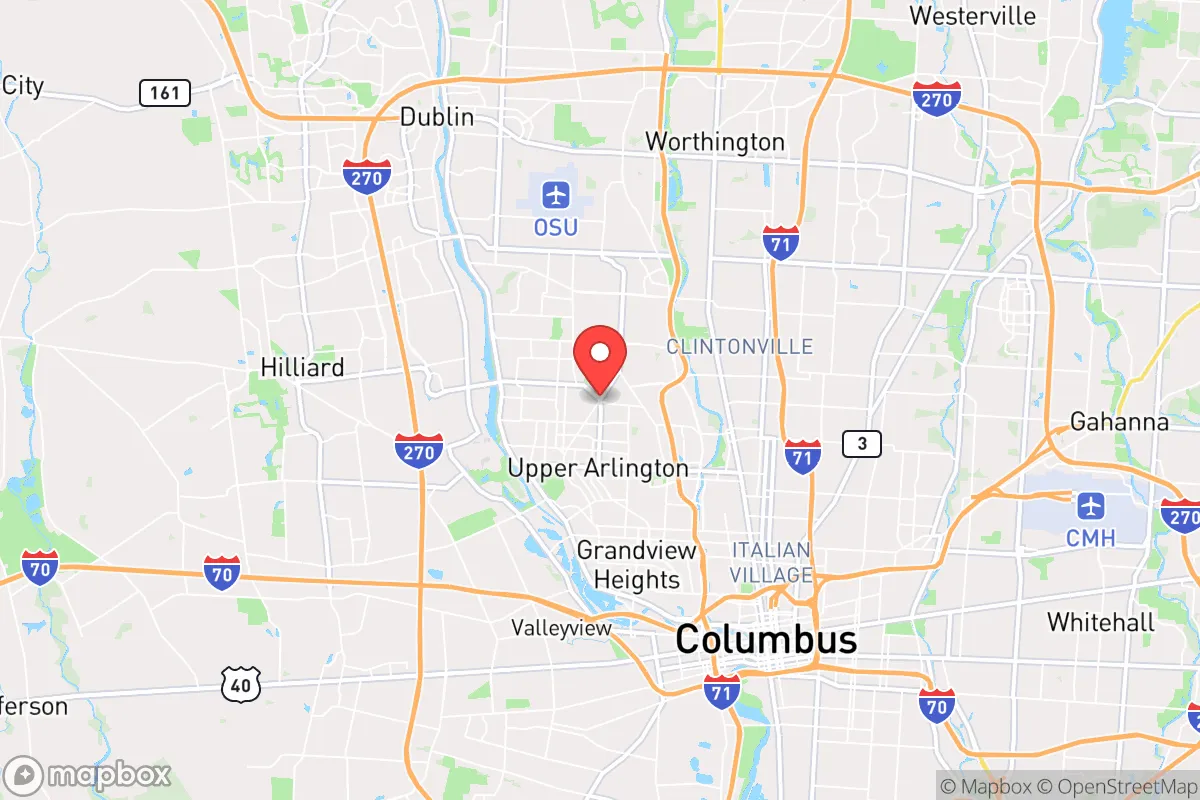
Photo: Wikipedia
Demographics of Upper Arlington, OH
Affluence Level in Upper Arlington, OH
A wealthy area with high-earning, well-educated households. Incomes, home values, and educational attainment meaningfully outpace national averages.
People of Upper Arlington, OH
The people of Upper Arlington, Ohio, today form a highly educated, predominantly white community of 36,319 residents, with a distinctive character shaped by its planned suburban origins and enduring family-oriented identity. The city is notably homogeneous, with 84.2% of residents identifying as white, while the largest minority groups are East and Southeast Asian communities at 4.4% and Indian subcontinent residents at 2.7%. With 79.2% of adults holding a college degree—more than double the national average—Upper Arlington's population is defined by professional achievement, political engagement, and a strong attachment to its historic neighborhoods and top-ranked school system.
How the city was settled and grew
Upper Arlington was not a gradual settlement but a deliberate planned community, conceived in 1913 by the King Thompson real estate firm on farmland northwest of Columbus. The original population was drawn not by industry or land grants, but by the promise of a refined, restricted suburb—deed covenants explicitly excluded non-white residents and required minimum home values. The first wave of residents were upper-middle-class white professionals, many of them executives and attorneys relocating from Columbus's older neighborhoods. The historic Arlington Gate district, centered around Arlington Avenue and Northam Road, contains the earliest homes built between 1915 and 1930, with large Colonial Revival and Tudor houses that housed the city's founding families. The Northam Park area, developed in the 1920s and 1930s, became the social and recreational hub for these early residents, with its namesake park and the original municipal pool. A second wave arrived after World War II, when returning GIs and their families filled the Kenny Park and Riverview Park neighborhoods, where smaller Cape Cods and ranches were built on narrower lots. These mid-century residents were largely white, college-educated, and employed by Ohio State University, Nationwide Insurance, and the growing state government in Columbus. By 1960, Upper Arlington had reached near build-out, with a population of roughly 28,000 that was 99% white.
Modern era (post-1965)
The post-1965 period brought gradual demographic change, though Upper Arlington remained far more homogeneous than the Columbus metro area. The Kingsdale neighborhood, built in the 1950s and 1960s around Kingsdale Shopping Center, began attracting a more diverse mix of professionals in the 1980s and 1990s, including the first significant numbers of East and Southeast Asian families—many employed by Ohio State University's medical and engineering programs. The Waltham Park area, a 1970s-era cluster of condominiums and townhomes near Lane Avenue, became a landing point for younger professionals and empty-nesters, including a small but growing Indian subcontinent population drawn to the proximity of Ohio State and the tech corridor along US-33. By 2000, the city's white share had declined to 92%, with Asian and Indian residents each accounting for roughly 2%. The 2010s saw a notable acceleration: the East and Southeast Asian population grew to 4.4% and the Indian subcontinent population to 2.7%, driven by high-skilled immigration and the expansion of Ohio State's research enterprise and the nearby Dublin tech hub. The Black population, however, remained minimal at 1.2%, and the Hispanic share at 3.5%—both well below regional averages. These shifts concentrated in the newer, denser housing stock of Lane Avenue corridor condos and the Fishinger Road area, while the older single-family neighborhoods like Arlington Gate and Northam Park remained overwhelmingly white.
The future
Upper Arlington's population is likely to continue a slow, selective diversification rather than a rapid transformation. The city's high housing costs—median home values exceed $500,000—and limited rental stock will constrain in-migration from lower-income groups, meaning future growth will come primarily from high-income professionals and their families. The East and Southeast Asian and Indian subcontinent populations are expected to grow steadily, potentially reaching 6-7% and 4-5% respectively by 2040, as these groups are disproportionately represented among the highly educated workers that Upper Arlington's housing market targets. The white share will likely decline gradually to around 78-80%, but the city will remain predominantly white and affluent. The Hispanic and Black populations are unlikely to see significant growth unless the city adds more affordable housing options, which is not a current policy priority. The city is not tribalizing into distinct ethnic enclaves—rather, new residents are dispersing across neighborhoods, with the strongest concentrations in the Lane Avenue and Fishinger Road areas where multi-family housing exists. The next decade will see Upper Arlington become slightly more Asian and Indian, but its essential character as a wealthy, highly educated, family-oriented suburb will persist.
For someone moving in now, Upper Arlington offers a stable, high-opportunity environment with exceptional schools and low crime, but it is not a place of rapid demographic change or broad economic diversity. The city is becoming incrementally more diverse at the top of the income and education ladder, while remaining largely closed to those without significant resources. This makes it an ideal fit for professionals and families who prioritize school quality and community stability over demographic variety, and who are comfortable in a community where nearly eight in ten adults hold a college degree and the median household income exceeds $130,000.

* Values derived from national, state, county, city and local statistics and may differ in a specific area. Last updated: 2026-04-19T05:00:37.000Z
Narrative content on this page is AI-generated and may contain mistakes. Verify any details that matter before acting on them.
ReloMaps may earn a commission from affiliate links at no extra cost to you.

