 Popular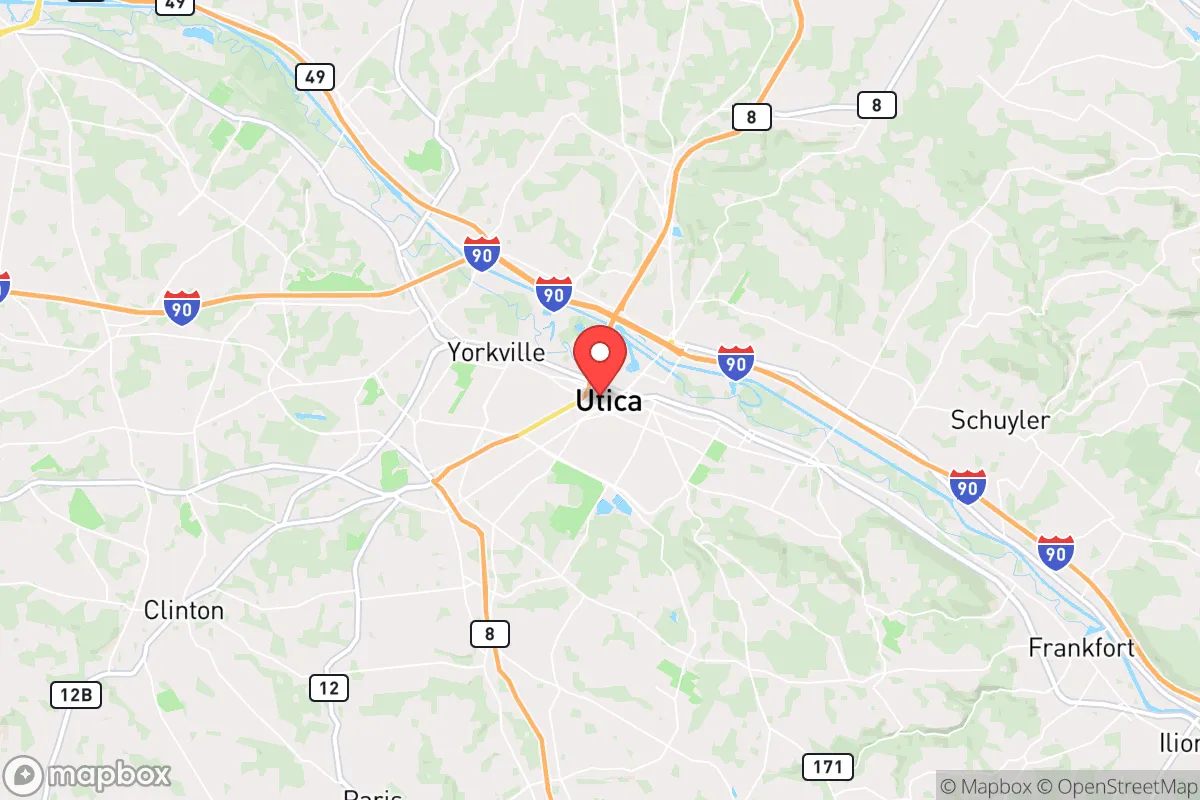
Photo: Wikipedia
Strategic Assessment of Utica, NY
Multiple tactical vulnerabilities. Population density, target proximity, or disaster risk are likely compounding. A retreat property and exit planning is required.
What does the Strategic Assessment tell us?
Our Strategic Assessment grades tactical survivability of an area. Major population centers, military targets, fallout zones, natural disasters, and border exposure all drive risk — lower exposure means a more defensible position in a crisis.
This is heavily inspired by Joel Skousen's Strategic Relocation book. Highly recommended you checkout the book ($)What does this tell us?
Our Strategic Assessment grades tactical survivability of an area. Major population centers, military targets, fallout zones, natural disasters, and border exposure all drive risk — lower exposure means a more defensible position in a crisis.
This is heavily inspired by Joel Skousen's Strategic Relocation book. Highly recommended you checkout the book ($)Strategic Pillars

Key Distances
Regional Safe Places
Below is our recommended "safe zones" in New York and the surrounding area based on our strategic heuristics. For most people, it's unrealistic to live in a “safe zone” full-time due to work, family or other personal reasons. They tend to be more rural. However, many of these areas are perfect for second homes and retreat properties that double as a vacation home or even a short-term rental.
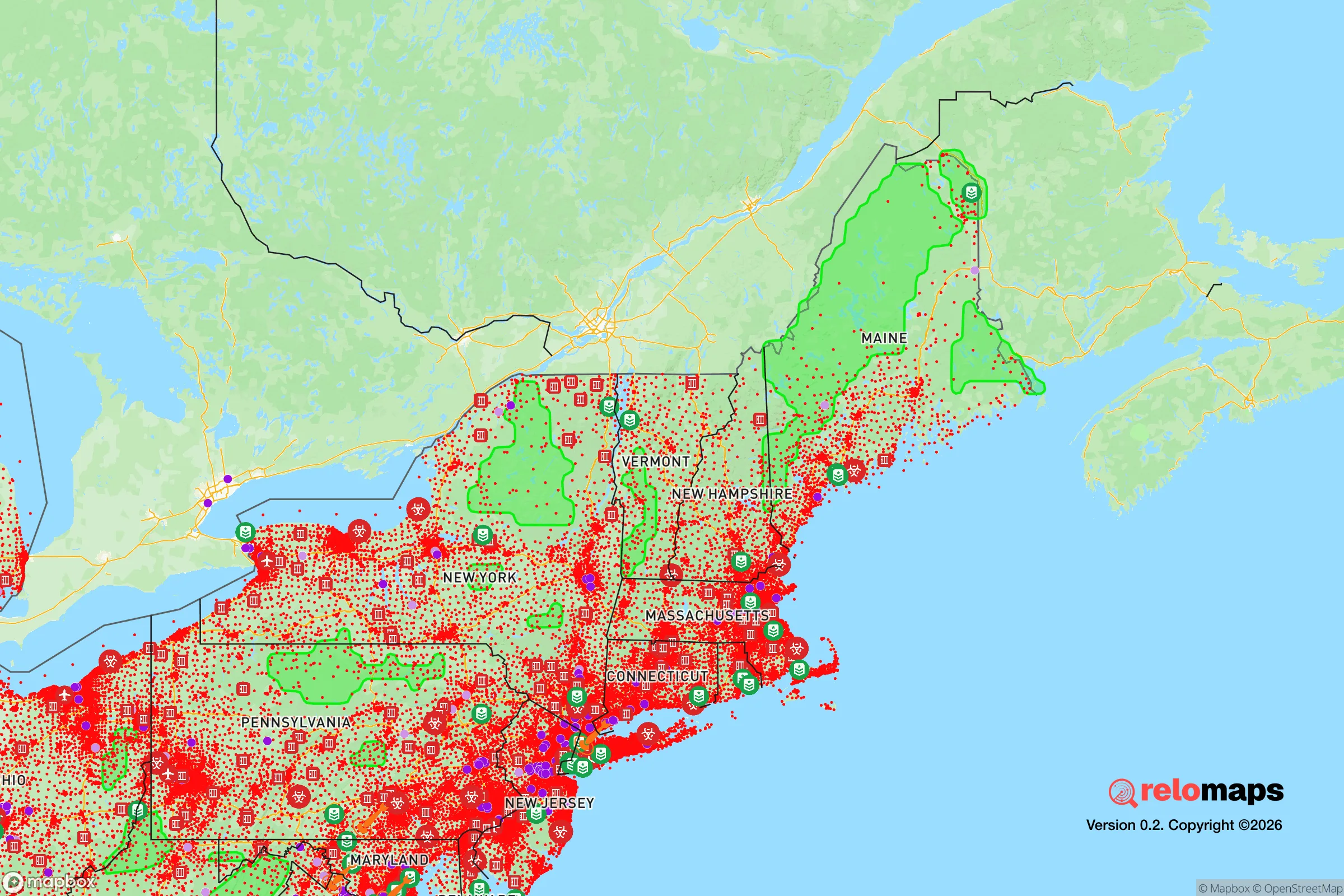
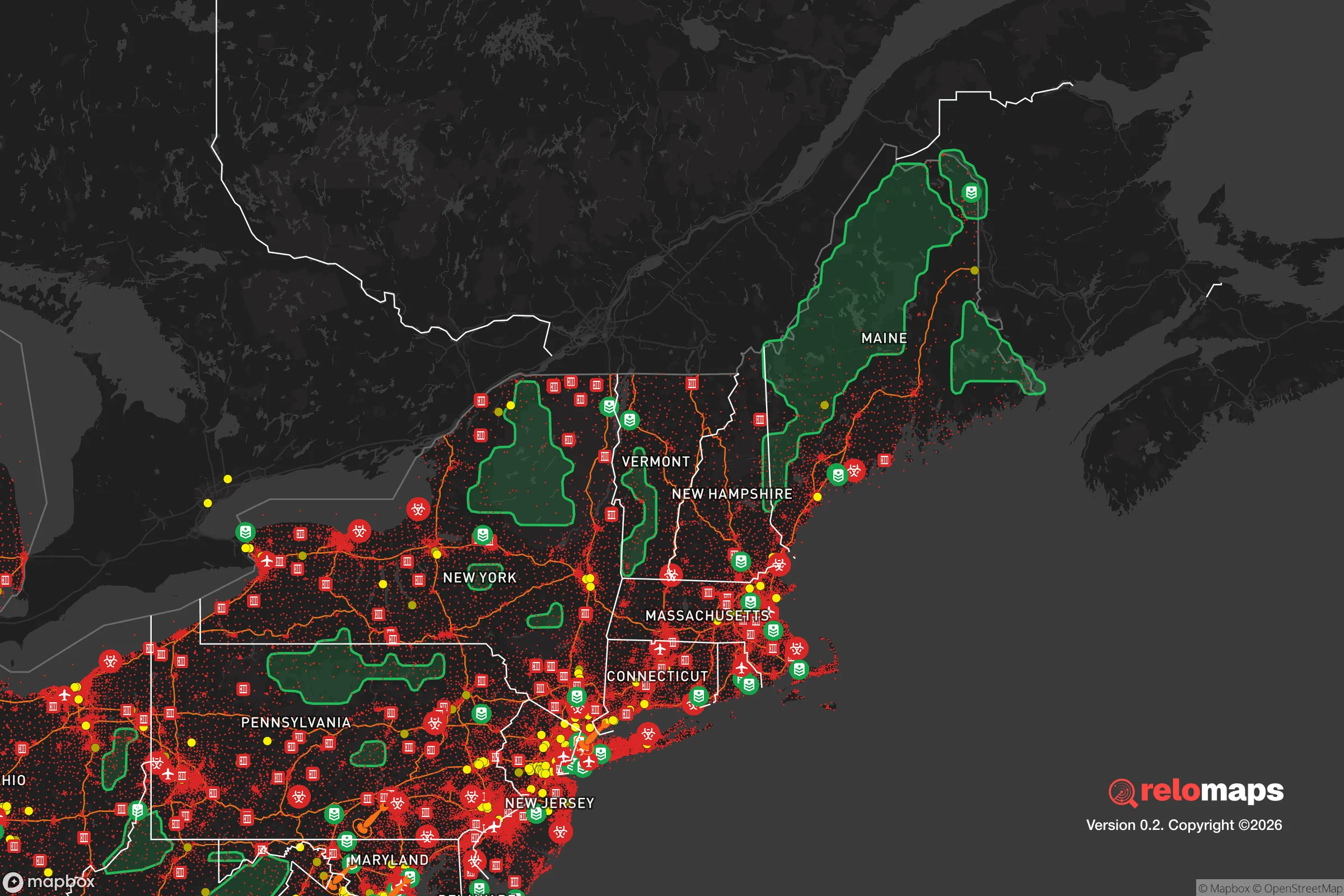


Important Note: For informational purposes only. This does not mean nothing bad ever happens in the green zones. Please use common sense. This is based on public data and modeled with AI. We tried to take a conservative approach but mistakes happen. We update this regularly as new information becomes available.
Solar Generator Recommendations
Backup power matters more here than in safer locations. We've picked three solar generators across budgets and capacity tiers — start with the budget unit if you only need a few essentials, or step up if you want to run a fridge and HVAC for days at a time.

Jackery Portable Power Station Explorer 300
Budget OptionPower on the Go: Weighing only 11 lbs, it's convenient to set up and store with book-sized foldable solar panels

BLUETTI Portable Power Station AC180
Designed for both indoor and outdoor scenarios, AC180 is highly capable as it has a robost capacity and continuous output power.

EF ECOFLOW DELTA Pro Ultra Power Station
Upgraded PickEcoFlow DELTA Pro Ultra is a whole-home energy system designed to grow with your family. Integrated with the Smart Home Panel 2, it scales to meet your evolving energy needs — keeping your home powered, intelligent, and secure through every stage of life.
We earn a commission, at no additional cost to you.
Strategic Assessment Analysis
Utica, New York, presents a mixed strategic picture for the conservative prepper or survivalist. Its core advantage is resilience through obscurity and a geographic position that buffers it from the immediate blast zones of major targets, but it sits within a state whose political trajectory and proximity to critical infrastructure introduce significant long-term risks. For a relocator prioritizing self-sufficiency and a lower probability of being caught in a mass casualty event, Utica offers a viable, if imperfect, base of operations—provided you understand its specific exposures and plan accordingly.
Geographic position and natural advantages for long-term survival
Utica’s location in the Mohawk Valley is its strongest card. It lies roughly 90 miles west of Albany and 240 miles northwest of New York City, placing it well outside the probable fallout zones of a nuclear strike on the NYC metro area or the Albany-area power grid nodes. The surrounding terrain—the Adirondacks to the north and the Catskills to the south—provides natural barriers that complicate large-scale movement and offer immediate bug-out options. The region is rich in surface water: the Mohawk River runs through the city, and countless streams, lakes, and reservoirs dot the surrounding counties. For a prepper, this means a reliable water source that doesn’t depend on municipal treatment plants, which could fail or become contaminated during a crisis. The climate, while harsh in winter, also acts as a natural deterrent to mass migration from coastal zones; deep snow and cold will slow or stop unprepared refugees, buying time for those with proper cold-weather gear and cached supplies. The area’s agricultural history means decent soil in the valley for small-scale food production, and the nearby forests offer timber, game, and fuel. Utica’s population has been declining for decades—down to about 60,000 from a peak of 100,000—which means less density, less competition for resources in a collapse, and more abandoned or undervalued property that can be acquired cheaply for a retreat setup.
Risks, exposures, and proximity to fallout-relevant landmarks
The downsides are real and must be weighed honestly. Utica is within 50 miles of the Nine Mile Point Nuclear Generating Station (in Oswego County) and the James A. FitzPatrick Nuclear Power Plant, both on Lake Ontario. A catastrophic failure or a targeted strike on these facilities would put Utica in a moderate fallout plume depending on wind direction. While not as immediate as being in the blast radius, this is a non-trivial risk for a survivalist. Additionally, the New York State Thruway (I-90) runs directly through the city, and the main rail lines for the Northeast corridor pass through the Mohawk Valley. In a national emergency, these arteries become evacuation and military supply routes, making Utica a potential chokepoint for traffic, refugees, or federal movement. The city itself has a history of economic decline and urban decay, which in a crisis could translate into localized civil unrest, looting, or gang activity from the remaining population. Politically, Utica and Oneida County lean more conservative than downstate New York, but the state government in Albany has shown a willingness to impose strict lockdowns, gun control, and energy restrictions. New York’s SAFE Act and recent ammunition background check laws are direct obstacles to prepper logistics—stockpiling ammunition or acquiring certain firearms is legally complicated and monitored. If you plan to maintain a low profile, this is a manageable nuisance; if you plan to operate openly, it’s a liability.
Practical resilience for a relocator: food, water, energy, and defensibility
For the individual or family looking to establish a resilient homestead, Utica’s practical assets are mixed but workable. Water is abundant—the Mohawk River is a year-round source, and the region’s aquifer is shallow enough for hand-pumped wells in many rural areas just outside the city limits. A rainwater catchment system is also viable given the area’s 45+ inches of annual precipitation. Food production is feasible: the growing season is short (roughly May to September), but cold-hardy crops like potatoes, carrots, kale, and apples do well. Local farmers’ markets and the presence of Amish and Mennonite communities in nearby Madison and Lewis counties mean you can source heirloom seeds, livestock, and practical knowledge without relying on big-box retailers. Energy independence is more challenging. The region is cloudy for much of the year, so solar panels alone won’t cut it—you’ll need a hybrid system with a small wind turbine or a reliable generator with stored fuel. Wood heat is the most practical primary heat source; the surrounding forests provide ample fuel, and a good wood stove can also be used for cooking. Defensibility depends on your exact location. The city itself is not defensible—too many entry points, too much abandoned infrastructure, too many people. But the rural townships within 15-30 minutes—like Remsen, Barneveld, or Forestport—offer properties on dead-end roads with natural cover from hills and forests. These areas are sparsely populated, and a well-chosen property with a clear line of sight and a single access road can be made very secure. The local gun culture is strong; you’ll find like-minded neighbors, but also a higher baseline of armed households, which is a deterrent to casual threats.
The overall strategic picture for Utica is that of a secondary-tier relocation target. It is not the ideal prepper paradise—that would be somewhere in the remote Intermountain West with no nuclear plants, no major highways, and a friendlier state government. But for someone constrained by budget, job requirements, or family ties to the Northeast, Utica offers a realistic compromise. You get a low cost of living (median home price around $130,000), access to abundant water and timber, a conservative-leaning local population, and a position that is far enough from the primary targets to survive the opening salvos of a national crisis. The trade-offs are the nuclear plant risk, the state-level political hostility, and the need to invest in alternative energy due to the cloudy climate. If you buy rural, stockpile supplies, build a community of trusted locals, and keep your head down, Utica can work. If you expect to ride out a collapse in the city itself or rely on the existing infrastructure, you will be disappointed. Treat it as a base camp, not a fortress, and you’ll be ahead of 90% of the population.

* Values derived from national, state, county, city and local statistics and may differ in a specific area. Last updated: 2026-04-19T21:55:13.000Z
Narrative content on this page is AI-generated and may contain mistakes. Verify any details that matter before acting on them.
ReloMaps may earn a commission from affiliate links at no extra cost to you.

