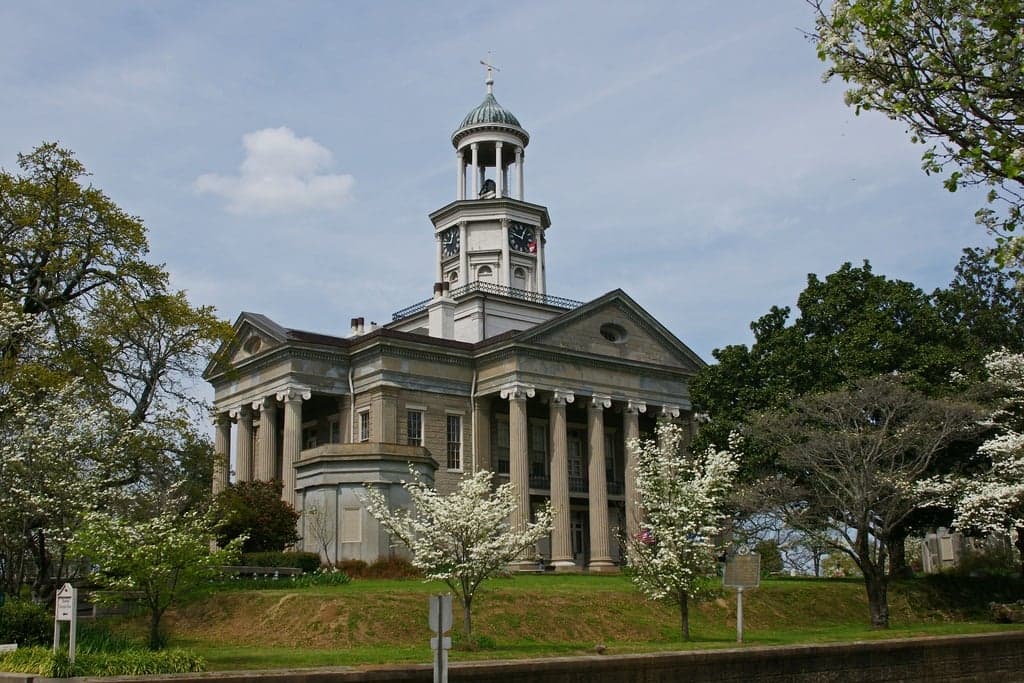
Photo: Wikipedia
Demographics of Vicksburg, MS
Affluence Level in Vicksburg, MS
A low-income area with significant economic hardship. Household wealth and educational attainment are well below national averages.
People of Vicksburg, MS
Vicksburg, Mississippi, is a city of roughly 21,000 residents where the population is overwhelmingly Black (73.7%) and the white population stands at 22.8%, a demographic profile shaped by centuries of plantation agriculture, Civil War upheaval, and post-industrial outmigration. The city is notably less diverse than the national average, with a foreign-born population of just 1.1% and tiny Hispanic (2.1%) and Asian (0.1%) communities. What defines Vicksburg today is its deep-rooted, majority-Black character, a relatively low college attainment rate (23.9%), and a population that has been steadily declining since its 1980 peak of over 25,000. For a conservative-leaning relocator, Vicksburg offers a tight-knit, historically grounded community, but one that is economically challenged and demographically homogeneous.
How the city was settled and grew
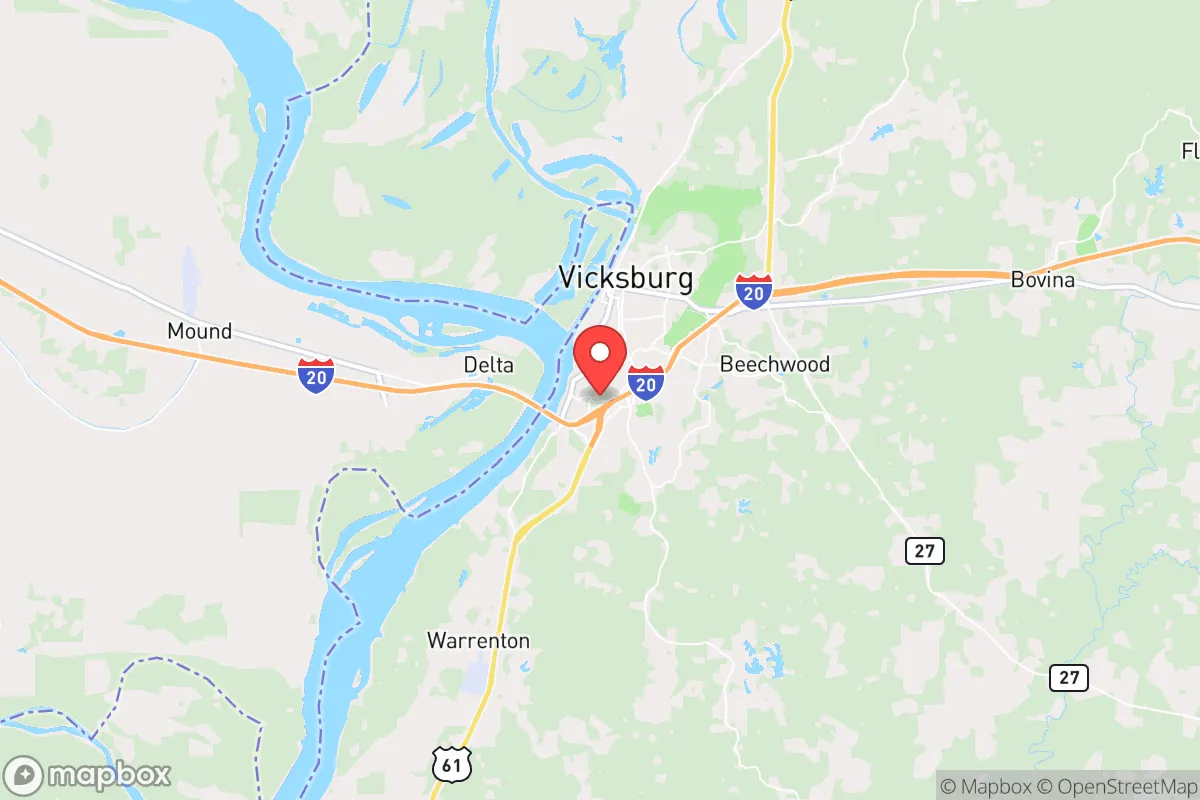
Vicksburg’s population history begins with its strategic location on the Mississippi River bluffs, which made it a natural hub for the cotton trade. The city was incorporated in 1825 and quickly grew as a landing point for steamboats and a market for the surrounding plantation economy. The original white settlers were largely Anglo-American planters and merchants from the Upper South, who brought enslaved Black laborers with them. By 1860, enslaved people made up over half of Warren County’s population, a ratio that persisted through Reconstruction. The post-Civil War era saw the rise of a free Black population that concentrated in neighborhoods like South Vicksburg and the Drummond Street area, where Black-owned businesses and churches anchored community life. The city’s white elite, meanwhile, built homes in the Garden District and along Monroe Street, establishing a pattern of racial residential separation that remains visible today. The early 20th century brought a modest wave of Italian and Lebanese immigrants, who settled near the downtown riverfront and opened grocery stores and saloons, but these groups largely assimilated into the white population by mid-century.
Modern era (post-1965)
After the 1965 Hart-Cellar Act, Vicksburg saw virtually no new immigration—its foreign-born share remains below 1.5%—so the city’s modern demographic story is one of domestic migration and suburbanization. The 1970s and 1980s saw significant white flight to unincorporated Warren County and to the Bovina and Redwood areas, driven by school desegregation orders and the decline of downtown retail. The Black population, which had been a majority since the 1960s, consolidated in the city core, particularly in South Vicksburg, the Kings neighborhood, and the area around Martin Luther King Jr. Boulevard. The white population that remained in the city limits concentrated in the Garden District and along the Hall’s Ferry Road corridor, where historic homes and newer subdivisions offered a buffer from the city’s economic struggles. The closure of the Vicksburg Naval Station in the 1990s and the decline of riverboat-related employment accelerated population loss, with the city shedding nearly 5,000 residents between 1980 and 2020. The Hispanic population, though tiny (2.1%), has grown slightly since 2000, largely due to construction and service jobs, and is scattered rather than concentrated in a single neighborhood.
The future
Vicksburg’s population is projected to continue its slow decline, with the 2020 census showing 20,944 residents—down from 23,856 in 2010. The city is not homogenizing into a single identity; rather, it is tribalizing along racial and economic lines, with the Black majority concentrated in the older, poorer core and the white minority clustered in the historic Garden District and newer subdivisions near the interstate. The immigrant communities are too small to drive any meaningful diversification—the East/Southeast Asian population (0.1%) and Indian-subcontinent population (0.2%) are negligible, and the Hispanic share, while growing, remains below 3%. The next 10-20 years will likely see continued outmigration of younger, college-educated residents (only 23.9% hold a bachelor’s degree) to Jackson or the Gulf Coast, leaving an older, poorer, and more racially polarized population. The city’s future depends on whether it can attract new industry or remote workers to reverse the population drain, but its low educational attainment and limited amenities make that a steep challenge.
For someone moving in now, Vicksburg is a historically rich but demographically static city where the population is shrinking, aging, and deeply divided by race and class. The city offers a strong sense of place and a lower cost of living than the national average, but relocators should expect a community that is overwhelmingly Black, with a small white enclave in the Garden District and virtually no immigrant presence. The bottom line: Vicksburg is becoming a smaller, poorer, and more racially polarized version of itself, and newcomers will find a city that prizes tradition over change.

* Values derived from national, state, county, city and local statistics and may differ in a specific area. Last updated: 2026-04-30T13:12:13.000Z
Narrative content on this page is AI-generated and may contain mistakes. Verify any details that matter before acting on them.
ReloMaps may earn a commission from affiliate links at no extra cost to you.

