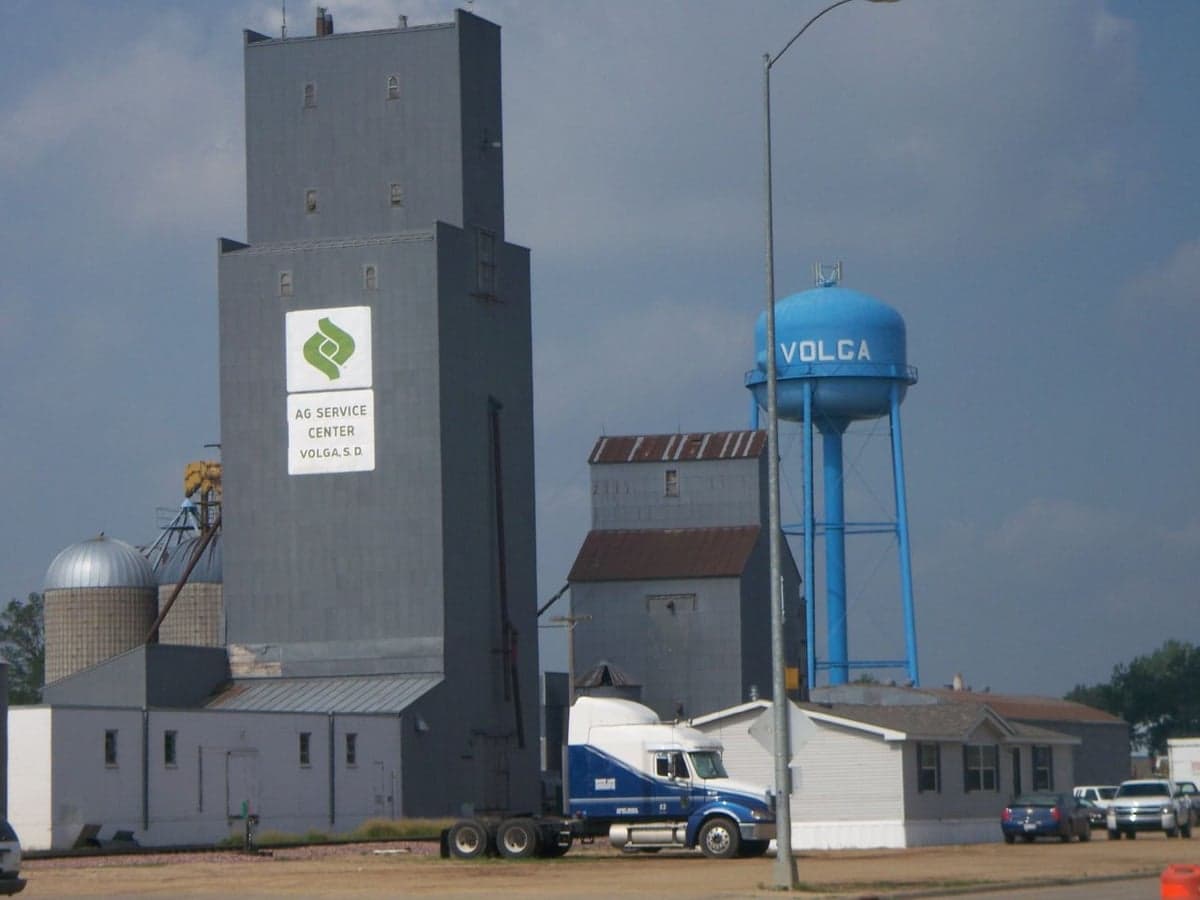
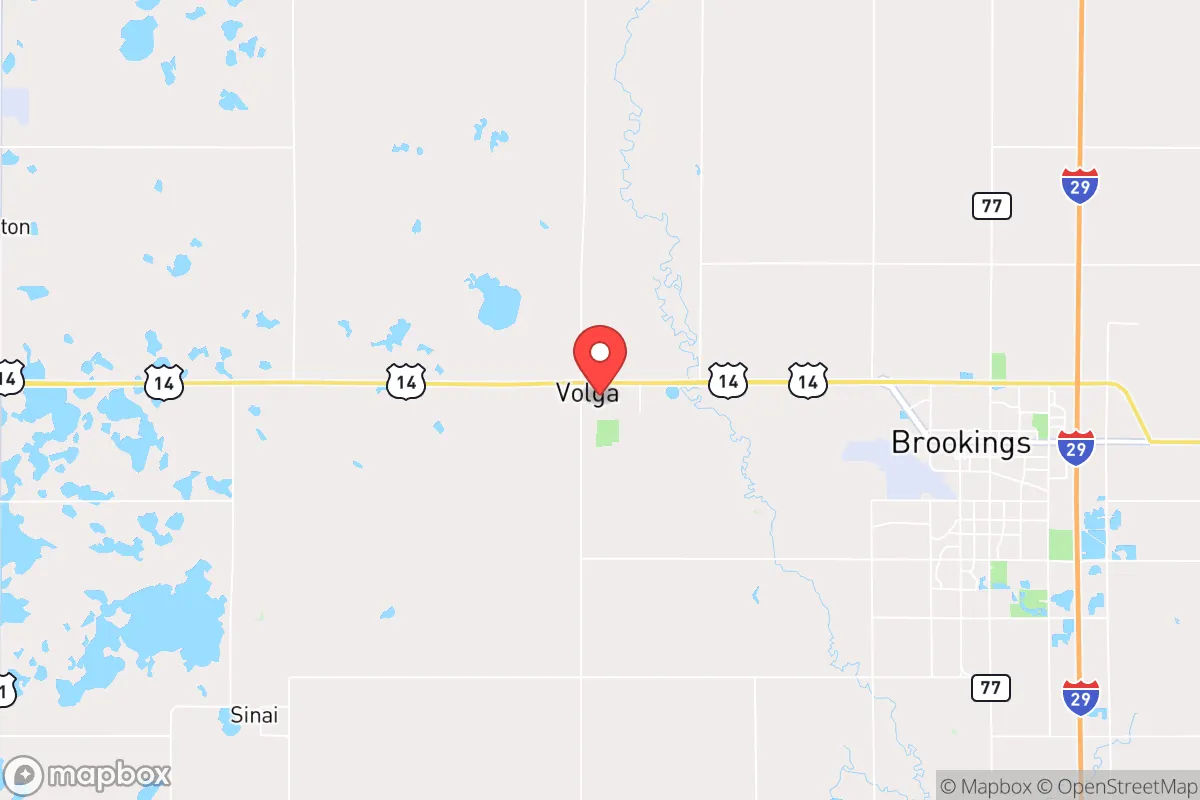
Photo: Wikipedia
Demographics of Volga, SD
Affluence Level in Volga, SD
A middle-class area roughly in line with national averages across income, home values, education, and employment.
People of Volga, SD
The people of Volga, South Dakota today form a small, tight-knit community of 2,246 residents that is overwhelmingly white (94.8%) and native-born, with a foreign-born share of just 0.3%. The city carries a distinctively Dutch-American character rooted in its 19th-century settlement, and its population is notably well-educated—41.6% hold a college degree, well above the state average. Volga is a stable, family-oriented town where generational continuity is the norm, and new arrivals are most often domestic migrants seeking affordable housing and a quiet rural lifestyle within commuting distance of Brookings.
How the city was settled and grew
Volga was founded in 1879 by Dutch immigrants who purchased land from the Winona and St. Peter Railroad. The original settlers were primarily farmers from the Netherlands seeking religious freedom and economic opportunity in the Dakota Territory. They established the town along the railroad line, and the first wave built homes in what is now known as Old Town Volga, the original grid of streets around the depot and Main Avenue. A second wave of Dutch families arrived in the 1880s and 1890s, settling in the East Side Addition, a neighborhood east of the railroad tracks that became the heart of the Dutch Reformed community. The town’s growth remained slow but steady through the early 20th century, driven by agriculture and the creamery industry. By 1930, Volga’s population had reached roughly 500, almost entirely of Dutch descent, with a small number of German and Scandinavian families living in the West End near the grain elevators.
Modern era (post-1965)
After the 1965 Hart-Cellar Act, Volga saw virtually no immigration-driven demographic change. The foreign-born population remains negligible at 0.3%, and the city’s racial composition has stayed overwhelmingly white. The most significant modern shift has been domestic in-migration from nearby Brookings and rural Minnesota, driven by the expansion of South Dakota State University and the growth of the Brookings-area manufacturing base. Newer subdivisions such as Prairie View Estates (built in the 1990s) and Sunset Ridge (developed in the 2000s) attracted younger families and professionals, many of whom commute to Brookings for work. These neighborhoods are more diverse in income and occupation than the historic Dutch core, but remain nearly all white. The Hispanic share of Volga’s population is 2.0%, and East/Southeast Asian residents make up 1.2%—both groups are concentrated in rental housing near the Volga Industrial Park on the south edge of town, where a few light-manufacturing and food-processing plants employ seasonal and year-round workers. There is no Indian-subcontinent population (0.0%) and no Black population (0.0%).
The future
Volga’s population is projected to grow modestly, driven by continued spillover from Brookings and the appeal of lower housing costs. The city’s demographic trajectory points toward gradual homogenization rather than tribalization: the small Hispanic and Asian communities are likely to remain small, as the local economy does not generate the kind of large-scale labor demand that attracts sustained immigration. The Dutch-American cultural identity will persist, though it may soften as newer residents from outside the region move into subdivisions like Meadowlark Addition (platted in 2018). The college-educated share is likely to rise further as more professionals choose Volga as a bedroom community. Over the next 10–20 years, Volga will likely remain a predominantly white, family-oriented town with a stable population, low crime, and a strong sense of community rooted in its agricultural and religious heritage.
For someone moving in now, Volga offers a safe, affordable, and culturally cohesive environment where neighbors know each other and community institutions—churches, the school, the annual Dutch Festival—anchor social life. It is not a place of rapid change or ethnic diversity, but rather a steady, predictable small town where the biggest demographic story is the slow arrival of young families from the nearby city. If you value stability, low taxes, and a community where your children can walk to school and play outside without worry, Volga is a strong fit.

* Values derived from national, state, county, city and local statistics and may differ in a specific area. Last updated: 2026-04-30T06:49:53.000Z
Narrative content on this page is AI-generated and may contain mistakes. Verify any details that matter before acting on them.
ReloMaps may earn a commission from affiliate links at no extra cost to you.

