 Popular
Demographics of Waterford Township, MI
Affluence Level in Waterford Township, MI
A wealthy area with high-earning, well-educated households. Incomes, home values, and educational attainment meaningfully outpace national averages.
People of Waterford Township, MI
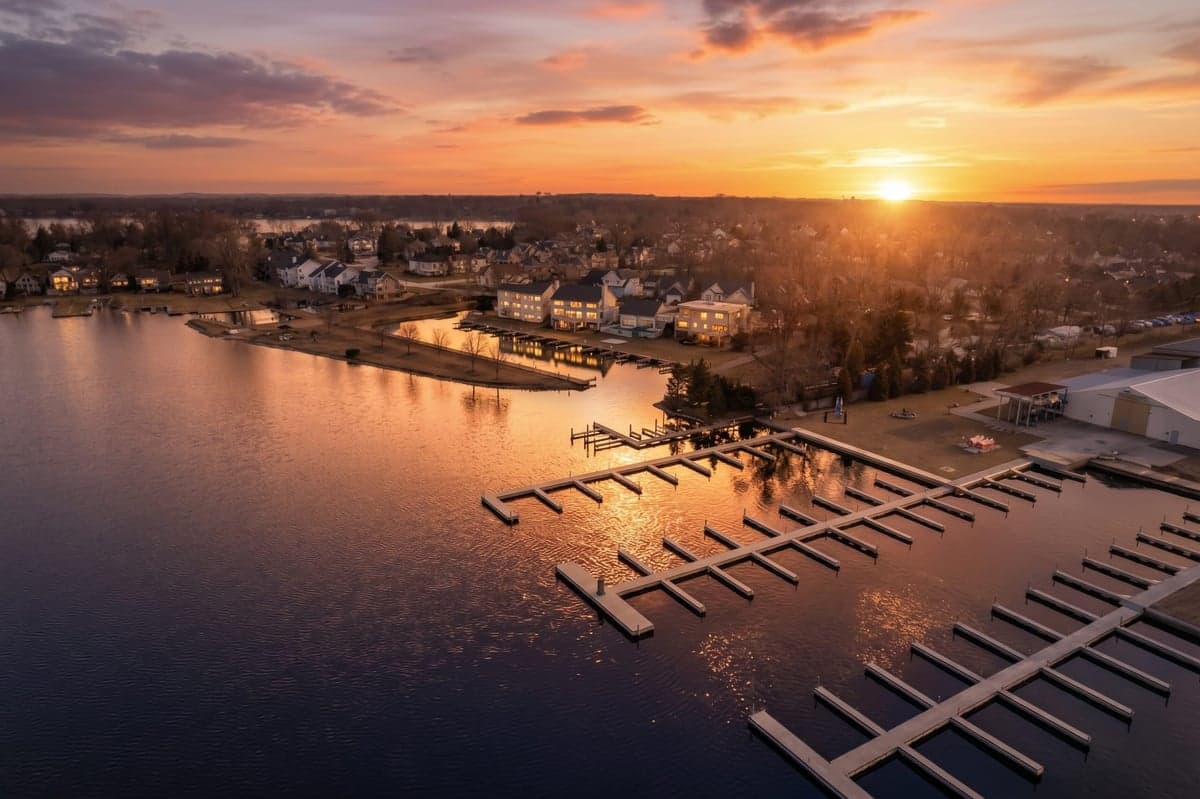
Waterford Township, Michigan, is a predominantly white, highly educated suburban community of roughly 277 residents, a figure that reflects its status as a small, tight-knit enclave within Oakland County. With a population that is 95.7% white and a foreign-born share of just 2.5%, the township retains a distinctly homogeneous character, while its 79.8% college-educated rate signals a professional-class population drawn to its quiet, residential atmosphere. The community’s identity is rooted in its historic role as a rural crossroads and later a bedroom suburb, with a population that has remained remarkably stable in its ethnic composition even as nearby cities have diversified.
How the city was settled and grew
Waterford Township’s original population arrived in the 1820s and 1830s, drawn by the promise of fertile land along the Clinton River and the chain of lakes that dot the area. The first settlers were primarily Yankees from New York and New England, who established farms and small mills around what is now the Waterford Village historic district, the original commercial and civic core. The construction of the Pontiac and Detroit Railroad in the 1840s spurred a second wave of German and Irish immigrants, who settled in the Drayton Plains neighborhood, working in the area’s sawmills and gristmills. By the early 20th century, the township’s population remained small and agrarian, with the Clintonville area emerging as a modest industrial pocket centered on a woolen mill. The post-World War II era brought a third wave: returning veterans and auto-industry workers from Detroit, who built ranch-style homes in subdivisions like Williams Lake Estates, transforming Waterford into a commuter suburb for Pontiac and Flint. These mid-century arrivals were overwhelmingly white and of European descent, cementing the township’s demographic baseline.
Modern era (post-1965)
After the 1965 Hart-Cellar Act reshaped immigration patterns nationwide, Waterford Township saw virtually no influx of new foreign-born populations, a trend that continues today with a foreign-born share of just 2.5%. The township’s population remained overwhelmingly white through the late 20th century, even as neighboring Pontiac and Waterford Village proper experienced modest diversification. Domestic in-migration during the 1970s and 1980s came primarily from other parts of Oakland County and northern Macomb County, with families seeking larger lots and lower taxes. These new residents concentrated in the Oakland Hills subdivision and the area around Elizabeth Lake, where newer, larger homes were built on former farmland. The East/Southeast Asian population, now at 1.4%, is a very recent phenomenon, with a handful of families settling in the Haven Hill area near the Oakland County Executive’s office, drawn by professional opportunities in the county government and healthcare sectors. The township’s Black and Hispanic populations remain at 0.0%, a reflection of both historical housing patterns and the area’s lack of rental housing stock that might attract more diverse residents.
The future
Waterford Township’s population is projected to remain stable or decline slightly over the next decade, as the existing housing stock ages and new construction remains limited by the township’s small land area and strict zoning. The population is likely to become slightly older, as younger families are priced out by rising home values in Oakland County and move to more affordable areas in Lapeer or Genesee counties. The East/Southeast Asian share may grow incrementally, reaching perhaps 2-3% by 2035, as professionals from nearby tech and healthcare employers seek the township’s low crime rates and strong school district. However, the township’s cultural identity will remain predominantly white and conservative-leaning, with little pressure for change from external migration. The lack of rental housing, combined with high home prices (median above $350,000), will continue to filter for higher-income, college-educated buyers, reinforcing the 79.8% college-educated rate.
For someone moving in now, Waterford Township offers a stable, low-diversity, highly educated community with strong schools and a quiet, lake-oriented lifestyle. The population is not diversifying rapidly, and the cultural character is likely to remain consistent with its post-war suburban roots. New residents should expect a place where neighbors know each other, local politics lean conservative, and the primary demographic change will be a gradual aging of the existing population rather than an influx of new groups.

* Values derived from national, state, county, city and local statistics and may differ in a specific area. Last updated: 2026-08-17T21:35:02.000Z
Narrative content on this page is AI-generated and may contain mistakes. Verify any details that matter before acting on them.
ReloMaps may earn a commission from affiliate links at no extra cost to you.

