Photo: Wikipedia
Personal Sovereignty in Berkeley County
Strong independent fundamentals that actively favor personal liberty and low regulation.
What does Personal Sovereignty tell us?
Personal Sovereignty measures your capacity for self-reliance and independence with minimal government friction. Higher scores mean fewer barriers between you and the way you want to live... but it assumes you have the space you need and good neighbors.
What does this tell us?
Personal Sovereignty measures your capacity for self-reliance and independence with minimal government friction. Higher scores mean fewer barriers between you and the way you want to live... but it assumes you have the space you need and good neighbors.
State Policy
Energy independence: Net exporter (200% of energy produced in-state)
Personal Liberty
Homesteading

Personal Liberty Analysis
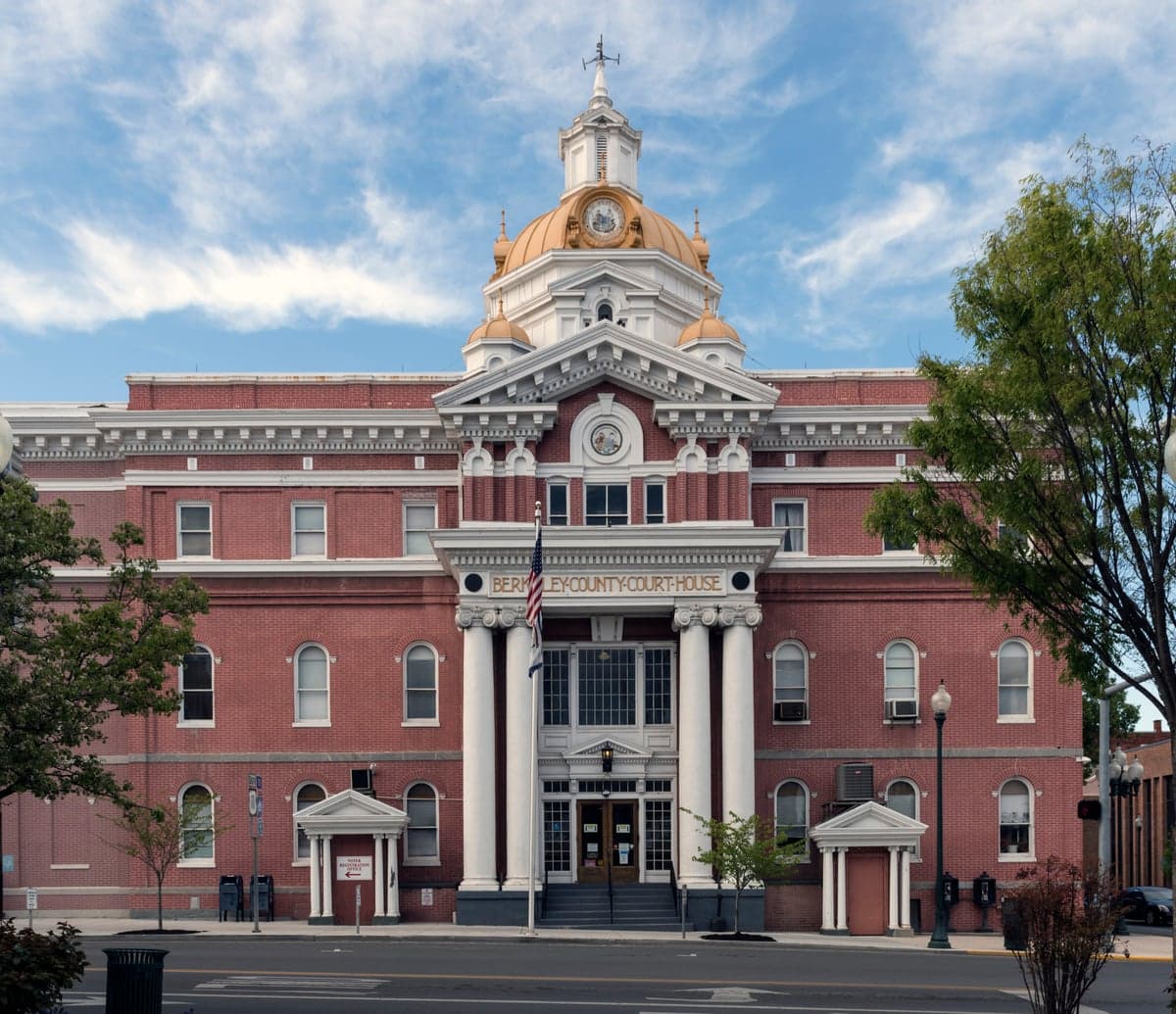
Berkeley County, West Virginia, offers a markedly higher degree of personal sovereignty than much of the Eastern Seaboard, particularly when compared to neighboring Maryland or Virginia. For those concerned with government overreach and preserving individual autonomy, this area presents a strategic balance of rural freedom and access to infrastructure, though it is not without its own encroaching pressures. The county’s political culture, rooted in a strong independent streak, generally supports the principle that a person’s life, property, and choices are their own—provided they are not infringing on others.
Tax burden and regulatory posture: How Berkeley County compares to neighboring states
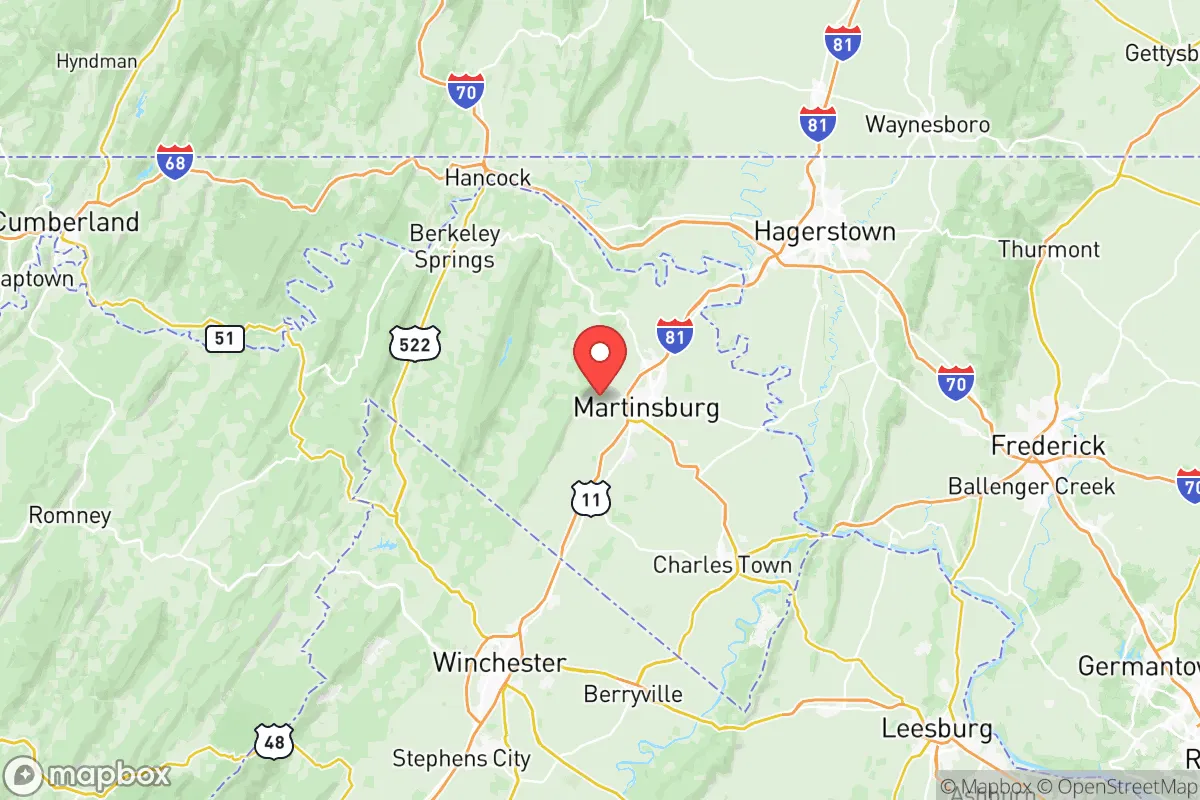
West Virginia’s state-level tax structure is a significant draw for those seeking to minimize government extraction. There is no state income tax on Social Security benefits, and the state has been phasing down its personal income tax, with a current flat rate of roughly 3.99%—far lower than Maryland’s progressive rates that can exceed 5.75%. Property taxes in Berkeley County are assessed at 60% of market value, with a levy rate that typically lands between 1.0% and 1.2% of assessed value, a fraction of what you’d pay across the Potomac in Loudoun County, Virginia. The regulatory posture at the county level is generally permissive, particularly in unincorporated areas like Falling Waters and Arden, where building permits and zoning restrictions are minimal. However, the city of Martinsburg has a more formalized code enforcement structure, and the town of Hedgesville maintains its own zoning ordinances. For a survivalist or prepper, the key takeaway is that the county commission and state legislature have historically resisted adopting the kind of aggressive environmental and land-use regulations common in blue states, though the influx of former D.C. metro residents is slowly shifting the political calculus in some precincts.
Self-defense and gun law specifics: What the Second Sanctuary status means for residents
Berkeley County is a Second Amendment Sanctuary, a formal declaration by the county commission that they will not expend resources to enforce unconstitutional federal firearms restrictions. This is not symbolic; it has practical teeth. West Virginia is a constitutional carry state, meaning no permit is required to carry a concealed firearm for anyone legally allowed to possess one. There is no state-level registry, no magazine capacity limits, and no "red flag" law as of 2026, though federal proposals remain a threat. The sheriff’s office in Berkeley County, particularly in rural areas like Gerrardstown and Bunker Hill, is known for a pro-Second Amendment stance, with deputies generally viewing gun ownership as a civil right rather than a privilege. For those living near the Sleepy Creek Wildlife Management Area, the ability to train on public land is a practical advantage. The only notable restriction is that carrying on school property requires a permit, but even that is handled with more leniency than in states like New York or California. For the prepper mindset, this means your defensive capabilities are not subject to the whims of a distant legislature—at least for now.
Self-reliance and homesteading viability: Lot sizes, zoning, and off-grid feasibility
The viability of a self-reliant lifestyle varies dramatically across Berkeley County. In the unincorporated areas of Shanghai and Ridgeway, you can find parcels of 5 to 20 acres with no zoning restrictions, allowing for livestock, private wells, septic systems, and even alternative energy setups like solar panels and small wind turbines. Off-grid living is legally feasible here, provided you meet basic health department requirements for water and waste. The county does not have a blanket ban on rainwater collection, and many rural properties already rely on it. However, the situation is different in the eastern panhandle’s growth corridor. Inwood and the outskirts of Martinsburg have seen suburban-style subdivisions with homeowners’ associations that impose strict covenants on everything from chicken coops to satellite dishes. If you want true autonomy, avoid any property with an HOA. The county’s comprehensive plan, updated in 2024, shows a tension between preserving agricultural character and accommodating growth from the D.C. exodus. For now, the western half of the county remains a homesteader’s haven, with soil quality that supports gardens and small orchards, and a growing season long enough for most staple crops.
Personal liberties: Parental rights, medical autonomy, speech, and property
West Virginia law generally respects parental rights in education and medical decisions. The state has a robust school choice program, including charter schools and education savings accounts, and Berkeley County’s school board has resisted the kind of critical race theory and gender ideology curricula that have sparked conflicts elsewhere. Medical autonomy is more nuanced. The state does not have a vaccine mandate for adults, and COVID-era restrictions were minimal compared to blue states, but the medical board still follows standard licensing protocols. For those seeking alternative or holistic medicine, the regulatory environment is permissive, with no state-level ban on naturopathic practices, though insurance coverage is limited. Free speech is protected under the state constitution, and there have been no notable attempts to restrict political speech or assembly in Berkeley County. Property rights are strongly defended; the county has no inclusionary zoning or rent control, and eminent domain is rarely used outside of infrastructure projects. The town of Hedgesville has a particularly strong tradition of local control, with residents historically voting down any measure that smacks of regional government overreach. For the survivalist, the key concern is the slow creep of federal influence through grant funding and environmental mandates, but at the local level, the culture remains one of "live and let live."
Overall, Berkeley County ranks among the top 20% of U.S. counties for personal sovereignty, especially when measured against the D.C. suburbs or the Northeast corridor. The combination of constitutional carry, low taxes, minimal zoning in rural areas, and a political culture that distrusts centralized authority creates a environment where a determined individual can live largely free from government interference. The primary threat is the ongoing demographic shift as more people flee high-tax states, bringing with them expectations of regulation and control. For now, the western half of the county—places like Shanghai and Ridgeway—remains a stronghold of self-reliance, while the eastern edge near Martinsburg is slowly being suburbanized. If you value autonomy over convenience, the choice is clear: buy west of Interstate 81, avoid HOAs, and keep an eye on the county commission meetings.

* Values derived from national, state, county, city and local statistics and may differ in a specific area. Last updated: 2026-05-12T14:10:24.000Z
Narrative content on this page is AI-generated and may contain mistakes. Verify any details that matter before acting on them.
ReloMaps may earn a commission from affiliate links at no extra cost to you.

