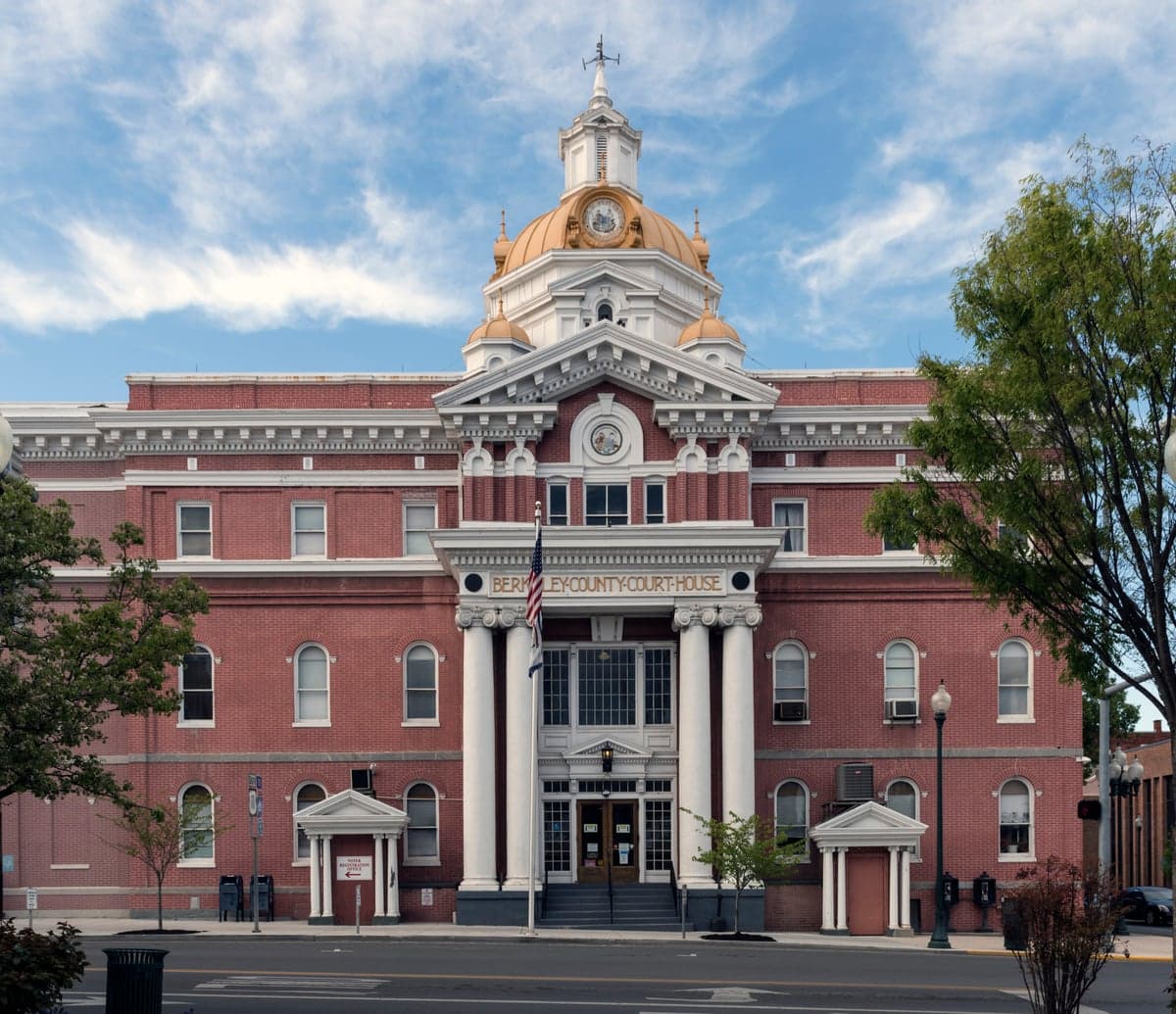
Photo: Wikipedia
Political ClimatePolitical Climate in Berkeley County
Showing district-level results — no local-only data available.
Local Political AnalysisPolitical Analysis of Berkeley County
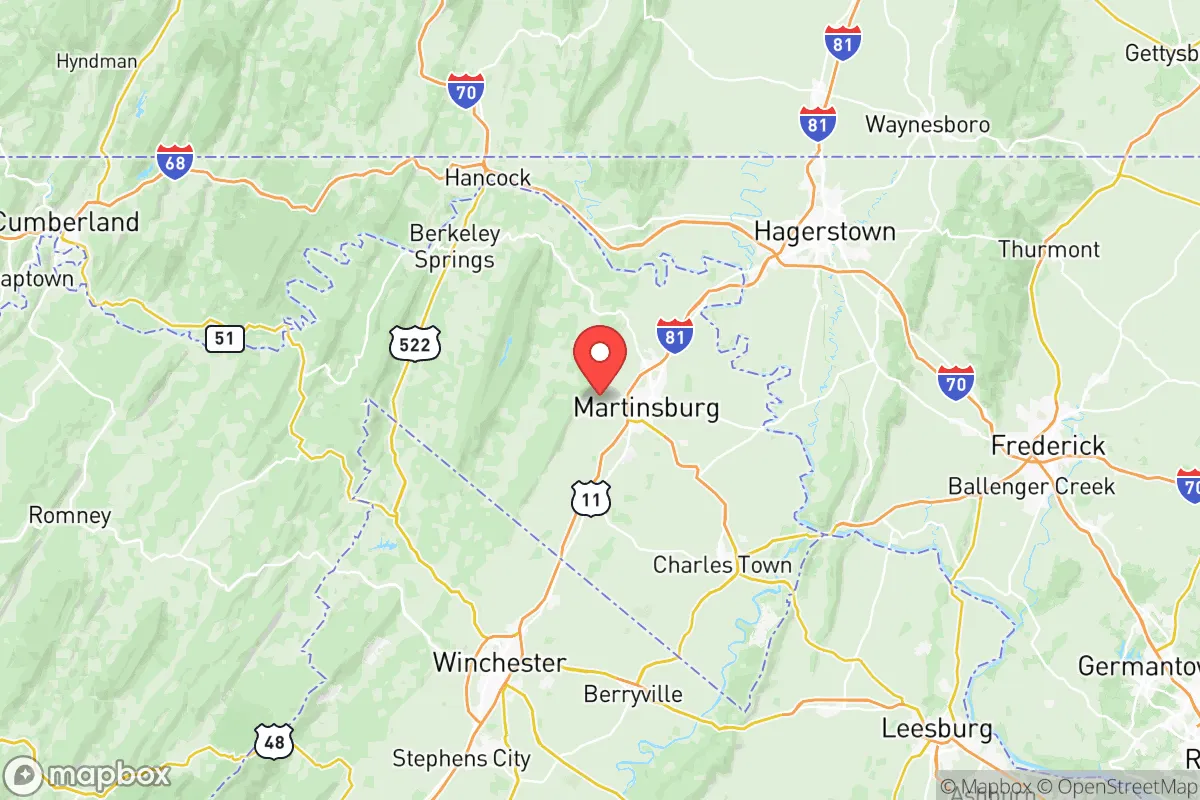
Berkeley County is a solidly conservative area, with a Cook PVI of R+20 that puts it right in line with the rest of West Virginia's R+21 rating. But don't let that overall number fool you—there's a real split happening here, and it's one that longtime residents like myself are keeping a close eye on. The county has been reliably red for decades, but the influx of folks from the D.C. metro area, especially around Martinsburg and the I-81 corridor, is starting to shift the local political landscape in ways that feel less like the West Virginia I grew up in.
How it compares
Compared to the rest of West Virginia, Berkeley County is actually a bit of a bellwether for the state's broader conservative lean. The state as a whole is R+21, so we're essentially a mirror image—but with a key difference: the eastern panhandle is more exposed to outside influence. In towns like Hedgesville and Falling Waters, you'll find the same deep-red, gun-friendly, low-tax values that define the rest of the state. But drive into Martinsburg proper, especially the newer subdivisions near the Maryland line, and you'll see precincts that are trending purple or even light blue. The Spring Mills area, with its growing population of commuters and remote workers, is where the swing votes are—and those votes are increasingly leaning toward progressive policies on things like zoning, school funding, and even local taxes. It's a stark contrast to Inwood and Bunker Hill, where the old-school conservative ethos still holds strong.
What this means for residents
For those of us who've been here a while, the biggest concern is government overreach creeping in under the guise of "growth." The county commission has stayed mostly conservative, but the school board and some municipal councils—especially in Martinsburg—have seen pushes for more progressive policies like diversity initiatives and higher property taxes to fund expanded public services. That's a red flag for anyone who values personal freedom and limited government. The state legislature in Charleston is still solidly red, so we've got some protection from the worst of it, but local elections are where the real battles are happening. If you're looking to move here, pay attention to which town you pick—Shepherdstown is the most liberal enclave in the county, while Berkeley Springs (in neighboring Morgan County) and Gerrardstown are still strongholds of traditional values.
Culturally, Berkeley County still feels like West Virginia—hunting, fishing, church on Sunday, and a general distrust of big government. But the new arrivals are bringing different priorities: bike lanes, farmers markets, and stricter environmental regulations. That's not all bad, but it's a shift that's happening faster than many of us are comfortable with. The long-term trajectory depends on whether the old guard can hold the line in local elections or whether the newcomers' voting power will tip the scales. For now, if you value low taxes, gun rights, and minimal government interference, Berkeley County is still a good bet—just keep an eye on the school board races and the county commission meetings. That's where the future of this place is being decided.

State Political ClimatePolitical Climate in West Virginia
State Political AnalysisPolitical Environment in the State
West Virginia is about as solidly Republican as a state gets, with a Cook PVI of R+21, meaning it votes roughly 21 points more Republican than the national average in presidential elections. The state has undergone a dramatic political realignment over the past 20 years, shifting from a reliably Democratic stronghold in the 1990s and early 2000s to a deep-red bastion today. This transformation was driven by cultural and economic factors—the decline of the coal industry, the national Democratic Party’s leftward shift on energy and social issues, and a growing distrust of federal overreach. The dominant coalition is now a mix of rural conservatives, working-class voters who feel abandoned by the national Democratic Party, and a growing number of retirees and remote workers seeking lower taxes and fewer regulations.
Urban vs. rural divide
The political map of West Virginia is starkly divided between its few small urban centers and the vast rural expanse. The state’s largest city, Charleston, and its surrounding Kanawha County are a notable exception, often voting more moderately or even leaning Democratic in local races. In the 2024 presidential election, Kanawha County went for Donald Trump by a margin of roughly 58% to 40%, which is still Republican but significantly less so than the rest of the state. Morgantown, home to West Virginia University, is another blue-ish pocket, with Monongalia County voting for Trump by a narrower 54% to 43% in 2024, driven by the academic and younger demographic. In contrast, rural counties like Mingo, Logan, and McDowell routinely deliver 80%+ margins for Republicans. The Eastern Panhandle—including counties like Berkeley and Jefferson—is a fascinating microcosm: it’s deeply red but has seen an influx of commuters from the D.C. metro area, which has introduced a small but growing libertarian-leaning and even moderate Democratic presence. The divide isn’t just about population density; it’s about economic dependence on coal versus newer industries like healthcare, education, and remote work.
Policy environment
West Virginia’s policy environment is aggressively conservative, with a focus on reducing taxes, limiting regulation, and protecting traditional values. The state has no personal income tax on Social Security benefits, and in 2023, the legislature passed a bill to gradually reduce the state income tax from 6.5% to 3.99% by 2026, with triggers for further cuts tied to revenue growth. Property taxes are among the lowest in the nation, capped by the state constitution at 1% of assessed value for most property. The regulatory posture is business-friendly, with a right-to-work law in place since 2016 and a strong tort reform environment that caps non-economic damages in medical malpractice cases at $500,000. On education, the state passed a robust school choice law in 2021, creating the Hope Scholarship, which allows parents to use state education funding for private school tuition, homeschooling, or other educational expenses. This was expanded in 2023 to include all students, regardless of income. Healthcare is a mixed bag: the state expanded Medicaid under the Affordable Care Act in 2014, a decision that remains controversial among conservatives, but there’s no state-run insurance exchange, and the legislature has repeatedly blocked efforts to create a public option. Election laws are strict: voter ID is required, early voting is limited to 10 days, and absentee voting requires an excuse. The state also passed a law in 2021 banning the use of private funding for election administration, a response to concerns about Zuckerberg-style election interference.
Trajectory & freedom
West Virginia is moving in a decidedly more freedom-oriented direction, particularly on gun rights, parental rights, and economic liberty. In 2023, the state passed a constitutional carry law, allowing any law-abiding adult to carry a concealed firearm without a permit. This was a major win for Second Amendment advocates. On parental rights, the state enacted the “Parental Bill of Rights” in 2021, which requires schools to notify parents of any medical or mental health services provided to their child and prohibits instruction on sexual orientation or gender identity in K-5 classrooms. The state also passed a law in 2023 banning transgender athletes from competing in girls’ sports, and another law prohibiting gender-affirming care for minors. On medical autonomy, West Virginia has some of the strongest conscience protections for healthcare providers who refuse to participate in abortions or other procedures on religious or moral grounds. The state’s near-total abortion ban, passed in 2022 with exceptions only for rape, incest, and the life of the mother, is among the strictest in the nation. Property rights have been strengthened by the passage of a “stand your ground” law in 2021, which eliminates the duty to retreat before using deadly force in self-defense. Taxation is trending downward, with the income tax cuts and a 2023 law exempting military pensions from state income tax. However, there are concerns about government overreach in areas like vaccine mandates: the state legislature passed a law in 2023 banning COVID-19 vaccine mandates by private employers, a clear signal that personal medical choice is being protected.
Civil unrest & political movements
West Virginia has a history of labor activism, but in recent years, political movements have shifted toward conservative and libertarian causes. The 2018 statewide teachers’ strike, which shut down schools for nine days and resulted in a 5% pay raise, was a rare moment of left-leaning mobilization, but it hasn’t translated into sustained progressive power. Instead, the dominant grassroots energy is on the right, with groups like the West Virginia Citizens Defense League pushing for gun rights and the Family Policy Council of West Virginia advocating for traditional values. There have been no significant sanctuary city movements; in fact, the state passed a law in 2020 requiring local law enforcement to cooperate with federal immigration authorities. Election integrity has been a flashpoint: in 2020, then-Governor Jim Justice (a Republican) signed an executive order requiring absentee ballots to be notarized, and the legislature later codified that requirement. There have been no major protests or civil unrest in recent years, though the 2020 Black Lives Matter protests in Charleston were small and largely peaceful. The state’s political culture is generally low-key, with most residents focused on economic survival rather than street activism. One notable trend is the growing “Free State” movement, with some libertarians and conservatives pushing for West Virginia to become a haven for those fleeing high-tax, high-regulation states like California and New York. This has led to a small but visible influx of remote workers and retirees, particularly in the Eastern Panhandle and around Lewisburg and Shepherdstown.
Projection
Over the next 5-10 years, West Virginia is likely to become even more conservative, driven by two key demographic trends: the continued out-migration of younger, more liberal-leaning residents seeking economic opportunities elsewhere, and the in-migration of conservative retirees and remote workers from blue states. The state’s population has been declining for decades, but the COVID-19 pandemic temporarily reversed that trend, with a net inflow of about 10,000 people in 2020-2021, many of them from the Northeast and West Coast. These newcomers tend to be older, wealthier, and more conservative, which will reinforce the state’s political lean. The coal industry will continue to decline, but the state is pivoting to natural gas, timber, and tourism, which are less unionized and more politically aligned with the GOP. The legislature will likely continue cutting taxes, expanding school choice, and protecting gun rights. The biggest wild card is the opioid crisis, which has devastated many communities and could drive a populist backlash against the current political establishment if economic conditions don’t improve. However, given the state’s deep cultural conservatism and the lack of a viable progressive alternative, the Republican dominance is secure for the foreseeable future.
For a conservative moving to West Virginia, the bottom line is this: you’ll find a state that largely shares your values on taxes, guns, education, and family. The government is generally hands-off, with low taxes, minimal regulation, and strong protections for parental rights and religious liberty. The main trade-offs are a struggling economy, limited job opportunities outside of healthcare and government, and a population that is aging and shrinking. If you’re looking for a place where your freedoms are respected and your tax dollars aren’t funding progressive social experiments, West Virginia is one of the best bets in the country. Just be prepared for a slower pace of life and a climate that can be harsh in the winter. The Eastern Panhandle offers the best balance of access to D.C. jobs and West Virginia’s low cost of living, while the southern coalfields are more isolated but deeply rooted in traditional values. Either way, you’ll be surrounded by people who believe in the same things you do.
* Values derived from national, state, county, city and local statistics and may differ in a specific area. Last updated: 2026-05-12T14:10:24.000Z
Narrative content on this page is AI-generated and may contain mistakes. Verify any details that matter before acting on them.
ReloMaps may earn a commission from affiliate links at no extra cost to you.

