
Photo: Wikipedia
Personal Sovereignty in Harrison County
Viable for self-reliance. Generally workable, though some barriers may limit total independence.
What does Personal Sovereignty tell us?
Personal Sovereignty measures your capacity for self-reliance and independence with minimal government friction. Higher scores mean fewer barriers between you and the way you want to live... but it assumes you have the space you need and good neighbors.
What does this tell us?
Personal Sovereignty measures your capacity for self-reliance and independence with minimal government friction. Higher scores mean fewer barriers between you and the way you want to live... but it assumes you have the space you need and good neighbors.
State Policy
Energy independence: Net exporter (200% of energy produced in-state)
Personal Liberty
Homesteading

Personal Liberty Analysis
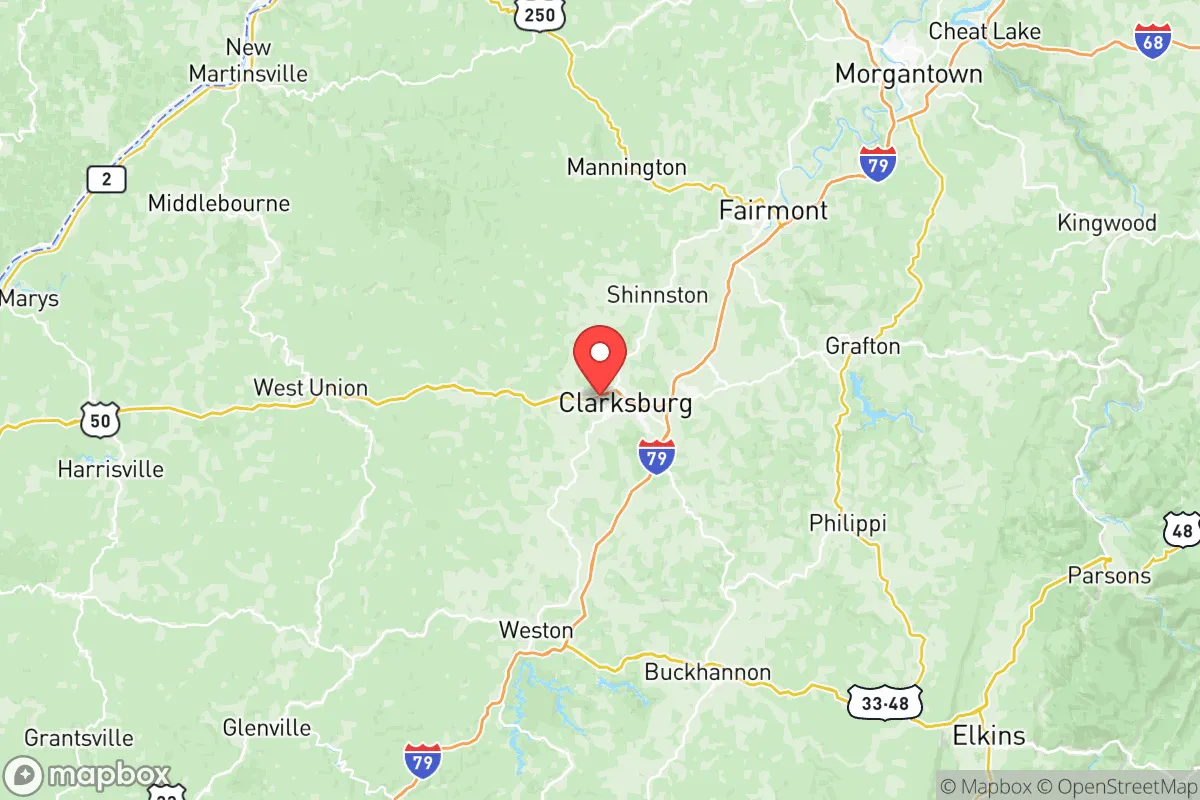
Harrison County, West Virginia, offers a notably high degree of personal sovereignty, grounded in a state-level legal framework that prioritizes individual autonomy in areas like taxation, self-defense, and property rights. For those seeking to minimize government overreach in daily life, the county presents a compelling environment where the regulatory touch is light, particularly when compared to more densely populated or politically progressive regions of the country. The area’s culture of self-reliance is reinforced by a legal system that generally defers to individual choice, making it a strong candidate for relocation-minded individuals and families who value independence.
Tax burden and regulatory posture: How light is the government footprint?
West Virginia’s tax structure is one of the most favorable in the nation for those prioritizing financial autonomy. The state has no personal property tax on vehicles or business inventory, and its income tax is structured with a flat rate of 4.12% as of 2026, following a series of phased reductions. Property taxes in Harrison County are assessed at a low effective rate—typically around 0.5% to 0.7% of market value—and are capped by the state constitution. The regulatory environment is similarly restrained. The county does not impose its own building codes beyond the state’s minimal standards, and there is no county-level zoning ordinance in unincorporated areas. This means that in places like Clarksburg, the county seat, and the surrounding rural communities of Lost Creek and Shinnston, residents can often build, repair, or modify structures without the layers of permits and inspections common in more regulated jurisdictions. The state’s right-to-work law and lack of a state-level minimum wage above the federal floor further reduce the regulatory burden on small businesses and self-employed individuals. For a reader comparing this to, say, the Austin city limits or the Denver metro area, the difference in administrative friction is stark.
Self-defense and gun law specifics: What are the legal protections for armed citizens?
West Virginia is a constitutional carry state, meaning that as of 2026, any law-abiding adult 21 or older can carry a concealed firearm without a permit. Harrison County’s sheriff’s office, like most in the state, processes permits for those who still wish to obtain one for reciprocity purposes, but the legal default is one of maximum personal liberty. The state’s “Stand Your Ground” law, codified in West Virginia Code §55-7-22, removes any duty to retreat before using deadly force in self-defense, both inside and outside the home. This is a significant legal protection for individuals who prioritize personal security. The county itself has a strong gun culture, with multiple shooting ranges and gun shops in and around Bridgeport and Nutter Fort. There are no county-level restrictions on magazine capacity, firearm types, or ammunition sales, and the state preempts local governments from enacting their own gun control ordinances. For a family or individual moving from a state with restrictive gun laws, the legal environment in Harrison County represents a clear and substantial increase in personal sovereignty over self-defense choices.
Self-reliance and homesteading viability: Lot sizes, zoning, and off-grid feasibility
Harrison County’s regulatory landscape is highly conducive to homesteading and off-grid living, particularly in its unincorporated areas. There is no county-wide zoning ordinance, which means that in rural communities like Salem and West Milford, residents can keep livestock, build workshops, and operate small-scale agricultural enterprises without seeking special use permits. Minimum lot sizes in unincorporated areas are generally governed by state health department regulations for septic systems, which typically require at least one acre for a conventional system, but larger parcels are common and affordable. Off-grid feasibility is high: the state has no laws prohibiting rainwater collection, and solar panel installations are not subject to homeowner association restrictions in unincorporated areas. The county’s building code, where it applies, is based on the 2018 International Residential Code, but enforcement is minimal outside of incorporated towns. For those seeking true self-reliance, the area around Anmoore and Lumberport offers affordable land—often under $5,000 per acre—with few legal barriers to constructing a self-sufficient homestead. The primary practical limitation is the availability of broadband internet in the most remote areas, though cellular coverage is generally adequate for basic needs.
Personal liberties: Parental rights, medical autonomy, speech, and property
West Virginia law provides strong protections for parental rights, including a statutory presumption that parents have the fundamental right to direct the upbringing, education, and healthcare of their children. The state does not mandate COVID-19 vaccines for school attendance, and parental consent is required for any medical treatment of minors. Medical autonomy for adults is similarly broad: the state has no vaccine passport requirements, and there are no state-level mandates for specific medical procedures. Free speech protections are robust, with no state-level hate speech laws or restrictions on political expression beyond the First Amendment baseline. Property rights are secured by the state’s strong eminent domain protections, which require a public use and just compensation, and by the absence of county-level rent control or landlord-tenant regulations beyond the state’s uniform landlord-tenant act. In Clarksburg and Bridgeport, homeowners enjoy the full bundle of property rights, including the ability to sell, lease, or develop their land with minimal government interference. The overall legal environment in Harrison County is one where the default assumption is that the individual, not the state, is the best judge of their own interests.
Compared to other regions of the United States, Harrison County offers a notably high degree of personal sovereignty across the key dimensions of tax burden, self-defense law, homesteading viability, and personal liberties. The state’s constitutional carry law, low property taxes, and absence of county-level zoning create a legal environment that is permissive by design. For a reader who prioritizes autonomy and self-reliance, the area stands in clear contrast to the more regulated environments of the Pacific Northwest, the Northeast corridor, or the urban centers of the West Coast. While no location is entirely free of government influence, Harrison County, West Virginia, represents a strong choice for those seeking to maximize their personal freedom within a stable, community-oriented setting.

* Values derived from national, state, county, city and local statistics and may differ in a specific area. Last updated: 2026-08-04T02:30:23.000Z
Narrative content on this page is AI-generated and may contain mistakes. Verify any details that matter before acting on them.
ReloMaps may earn a commission from affiliate links at no extra cost to you.

